惯性聚合 高效追踪和阅读你感兴趣的博客、新闻、科技资讯
阅读原文 在惯性聚合中打开

推荐订阅源

L
LINUX DO - 热门话题
H
Hacker News: Front Page
P
Proofpoint News Feed
F
Future of Privacy Forum
Spread Privacy
Spread Privacy
The Register - Security
S
Schneier on Security
T
Tor Project blog
Google DeepMind News
P
Palo Alto Networks Blog
Threat Intelligence Blog | Flashpoint
让小产品的独立变现更简单 - ezindie.com
罗磊的独立博客
Recent Commits to openclaw:main
S
SegmentFault 最新的问题
P
Privacy International News Feed
Security Latest
Security Latest
博客园 - 聂微东
博客园_首页
博客园 - 司徒正美
V
V2EX
宝玉的分享
宝玉的分享
S
Securelist
The Cloudflare Blog
J
Java Code Geeks
I
Intezer
Apple Machine Learning Research
Know Your Adversary
Know Your Adversary
博客园 - 叶小钗
小众软件
小众软件
爱范儿
爱范儿
C
Cyber Attacks, Cyber Crime and Cyber Security
L
Lohrmann on Cybersecurity
Latest news
Latest news
美团技术团队
S
Secure Thoughts
P
Privacy & Cybersecurity Law Blog
Project Zero
Project Zero
Jina AI
Jina AI
IT之家
IT之家
酷 壳 – CoolShell
酷 壳 – CoolShell
C
Cybersecurity and Infrastructure Security Agency CISA
Recorded Future
Recorded Future
WordPress大学
WordPress大学
博客园 - 【当耐特】
F
Fox-IT International blog
人人都是产品经理
人人都是产品经理
博客园 - 三生石上(FineUI控件)
Simon Willison's Weblog
OSCHINA 社区最新新闻
OSCHINA 社区最新新闻

JPost.com - Archaeology | The Jerusalem Post

Korean, Egyptian archaeologists find ancient temple gate blocks during restoration work in Luxor ‘Lexden Lady,’ wealthy Roman woman buried in lead coffin, goes on display in UK Neanderthal tooth from Siberian cave shows signs of earliest-known invasive dental surgery - study Pompeii victim revealed to be a doctor fleeing Vesuvius’ eruption over 60 years after discovery Over 30 mummified cats, ancient Egyptian tombs, coffins discovered at Luxor necropolis site Silk Road Virtual Museum opens first Israel exhibit, displays ancient textiles found in Arava Egypt exhibits rare artifact from King Tut's tomb, two restored New Kingdom tombs in Luxor Ancient tunnel with unknown age, purpose found near Kibbutz Ramat Rachel ahead of Jerusalem Day US returns two rare, ancient coins to Israel following joint antiquities theft investigation Central-Eastern Europe's oldest Neanderthal group identified by DNA taken from teeth - study Eight-year-old boy visiting Ramon Crater finds over 1,700-year-old statue fragment hidden in rocks Wooden platform older than Stonehenge found hidden beneath man-made island in Scotland Scientists find traces of rare 'imperial' Tyrian purple dye found in Roman infant burials in York Collection of Greek, Roman, Byzantine artifacts discovered in neighborhood of Egypt’s Alexandria Nearly 2,000-year-old 'souvenir cup' found in Spain names Hadrian's Wall's eastern forts - study World's oldest plague mass grave found beneath Roman racetrack in Jordan - study Mummy CT scan reveal ancient Egyptian might've suffered from osteoperosis IAA reveals new study focused on ancient Jerusalem bullae in honor of Israel Excellence Week Project to make Tel Hebron’s Second Temple mikveh accessible to visitors nearly complete, INPA says Collection of gold beads, amulets discovered during excavations on Greek island Academics recover over 40 lost pages of a 6th-century New Testament manuscript Turkish authorities reportedly seize gold Hebrew manuscript inscribed on python skin Marble statue of Greek goddess Athena found hidden in rubble in Turkey's ancient city of Laodicea Evidence of what may be world’s oldest cremation found in Ethiopia, new study reveals Italian archaeologists use AI to generate image of Pompeii victim for first time Remains from Israel’s North show Neanderthal children grew faster than modern humans - study Great Pyramid of Giza was built over course of 20 years, using multiple ramps, new study claims Partial statue of Ramesses the Great found in ancient Egyptian capital city along Nile CT scans reveal age, authenticity of child mummy housed in Polish museum for over a century - study Fragment of Homer's Iliad discovered inside Roman-era mummy during Egypt excavations Evidence of human sacrifice, inbreeding found at ancient Korean burial complex - study Neanderthal children in central Europe may have hunted turtles for materials, not for food - study MyHeritage's Scribe AI decodes world's oldest love letter, reveals 15th century familial tensions Early humans may have begun eating elephants, large animals 1.8 million years ago - study Over 20 sarcophagi belonging to ‘Chanters of Amun’ discovered during excavations near Luxor DNA analysis reveals ancestry of man buried in ancient Spanish tomb, shows mixed heritage - study An ancient Egyptian temple was just found in Sinai after six years of digging Ancient charcoal found in northern Israel sheds new light on how early humans lived - study Early humans in South Africa used dedicated quarries for stone as long as 220,000 years ago - study Hezbollah rocket hits Byzantine-era church in Nahariya, damages protective structure Prehistoric children’s remains show syphilis-like disease spread through ancient Vietnam - study Ashes of Pompeii: New study confirms ancient city's role within Rome’s global trade route How archaeologists used technology to rediscover ancient Egyptian city on the Nile Delta - study Clay cylinders found in Iraq bear writings of Babylonian king who besieged Jerusalem, study reveals Native American use of dice, probability predates known Old World dice by millenia - study Neanderthals who lived in Siberian cave millenia apart were distant relatives, study finds Lost mosaic shows first visual depiction of women fighting beasts in Roman arenas - study Scandinavia's largest prehistoric mound is not a tomb, but a memorial to a natural disaster - study China's largest artifact made of meteorite iron found in Bronze Age ritual site - study Iron Age hoard rewrites history of wagons in Britain, may have been part of royal memorial - study Evidence of lost baptismal rite stage uncovered in Byzantine era church near Kinneret - study Archaeologists unearth at least five Gaul skeletons buried sitting upright during Paris excavations Stone stele depicting Roman emperor, Egyptian gods found near Karnak temple site in Luxor Persian-era mass grave of children found during excavations in Israel’s Tel Azekah - study Collection of 7,000-year-old ostrich eggs discovered under sand dunes in southern Israel Discovery off Israel’s coast reveals earliest known 2,600-year-old shipment of raw iron Israel’s 'Stonehenge’ not alone with near 30 similar sites, satellite imagery reveals - study Roman fort found north of Hadrian’s Wall may have been used to defend against unconquered Scotland Ancient mosaic bearing Greek inscription for ‘haters gonna hate’ found in southern Turkey Revolutionary find: Hoard of century old gold coins discovered under a house in western Russia Archaeologists may have found lost remains of French musketeer d'Artagnan in Dutch church LiDAR reveals network of ancient Maya markets hidden under jungle canopy Stone handaxes found in Galilee show early humans valued aesthetics of their tools - study Children buried in 'adult warrior' bronze belts discovered in 2,500-year-old tomb in Italy Vast desert complex reveals how early Christians lived together 60,000-year-old ostrich eggshells reveal humanity’s first brush with geometry Researchers rethink how humans populated the Americas after new find Handgun fragments found near Germany's Kletzke Castle may date to 14th century, new research shows
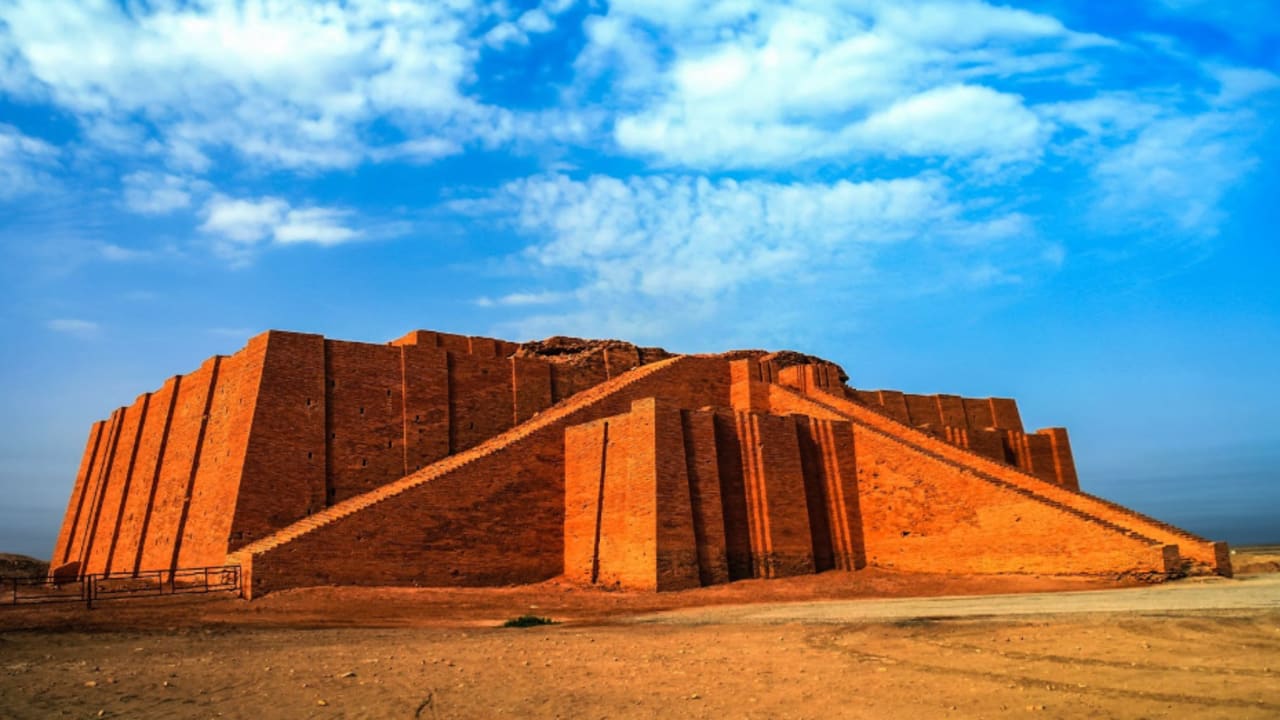
Iraq races to restore ancient Ziggurat of Ur amid threat of climate erosion - report
2026-05-23 · via JPost.com - Archaeology | The Jerusalem Post
ByMIRIAM SELA-EITAM

Iraq has begun restoring the ancient Ziggurat of Ur using locally made bricks and traditional building methods, Iraqi outlet Shafaq News reported two weeks ago.

According to Shafaq, the current initiative is expected to include restoring the first level of the 4,000-year-old temple and its three main staircases, repairing cracks on the second level, and reconstruction work on the third level based on available archaeological evidence.

This marks the “seventh major restoration campaign at the ziggurat since its construction under the Third Dynasty of Ur around 2112 BCE,” Shafaq noted, adding that the work is expected to be completed by July 2026.

The ziggurat was originally constructed in honor of the Mesopotamian moon god Nanna, the patron deity of Ur.

It later crumbled during the Neo-Babylonian period, until it was eventually restored by the last Neo-Babylonian king, Nabonidus, who ruled from 556 BCE until the fall of the empire.

In 1862, Henry Rawlinson identified Ur Kaśdim - the birthplace of Abraham in Jewish tradition - with Tell el-Muqayyar, a site located near the ziggurat.

Today, it remains one of the best preserved examples of ancient Mesopotamian architecture.

Climate change putting site in danger of erosion

In a video published in early May, Reuters revealed that the Iraqi government had announced an initial budget of $382,000 to restore and save the ziggurat from climate change.

“The site is in a state of emergency,” Reuters quoted archaeologist Karrar Jamal Abed as saying. “It is directly exposed to deterioration and collapse because of weather conditions.”

Reuters reported that according to local authorities, the monument - and others like it - have been affected by harsh, dry weather which is increasing soil salinity, adding that a combination of wind and sand dunes appear to have led to erosion on the temple’s northern side.

Previously, UNESCO has warned that archaeological sites in southern Iraq are highly vulnerable to erosion caused by the elements and lack of long-term conservation measures.

Archaeologist Kadhim Hassoun Honeihin, who is overseeing the restoration, emphasized to Reuters his team’s accuracy in rebuilding the historic site.

“For the paving bricks, a sample was taken from the ziggurat and a replica of the original was made, containing the same chemical materials and physical properties,” Honeihin explained. “Regarding the mud, it was handmade on-site in Ur, and the clay was taken from an environment similar to that of the ancient city of Ur.”

Honeihin shared that he believes the ziggurat will receive regular maintenance in the future, as the site no longer has “barriers of nature or man-made structures to shield it from the full range of weather elements.”

Iraq reportedly looking to restore second monument

Shafaq also reported that Iraqi antiquities officials have also begun to advance a second preservation effort, supported by Italy, to restore and protect the Taq Kasra site (also known as the Arch of Ctesiphon) in Baghdad.

A team of Iraqi engineers and archaeologists recently visited the site to review an Italian proposal “”aimed at treating structural cracks and preserving the landmark in line with international conservation standards,” Ali Basim, director of Baghdad Antiquities and Heritage, told Shafaq.

Basim added the the preservation is most likely needed due to the increasing numbers of Iraqi and foreign tourists at the site.

Follow us on Google