

惯性聚合 高效追踪和阅读你感兴趣的博客、新闻、科技资讯
阅读原文 在惯性聚合中打开

推荐订阅源

Blog — PlanetScale
Blog — PlanetScale
爱范儿
爱范儿
MongoDB | Blog
MongoDB | Blog
腾讯CDC
aimingoo的专栏
aimingoo的专栏
月光博客
月光博客
Engineering at Meta
Engineering at Meta
C
Check Point Blog
N
Netflix TechBlog - Medium
钛媒体:引领未来商业与生活新知
钛媒体:引领未来商业与生活新知
L
LangChain Blog
大猫的无限游戏
大猫的无限游戏
IT之家
IT之家
Microsoft Security Blog
GbyAI
GbyAI
奇客Solidot–传递最新科技情报
奇客Solidot–传递最新科技情报
T
The Blog of Author Tim Ferriss
Last Week in AI
Last Week in AI
B
Blog
让小产品的独立变现更简单 - ezindie.com
人人都是产品经理
人人都是产品经理
博客园 - 叶小钗
WordPress大学
WordPress大学
博客园 - 司徒正美

JPost.com - Archaeology | The Jerusalem Post

What was the Qumran sect's mysterious calender used for? | The Jerusalem Post Ancient structure near Stonehenge may have inspired its solstice alignment | The Jerusalem Post Ancient tablet found at Roman fort bears Greek curse against enemies | The Jerusalem Post Archaeologists unearth ancient Byzantine-era city in Egypt’s Dakhla Oasis | The Jerusalem Post Ancient mosaics, coins to go on display in new exhibit in northern Israel | The Jerusalem Post Archaeologists find inscriptions of pharaohs, ancient deities in Egyptian temple | The Jerusalem Post Italy buys famed Etruscan tomb, displays it in Rome museum | The Jerusalem Post New AI project aims to uncover origins of the Dead Sea Scrolls | The Jerusalem Post Site of Alexander the Great’s battle with Persians under historic protection | The Jerusalem Post Previously unknown Iron Age grave found ahead of construction in Germany | The Jerusalem Post Collector finds rare Hebrew-inscribed Moroccan mortar in Jerusalem's Old City | The Jerusalem Post Stone from Tel Eton may hold evidence of ancient religious reforms, study claims | The Jerusalem Post Complete text of carbonized Herculaneum scroll unlocked for first time | The Jerusalem Post Study: New identification technique pushes back timeline of human fire use | The Jerusalem Post Over 3,000 artifacts from Stone Age to WWII found in Netherlands valley | The Jerusalem Post American family repatriates four ancient artifacts to Egypt | The Jerusalem Post Remains of Queen Elisenda, 24 others unearthed in Barcelona for study | The Jerusalem Post Two ancient statues uncovered during Israel Railways excavations near Haifa | The Jerusalem Post Marble bust believed to depict Roman goddess of love found during excavations at Alicante beach Ancient Greco-Roman cemetery unearthed at archaeological site in Egypt's Nile Delta Ancient jars unearthed at biblical Shiloh days before annual wine festival WATCH: A Paleolithic time capsule: Rare prehistoric cave discovered near highway outside of Haifa Ancient water reservoirs discovered at Red Sea's Port of Aydhab site near Egypt-Sudan border Collection of ancient Egyptian, Greek, Roman-era artifacts discovered at Egypt’s Heracleopolis First near-complete ancient Egyptian funerary set discovered at Heliopolis necropolis site WATCH: Norway recovers Chinese porcelain, European-made goods from 18th-century shipwreck Neanderthals' ancient toolkit included hammers, blades made from rhino teeth, study finds Evidence of ancient Native American life uncovered near Cape Canaveral Space Force Station Rare, intact ancient Roman burial unearthed during excavations in eastern Croatia - report Plaster-making technique attributed to Romans used at Motza some 8,000 years earlier, study shows
Scandinavia's largest prehistoric mound is not a tomb, bu...
2026-04-05 · via JPost.com - Archaeology | The Jerusalem Post

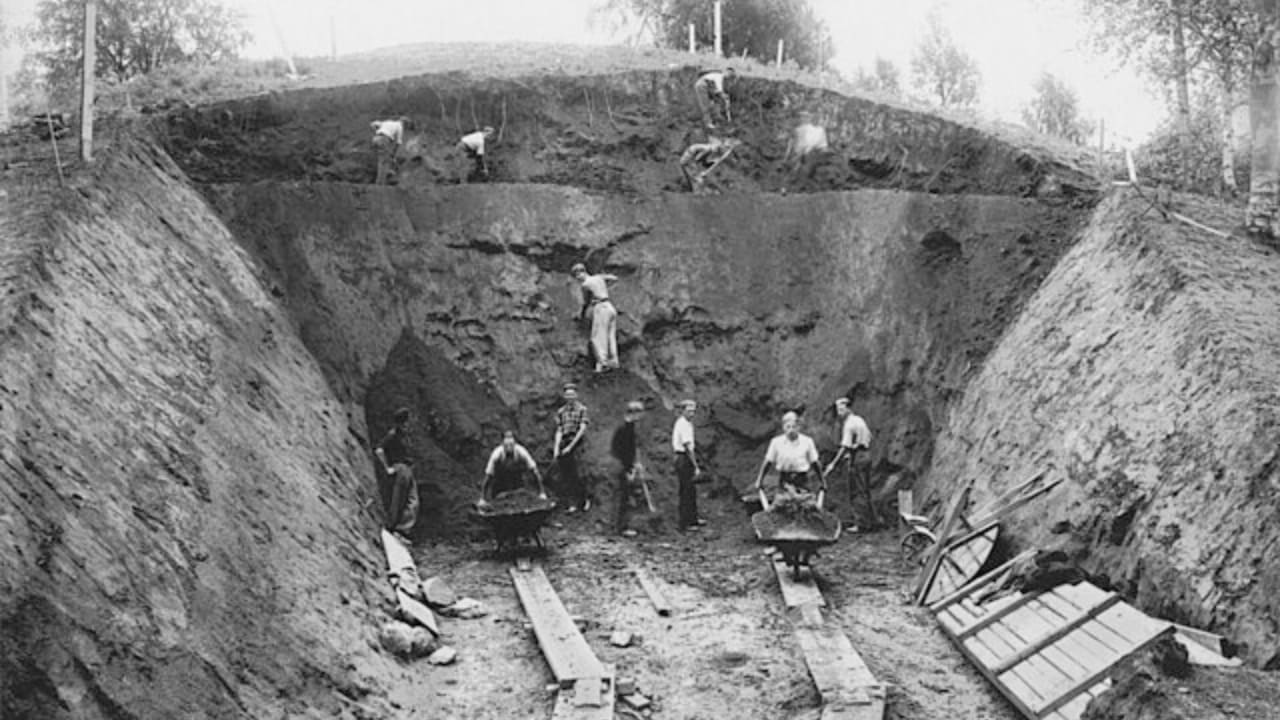
Archaeological excavations that have taken place at Raknehaugen, have all failed to discover evidence that would typically indicate a burial mound, such as a grave or human remains.

Excavations of Raknehaugen, Norway, in 1939.
(photo credit: Cultural History Museum, University of Oslo)
ByMIRIAM SELA-EITAM
Updated:

Scandinavia's largest prehistoric mound may have been constructed as a memorial to a natural disaster, according to a study published in early March in the European Journal of Archaeology, challenging previously assumed claims of it being a tomb. 

For over 150 years, archaeologists assumed that Rakni's Mound (Raknehaugen), a large, earthen mound located about 40 kilometers north of Oslo, was the burial site of an Iron Age leader as is usually assumed for structures of this kind.

“The mounds [are] viewed as constructed for, and by, a societal elite and interpreted as material expressions of status or power,” the study explained. “Their size has been held as a measure of the deceased’s standing in life, and a near-linear relationship is essentially claimed between the energy expended on their building and the prestige of the person interred.”

Using LiDAR, however, researchers recently discovered that the mound sits on the southern end of a massive landslide “scar,” seemingly acting as a boundary between the forested areas to the north and the unstable, clay-rich terrain prone to landslides to the south.

Raknehaugen has been dated to 550 CE, a period of severe climate change caused by a series of volcanic eruptions beginning in 536 CE, named by researchers as the “Dust Veil” or the “Volcanic winter of 536.”
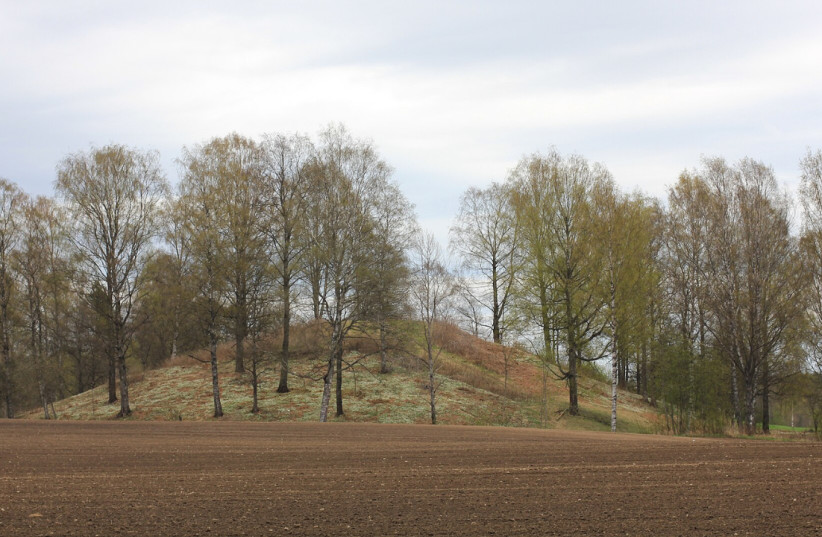
Raknehaugen mound, the largest one in Scandinavia, April 3, 2026.
Raknehaugen mound, the largest one in Scandinavia, April 3, 2026. (credit: Wikimedia commons/Øyvind Holmstad )

Failure to find evidence of burial

Archaeological excavations that have taken place at Raknehaugen between 1869 to the 1990s, have all failed to discover evidence that would typically indicate a burial mound, such as a grave, human remains, or grave goods.

A cremated bone fragment found in the 1940s had initially interpreted as evidence of a possible burial, but later disregarded as it radiocarbon dated to circa 1300 BCE, over 1,800 years before the mound was constructed.

What the excavations did find, however, was that the mound is constructed of three elaborate layers of approximately 25,000 logs, carefully interspersed across deposits of clay and sand.

The trees had also not been neatly cut down, the researchers noted, adding that many of them had simply been broken or pulled up by their foots.

According to the study, this worsening sixth-century climate triggered a catastrophic "quick clay" landslide that devastated local communities, and the broken, uprooted trees buried within the mound could have been debris from the catastrophe.

Rather than a royal tomb, Raknehaugen’s construction is theorized to have been an act of communal healing, a way to rebuild a sense of order after a terrible natural disaster, similar to Ngundeng's Mound in Sudan.

Prehistoric mounds such as this were not simply markers of power, but "ritual structures built for ritual purposes, mediating the relationship between humans, their environment, and the cosmological realm."