


惯性聚合 高效追踪和阅读你感兴趣的博客、新闻、科技资讯
阅读原文 在惯性聚合中打开

推荐订阅源

博客园_首页
B
Blog RSS Feed
Microsoft Azure Blog
J
Java Code Geeks
Cyber Security Advisories - MS-ISAC
Google DeepMind News
F
Fortinet All Blogs
V
V2EX
freeCodeCamp Programming Tutorials: Python, JavaScript, Git & More
Engineering at Meta
Engineering at Meta
月光博客
月光博客
阮一峰的网络日志
阮一峰的网络日志
M
MIT News - Artificial intelligence
IT之家
IT之家
博客园 - 【当耐特】
U
Unit 42
云风的 BLOG
云风的 BLOG
L
LangChain Blog
小众软件
小众软件
Microsoft Security Blog
B
Blog
H
Hackread – Cybersecurity News, Data Breaches, AI and More
宝玉的分享
宝玉的分享
N
Netflix TechBlog - Medium

JPost.com - Archaeology | The Jerusalem Post

What was the Qumran sect's mysterious calender used for? | The Jerusalem Post Ancient structure near Stonehenge may have inspired its solstice alignment | The Jerusalem Post Ancient tablet found at Roman fort bears Greek curse against enemies | The Jerusalem Post Archaeologists unearth ancient Byzantine-era city in Egypt’s Dakhla Oasis | The Jerusalem Post Ancient mosaics, coins to go on display in new exhibit in northern Israel | The Jerusalem Post Archaeologists find inscriptions of pharaohs, ancient deities in Egyptian temple | The Jerusalem Post Italy buys famed Etruscan tomb, displays it in Rome museum | The Jerusalem Post New AI project aims to uncover origins of the Dead Sea Scrolls | The Jerusalem Post Site of Alexander the Great’s battle with Persians under historic protection | The Jerusalem Post Previously unknown Iron Age grave found ahead of construction in Germany | The Jerusalem Post Collector finds rare Hebrew-inscribed Moroccan mortar in Jerusalem's Old City | The Jerusalem Post Stone from Tel Eton may hold evidence of ancient religious reforms, study claims | The Jerusalem Post Complete text of carbonized Herculaneum scroll unlocked for first time | The Jerusalem Post Study: New identification technique pushes back timeline of human fire use | The Jerusalem Post Over 3,000 artifacts from Stone Age to WWII found in Netherlands valley | The Jerusalem Post American family repatriates four ancient artifacts to Egypt | The Jerusalem Post Remains of Queen Elisenda, 24 others unearthed in Barcelona for study | The Jerusalem Post Two ancient statues uncovered during Israel Railways excavations near Haifa | The Jerusalem Post Marble bust believed to depict Roman goddess of love found during excavations at Alicante beach Ancient Greco-Roman cemetery unearthed at archaeological site in Egypt's Nile Delta Ancient jars unearthed at biblical Shiloh days before annual wine festival WATCH: A Paleolithic time capsule: Rare prehistoric cave discovered near highway outside of Haifa Ancient water reservoirs discovered at Red Sea's Port of Aydhab site near Egypt-Sudan border Collection of ancient Egyptian, Greek, Roman-era artifacts discovered at Egypt’s Heracleopolis First near-complete ancient Egyptian funerary set discovered at Heliopolis necropolis site WATCH: Norway recovers Chinese porcelain, European-made goods from 18th-century shipwreck Neanderthals' ancient toolkit included hammers, blades made from rhino teeth, study finds Evidence of ancient Native American life uncovered near Cape Canaveral Space Force Station Rare, intact ancient Roman burial unearthed during excavations in eastern Croatia - report Plaster-making technique attributed to Romans used at Motza some 8,000 years earlier, study shows
Evidence of human sacrifice, inbreeding found at ancient ...
2026-04-18 · via JPost.com - Archaeology | The Jerusalem Post

Additionally, researchers found genetic confirmation that entire families had been sacrificed together as part of sunjang, the ritualistic sacrifice of servants to be buried alongside their superiors

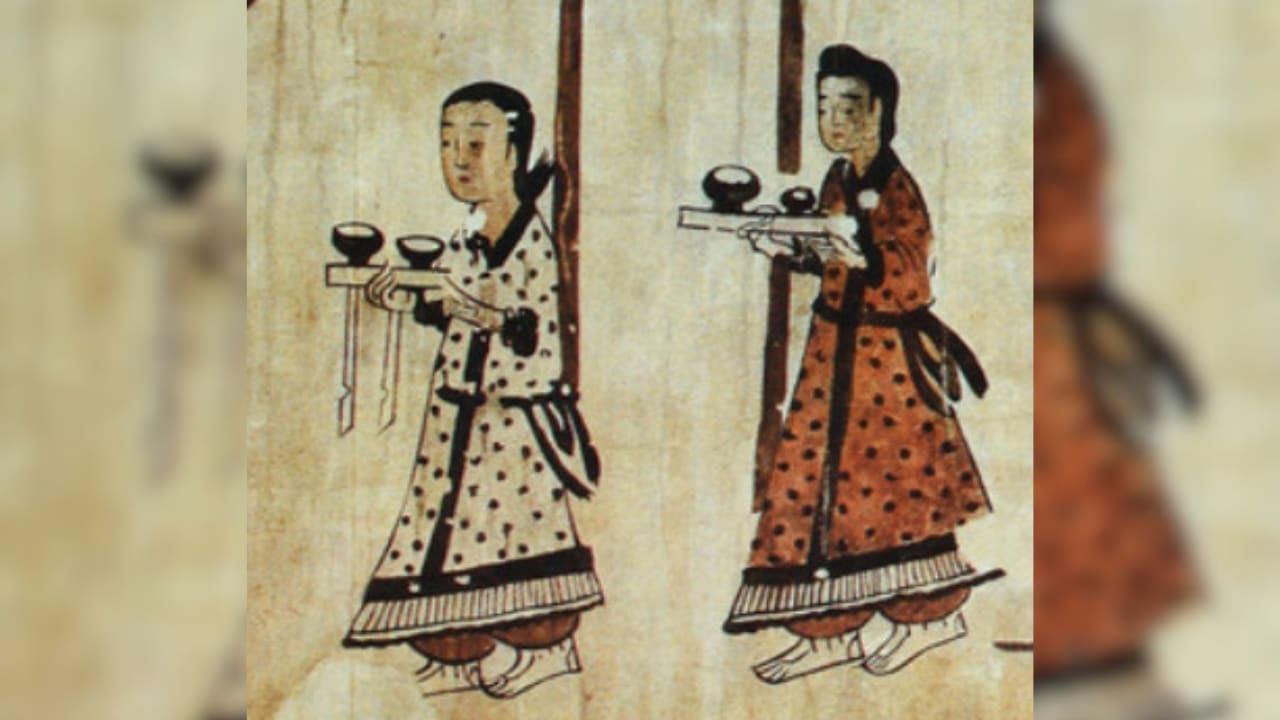
 The women's Hanbok in 5th-century Goguryeo murals, rooted in the attire of northern nomadic peoples, features a separate top and bottom, with an A-line skirt worn over pants.
The women's Hanbok in 5th-century Goguryeo murals, rooted in the attire of northern nomadic peoples, features a separate top and bottom, with an A-line skirt worn over pants.
(photo credit: Wikimedia commons/Korean Traditional Culture Portal)
ByMIRIAM SELA-EITAM
Updated:

DNA taken from human remains found within a 1,600-year-old burial complex in southeastern Korea reveals that ancient Korean society largely practiced inbreeding and ritual human sacrifice, according to a new study published in Science Advances.

The Imdang-Joyeong burial site in Gyeongsan City is dated to the Three-Kingdoms period (circa 57 BCE to 668 CE), and is known for the high presence of deaths caused by sunjang, the ritualistic sacrifice of servants in order for them to be buried alongside their superiors.

At least 20 tombs at the site contain both a grave owner and one or more individuals believed to have been killed in order to accompany them into death, according to the study.

By analyzing DNA samples from the remains of 78 individuals from 44 different graves, researchers found that they belonged to 13 family trees spread across two separate burial areas within the complex.

Further, the analysis revealed 54 pairs of relatives among the buried individuals, including 11 first-degree pairs (such as parents and children or siblings), 23 second-degree pairs (grandparents, aunts, uncles), and at least 20 more distant connections.
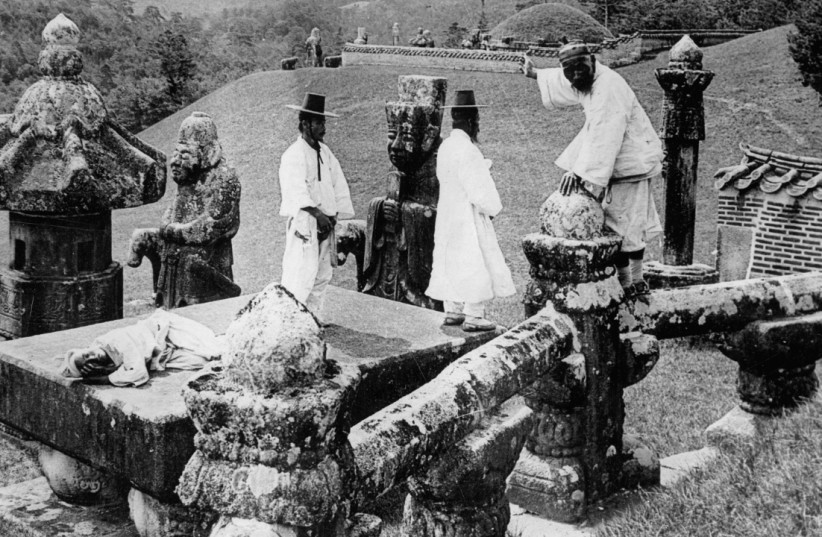
File photo: On this Korean altar human sacrifices were offered, Korea. Photograph taken around 1935.
File photo: On this Korean altar human sacrifices were offered, Korea. Photograph taken around 1935. (credit: Imagno/Getty Images)

Additionally, researchers found genetic confirmation that entire families had been sacrificed together as part of sunjang, noting at least three different cases where parents and children had been killed and buried together in the same grave.

"Genetic relatedness among sacrificial individuals over generations may suggest the presence of families that served as sacrificial individuals for the grave owner class for consecutive generations," researchers wrote in the study.

Evidence of inbreeding found at site

Even more so, researchers found evidence of inbreeding, or consanguineous marriage, being practiced amongst those buried at Imdang-Joyeong.

Researchers identified five individuals born of closely related parents by measuring long stretches of identical DNA, known as "runs of homozygosity" (ROH). The more closely related one's parents are, the longer these repeated segments tend to be. 

DNA from one person, a woman named by researchers as “IMD003,” showed particularly long runs of homozygosity, indicated that her parents had been been first cousins or closer.

Notably, signs of inbreeding appeared among the sacrificed individuals as well and not only among the more elite grave owners, the study explained, suggesting that "the Imdang-Joyeong society practiced intracommunity marriage, likely within social status."

The findings seem to also challenge assumptions drawn from European archaeology, where it is usually seen in ancient societies that women moving away from their birth families after marriage. 

At Imdang-Joyeong, researchers found that adult women were buried alongside their maternal relatives, meaning that they most likely had stayed close to home.