
惯性聚合 高效追踪和阅读你感兴趣的博客、新闻、科技资讯
阅读原文 在惯性聚合中打开

推荐订阅源

Recent Announcements
人人都是产品经理
人人都是产品经理
月光博客
月光博客
博客园 - 三生石上(FineUI控件)
GbyAI
GbyAI
博客园 - 司徒正美
美团技术团队
Vercel News
Vercel News
IT之家
IT之家
U
Unit 42
Y
Y Combinator Blog
罗磊的独立博客
Microsoft Security Blog
MongoDB | Blog
MongoDB | Blog
Jina AI
Jina AI
V
Visual Studio Blog
B
Blog
钛媒体:引领未来商业与生活新知
钛媒体:引领未来商业与生活新知
MyScale Blog
MyScale Blog
博客园 - 叶小钗
A
About on SuperTechFans
WordPress大学
WordPress大学
Hugging Face - Blog
Hugging Face - Blog
B
Blog RSS Feed

JPost.com - Archaeology | The Jerusalem Post

What was the Qumran sect's mysterious calender used for? | The Jerusalem Post Ancient structure near Stonehenge may have inspired its solstice alignment | The Jerusalem Post Ancient tablet found at Roman fort bears Greek curse against enemies | The Jerusalem Post Archaeologists unearth ancient Byzantine-era city in Egypt’s Dakhla Oasis | The Jerusalem Post Ancient mosaics, coins to go on display in new exhibit in northern Israel | The Jerusalem Post Archaeologists find inscriptions of pharaohs, ancient deities in Egyptian temple | The Jerusalem Post Italy buys famed Etruscan tomb, displays it in Rome museum | The Jerusalem Post New AI project aims to uncover origins of the Dead Sea Scrolls | The Jerusalem Post Site of Alexander the Great’s battle with Persians under historic protection | The Jerusalem Post Previously unknown Iron Age grave found ahead of construction in Germany | The Jerusalem Post Collector finds rare Hebrew-inscribed Moroccan mortar in Jerusalem's Old City | The Jerusalem Post Stone from Tel Eton may hold evidence of ancient religious reforms, study claims | The Jerusalem Post Complete text of carbonized Herculaneum scroll unlocked for first time | The Jerusalem Post Study: New identification technique pushes back timeline of human fire use | The Jerusalem Post Over 3,000 artifacts from Stone Age to WWII found in Netherlands valley | The Jerusalem Post American family repatriates four ancient artifacts to Egypt | The Jerusalem Post Remains of Queen Elisenda, 24 others unearthed in Barcelona for study | The Jerusalem Post Two ancient statues uncovered during Israel Railways excavations near Haifa | The Jerusalem Post Marble bust believed to depict Roman goddess of love found during excavations at Alicante beach Ancient Greco-Roman cemetery unearthed at archaeological site in Egypt's Nile Delta Ancient jars unearthed at biblical Shiloh days before annual wine festival WATCH: A Paleolithic time capsule: Rare prehistoric cave discovered near highway outside of Haifa Ancient water reservoirs discovered at Red Sea's Port of Aydhab site near Egypt-Sudan border Collection of ancient Egyptian, Greek, Roman-era artifacts discovered at Egypt’s Heracleopolis First near-complete ancient Egyptian funerary set discovered at Heliopolis necropolis site WATCH: Norway recovers Chinese porcelain, European-made goods from 18th-century shipwreck Neanderthals' ancient toolkit included hammers, blades made from rhino teeth, study finds Evidence of ancient Native American life uncovered near Cape Canaveral Space Force Station Rare, intact ancient Roman burial unearthed during excavations in eastern Croatia - report Plaster-making technique attributed to Romans used at Motza some 8,000 years earlier, study shows
How archaeologists used technology to rediscover ancient ...
MIRIAM SELA-EITAM · 2026-04-12 · via JPost.com - Archaeology | The Jerusalem Post

The site holds three prominent mounds, known as Koms A, B, and C, with Kom C selected for investigation due to its history spanning the Predynastic period through the Early Islamic era.
Follow us on Google
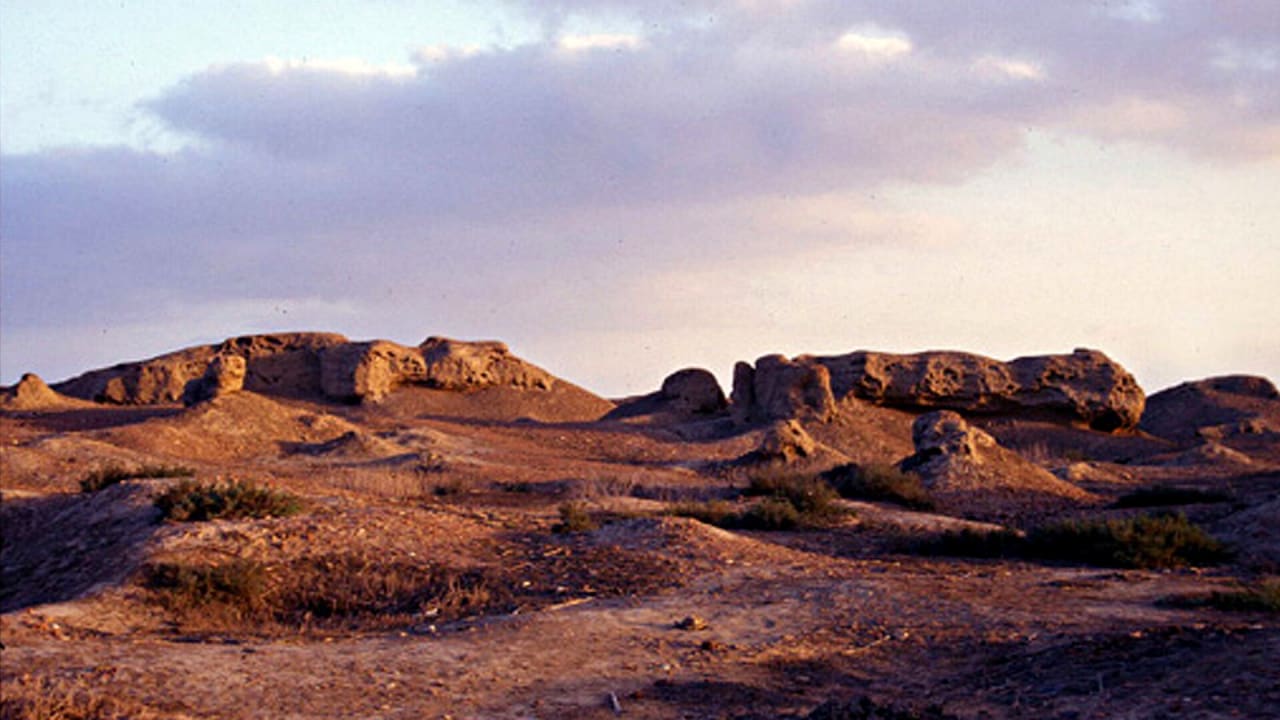
Ruins of mudbrick buildings on the northern mound of Buto, April 7, 2026.
(photo credit: Wikimedia commons/Faris knight)
ByMIRIAM SELA-EITAM

The oldest ruins of the ancient Egyptian city of Buto, dating to approximately 2,600 years ago, have been rediscovered by archaeologists testing new technology meant to aid in locating structures buried deep beneath the surface.

The complete findings were published in March in the journal Acta Geophysica.

Excavations at Buto, Buto, also known as Tell el-Fara’in or Hill of Pharaohs, began in the mid-1960s. More recently, in 2022, archaeologists discovered the remains of a hall lined with pillars within Buto’s larger temple structure.

Situated in the flood plain of the northwestern Nile Delta, the study noted that the city “protruded from the surrounding landscape, providing early residents with a haven from the annual flooding.

However, the city’s proximety to the river has led to a challenge for archaeologists working to excavate the ruins, as traditional digging methods would have teams sifting through tons of debris and struggling with groundwater in order to reach the deepest layers.

A view of the river Nile in Giza, Egypt April 18, 2025; illustrative.
A view of the river Nile in Giza, Egypt April 18, 2025; illustrative. (credit: REUTERS/MOHAMED ABD EL GHANY)

As such, archaeologists turned to newer technology, such as Sentinel-1 SAR imagery, and electrical resistivity tomography (ERT) surveys, in order to conduct a multi-pronged approach and figure out the exact location of Buto’s most ancient ruins.

Excavating Buto’s Kom C

The site holds three prominent mounds, known as Koms A, B, and C, with Kom C selected for investigation due to its history spanning the Predynastic period through the Early Islamic era.

In the first three meters of Kom C, the scans revealed a layer of broken pottery and debris dating to the late Roman and Ptolemic periods. 

Pushing on, at a depth of between three to six meters deep, the scans located the remains of several structures, believed to have been from the Saite period.

Following the location, archaeologists conducted a small, targeted excavation to reach the structure, and unearthed several mudbrick buildings and religious artifacts precisely where the satellite imagery and ERT had predicted.

The artifacts included amulets of several Egyptian gods (Isis, Horus, Taweret, Bes, Anubis, and Wadjet), a bronze statue of Horus, a steatite scarab bearing the name of Thutmose III, and other limestone statute fragments.

According to the study, the finds indicate that the site had the “presence of a religious site with strong cultic and ceremonial associations, further reinforcing the interpretation of the structure as a temple from the 26th Dynasty.

"The results of this study demonstrate the effectiveness of combining geophysical measurements and remote sensing data, which gave a very accurate vision in detecting buried settlements in a complex region,” the study concluded.

"3D inversion algorithms were particularly effective in delineating buried mudbrick walls and architectural structures, significantly enhancing our understanding of site formation processes."

Follow us on Google

