
惯性聚合 高效追踪和阅读你感兴趣的博客、新闻、科技资讯
阅读原文 在惯性聚合中打开

推荐订阅源

N
Netflix TechBlog - Medium
T
The Blog of Author Tim Ferriss
aimingoo的专栏
aimingoo的专栏
A
About on SuperTechFans
Stack Overflow Blog
Stack Overflow Blog
B
Blog RSS Feed
Microsoft Security Blog
H
Hackread – Cybersecurity News, Data Breaches, AI and More
人人都是产品经理
人人都是产品经理
让小产品的独立变现更简单 - ezindie.com
J
Java Code Geeks
Cyber Security Advisories - MS-ISAC
B
Blog
MongoDB | Blog
MongoDB | Blog
L
LangChain Blog
WordPress大学
WordPress大学
小众软件
小众软件
IT之家
IT之家
腾讯CDC
月光博客
月光博客
量子位
Blog — PlanetScale
Blog — PlanetScale
P
Proofpoint News Feed
freeCodeCamp Programming Tutorials: Python, JavaScript, Git & More

JPost.com - Archaeology | The Jerusalem Post

What was the Qumran sect's mysterious calender used for? | The Jerusalem Post Ancient structure near Stonehenge may have inspired its solstice alignment | The Jerusalem Post Ancient tablet found at Roman fort bears Greek curse against enemies | The Jerusalem Post Archaeologists unearth ancient Byzantine-era city in Egypt’s Dakhla Oasis | The Jerusalem Post Ancient mosaics, coins to go on display in new exhibit in northern Israel | The Jerusalem Post Archaeologists find inscriptions of pharaohs, ancient deities in Egyptian temple | The Jerusalem Post Italy buys famed Etruscan tomb, displays it in Rome museum | The Jerusalem Post New AI project aims to uncover origins of the Dead Sea Scrolls | The Jerusalem Post Site of Alexander the Great’s battle with Persians under historic protection | The Jerusalem Post Previously unknown Iron Age grave found ahead of construction in Germany | The Jerusalem Post Collector finds rare Hebrew-inscribed Moroccan mortar in Jerusalem's Old City | The Jerusalem Post Stone from Tel Eton may hold evidence of ancient religious reforms, study claims | The Jerusalem Post Complete text of carbonized Herculaneum scroll unlocked for first time | The Jerusalem Post Study: New identification technique pushes back timeline of human fire use | The Jerusalem Post Over 3,000 artifacts from Stone Age to WWII found in Netherlands valley | The Jerusalem Post American family repatriates four ancient artifacts to Egypt | The Jerusalem Post Remains of Queen Elisenda, 24 others unearthed in Barcelona for study | The Jerusalem Post Two ancient statues uncovered during Israel Railways excavations near Haifa | The Jerusalem Post Marble bust believed to depict Roman goddess of love found during excavations at Alicante beach Ancient Greco-Roman cemetery unearthed at archaeological site in Egypt's Nile Delta Ancient jars unearthed at biblical Shiloh days before annual wine festival WATCH: A Paleolithic time capsule: Rare prehistoric cave discovered near highway outside of Haifa Ancient water reservoirs discovered at Red Sea's Port of Aydhab site near Egypt-Sudan border Collection of ancient Egyptian, Greek, Roman-era artifacts discovered at Egypt’s Heracleopolis First near-complete ancient Egyptian funerary set discovered at Heliopolis necropolis site WATCH: Norway recovers Chinese porcelain, European-made goods from 18th-century shipwreck Neanderthals' ancient toolkit included hammers, blades made from rhino teeth, study finds Evidence of ancient Native American life uncovered near Cape Canaveral Space Force Station Rare, intact ancient Roman burial unearthed during excavations in eastern Croatia - report Plaster-making technique attributed to Romans used at Motza some 8,000 years earlier, study shows
Ancient charcoal found in northern Israel sheds new light...
2026-04-15 · via JPost.com - Archaeology | The Jerusalem Post

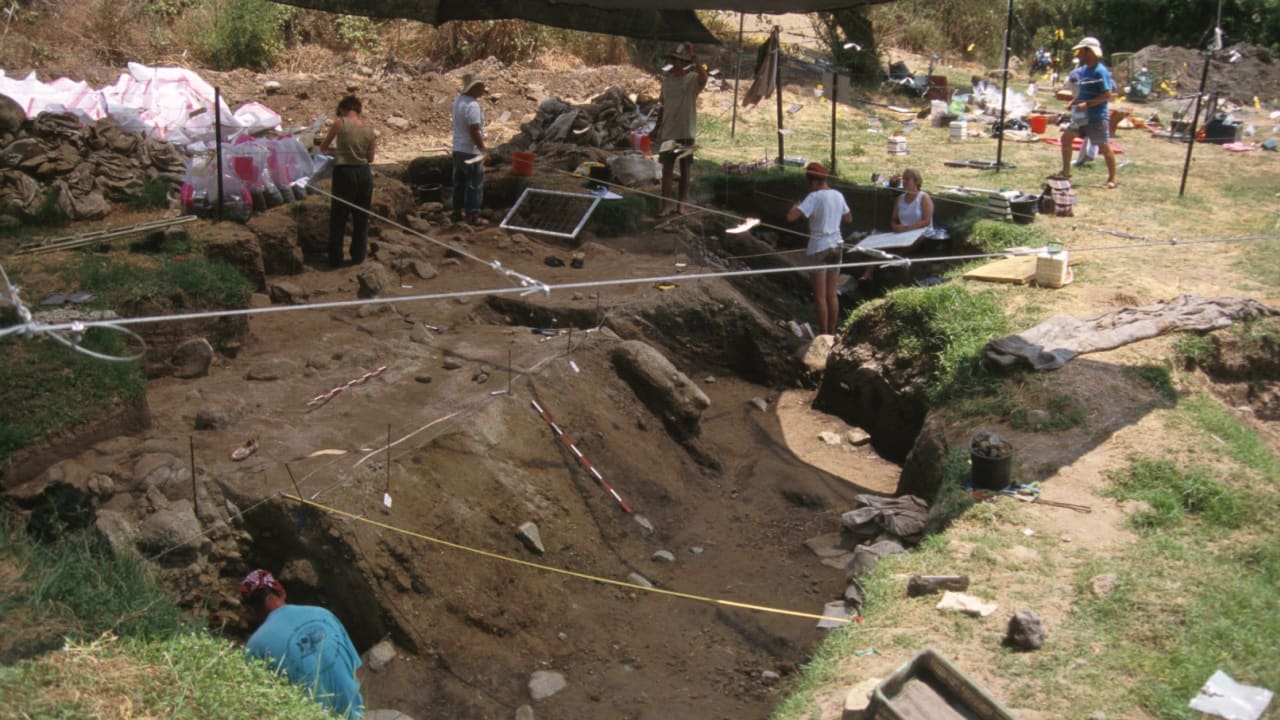
Within the charcoal, archaeologists found traces of ash, willow, oak, olive, pistachio, grapevine, oleander, and the oldest known evidence of pomegranate wood in the Levant.

A general view of the excavation of Gesher B'not Ya‘acov Acheulian site, April 14, 2026.
(photo credit: GBY Expedition)
ByMIRIAM SELA-EITAM

Nearly 780,000-year-old charcoal fragments found at the Gesher Bnot Ya'akov archaeological site in northern Israel show that early humans had a higher level of intelligence than previously thought, according to a new study published in Quaternary Science Reviews

Charcoal rarely survives at such early prehistoric sites, the study explained. Meaning, that this unusually large collection of fragments gave archaeologists a rare chance to study the repeated use of fire over the course of over tens of thousands of years.

Using microscopic techniques, an international team of researchers from Israel, Spain, and Germany, analyzed 266 preserved fragments of charcoal found on the shores of paleo–Lake Hula

Within the charcoal, archaeologists found traces of ash, willow, oak, olive, pistachio, grapevine, oleander, and the oldest known evidence of pomegranate wood in the Levant, reflecting a wider variety of plants within the charcoal than other botanical remains found at the site.

According to researchers, the different types of wood present within the charcoal suggested that early humans used the driftwood that collected naturally along the lake’s shore as firewood, rather than only using wood that could be found nearby.
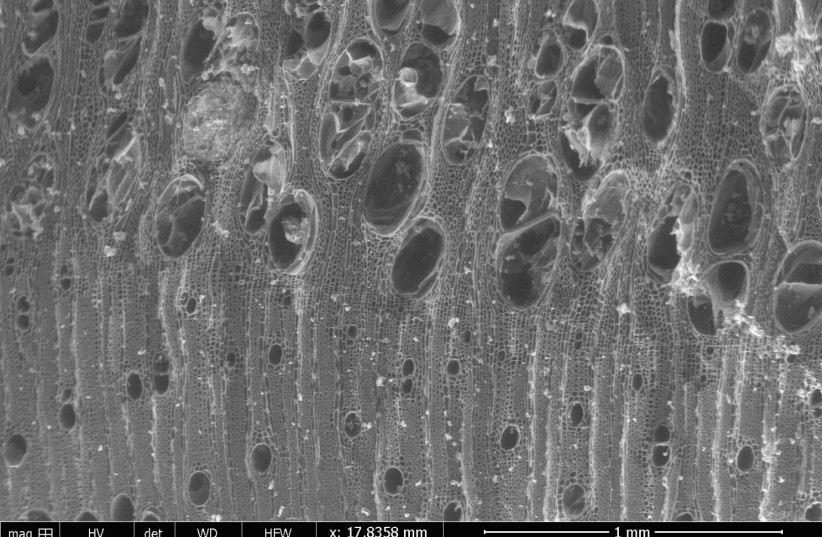
Traverse section of a charcoal fragment of ash observed under an ESEM microscope, April 14, 2026.
Traverse section of a charcoal fragment of ash observed under an ESEM microscope, April 14, 2026. (credit: M. MoncusilPHES)

Evidence of stone tools, animal hunting found

Previous excavations led by Professor Naama Goren-Inbar of the Hebrew University of Jerusalem found evidence of continued activity at the site, including stone tools made of flint, limestone, and basalt, as well as the remains of hunted animals, and an array of plant-based foods gathered from around the lake.

Spatial analysis of the site further revealed significant overlap between the clusters of charcoal and remains of fish, mainly the teeth of large carp, indicating that fish were being cooked at the site over controlled fires.

Additionally, the site contained evidence of large-animal hunting. Archaeologists discovered the skull and bones of a straight-tusked elephant at the site, arranged in a way that suggested a possible on-site butchering of the creature. 

The ability to create controlled fires and repeatedly return to a location that offered water, various food sources, stone tool materials, and a steady supply of fuel, all indicate that the use of fire during the Middle Pleistocene was more structured and intentional than previously thought, the study explained, and that the availability of resources played an important role in shaping how and where early humans lived.