
惯性聚合 高效追踪和阅读你感兴趣的博客、新闻、科技资讯
阅读原文 在惯性聚合中打开

推荐订阅源

G
Google Developers Blog
宝玉的分享
宝玉的分享
月光博客
月光博客
B
Blog
云风的 BLOG
云风的 BLOG
Google DeepMind News
Engineering at Meta
Engineering at Meta
aimingoo的专栏
aimingoo的专栏
N
Netflix TechBlog - Medium
博客园_首页
GbyAI
GbyAI
人人都是产品经理
人人都是产品经理
A
About on SuperTechFans
Y
Y Combinator Blog
L
LangChain Blog
有赞技术团队
有赞技术团队
D
Docker
爱范儿
爱范儿
博客园 - 司徒正美
H
Hackread – Cybersecurity News, Data Breaches, AI and More
让小产品的独立变现更简单 - ezindie.com
酷 壳 – CoolShell
酷 壳 – CoolShell
Microsoft Security Blog
D
DataBreaches.Net

JPost.com - Archaeology | The Jerusalem Post

What was the Qumran sect's mysterious calender used for? | The Jerusalem Post Ancient structure near Stonehenge may have inspired its solstice alignment | The Jerusalem Post Ancient tablet found at Roman fort bears Greek curse against enemies | The Jerusalem Post Archaeologists unearth ancient Byzantine-era city in Egypt’s Dakhla Oasis | The Jerusalem Post Ancient mosaics, coins to go on display in new exhibit in northern Israel | The Jerusalem Post Archaeologists find inscriptions of pharaohs, ancient deities in Egyptian temple | The Jerusalem Post Italy buys famed Etruscan tomb, displays it in Rome museum | The Jerusalem Post New AI project aims to uncover origins of the Dead Sea Scrolls | The Jerusalem Post Site of Alexander the Great’s battle with Persians under historic protection | The Jerusalem Post Previously unknown Iron Age grave found ahead of construction in Germany | The Jerusalem Post Collector finds rare Hebrew-inscribed Moroccan mortar in Jerusalem's Old City | The Jerusalem Post Stone from Tel Eton may hold evidence of ancient religious reforms, study claims | The Jerusalem Post Complete text of carbonized Herculaneum scroll unlocked for first time | The Jerusalem Post Study: New identification technique pushes back timeline of human fire use | The Jerusalem Post Over 3,000 artifacts from Stone Age to WWII found in Netherlands valley | The Jerusalem Post American family repatriates four ancient artifacts to Egypt | The Jerusalem Post Remains of Queen Elisenda, 24 others unearthed in Barcelona for study | The Jerusalem Post Two ancient statues uncovered during Israel Railways excavations near Haifa | The Jerusalem Post Marble bust believed to depict Roman goddess of love found during excavations at Alicante beach Ancient Greco-Roman cemetery unearthed at archaeological site in Egypt's Nile Delta Ancient jars unearthed at biblical Shiloh days before annual wine festival WATCH: A Paleolithic time capsule: Rare prehistoric cave discovered near highway outside of Haifa Ancient water reservoirs discovered at Red Sea's Port of Aydhab site near Egypt-Sudan border Collection of ancient Egyptian, Greek, Roman-era artifacts discovered at Egypt’s Heracleopolis First near-complete ancient Egyptian funerary set discovered at Heliopolis necropolis site WATCH: Norway recovers Chinese porcelain, European-made goods from 18th-century shipwreck Neanderthals' ancient toolkit included hammers, blades made from rhino teeth, study finds Evidence of ancient Native American life uncovered near Cape Canaveral Space Force Station Rare, intact ancient Roman burial unearthed during excavations in eastern Croatia - report Plaster-making technique attributed to Romans used at Motza some 8,000 years earlier, study shows
Neanderthals who lived in Siberian cave millenia apart we...
MIRIAM SELA-EITAM · 2026-04-10 · via JPost.com - Archaeology | The Jerusalem Post

Further analysis of the genetic similarity showed that Neanderthals in the Altai region likely lived in groups of fewer than 50 people.

Follow us on Google
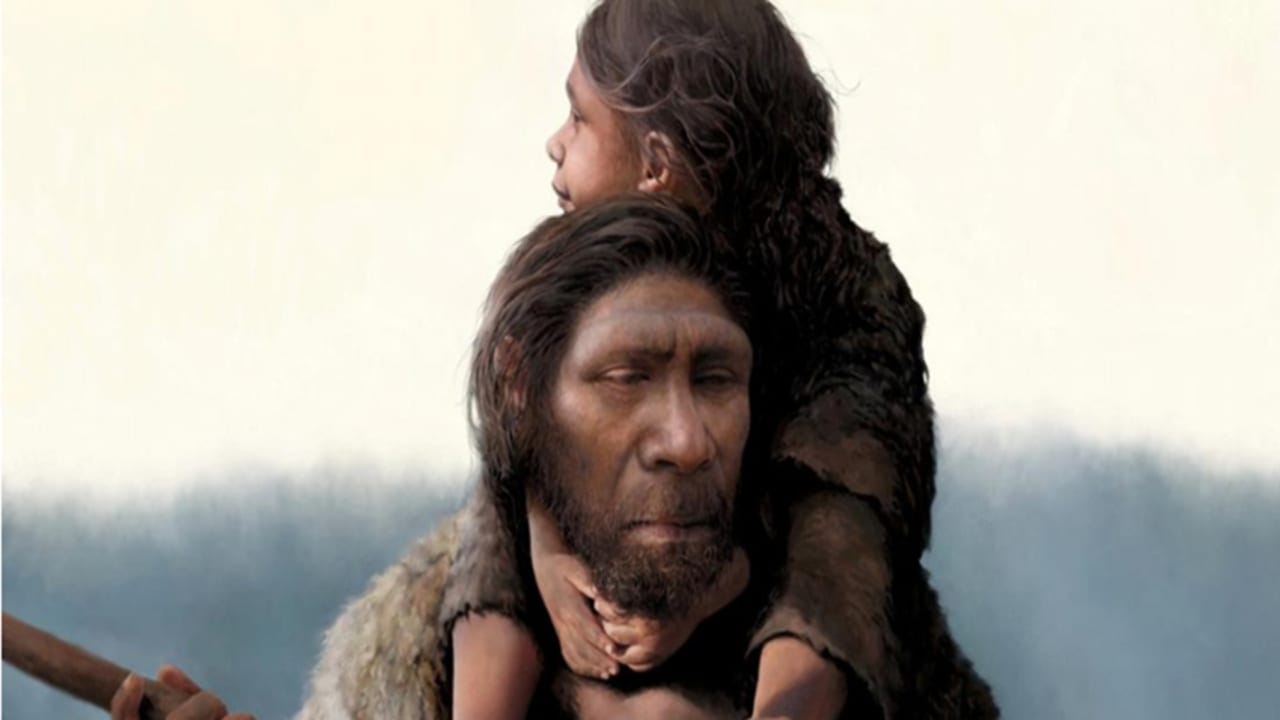
 World's oldest Neanderthal fingerprint found on 43,000-year-old pebble in Spain. Illustration.
World's oldest Neanderthal fingerprint found on 43,000-year-old pebble in Spain. Illustration.
(photo credit: Tom Bjorklund/Max Planck Institute for Evolutionary Anthropology)
ByMIRIAM SELA-EITAM

DNA belonging to two Neanderthals, whose ancestors were likely cousins, was found in the same Siberian cave about 10,000 years apart, according to a study published in March in the journal Proceedings of the National Academy of Sciences (PNAS).

The study analyzed DNA extracted from a 110,000-year-old bone fragment of a male Neanderthal (Neanderthal D17), comparing it with previously discovered DNA from an older, roughly 120,000-year-old female (Neanderthal D5).

Both the male and female were recovered from the Denisova Cave in Siberia's Altai Mountains.

Researchers found that the two shared ancestors were close relatives, either first cousins or double first cousins.

Further analysis of the genetic similarity showed that Neanderthals in the Altai region likely lived in groups of fewer than 50 people, unlike later Neanderthals in western Europe who lived in larger, less isolated communities.

Neanderthals ate maggots from rotting meat, new research finds. Illustration.
Neanderthals ate maggots from rotting meat, new research finds. Illustration. (credit: Gorodenkoff. Via Shutterstock)

This meant that “Neanderthal populations accumulated allele [alternate forms of the same gene] frequency differences more rapidly than the ancestors of present-day human groups,” according to the study.

Researchers discover fourth Neanderthal genome 

Additionally, researchers found traces of Denisovan DNA in both D17 and D5, presenting a fourth, previously unknown Neanderthal genome that left no comparable mark on later Neanderthal remains found in the same cave. 

The Denisovans were an additional species of early human living in the Altai region during the Middle to Late Pleistocene, approximately 200,000–32,000 years ago.

“It is likely that Denisova Cave was part of a broader landscape used repeatedly by these Neanderthal populations over time, rather than a site occupied by a single, continuous group," Diyendo Massilani, a genetics professor at the Yale School of Medicine and study first author, told Live Science. 

Massilani added that the large amount of genetic separation may have limited the Neanderthals' ability to adapt to environmental changes.

“Even though the individuals from which we have genomes were separated for only about 50,000 years on average, they reached levels of difference similar to what we see today between some of the most distinct human populations, like people from Central Africa and Papua New Guinea that separated about 300,000 years ago.”

Follow us on Google
