
惯性聚合 高效追踪和阅读你感兴趣的博客、新闻、科技资讯
阅读原文 在惯性聚合中打开

推荐订阅源

Y
Y Combinator Blog
GbyAI
GbyAI
U
Unit 42
WordPress大学
WordPress大学
Last Week in AI
Last Week in AI
P
Proofpoint News Feed
D
DataBreaches.Net
N
Netflix TechBlog - Medium
H
Hackread – Cybersecurity News, Data Breaches, AI and More
freeCodeCamp Programming Tutorials: Python, JavaScript, Git & More
C
Check Point Blog
Martin Fowler
Martin Fowler
月光博客
月光博客
MongoDB | Blog
MongoDB | Blog
MyScale Blog
MyScale Blog
The Cloudflare Blog
Apple Machine Learning Research
让小产品的独立变现更简单 - ezindie.com
M
MIT News - Artificial intelligence
云风的 BLOG
云风的 BLOG
罗磊的独立博客
B
Blog RSS Feed
J
Java Code Geeks
The GitHub Blog
The GitHub Blog

JPost.com - Archaeology | The Jerusalem Post

What was the Qumran sect's mysterious calender used for? | The Jerusalem Post Ancient structure near Stonehenge may have inspired its solstice alignment | The Jerusalem Post Ancient tablet found at Roman fort bears Greek curse against enemies | The Jerusalem Post Archaeologists unearth ancient Byzantine-era city in Egypt’s Dakhla Oasis | The Jerusalem Post Ancient mosaics, coins to go on display in new exhibit in northern Israel | The Jerusalem Post Archaeologists find inscriptions of pharaohs, ancient deities in Egyptian temple | The Jerusalem Post Italy buys famed Etruscan tomb, displays it in Rome museum | The Jerusalem Post New AI project aims to uncover origins of the Dead Sea Scrolls | The Jerusalem Post Site of Alexander the Great’s battle with Persians under historic protection | The Jerusalem Post Previously unknown Iron Age grave found ahead of construction in Germany | The Jerusalem Post Collector finds rare Hebrew-inscribed Moroccan mortar in Jerusalem's Old City | The Jerusalem Post Stone from Tel Eton may hold evidence of ancient religious reforms, study claims | The Jerusalem Post Complete text of carbonized Herculaneum scroll unlocked for first time | The Jerusalem Post Study: New identification technique pushes back timeline of human fire use | The Jerusalem Post Over 3,000 artifacts from Stone Age to WWII found in Netherlands valley | The Jerusalem Post American family repatriates four ancient artifacts to Egypt | The Jerusalem Post Remains of Queen Elisenda, 24 others unearthed in Barcelona for study | The Jerusalem Post Two ancient statues uncovered during Israel Railways excavations near Haifa | The Jerusalem Post Marble bust believed to depict Roman goddess of love found during excavations at Alicante beach Ancient Greco-Roman cemetery unearthed at archaeological site in Egypt's Nile Delta Ancient jars unearthed at biblical Shiloh days before annual wine festival WATCH: A Paleolithic time capsule: Rare prehistoric cave discovered near highway outside of Haifa Ancient water reservoirs discovered at Red Sea's Port of Aydhab site near Egypt-Sudan border Collection of ancient Egyptian, Greek, Roman-era artifacts discovered at Egypt’s Heracleopolis First near-complete ancient Egyptian funerary set discovered at Heliopolis necropolis site WATCH: Norway recovers Chinese porcelain, European-made goods from 18th-century shipwreck Neanderthals' ancient toolkit included hammers, blades made from rhino teeth, study finds Evidence of ancient Native American life uncovered near Cape Canaveral Space Force Station Rare, intact ancient Roman burial unearthed during excavations in eastern Croatia - report Plaster-making technique attributed to Romans used at Motza some 8,000 years earlier, study shows
Central-Eastern Europe's oldest Neanderthal group identif...
MIRIAM SELA-EITAM · 2026-05-13 · via JPost.com - Archaeology | The Jerusalem Post

Notably, three of the teeth - two belonging to children and one to an adult - taken from different sediment layers within the cave, all shared identical mitochondrial DNA.
Follow us on Google
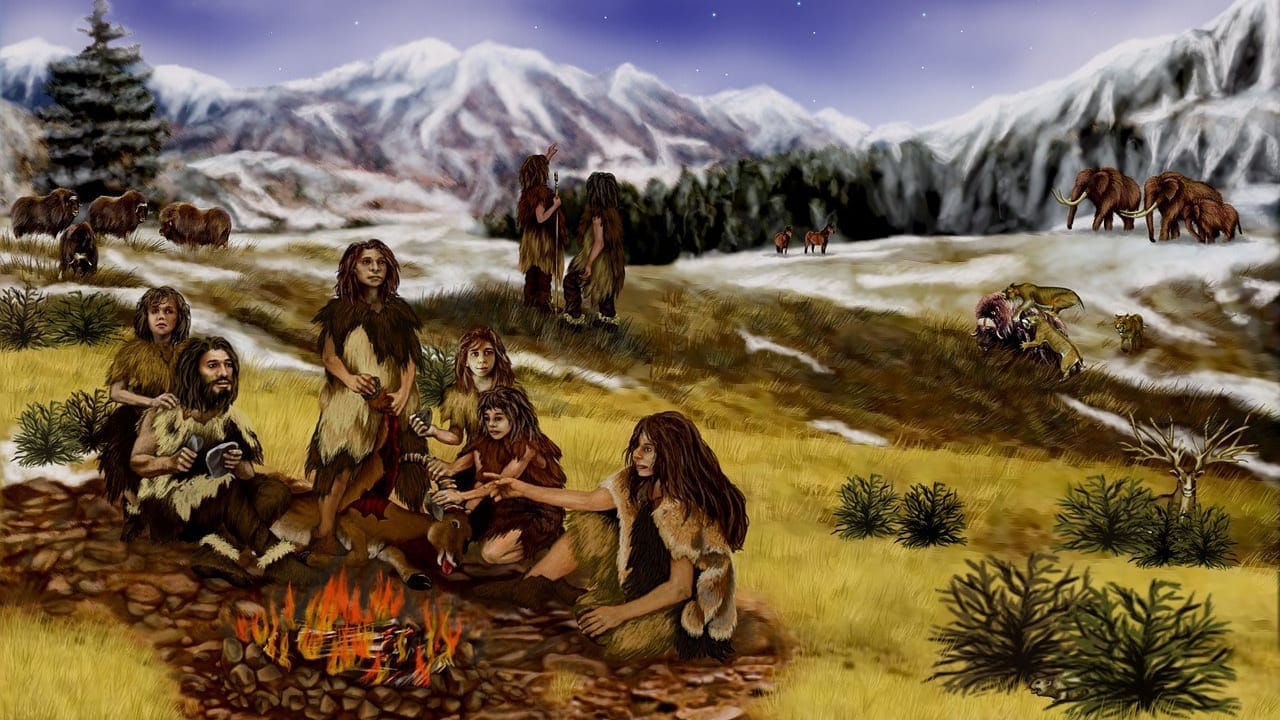
 Neanderthal communities in prehistoric Europe. How were they linked? (Illustrative)
Neanderthal communities in prehistoric Europe. How were they linked? (Illustrative)
(photo credit: PIXABAY)
ByMIRIAM SELA-EITAM

DNA recovered from Neanderthal teeth found in Stajnia Cave in southern Poland shows the oldest known group of Neanderthals ever found in Central Europe, according to a new study.

The study, published in Current Biology in May, analyzed DNA taken from eight of the nine teeth discovered at the site, finding that at least seven different Neanderthals had lived at the site at one time.

Using molecular branch shortening, a technique that calculates age based on the rate at which DNA mutations accumulate over time, researchers were able to place all seven individuals as living roughly within Marine Isotope Stage 5 (MIS), approximately 130,000 to 71,000 years ago. 

Radiocarbon dating was not used as the teeth are from over 100,000 years ago, the study explained.

Notably, three of the teeth - two belonging to children and one to an adult - taken from different sediment layers within the cave, all shared identical mitochondrial DNA. Meaning that they all either belonged to the same individual or that their owners shared a common female ancestor.

Neanderthal recipes: Study reveals how Neanderthals living in Northern Israel butchered their meat. Illustration.
Neanderthal recipes: Study reveals how Neanderthals living in Northern Israel butchered their meat. Illustration. (credit: Gorodenkoff. Via Shutterstock)

According to the study, finding identical DNA in teeth from different sediment layers shows that the dirt in the cave was extensively disturbed over the years.

"This is an extraordinary result because, for the first time, we are able to observe a small group of at least seven Neanderthals from Central-Eastern Europe who lived around 100,000 years ago," said Andrea Picin, professor at the University of Bologna and coordinator of the research.

"In most cases, Neanderthal genetic data come from single fossils or from remains scattered across different sites and periods. At Stajnia, by contrast, it has been possible to reconstruct a small group of individuals, providing for the first time a coherent genetic picture of Neanderthals in this part of Europe."

Findings contradict 2024 study

The DNA identified from the teeth at the Stajnia cave is not unique to Poland, the study explained, but is related to genetic material found in Neanderthal from southeastern France, the Iberian Peninsula, and the Caucasus region. 

Additionally, the study noted that the findings from Stajnia Cave contradict those of a 2024 study on a Neanderthal known as "Thorin," who was discovered at Mandrin Cave in southern France.

Researchers found that Thorin’s mitochondrial DNA places him on the same branch of the Neanderthal family tree as that of individuals whose teeth were found in the Polish cave, which, using molecular dating, would mean he lived around 100,000 years ago.

The 2024 study, however, used radiocarbon dating and estimated Thorin’s age at approximately 42,000 to 50,000 years ago.

"Our study is a reminder that the oldest chronologies must be treated with great caution," explained Sahra Talamo, professor at the University of Bologna and co-coordinator of the study. "When radiocarbon values approach the limit of calibration, it is essential not to assign more precision than the data can actually support.”

“In such cases, the comparison between archaeology, radiocarbon dating, and genetics becomes crucial."

Follow us on Google
