





惯性聚合 高效追踪和阅读你感兴趣的博客、新闻、科技资讯
阅读原文 在惯性聚合中打开

推荐订阅源

博客园 - Franky
D
Docker
Jina AI
Jina AI
The GitHub Blog
The GitHub Blog
博客园 - 聂微东
B
Blog RSS Feed
大猫的无限游戏
大猫的无限游戏
M
MIT News - Artificial intelligence
Vercel News
Vercel News
Microsoft Security Blog
博客园 - 叶小钗
爱范儿
爱范儿
D
DataBreaches.Net
Hugging Face - Blog
Hugging Face - Blog
IT之家
IT之家
Recent Announcements
U
Unit 42
腾讯CDC
奇客Solidot–传递最新科技情报
奇客Solidot–传递最新科技情报
宝玉的分享
宝玉的分享
量子位
Stack Overflow Blog
Stack Overflow Blog
Cyber Security Advisories - MS-ISAC
Microsoft Azure Blog

JPost.com - Archaeology | The Jerusalem Post

What was the Qumran sect's mysterious calender used for? | The Jerusalem Post Ancient structure near Stonehenge may have inspired its solstice alignment | The Jerusalem Post Ancient tablet found at Roman fort bears Greek curse against enemies | The Jerusalem Post Archaeologists unearth ancient Byzantine-era city in Egypt’s Dakhla Oasis | The Jerusalem Post Ancient mosaics, coins to go on display in new exhibit in northern Israel | The Jerusalem Post Archaeologists find inscriptions of pharaohs, ancient deities in Egyptian temple | The Jerusalem Post Italy buys famed Etruscan tomb, displays it in Rome museum | The Jerusalem Post New AI project aims to uncover origins of the Dead Sea Scrolls | The Jerusalem Post Site of Alexander the Great’s battle with Persians under historic protection | The Jerusalem Post Previously unknown Iron Age grave found ahead of construction in Germany | The Jerusalem Post Collector finds rare Hebrew-inscribed Moroccan mortar in Jerusalem's Old City | The Jerusalem Post Stone from Tel Eton may hold evidence of ancient religious reforms, study claims | The Jerusalem Post Complete text of carbonized Herculaneum scroll unlocked for first time | The Jerusalem Post Study: New identification technique pushes back timeline of human fire use | The Jerusalem Post Over 3,000 artifacts from Stone Age to WWII found in Netherlands valley | The Jerusalem Post American family repatriates four ancient artifacts to Egypt | The Jerusalem Post Remains of Queen Elisenda, 24 others unearthed in Barcelona for study | The Jerusalem Post Two ancient statues uncovered during Israel Railways excavations near Haifa | The Jerusalem Post Marble bust believed to depict Roman goddess of love found during excavations at Alicante beach Ancient Greco-Roman cemetery unearthed at archaeological site in Egypt's Nile Delta Ancient jars unearthed at biblical Shiloh days before annual wine festival WATCH: A Paleolithic time capsule: Rare prehistoric cave discovered near highway outside of Haifa Ancient water reservoirs discovered at Red Sea's Port of Aydhab site near Egypt-Sudan border Collection of ancient Egyptian, Greek, Roman-era artifacts discovered at Egypt’s Heracleopolis First near-complete ancient Egyptian funerary set discovered at Heliopolis necropolis site WATCH: Norway recovers Chinese porcelain, European-made goods from 18th-century shipwreck Neanderthals' ancient toolkit included hammers, blades made from rhino teeth, study finds Evidence of ancient Native American life uncovered near Cape Canaveral Space Force Station Rare, intact ancient Roman burial unearthed during excavations in eastern Croatia - report Plaster-making technique attributed to Romans used at Motza some 8,000 years earlier, study shows
Prehistoric children’s remains show syphilis-like disease...
2026-04-13 · via JPost.com - Archaeology | The Jerusalem Post

Researchers have for decades believed that of these diseases, only syphilis could be transmitted congenitally, lending to the assumption that syphilis began with Christopher Columbus’ journeys.
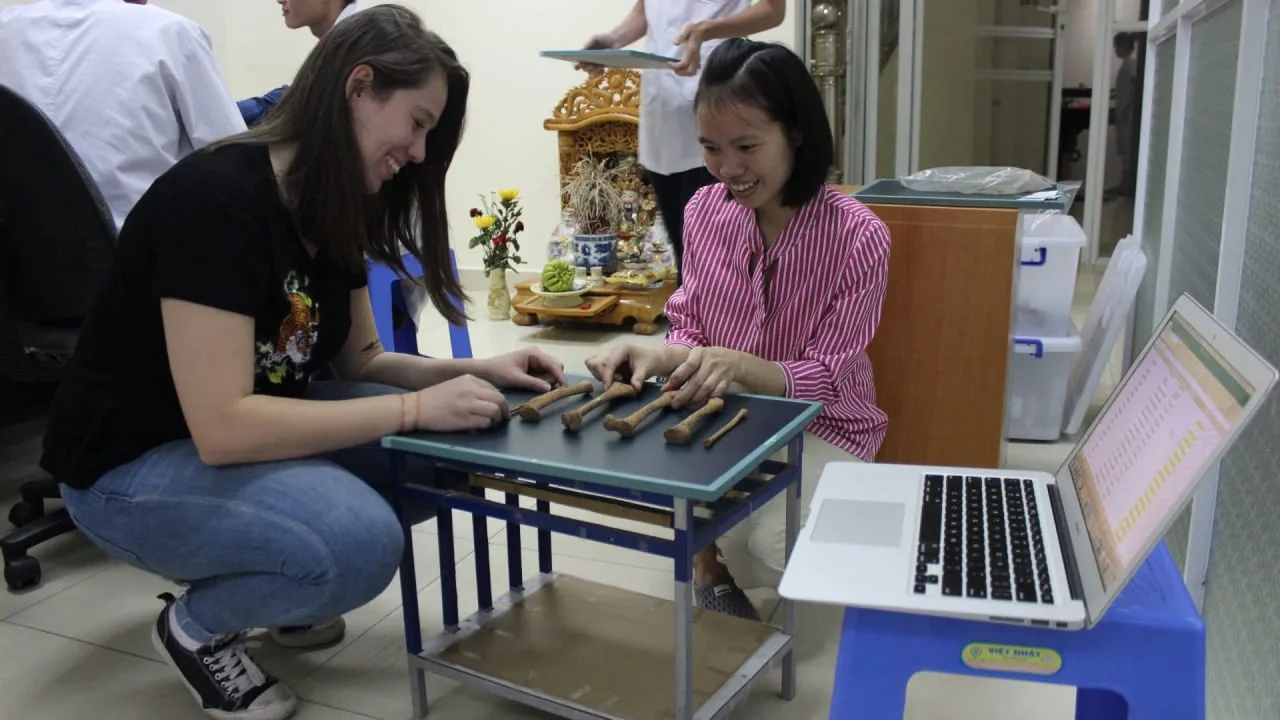
Dr. Melandri Vlok and Ms. Minh Tran conducting radiographic analysis on child skeletons from Man Bac, April 11, 2026.
(photo credit: Dr. Melandri Vlok/Charles Sturt University)
ByMIRIAM SELA-EITAM

Traces of disease found in prehistoric remains may rewrite the medical world’s understanding of syphilis and challenge the idea of its origins in the Americas, according to a new study.

Published in the International Journal of Osteoarchaeology in March, the study analyzed the 309 individuals, taken from 16 archaeological sites across Vietnam from 10,000 to 1,000 years ago.

Only the skeletal remains of three children (aged 18, five, and two-and-a-half years old) bore evidence of congenital (present at birth) treponematosis, a group of diseases that includes syphilis, yaws, bejel, and pinta.

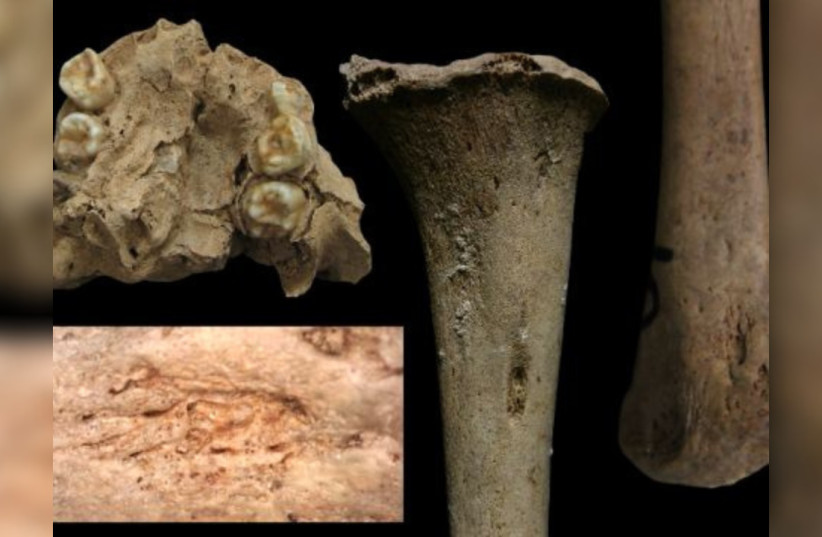
The children’s remains, taken from the Man Bac site in northern Vietnam and An Son in southern Vietnam, dated to around 4,100 to 3,300 years ago, had distinctive dental abnormalities and skeletal lesions, indicating that the disease may have been congenital yaws, and not syphilis.

Researchers have for decades believed that of these diseases, only syphilis could be transmitted congenitally, lending to the assumption that syphilis began with Christopher Columbus’ journeys.

Prehistoric Vietnamese children's bones and teeth bearking marks of syphilis-like disease, April 11, 2026.
Prehistoric Vietnamese children's bones and teeth bearking marks of syphilis-like disease, April 11, 2026. (credit: Dr. Melandri Vlok/Charles Sturt University)

“Our research shows that this assumption may not always hold true,” explained study lead author Dr. Melandri Vlok of Charles Sturt University.  “Other treponemal diseases may also have been transmitted from mother to child.”

Studying the origin of syphilis in Vietnam

Previous research at Man Bac found that 10% of those buried in the area had most likely contracted treponemal disease.

Most of these, however, were seen in remains belonging to children and adolescents, in line with the known fact that non-venereal treponemal diseases are usually transmitted through skin to skin contact, rather than sexually.

“The epidemiology of the site strongly points toward a non-venereal form of treponemal disease,” Vlok said. “Yet we still see evidence of congenital transmission. That’s the surprising part.”

“If congenital transmission can occur in non-venereal treponematoses, then we need to rethink how we interpret skeletal evidence in the past. Some cases previously labelled as congenital syphilis may represent entirely different diseases.”

This “challenges one of the key pillars of the 'Columbus brought syphilis [to Europe from the New World]' theory and shows that … we're still a long way from solving the mystery of where syphilis really began,” Nicola Czaplinski, a doctoral candidate in health sciences at the University of Notre Dame Australia, said in an email to Live Science.