


惯性聚合 高效追踪和阅读你感兴趣的博客、新闻、科技资讯
阅读原文 在惯性聚合中打开

推荐订阅源

WordPress大学
WordPress大学
酷 壳 – CoolShell
酷 壳 – CoolShell
小众软件
小众软件
Vercel News
Vercel News
Last Week in AI
Last Week in AI
H
Help Net Security
The Cloudflare Blog
L
LangChain Blog
Microsoft Security Blog
B
Blog RSS Feed
云风的 BLOG
云风的 BLOG
I
InfoQ
U
Unit 42
美团技术团队
人人都是产品经理
人人都是产品经理
雷峰网
雷峰网
OSCHINA 社区最新新闻
OSCHINA 社区最新新闻
博客园 - 叶小钗
Y
Y Combinator Blog
Hugging Face - Blog
Hugging Face - Blog
A
About on SuperTechFans
宝玉的分享
宝玉的分享
量子位
博客园_首页

JPost.com - Archaeology | The Jerusalem Post

What was the Qumran sect's mysterious calender used for? | The Jerusalem Post Ancient structure near Stonehenge may have inspired its solstice alignment | The Jerusalem Post Ancient tablet found at Roman fort bears Greek curse against enemies | The Jerusalem Post Archaeologists unearth ancient Byzantine-era city in Egypt’s Dakhla Oasis | The Jerusalem Post Ancient mosaics, coins to go on display in new exhibit in northern Israel | The Jerusalem Post Archaeologists find inscriptions of pharaohs, ancient deities in Egyptian temple | The Jerusalem Post Italy buys famed Etruscan tomb, displays it in Rome museum | The Jerusalem Post New AI project aims to uncover origins of the Dead Sea Scrolls | The Jerusalem Post Site of Alexander the Great’s battle with Persians under historic protection | The Jerusalem Post Previously unknown Iron Age grave found ahead of construction in Germany | The Jerusalem Post Collector finds rare Hebrew-inscribed Moroccan mortar in Jerusalem's Old City | The Jerusalem Post Stone from Tel Eton may hold evidence of ancient religious reforms, study claims | The Jerusalem Post Complete text of carbonized Herculaneum scroll unlocked for first time | The Jerusalem Post Study: New identification technique pushes back timeline of human fire use | The Jerusalem Post Over 3,000 artifacts from Stone Age to WWII found in Netherlands valley | The Jerusalem Post American family repatriates four ancient artifacts to Egypt | The Jerusalem Post Remains of Queen Elisenda, 24 others unearthed in Barcelona for study | The Jerusalem Post Two ancient statues uncovered during Israel Railways excavations near Haifa | The Jerusalem Post Marble bust believed to depict Roman goddess of love found during excavations at Alicante beach Ancient Greco-Roman cemetery unearthed at archaeological site in Egypt's Nile Delta Ancient jars unearthed at biblical Shiloh days before annual wine festival WATCH: A Paleolithic time capsule: Rare prehistoric cave discovered near highway outside of Haifa Ancient water reservoirs discovered at Red Sea's Port of Aydhab site near Egypt-Sudan border Collection of ancient Egyptian, Greek, Roman-era artifacts discovered at Egypt’s Heracleopolis First near-complete ancient Egyptian funerary set discovered at Heliopolis necropolis site WATCH: Norway recovers Chinese porcelain, European-made goods from 18th-century shipwreck Neanderthals' ancient toolkit included hammers, blades made from rhino teeth, study finds Evidence of ancient Native American life uncovered near Cape Canaveral Space Force Station Rare, intact ancient Roman burial unearthed during excavations in eastern Croatia - report Plaster-making technique attributed to Romans used at Motza some 8,000 years earlier, study shows
Archaeologists may have found lost remains of French musk...
2026-03-26 · via JPost.com - Archaeology | The Jerusalem Post

The church had previously been identified as a possible resting place of the 17th-century soldier.

Follow us on Google
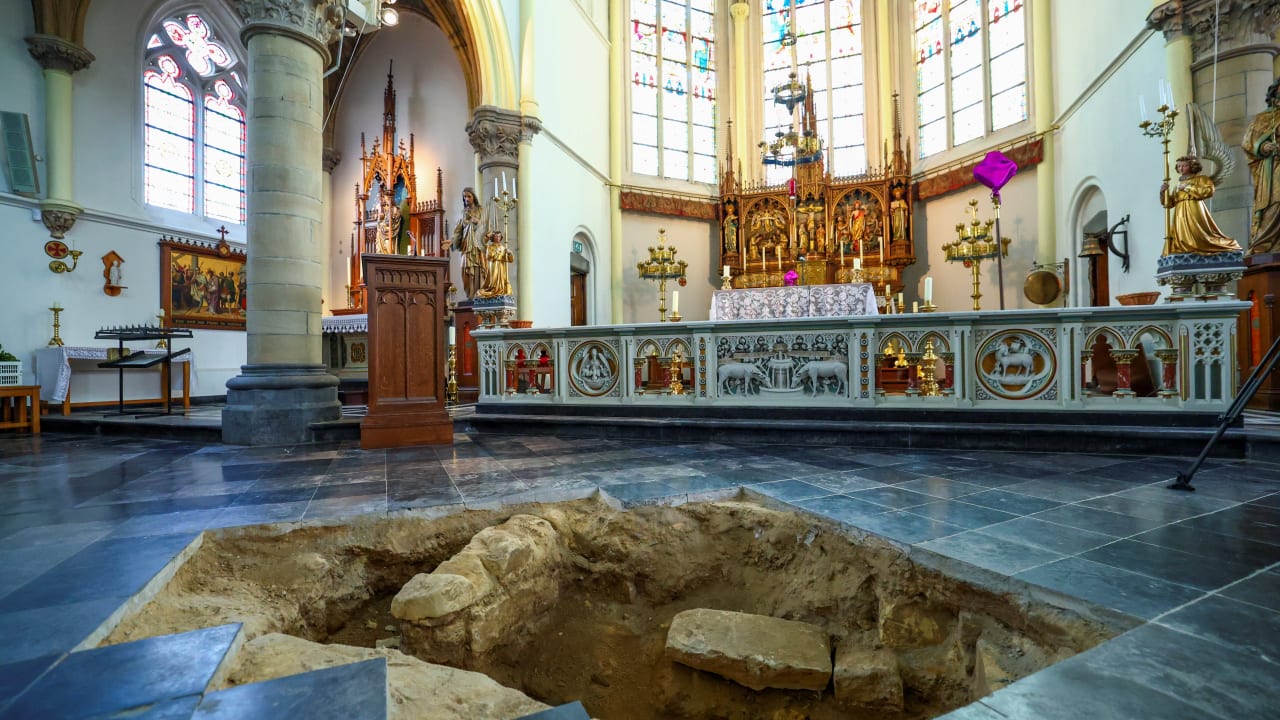
A view inside the Peter and Paul Church in Maastricht shows an excavation pit opened in the floor, where archaeologists believe they may have uncovered the skeletal remains of Charles de Batz de Castelmore, known as d’Artagnan, leader of King Louis XIV's musketeers, March 25, 2026.
(photo credit: REUTERS/PIROSCHKA VAN DE WOUW)
ByREUTERS, MIRIAM SELA-EITAM
Updated:

The skeleton of famed French musketeer Charles de Batz de Castelmore d'Artagnan may have been found in front of a church altar in the Dutch city of Maastricht, church officials and an archaeologist said on Wednesday.

Workers discovered a grave containing human remains beneath tiles after part of the floor of St. Peter and Paul Church subsided in February, triggering a race to identify the skeleton through DNA testing.

The church had previously been identified as a possible resting place of the 17th-century soldier.

A DNA sample retrieved from a jawbone found in the church has been taken to Germany to be tested against that of the musketeer's descendants.

Additionally, the BBC noted that some of the bones have been taken to the city of Deventer in attempt to determine the skeleton's age and the gender of the individual it belonged to.
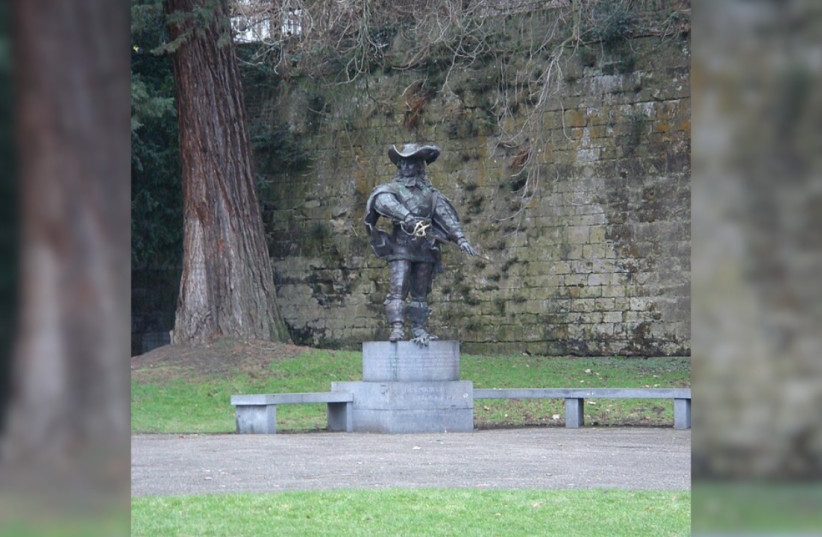
A statue of D'Artagnan in Maastricht, March 25, 2026.
A statue of D'Artagnan in Maastricht, March 25, 2026. (credit: Hänsel und Gretel/Wikimedia commons)

"This has truly become a top-level investigation, in which we want to be absolutely certain, or as certain as possible, whether it is the famous musketeer, who was killed here near Maastricht," archaeologist Wim Dijkman told Reuters.

Despite this, Dijkman explained to Limburg public broadcaster L1 that he is a scientist, and "will only say it is d'Artagnan when I know for certain."

Felled by a musket ball

"A section of the floor in the church had subsided, and during the restoration work, we discovered a skeleton," Deacon Jos Valke shared with L1. "I immediately called Wim because he has been working on d'Artagnan for more than twenty years."

"We became quite silent when we found the first bone," the deacon told the BBC, adding that there were additional clues, including a coin that has been dated to 1660 and part of a lead bullet found at the burial spot.

A contemporary letter said d'Artagnan had been buried in consecrated ground.

"Well, under an altar - it couldn't be much holier than that," Valke said. "When you add it all up, then, it seems plausible to us. But of course nothing is certain yet."

A fictionalized version of d'Artagnan was the hero of Alexandre Dumas' 1844 novel "The Three Musketeers," a hot-headed teenager who becomes the fourth musketeer. But d'Artagnan was a real historical figure.

Like his fictional counterpart, d'Artagnan served French "Sun King" Louis XIV and eventually became captain-lieutenant of the musketeers. He was killed during the French siege of Maastricht in the Franco-Dutch War on June 25, 1673, after being struck in the throat by a musket ball.

The church stands near the site where the French army camped. Although d'Artagnan was celebrated as a hero, transporting his body back to Paris in the summer heat would have been difficult.

Follow us on Google