



惯性聚合 高效追踪和阅读你感兴趣的博客、新闻、科技资讯
阅读原文 在惯性聚合中打开

推荐订阅源

Recent Announcements
J
Java Code Geeks
U
Unit 42
GbyAI
GbyAI
大猫的无限游戏
大猫的无限游戏
L
LangChain Blog
D
Docker
F
Fortinet All Blogs
N
Netflix TechBlog - Medium
钛媒体:引领未来商业与生活新知
钛媒体:引领未来商业与生活新知
罗磊的独立博客
I
InfoQ
The Cloudflare Blog
小众软件
小众软件
V
Visual Studio Blog
OSCHINA 社区最新新闻
OSCHINA 社区最新新闻
Engineering at Meta
Engineering at Meta
S
SegmentFault 最新的问题
爱范儿
爱范儿
Hugging Face - Blog
Hugging Face - Blog
P
Proofpoint News Feed
V
V2EX
月光博客
月光博客
Martin Fowler
Martin Fowler

JPost.com - Archaeology | The Jerusalem Post

What was the Qumran sect's mysterious calender used for? | The Jerusalem Post Ancient structure near Stonehenge may have inspired its solstice alignment | The Jerusalem Post Ancient tablet found at Roman fort bears Greek curse against enemies | The Jerusalem Post Archaeologists unearth ancient Byzantine-era city in Egypt’s Dakhla Oasis | The Jerusalem Post Ancient mosaics, coins to go on display in new exhibit in northern Israel | The Jerusalem Post Archaeologists find inscriptions of pharaohs, ancient deities in Egyptian temple | The Jerusalem Post Italy buys famed Etruscan tomb, displays it in Rome museum | The Jerusalem Post New AI project aims to uncover origins of the Dead Sea Scrolls | The Jerusalem Post Site of Alexander the Great’s battle with Persians under historic protection | The Jerusalem Post Previously unknown Iron Age grave found ahead of construction in Germany | The Jerusalem Post Collector finds rare Hebrew-inscribed Moroccan mortar in Jerusalem's Old City | The Jerusalem Post Stone from Tel Eton may hold evidence of ancient religious reforms, study claims | The Jerusalem Post Complete text of carbonized Herculaneum scroll unlocked for first time | The Jerusalem Post Study: New identification technique pushes back timeline of human fire use | The Jerusalem Post Over 3,000 artifacts from Stone Age to WWII found in Netherlands valley | The Jerusalem Post American family repatriates four ancient artifacts to Egypt | The Jerusalem Post Remains of Queen Elisenda, 24 others unearthed in Barcelona for study | The Jerusalem Post Two ancient statues uncovered during Israel Railways excavations near Haifa | The Jerusalem Post Marble bust believed to depict Roman goddess of love found during excavations at Alicante beach Ancient Greco-Roman cemetery unearthed at archaeological site in Egypt's Nile Delta Ancient jars unearthed at biblical Shiloh days before annual wine festival WATCH: A Paleolithic time capsule: Rare prehistoric cave discovered near highway outside of Haifa Ancient water reservoirs discovered at Red Sea's Port of Aydhab site near Egypt-Sudan border Collection of ancient Egyptian, Greek, Roman-era artifacts discovered at Egypt’s Heracleopolis First near-complete ancient Egyptian funerary set discovered at Heliopolis necropolis site WATCH: Norway recovers Chinese porcelain, European-made goods from 18th-century shipwreck Neanderthals' ancient toolkit included hammers, blades made from rhino teeth, study finds Evidence of ancient Native American life uncovered near Cape Canaveral Space Force Station Rare, intact ancient Roman burial unearthed during excavations in eastern Croatia - report Plaster-making technique attributed to Romans used at Motza some 8,000 years earlier, study shows
Israel’s 'Stonehenge’ not alone with near 30 similar site...
2026-03-28 · via JPost.com - Archaeology | The Jerusalem Post

The newly discovered sites all share a similar design: large circular structures, between approximately 50 to 250 meters in diameter, built with stones taken from local basalt fields.

Follow us on Google
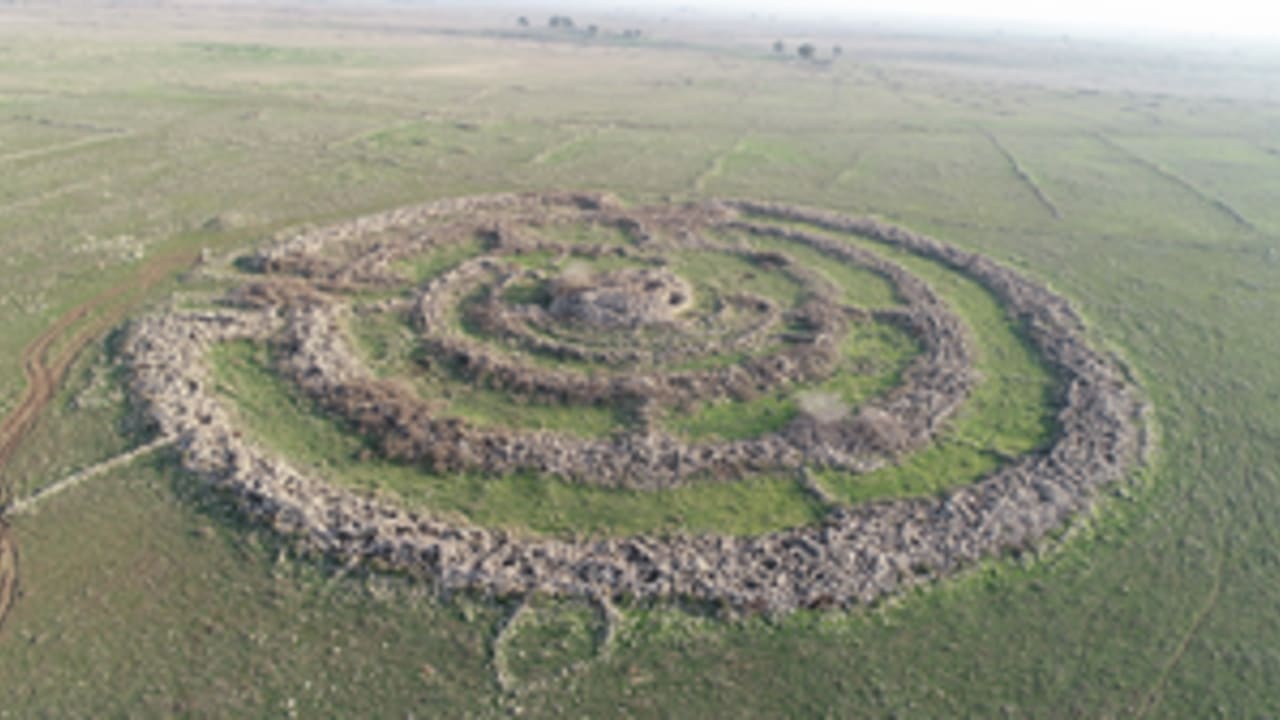
Rujm el-Hiri site in Golan Heights, March 27, 2026.
(photo credit: Yaakov Schmidt and Alex Wiegman, Israel Antiquities Authority)
ByMIRIAM SELA-EITAM

The stone circles of Rujm el-Hiri, nicknamed “Israel’s Stonehenge” or “Gilgal Refaim,” are not the only ones of its kind, according to a new study by Ben-Gurion University of the Negev (BGU) researchers.

By using advanced satellite imagery and remote sensing technology to survey areas previously inaccessible, BGU researchers have identified at least 28 other sites within 25 kilometers of Rujm el-Hiri that were not previously known.

The findings, recently published journal PLOS One, suggest that Rujm el-Hiri was not a singular, isolated monument, but rather an “elaborate example of a widespread architectural tradition integrated into the social and economic systems of the proto-historic Levant.”

Rujm el-Hiri was first discovered in the Golan Heights in 1968, and has been dated to approximately 3,500 and 6,500 years ago. It is made of a central cairn encircled by multiple concentric basalt stone rings, spanning for over 150 meters in diameter.

Satellite imagery revealed that the newly discovered sites share a similar design: large circular structures, between approximately 50 to 250 meters in diameter, built with stones taken from local basalt fieldstones.
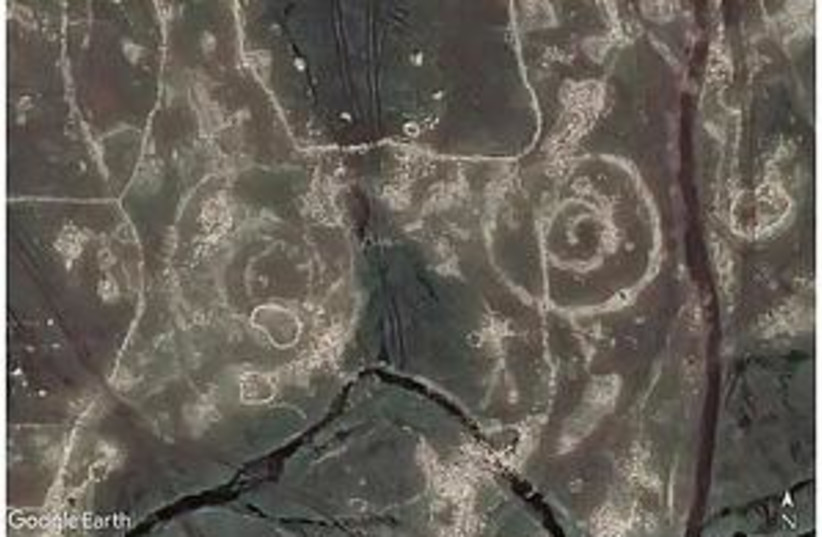
Three stone circles found in the Golan Heights, positioned atop one another, March 27, 2026.
Three stone circles found in the Golan Heights, positioned atop one another, March 27, 2026. (credit: Dr. Michal Birkenfeld and Dr. Olga Khabarova)

Site part of a broader social, economic system

The discovered structures contain circular walls and internal partitions, often located near seasonal water sources and integrated into agricultural land use, revealing how ancient populations managed their resources and moved across the area.

Further, researchers believe the stone circles may have been multi-purpose, serving as ritual gathering places, territorial markers, or assembly sites for ancient herding communities, adding to earlier theories of Rujm el-Hiri being a burial site or astronomical observatory.

According to Dr. Michal Birkenfeld of BGU’s Department of Archaeology, the circles “invite a reinterpretation of significant proto-historic monuments in the region, recognizing them as integral parts of broader social and economic systems.”

"Our analysis may have implications for previous interpretations of Rujm el-Hiri's function," she concluded. "While traditional archaeological methods remain essential, this landscape-based perspective allows us to reach a fuller understanding of these monuments within our shared human past."

Follow us on Google