


惯性聚合 高效追踪和阅读你感兴趣的博客、新闻、科技资讯
阅读原文 在惯性聚合中打开

推荐订阅源

MyScale Blog
MyScale Blog
F
Fortinet All Blogs
Cyber Security Advisories - MS-ISAC
D
Docker
freeCodeCamp Programming Tutorials: Python, JavaScript, Git & More
爱范儿
爱范儿
V
Visual Studio Blog
Last Week in AI
Last Week in AI
WordPress大学
WordPress大学
aimingoo的专栏
aimingoo的专栏
小众软件
小众软件
L
LangChain Blog
Vercel News
Vercel News
阮一峰的网络日志
阮一峰的网络日志
IT之家
IT之家
P
Proofpoint News Feed
博客园_首页
D
DataBreaches.Net
T
The Blog of Author Tim Ferriss
The GitHub Blog
The GitHub Blog
酷 壳 – CoolShell
酷 壳 – CoolShell
C
Check Point Blog
Engineering at Meta
Engineering at Meta
Microsoft Azure Blog

JPost.com - Archaeology | The Jerusalem Post

What was the Qumran sect's mysterious calender used for? | The Jerusalem Post Ancient structure near Stonehenge may have inspired its solstice alignment | The Jerusalem Post Ancient tablet found at Roman fort bears Greek curse against enemies | The Jerusalem Post Archaeologists unearth ancient Byzantine-era city in Egypt’s Dakhla Oasis | The Jerusalem Post Ancient mosaics, coins to go on display in new exhibit in northern Israel | The Jerusalem Post Archaeologists find inscriptions of pharaohs, ancient deities in Egyptian temple | The Jerusalem Post Italy buys famed Etruscan tomb, displays it in Rome museum | The Jerusalem Post New AI project aims to uncover origins of the Dead Sea Scrolls | The Jerusalem Post Site of Alexander the Great’s battle with Persians under historic protection | The Jerusalem Post Previously unknown Iron Age grave found ahead of construction in Germany | The Jerusalem Post Collector finds rare Hebrew-inscribed Moroccan mortar in Jerusalem's Old City | The Jerusalem Post Stone from Tel Eton may hold evidence of ancient religious reforms, study claims | The Jerusalem Post Complete text of carbonized Herculaneum scroll unlocked for first time | The Jerusalem Post Study: New identification technique pushes back timeline of human fire use | The Jerusalem Post Over 3,000 artifacts from Stone Age to WWII found in Netherlands valley | The Jerusalem Post American family repatriates four ancient artifacts to Egypt | The Jerusalem Post Remains of Queen Elisenda, 24 others unearthed in Barcelona for study | The Jerusalem Post Two ancient statues uncovered during Israel Railways excavations near Haifa | The Jerusalem Post Marble bust believed to depict Roman goddess of love found during excavations at Alicante beach Ancient Greco-Roman cemetery unearthed at archaeological site in Egypt's Nile Delta Ancient jars unearthed at biblical Shiloh days before annual wine festival WATCH: A Paleolithic time capsule: Rare prehistoric cave discovered near highway outside of Haifa Ancient water reservoirs discovered at Red Sea's Port of Aydhab site near Egypt-Sudan border Collection of ancient Egyptian, Greek, Roman-era artifacts discovered at Egypt’s Heracleopolis First near-complete ancient Egyptian funerary set discovered at Heliopolis necropolis site WATCH: Norway recovers Chinese porcelain, European-made goods from 18th-century shipwreck Neanderthals' ancient toolkit included hammers, blades made from rhino teeth, study finds Evidence of ancient Native American life uncovered near Cape Canaveral Space Force Station Rare, intact ancient Roman burial unearthed during excavations in eastern Croatia - report Plaster-making technique attributed to Romans used at Motza some 8,000 years earlier, study shows
China's largest artifact made of meteorite iron found in ...
2026-04-02 · via JPost.com - Archaeology | The Jerusalem Post

To date, a total of 13 meteoritic iron artifacts have been identified in China, with most found in the country’s north. 

Follow us on Google
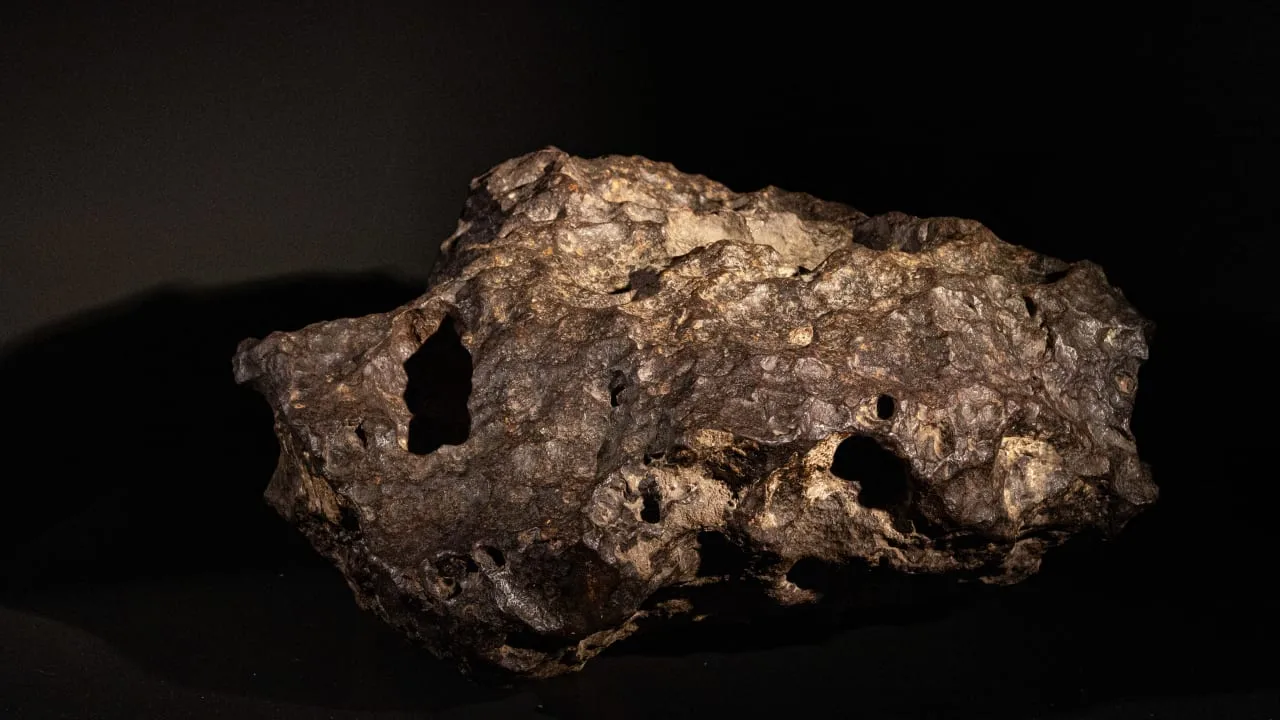
(Illustrative) A massive 420 kg meteorite on display in Paris, France, November 5, 2025.
(photo credit: Lyvans Boolaky/Getty Images)
ByMIRIAM SELA-EITAM
Updated:

A corroded, axe-shaped lump of iron unearthed from a ritual site in southwest China was forged entirely from a meteorite, according to a recent study published in Archaeological Research in Asia.

The artifact was found buried upright at Sanxingdui, a Bronze Age site in the Sichuan Province already famous for its bronze masks, figurines, and ceremonial trees. 

To date, a total of 13 meteoritic iron artifacts have been identified in China, with most found in the country’s north.

Researchers have dated the artifact to the late Shang Dynasty (roughly 1600–1046 BCE), confirming it to be the largest artifact made from meteoritic iron ever found in the area.

Additionally, the study noted that while most artifacts found in northern China were found embedded within bronze weapons and buried with important individuals, the one discovered in Sanxingdui seems to have been made entirely from meteoritic iron.
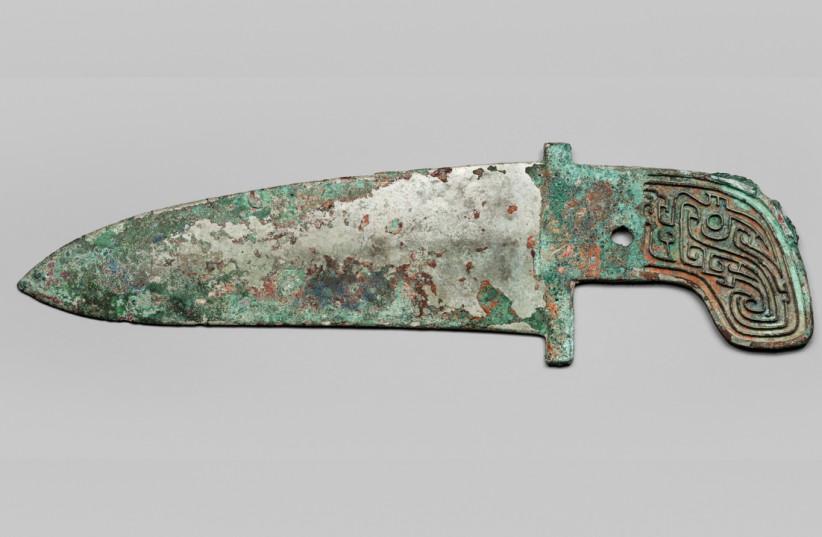
Dagger-Axe (ge), Shang dynasty (1600 - 1046 BCE). Artist Unknown.
Dagger-Axe (ge), Shang dynasty (1600 - 1046 BCE). Artist Unknown. (credit: Heritage Art/Heritage Images via Getty Images)

What the object was actually used for remains unclear. Despite the context surrounding its discovery, which suggests ritual significance, the study explained that bronze artifacts found at the site bear cut marks made from extremely hard tools.

According to researchers, this raises the possibility that the artifact was in fact a working tool rather than a ceremonial one.

Identifying artifact’s meteorite origin

The key to identifying the artifact’s origin lay in its chemical makeup, the study noted, adding that an initial field analysis using a handheld X-ray scanner showed that the artifact was made up of more than 90% iron and 7.41% nickel.

Such a combination is rarely found in naturally occurring iron ore, but is characteristic of iron found in meteorites.

A follow-up laboratory analysis using electron microscopy in order to reveal a more in-depth chemical composition, confirmed that the artifact contained nickel levels of roughly 20%, which are far higher than the median of around 11% seen in other Chinese meteoritic iron finds.

Additionally, the iron's internal structure showed no signs of the intensive hammering or other techniques that would indicate human metalworking. This, combined with the near-impossibility of producing the iron-nickel alloy using ancient smelting techniques, further ruled out the possibility of the artifact being man-made.

Follow us on Google