



惯性聚合 高效追踪和阅读你感兴趣的博客、新闻、科技资讯
阅读原文 在惯性聚合中打开

推荐订阅源

Microsoft Azure Blog
Google Online Security Blog
D
Darknet – Hacking Tools, Hacker News & Cyber Security
Threat Intelligence Blog | Flashpoint
Simon Willison's Weblog
T
Threat Research - Cisco Blogs
C
CXSECURITY Database RSS Feed - CXSecurity.com
L
Lohrmann on Cybersecurity
www.infosecurity-magazine.com
Forbes - Security
Forbes - Security
P
Palo Alto Networks Blog
Schneier on Security
S
Schneier on Security
T
Tor Project blog
cs.CL updates on arXiv.org
WordPress大学
WordPress大学
The Hacker News
The Hacker News
Hacker News - Newest:
Hacker News - Newest: "LLM"
罗磊的独立博客
Application and Cybersecurity Blog
F
Fortinet All Blogs
博客园 - 三生石上(FineUI控件)
小众软件
小众软件
C
Check Point Blog
Stack Overflow Blog
Stack Overflow Blog
Blog — PlanetScale
Blog — PlanetScale
雷峰网
雷峰网
S
Security @ Cisco Blogs
PCI Perspectives
PCI Perspectives
Spread Privacy
Spread Privacy
W
WeLiveSecurity
SecWiki News
SecWiki News
A
About on SuperTechFans
H
Help Net Security
博客园 - 司徒正美
Recent Commits to openclaw:main
爱范儿
爱范儿
S
Securelist
M
MIT News - Artificial intelligence
云风的 BLOG
云风的 BLOG
月光博客
月光博客
Jina AI
Jina AI
博客园 - 叶小钗
Vercel News
Vercel News
阮一峰的网络日志
阮一峰的网络日志
Recent Announcements
S
Secure Thoughts
The Cloudflare Blog
美团技术团队
freeCodeCamp Programming Tutorials: Python, JavaScript, Git & More

JPost.com - Archaeology | The Jerusalem Post

What was the Qumran sect's mysterious calender used for? | The Jerusalem Post Ancient structure near Stonehenge may have inspired its solstice alignment | The Jerusalem Post Ancient tablet found at Roman fort bears Greek curse against enemies | The Jerusalem Post Archaeologists unearth ancient Byzantine-era city in Egypt’s Dakhla Oasis | The Jerusalem Post Ancient mosaics, coins to go on display in new exhibit in northern Israel | The Jerusalem Post Archaeologists find inscriptions of pharaohs, ancient deities in Egyptian temple | The Jerusalem Post Italy buys famed Etruscan tomb, displays it in Rome museum | The Jerusalem Post New AI project aims to uncover origins of the Dead Sea Scrolls | The Jerusalem Post Site of Alexander the Great’s battle with Persians under historic protection | The Jerusalem Post Previously unknown Iron Age grave found ahead of construction in Germany | The Jerusalem Post Collector finds rare Hebrew-inscribed Moroccan mortar in Jerusalem's Old City | The Jerusalem Post Stone from Tel Eton may hold evidence of ancient religious reforms, study claims | The Jerusalem Post Complete text of carbonized Herculaneum scroll unlocked for first time | The Jerusalem Post Study: New identification technique pushes back timeline of human fire use | The Jerusalem Post Over 3,000 artifacts from Stone Age to WWII found in Netherlands valley | The Jerusalem Post American family repatriates four ancient artifacts to Egypt | The Jerusalem Post Remains of Queen Elisenda, 24 others unearthed in Barcelona for study | The Jerusalem Post Two ancient statues uncovered during Israel Railways excavations near Haifa | The Jerusalem Post Marble bust believed to depict Roman goddess of love found during excavations at Alicante beach Ancient Greco-Roman cemetery unearthed at archaeological site in Egypt's Nile Delta Ancient jars unearthed at biblical Shiloh days before annual wine festival WATCH: A Paleolithic time capsule: Rare prehistoric cave discovered near highway outside of Haifa Ancient water reservoirs discovered at Red Sea's Port of Aydhab site near Egypt-Sudan border Collection of ancient Egyptian, Greek, Roman-era artifacts discovered at Egypt’s Heracleopolis First near-complete ancient Egyptian funerary set discovered at Heliopolis necropolis site WATCH: Norway recovers Chinese porcelain, European-made goods from 18th-century shipwreck Neanderthals' ancient toolkit included hammers, blades made from rhino teeth, study finds Evidence of ancient Native American life uncovered near Cape Canaveral Space Force Station Rare, intact ancient Roman burial unearthed during excavations in eastern Croatia - report Plaster-making technique attributed to Romans used at Motza some 8,000 years earlier, study shows British heritage charity constructs replica of 4,500-year-old prehistoric building near Stonehenge Six previously unknown Bronze Age mines found in Spain, some 150 more remain ‘undiscovered’ Iraq races to restore ancient Ziggurat of Ur amid threat of climate erosion - report Korean, Egyptian archaeologists find ancient temple gate blocks during restoration work in Luxor ‘Lexden Lady,’ wealthy Roman woman buried in lead coffin, goes on display in UK Neanderthal tooth from Siberian cave shows signs of earliest-known invasive dental surgery - study Pompeii victim revealed to be a doctor fleeing Vesuvius’ eruption over 60 years after discovery Over 30 mummified cats, ancient Egyptian tombs, coffins discovered at Luxor necropolis site Silk Road Virtual Museum opens first Israel exhibit, displays ancient textiles found in Arava Egypt exhibits rare artifact from King Tut's tomb, two restored New Kingdom tombs in Luxor Ancient tunnel with unknown age, purpose found near Kibbutz Ramat Rachel ahead of Jerusalem Day US returns two rare, ancient coins to Israel following joint antiquities theft investigation Central-Eastern Europe's oldest Neanderthal group identified by DNA taken from teeth - study Eight-year-old boy visiting Ramon Crater finds over 1,700-year-old statue fragment hidden in rocks Wooden platform older than Stonehenge found hidden beneath man-made island in Scotland Scientists find traces of rare 'imperial' Tyrian purple dye found in Roman infant burials in York Collection of Greek, Roman, Byzantine artifacts discovered in neighborhood of Egypt’s Alexandria Nearly 2,000-year-old 'souvenir cup' found in Spain names Hadrian's Wall's eastern forts - study World's oldest plague mass grave found beneath Roman racetrack in Jordan - study Mummy CT scan reveal ancient Egyptian might've suffered from osteoperosis | The Jerusalem Post IAA reveals new study focused on studying ancient Jerusalem bullae | The Jerusalem Post Project to make Tel Hebron’s Second Temple mikveh accessible to visitors nearly complete, INPA says Collection of gold beads, amulets discovered during excavations on Greek island Academics recover over 40 lost pages of a 6th-century New Testament manuscript Turkish authorities reportedly seize gold Hebrew manuscript inscribed on python skin Marble statue of Greek goddess Athena found hidden in rubble in Turkey's ancient city of Laodicea Evidence of what may be world’s oldest cremation found in Ethiopia, new study reveals Italian archaeologists use AI to generate image of Pompeii victim for first time Remains from Israel’s North show Neanderthal children grew faster than modern humans - study Great Pyramid of Giza was built over course of 20 years, using multiple ramps, new study claims Partial statue of Ramesses the Great found in ancient Egyptian capital city along Nile CT scans reveal age, authenticity of child mummy housed in Polish museum for over a century - study Fragment of Homer's Iliad discovered inside Roman-era mummy during Egypt excavations Evidence of human sacrifice, inbreeding found at ancient Korean burial complex - study Neanderthal children in central Europe may have hunted turtles for materials, not for food - study MyHeritage's Scribe AI decodes world's oldest love letter, reveals 15th century familial tensions Early humans may have begun eating elephants, large animals 1.8 million years ago - study Over 20 sarcophagi belonging to ‘Chanters of Amun’ discovered during excavations near Luxor DNA analysis reveals ancestry of man buried in ancient Spanish tomb, shows mixed heritage - study An ancient Egyptian temple was just found in Sinai after six years of digging Ancient charcoal found in northern Israel sheds new light on how early humans lived - study Early humans in South Africa used dedicated quarries for stone as long as 220,000 years ago - study Hezbollah rocket hits Byzantine-era church in Nahariya, damages protective structure Prehistoric children’s remains show syphilis-like disease spread through ancient Vietnam - study Ashes of Pompeii: New study confirms ancient city's role within Rome’s global trade route How archaeologists used technology to rediscover ancient Egyptian city on the Nile Delta - study Clay cylinders found in Iraq bear writings of Babylonian king who besieged Jerusalem, study reveals Native American use of dice, probability predates known Old World dice by millenia - study Neanderthals who lived in Siberian cave millenia apart were distant relatives, study finds Lost mosaic shows first visual depiction of women fighting beasts in Roman arenas - study Scandinavia's largest prehistoric mound is not a tomb, but a memorial to a natural disaster - study China's largest artifact made of meteorite iron found in Bronze Age ritual site - study Iron Age hoard rewrites history of wagons in Britain, may have been part of royal memorial - study Evidence of lost baptismal rite stage uncovered in Byzantine era church near Kinneret - study Archaeologists unearth at least five Gaul skeletons buried sitting upright during Paris excavations Stone stele depicting Roman emperor, Egyptian gods found near Karnak temple site in Luxor Persian-era mass grave of children found during excavations in Israel’s Tel Azekah - study Collection of 7,000-year-old ostrich eggs discovered under sand dunes in southern Israel Discovery off Israel’s coast reveals earliest known 2,600-year-old shipment of raw iron Israel’s 'Stonehenge’ not alone with near 30 similar sites, satellite imagery reveals - study Second century CE Roman military fort found north of Hadrian's Wall in Scotland | The Jerusalem Post Ancient mosaic with Greek inscription discovered in Turkey | The Jerusalem Post Collection of pre-revolution coins found under house in Russia | The Jerusalem Post Archaeologists may have found lost remains of French musketeer d'Artagnan in Dutch church LiDAR reveals network of ancient Maya markets hidden under jungle canopy Children buried in 'adult warrior' bronze belts discovered in 2,500-year-old tomb in Italy Vast desert complex reveals how early Christians lived together 60,000-year-old ostrich eggshells reveal humanity’s first brush with geometry Researchers rethink how humans populated the Americas after new find Handgun fragments found in Germany may be oldest in Europe | The Jerusalem Post
Stone handaxes found in Galilee show early humans valued aesthetics of their tools - study
2026-03-25 · via JPost.com - Archaeology | The Jerusalem Post

The axes were dated to the Pleistocene, likely made by Homo erectus, the first human species to evolve to have a humanlike body shape and gait, who had lived in the region thousands of years ago.

Follow us on Google
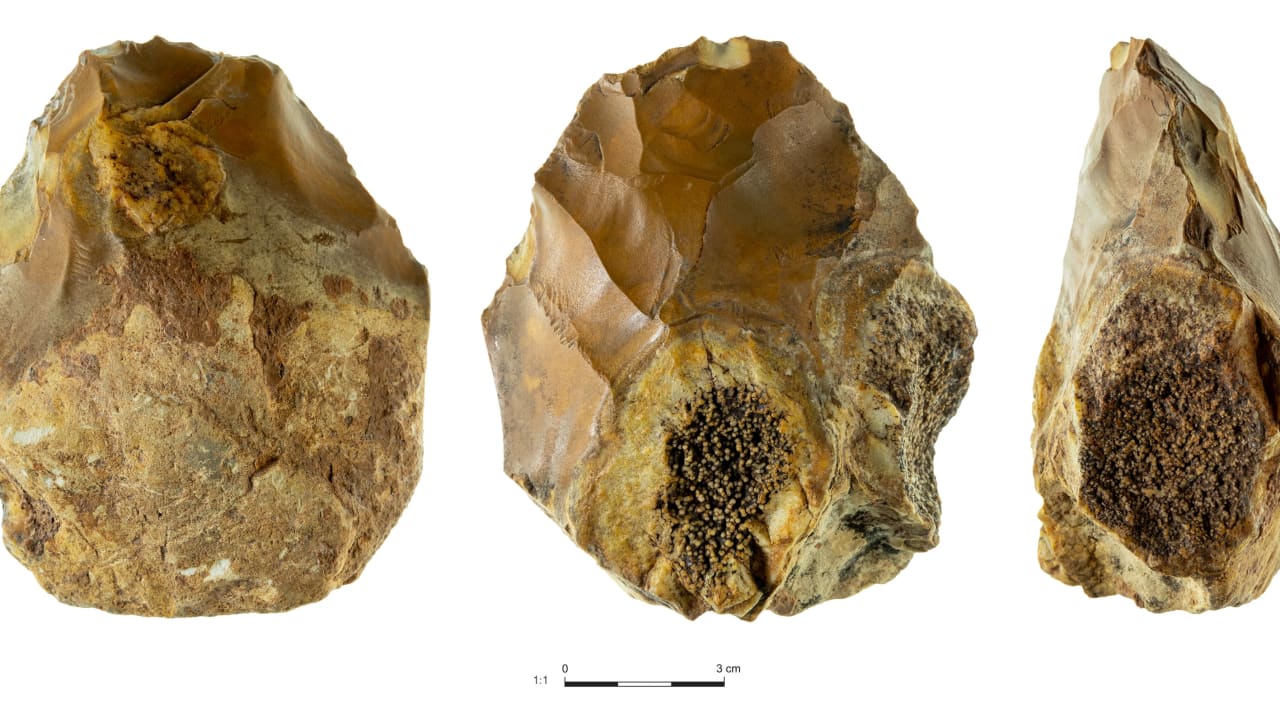
 A handaxe incorporating a geode (“Elijah’s apple”) from the Sakhnin Valley in northern Israel, March 24, 2026.
A handaxe incorporating a geode (“Elijah’s apple”) from the Sakhnin Valley in northern Israel, March 24, 2026.
(photo credit: TEL AVIV UNIVERSITY)
ByMIRIAM SELA-EITAM

A collection of Paleolithic stone handaxes found in the Sakhnin Valley of the Lower Galilee has shed new light on the cultural and cognitive world of early humans, according to a recent study completed by researchers from Tel Aviv University.

After noticing several knapped stones scattered around the valley, Sakhnin resident Muataz Shalata brought the finds to the attention of Tel Aviv University Professor Ran Barkai, an archaeologist and expert on the topic of early Paleolithic culture.

Barkai, alongside Shalata, embarked on an archaeological expedition in the valley and discovered a series of Paleolithic sites containing hundreds of large, carefully crafted stone handaxes.

The axes were dated to the Pleistocene, likely made by Homo erectus, the first human species to evolve to have a humanlike body shape and gait, who had lived in the region hundreds of thousands of years ago.

“Handaxes served as the main tool of early humans for more than a million years,” Barkai said. “In the Sakhnin Valley, many hundreds of handaxes were found, indicating that the area served as an important hub of human activity over long periods of time.”
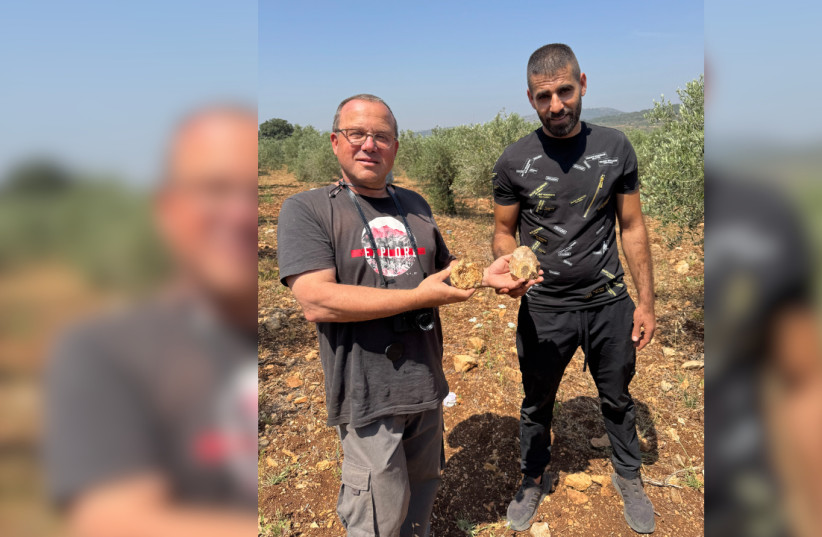
Tel Aviv University Professor Ran Barkai and Sakhnin resident Muataz Shalata, after finding a handaxe incorporating a geode (“Elijah’s apple”) from the Sakhnin Valley, northern Israel, March 24, 2026.
Tel Aviv University Professor Ran Barkai and Sakhnin resident Muataz Shalata, after finding a handaxe incorporating a geode (“Elijah’s apple”) from the Sakhnin Valley, northern Israel, March 24, 2026. (credit: TEL AVIV UNIVERSITY)

The Sakhnin Valley is also located near what researchers believe to have been the main route of early elephants, which would have been a primary food source for early humans and given reason for the high quantity of handaxes found. 

Largest amount of decorated handaxes found anywhere

Aside from the quantity of handaxes found, researchers noted that the large number of axes decorated and shaped around fossils and geodes exceedes all comparable finds of similar artifacts documented to date.

Barkai also explained that Homo erectus may have been attracted to the Sakhnin Valley due to the large amount of geodes, flint, and fossils found within it.

“Early humans who came here hundreds of thousands of years ago must have been astonished by this exceptional richness of stones, leaving behind an extraordinary phenomenon,” he said, adding that more than ten handaxes “fashioned from flint nodules containing fossils or special geological formations” have been found.

These natural features were “deliberately preserved in a prominent position at the center of each handaxe” by early humans, Barkai noted.

“Since such features make precise and symmetrical knapping difficult, we can conclude that the selection of these specific stones was not accidental. On the contrary, the knapping process highlighted the natural feature and kept it at the center of the tool."

According to the researchers, the phenomena shows a higher level of “aesthetic and conceptual intention” among Homo erectus beyond the simple act of producing tools, as embedding the fossils and geodes do not add to the axe’s function.

“The unique landscape of the Sakhnin Valley led early humans to behave in a distinctive manner,” Barkai said. “The integration of fossils and geological features endowed the handaxes with added potency and meaning, connecting them to primeval elements.”

“The findings from the Sakhnin Valley open a rare window into the inner world of early humans, indicating that already at the dawn of human history they were sensitive to aesthetics, attributed meaning to nature, and had complex relationships with their world.”

The study appeared in the journal Entin Faculty of Humanities: Tel Aviv: Journal of the Institute of Archaeology of Tel Aviv University.

Follow us on Google