



惯性聚合 高效追踪和阅读你感兴趣的博客、新闻、科技资讯
阅读原文 在惯性聚合中打开

推荐订阅源

腾讯CDC
aimingoo的专栏
aimingoo的专栏
S
SegmentFault 最新的问题
A
About on SuperTechFans
Engineering at Meta
Engineering at Meta
宝玉的分享
宝玉的分享
freeCodeCamp Programming Tutorials: Python, JavaScript, Git & More
博客园 - 叶小钗
WordPress大学
WordPress大学
N
Netflix TechBlog - Medium
MyScale Blog
MyScale Blog
Stack Overflow Blog
Stack Overflow Blog
Microsoft Azure Blog
博客园 - 聂微东
M
MIT News - Artificial intelligence
F
Fortinet All Blogs
奇客Solidot–传递最新科技情报
奇客Solidot–传递最新科技情报
Blog — PlanetScale
Blog — PlanetScale
T
Tailwind CSS Blog
Recent Announcements
Jina AI
Jina AI
大猫的无限游戏
大猫的无限游戏
Apple Machine Learning Research
J
Java Code Geeks

JPost.com - Archaeology | The Jerusalem Post

What was the Qumran sect's mysterious calender used for? | The Jerusalem Post Ancient structure near Stonehenge may have inspired its solstice alignment | The Jerusalem Post Ancient tablet found at Roman fort bears Greek curse against enemies | The Jerusalem Post Archaeologists unearth ancient Byzantine-era city in Egypt’s Dakhla Oasis | The Jerusalem Post Ancient mosaics, coins to go on display in new exhibit in northern Israel | The Jerusalem Post Archaeologists find inscriptions of pharaohs, ancient deities in Egyptian temple | The Jerusalem Post Italy buys famed Etruscan tomb, displays it in Rome museum | The Jerusalem Post New AI project aims to uncover origins of the Dead Sea Scrolls | The Jerusalem Post Site of Alexander the Great’s battle with Persians under historic protection | The Jerusalem Post Previously unknown Iron Age grave found ahead of construction in Germany | The Jerusalem Post Collector finds rare Hebrew-inscribed Moroccan mortar in Jerusalem's Old City | The Jerusalem Post Stone from Tel Eton may hold evidence of ancient religious reforms, study claims | The Jerusalem Post Complete text of carbonized Herculaneum scroll unlocked for first time | The Jerusalem Post Study: New identification technique pushes back timeline of human fire use | The Jerusalem Post Over 3,000 artifacts from Stone Age to WWII found in Netherlands valley | The Jerusalem Post American family repatriates four ancient artifacts to Egypt | The Jerusalem Post Remains of Queen Elisenda, 24 others unearthed in Barcelona for study | The Jerusalem Post Two ancient statues uncovered during Israel Railways excavations near Haifa | The Jerusalem Post Marble bust believed to depict Roman goddess of love found during excavations at Alicante beach Ancient Greco-Roman cemetery unearthed at archaeological site in Egypt's Nile Delta Ancient jars unearthed at biblical Shiloh days before annual wine festival WATCH: A Paleolithic time capsule: Rare prehistoric cave discovered near highway outside of Haifa Ancient water reservoirs discovered at Red Sea's Port of Aydhab site near Egypt-Sudan border Collection of ancient Egyptian, Greek, Roman-era artifacts discovered at Egypt’s Heracleopolis First near-complete ancient Egyptian funerary set discovered at Heliopolis necropolis site WATCH: Norway recovers Chinese porcelain, European-made goods from 18th-century shipwreck Neanderthals' ancient toolkit included hammers, blades made from rhino teeth, study finds Evidence of ancient Native American life uncovered near Cape Canaveral Space Force Station Rare, intact ancient Roman burial unearthed during excavations in eastern Croatia - report Plaster-making technique attributed to Romans used at Motza some 8,000 years earlier, study shows
An ancient Egyptian temple was just found in Sinai after ...
2026-04-16 · via JPost.com - Archaeology | The Jerusalem Post

Analysis of the site also shows that the structure had been continuously used from the 2nd century BCE to the 6th century CE, with only minor architectural modifications happening during that time.
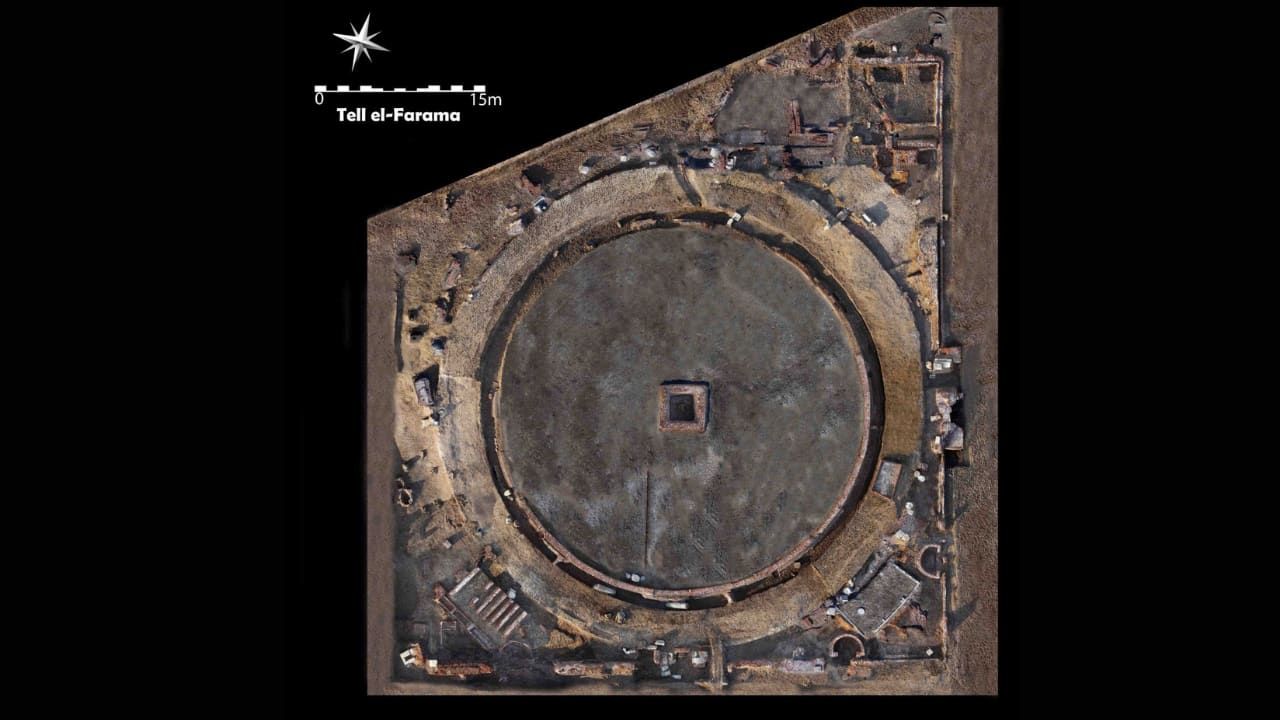
Aerial photo of the ancient temple discovered at Tell el-Farma in the  northern Sinai, April 15, 2026.
Aerial photo of the ancient temple discovered at Tell el-Farma in the northern Sinai, April 15, 2026.
(photo credit: EGYPTIAN TOURISM AND ANTIQUITIES MINISTRY)
ByMIRIAM SELA-EITAM
Updated:

A temple dedicated to the local god Pelusius has been unearthed after six years of excavations at Tell el-Farma in the city of Pelusium in the northern Sinai, the Egyptian Tourism and Antiquities Ministry said in a statement last week.

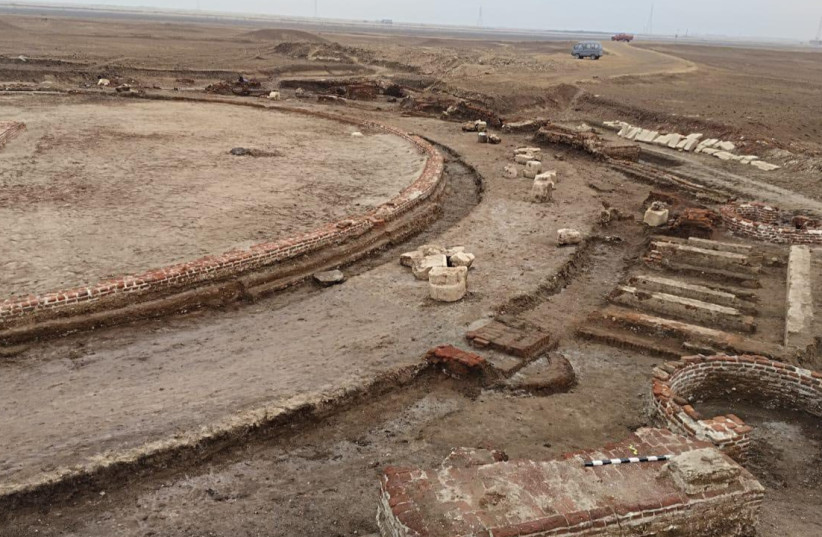
Within the temple, archaeologists uncovered a circular basin with a diameter of 35 meters, which connects to the Pelusiac branch of the Nile River, Professor Mohamed Abdel Badie, head of the Egyptian Antiquities Sector at the Supreme Council of Antiquities, pointed out.

There, the basin was filled with “water loaded with Nile silt,” symbolically indicating the temple’s connection to Pelusius, whose name was derived from the Greek word plus meaning “mud.”

Further, the basin is surrounded by a system of drainage channels, and a square base at its center, believed to have held a statue of the deity. The building also had multiple entrances on the eastern, southern, and western sides, while the northern side has suffered significant damage.

Analysis of the site also shows that the structure had been continuously used from the 2nd century BCE to the 6th century CE, with only minor architectural modifications happening during that time.

Ruins of ancient temple found at the Tell el-Farma archaeological site in the northern Sinai, April 15, 2026.
Ruins of ancient temple found at the Tell el-Farma archaeological site in the northern Sinai, April 15, 2026. (credit: EGYPTIAN TOURISM AND ANTIQUITIES MINISTRY)

Originally thought to be Senate building

Archaeologists had discovered part of the building in 2019, explained Dr. Hisham Hussein, Head of the Central Administration of Antiquities for Lower Egypt and Sinai and mission supervisor, and had believed it to have been the city's Senate building.

However, continued excavations, in-depth field studies, and comparison with similar structures from the Hellenistic and Roman periods outside of Egypt  proved this theory to be incorrect. 

Egyptian Tourism and Antiquities Minister Sherif Fathy expressed his delight at the discovery, which “confirms the strategic and archaeological importance of the north Sinai region and its wealth of promising sites that still hold many secrets.”

Dr. Hisham El-Leithy, Secretary General of Egypt’s Supreme Council of Antiquities, echoed the sentiment, noting the importance of the temple's discovery as it illustrates Pelusium’s status and role in influencing religious and cultural ideas at the time.

Further, he added that the temple combines “ancient Egyptian traditions with Hellenistic and Roman styles in an exceptional embodiment of the cultural interaction between Egypt and the classical world.”