
惯性聚合 高效追踪和阅读你感兴趣的博客、新闻、科技资讯
阅读原文 在惯性聚合中打开

推荐订阅源

Vercel News
Vercel News
博客园 - 【当耐特】
freeCodeCamp Programming Tutorials: Python, JavaScript, Git & More
小众软件
小众软件
Hugging Face - Blog
Hugging Face - Blog
aimingoo的专栏
aimingoo的专栏
WordPress大学
WordPress大学
G
Google Developers Blog
博客园 - 叶小钗
大猫的无限游戏
大猫的无限游戏
P
Proofpoint News Feed
J
Java Code Geeks
U
Unit 42
云风的 BLOG
云风的 BLOG
阮一峰的网络日志
阮一峰的网络日志
N
Netflix TechBlog - Medium
宝玉的分享
宝玉的分享
让小产品的独立变现更简单 - ezindie.com
D
Docker
V
Visual Studio Blog
Cyber Security Advisories - MS-ISAC
H
Help Net Security
V
V2EX
T
Tailwind CSS Blog

JPost.com - Archaeology | The Jerusalem Post

What was the Qumran sect's mysterious calender used for? | The Jerusalem Post Ancient structure near Stonehenge may have inspired its solstice alignment | The Jerusalem Post Ancient tablet found at Roman fort bears Greek curse against enemies | The Jerusalem Post Archaeologists unearth ancient Byzantine-era city in Egypt’s Dakhla Oasis | The Jerusalem Post Ancient mosaics, coins to go on display in new exhibit in northern Israel | The Jerusalem Post Archaeologists find inscriptions of pharaohs, ancient deities in Egyptian temple | The Jerusalem Post Italy buys famed Etruscan tomb, displays it in Rome museum | The Jerusalem Post New AI project aims to uncover origins of the Dead Sea Scrolls | The Jerusalem Post Site of Alexander the Great’s battle with Persians under historic protection | The Jerusalem Post Previously unknown Iron Age grave found ahead of construction in Germany | The Jerusalem Post Collector finds rare Hebrew-inscribed Moroccan mortar in Jerusalem's Old City | The Jerusalem Post Stone from Tel Eton may hold evidence of ancient religious reforms, study claims | The Jerusalem Post Complete text of carbonized Herculaneum scroll unlocked for first time | The Jerusalem Post Study: New identification technique pushes back timeline of human fire use | The Jerusalem Post Over 3,000 artifacts from Stone Age to WWII found in Netherlands valley | The Jerusalem Post American family repatriates four ancient artifacts to Egypt | The Jerusalem Post Remains of Queen Elisenda, 24 others unearthed in Barcelona for study | The Jerusalem Post Two ancient statues uncovered during Israel Railways excavations near Haifa | The Jerusalem Post Marble bust believed to depict Roman goddess of love found during excavations at Alicante beach Ancient Greco-Roman cemetery unearthed at archaeological site in Egypt's Nile Delta Ancient jars unearthed at biblical Shiloh days before annual wine festival WATCH: A Paleolithic time capsule: Rare prehistoric cave discovered near highway outside of Haifa Ancient water reservoirs discovered at Red Sea's Port of Aydhab site near Egypt-Sudan border Collection of ancient Egyptian, Greek, Roman-era artifacts discovered at Egypt’s Heracleopolis First near-complete ancient Egyptian funerary set discovered at Heliopolis necropolis site WATCH: Norway recovers Chinese porcelain, European-made goods from 18th-century shipwreck Neanderthals' ancient toolkit included hammers, blades made from rhino teeth, study finds Evidence of ancient Native American life uncovered near Cape Canaveral Space Force Station Rare, intact ancient Roman burial unearthed during excavations in eastern Croatia - report Plaster-making technique attributed to Romans used at Motza some 8,000 years earlier, study shows
Fragment of Homer's Iliad discovered inside Roman-era mum...
2026-04-23 · via JPost.com - Archaeology | The Jerusalem Post

Several other mummies, three golden tongues, and a tongue made of copper were also discovered during excavations.
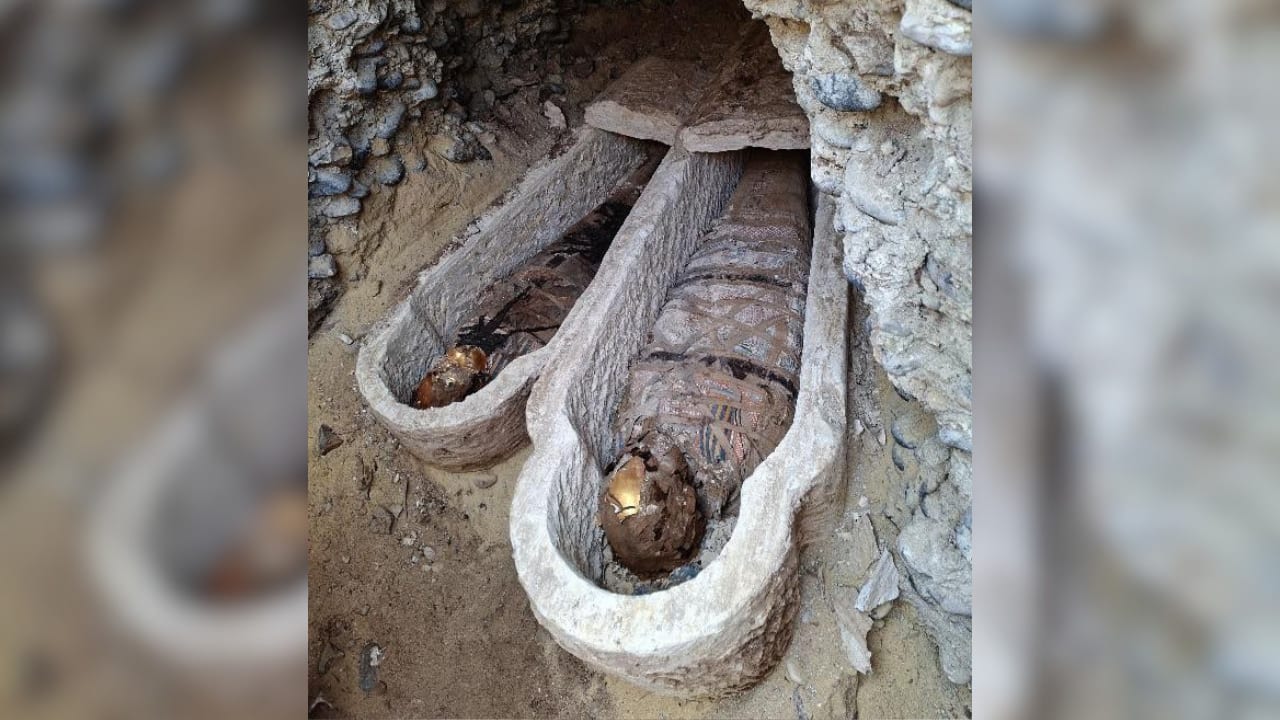
Mummies discovered in a Roman-era tomb during archaeological excavations in the el-Bahnasa area in Egypt’s Minya Governorate, April 22, 2026.
(photo credit: EGYPTIAN TOURISM AND ANTIQUITIES MINISTRY)
ByMIRIAM SELA-EITAM

A section of Homer’s Iliad, written on a papyrus fragment, was found inside a mummy during recent excavations of a Roman-era tomb in the el-Bahnasa area of Egypt’s Minya Governorate.

The section is from Homer’s “Catalogue of Ships” from the Iliad's second book explained Hisham el-Leithy, Secretary-General of Egypt’s Supreme Council of Antiquities, which details all those who participated in the mythical Greek campaign against Troy.

Leithy added that the discovery provides new insights into the funerary practices in Bahnasa during the Greek and Roman periods and “adds an important literary and historical dimension to the site.”

The find, announced by the Egyptian Tourism and Antiquities Ministry on Saturday, was made by a Spanish archaeological mission affiliated with the University of Barcelona.

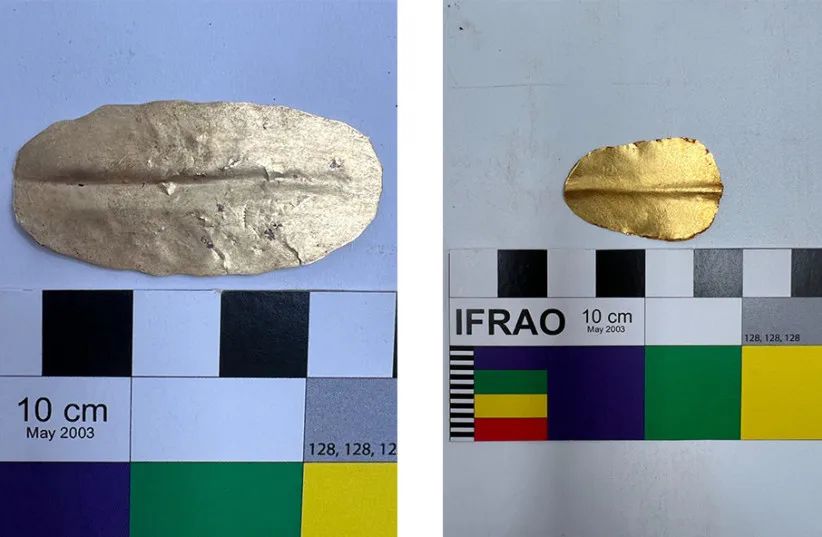
Several other mummies, three golden tongues, and a tongue made of copper were also discovered during excavations.

Gold and copper tongues discovered during archaeological excavations in the el-Bahnasa area in Egypt’s Minya Governorate, April 22, 2026.
Gold and copper tongues discovered during archaeological excavations in the el-Bahnasa area in Egypt’s Minya Governorate, April 22, 2026. (credit: EGYPTIAN TOURISM AND ANTIQUITIES MINISTRY)

Some of the mummies were found in wrappings decorated with geometric patterns, the ministry said, while others bore evidence of gold leaf having been used in the decoration.

Several painted wooden coffins were also uncovered inside an underground burial chamber at the site, noted Hassan Amer, a professor of archaeology at Cairo University and one of the mission leaders.

However, he added that they were "in a state of deterioration as a result of being looted in ancient times."

The discovery, according to Egyptian Tourism and Antiquities Minister Sherif Fathy, “reflects the richness and diversity of Egyptian civilization across the ages."

Human remains, statuettes of Roman, Greek gods found nearby

Additionally, during excavations at a nearby site in 2024, archaeologists discovered the ruins of a trench housing three limestone chambers, said Mohamed Abdel Badie, head of the Supreme Council of Antiquities' Egyptian Antiquities Sector.

Inside the first chamber, archaeologists found a stone slab, a large jar containing the burnt remains of an adult, and the bones of an infant and a feline animal wrapped in pieces of fabric.

The second chamber was similarly home to a jar containing the remains of two individuals and the bones of another feline.

Badie did not note if anything was found in the third chamber.

He did add that small terracotta and bronze statuettes had been found to the south of the site, including those depicting Harpocrates, the Hellenistic interpretation of Egypt’s Horus the Child, as a knight, and Cupid, the Roman deity of desire.