


惯性聚合 高效追踪和阅读你感兴趣的博客、新闻、科技资讯
阅读原文 在惯性聚合中打开

推荐订阅源

Engineering at Meta
Engineering at Meta
J
Java Code Geeks
I
InfoQ
腾讯CDC
Vercel News
Vercel News
IT之家
IT之家
V
Visual Studio Blog
P
Proofpoint News Feed
freeCodeCamp Programming Tutorials: Python, JavaScript, Git & More
G
Google Developers Blog
Cyber Security Advisories - MS-ISAC
博客园 - 叶小钗
有赞技术团队
有赞技术团队
月光博客
月光博客
Martin Fowler
Martin Fowler
量子位
L
LangChain Blog
B
Blog
Last Week in AI
Last Week in AI
博客园 - 司徒正美
Microsoft Security Blog
博客园 - 聂微东
Microsoft Azure Blog
A
About on SuperTechFans

JPost.com - Archaeology | The Jerusalem Post

What was the Qumran sect's mysterious calender used for? | The Jerusalem Post Ancient structure near Stonehenge may have inspired its solstice alignment | The Jerusalem Post Ancient tablet found at Roman fort bears Greek curse against enemies | The Jerusalem Post Archaeologists unearth ancient Byzantine-era city in Egypt’s Dakhla Oasis | The Jerusalem Post Ancient mosaics, coins to go on display in new exhibit in northern Israel | The Jerusalem Post Archaeologists find inscriptions of pharaohs, ancient deities in Egyptian temple | The Jerusalem Post Italy buys famed Etruscan tomb, displays it in Rome museum | The Jerusalem Post New AI project aims to uncover origins of the Dead Sea Scrolls | The Jerusalem Post Site of Alexander the Great’s battle with Persians under historic protection | The Jerusalem Post Previously unknown Iron Age grave found ahead of construction in Germany | The Jerusalem Post Collector finds rare Hebrew-inscribed Moroccan mortar in Jerusalem's Old City | The Jerusalem Post Stone from Tel Eton may hold evidence of ancient religious reforms, study claims | The Jerusalem Post Complete text of carbonized Herculaneum scroll unlocked for first time | The Jerusalem Post Study: New identification technique pushes back timeline of human fire use | The Jerusalem Post Over 3,000 artifacts from Stone Age to WWII found in Netherlands valley | The Jerusalem Post American family repatriates four ancient artifacts to Egypt | The Jerusalem Post Remains of Queen Elisenda, 24 others unearthed in Barcelona for study | The Jerusalem Post Two ancient statues uncovered during Israel Railways excavations near Haifa | The Jerusalem Post Marble bust believed to depict Roman goddess of love found during excavations at Alicante beach Ancient Greco-Roman cemetery unearthed at archaeological site in Egypt's Nile Delta Ancient jars unearthed at biblical Shiloh days before annual wine festival WATCH: A Paleolithic time capsule: Rare prehistoric cave discovered near highway outside of Haifa Ancient water reservoirs discovered at Red Sea's Port of Aydhab site near Egypt-Sudan border Collection of ancient Egyptian, Greek, Roman-era artifacts discovered at Egypt’s Heracleopolis First near-complete ancient Egyptian funerary set discovered at Heliopolis necropolis site WATCH: Norway recovers Chinese porcelain, European-made goods from 18th-century shipwreck Neanderthals' ancient toolkit included hammers, blades made from rhino teeth, study finds Evidence of ancient Native American life uncovered near Cape Canaveral Space Force Station Rare, intact ancient Roman burial unearthed during excavations in eastern Croatia - report Plaster-making technique attributed to Romans used at Motza some 8,000 years earlier, study shows
Stone stele depicting Roman emperor, Egyptian gods found ...
2026-03-31 · via JPost.com - Archaeology | The Jerusalem Post

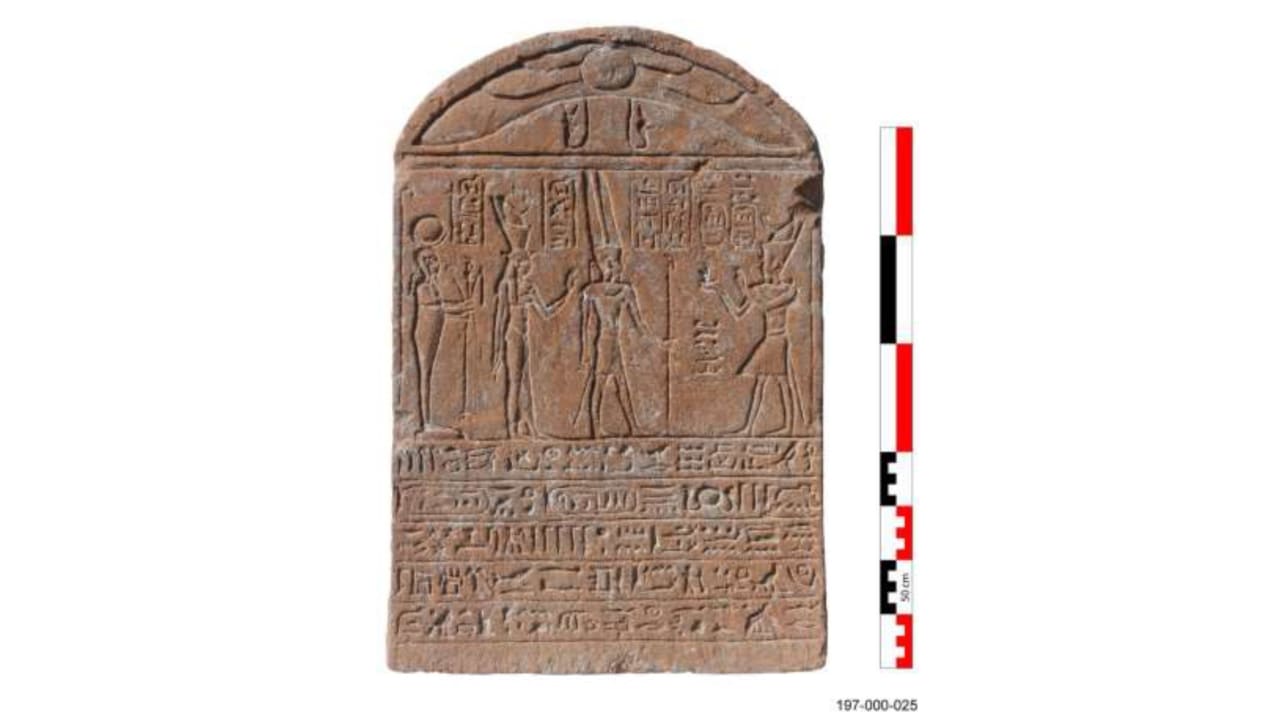
The stele was discovered during the three-year-long restoration efforts of a gateway from the time of Ramesses III in Karnak.

Follow us on Google
Stele depicting Roman Emperor Tiberius standing before the Theban triad of the ancient Egyptian gods found near the Karnak Temple Complex, March 30, 2026.
(photo credit: EGYPTIAN TOURISM AND ANTIQUITIES MINISTRY)
ByMIRIAM SELA-EITAM

A sandstone stele dating to the reign of Roman Emperor Tiberius (14 to 37 CE) was discovered near Luxor, Egypt, by a team of Egyptian and French archaeologists, Egypt’s Tourism and Antiquities Ministry announced is a statement last week. 

The stele depicts Tiberius standing before the Theban triad of the ancient Egyptian gods: Amun (or Amun-Ra), Mut, and Khonsu.

Below the scene are five lines of hieroglyphic text documenting the restoration of the retaining wall of Amun’s Temple within the Karnak Temple Complex.

Dr. Abdel Ghaffar Wagdy, director-general of Luxor Museum and leader of the Egyptian side of the archaeological mission, noted that the stele underwent meticulous restoration and is set to be displayed at a museum in the future.

The stele was discovered during the three-year-long restoration efforts of a gateway from the time of Ramesses III, the second pharoah of the 20th Dynasty (1189 to 1077 BCE), in Karnak, after the lower part of the wall had been found heavily deteriorated and covered in vegetation.
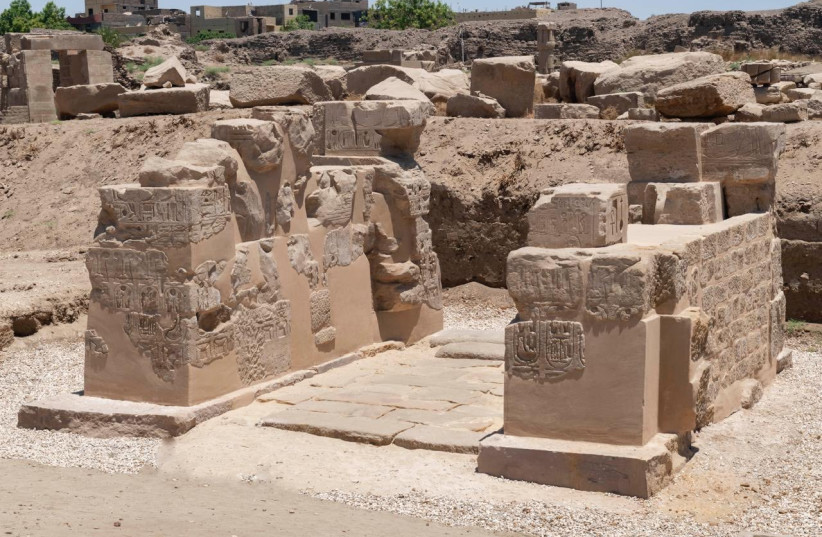
Restored Ramesses III gate near the north end of the Karnak Temple Complex near Luxor, Egypt, March 30, 2026.
Restored Ramesses III gate near the north end of the Karnak Temple Complex near Luxor, Egypt, March 30, 2026. (credit: EGYPTIAN TOURISM AND ANTIQUITIES MINISTRY)

Evidence of earlier construction, restoration found

In order to restore the gate, archaeologists needed to dismantle it, restore each stone block, and document them all before reassembling the gateway fully. They found that several of the decorated stone blocks actually dated to the earlier reign of Amenhotep III of the 18th Dynasty (1550 BCE to 1295 BCE), possibly reused from an older gate set along the same wall.

Sections of the northern wall of Amun’s Karnak temple were discovered on either side of the gate, themselves belonging to the New Kingdom (16th-11th century BCE), as well as evidence of additional construction from the 18th Dynasty and reign of Ramesses III.

Further evidence suggests Greek and Roman era restoration efforts of the wall and gate.

Additionally, during excavations at the site during the summer of 2025, archaeologists succeeded in uncovering a paved road linking the gate to the Courtyard of the Third Pylon within Karnak’s complex.

Egyptian Tourism and Antiquities Minister Sherif Fathy praised the joint French-Egyptian efforts, noting that the restoration and discovery are a part of a larger framework to develop Karnak into an open-air museum.

He added that “the restoration work and archaeological discoveries achieved in recent years represent an important scientific addition that contributes to providing a clearer vision of the development of the Karnak temples throughout the ages, especially during the first millennium BCE.”

Follow us on Google