


惯性聚合 高效追踪和阅读你感兴趣的博客、新闻、科技资讯
阅读原文 在惯性聚合中打开

推荐订阅源

GbyAI
GbyAI
Exploit-DB.com RSS Feed
Security Archives - TechRepublic
H
Heimdal Security Blog
T
Tenable Blog
Webroot Blog
Webroot Blog
Cisco Talos Blog
Cisco Talos Blog
NISL@THU
NISL@THU
Help Net Security
Help Net Security
W
WeLiveSecurity
量子位
Stack Overflow Blog
Stack Overflow Blog
Schneier on Security
Simon Willison's Weblog
Recorded Future
Recorded Future
Martin Fowler
Martin Fowler
K
KPMG report finds enterprise disconnect between AI and its ROI | CIO
L
Lohrmann on Cybersecurity
SecWiki News
SecWiki News
Blog — PlanetScale
Blog — PlanetScale
F
Full Disclosure
Recent Commits to openclaw:main
小众软件
小众软件
Cyberwarzone
Cyberwarzone
S
Security Affairs
L
LangChain Blog
Hacker News - Newest:
Hacker News - Newest: "LLM"
V
V2EX
WordPress大学
WordPress大学
爱范儿
爱范儿
让小产品的独立变现更简单 - ezindie.com
L
LINUX DO - 热门话题
Forbes - Security
Forbes - Security
Engineering at Meta
Engineering at Meta
博客园 - 三生石上(FineUI控件)
Scott Helme
Scott Helme
H
Help Net Security
www.infosecurity-magazine.com
C
Cyber Attacks, Cyber Crime and Cyber Security
有赞技术团队
有赞技术团队
IT之家
IT之家
G
Google Developers Blog
cs.CV updates on arXiv.org
S
Schneier on Security
Google DeepMind News
freeCodeCamp Programming Tutorials: Python, JavaScript, Git & More
月光博客
月光博客
Hacker News: Ask HN
Hacker News: Ask HN
O
OpenAI News
宝玉的分享
宝玉的分享

Securelist

New Project CAV3RN .NET Native AOT communication module HelloNet campaign: a threat via the ViPNet update system GoSerpent backdoor attacks in Southeast Asia OkoBot framework infection chain Threat landscape for industrial automation systems. Q1 2026 When checking the URL isn't enough: phishing via the Microsoft identity platform Armored Likho's new weapon: BusySnake Stealer How to improve your organization's security based on compromise assessment findings How a single ScreenConnect incident exposed a massive campaign How the ToddyCat APT group gains access to Gmail accounts The Gentlemen RaaS: rapid growth and a new ransomware variant CVE-2024-2658 vulnerability in Schneider Electric software: risks to industrial control systems Threat landscape for SMBs in 2026: fake AI tools, phishing and more StrikeShark: a new campaign involving a custom SharkLoader and Cobalt Strike Beacon An unknown actor distributes malicious VBS scripts via WhatsApp Gamers beware: malicious wallpapers on Steam found stealing accounts Hacktivists are broadening their scope beyond political motivation Argamal: Malware hidden in hentai games Wardriving assessment across Mexico: Preparing for the 2026 World Cup Containers on fire: from container escapes to supply chain attacks Security risks for OpenClaw users and how to mitigate them What’s in the container? Analyzing vulnerabilities, risks and protection with Kaspersky Container Security and Pirates in the crosshairs: how one cybercrime gang has been infecting book, movie, and TV show fans for years Cloud Atlas activity in the second half of 2025 and early 2026: new tools and a new payload How an image could compromise your Mac: understanding an ExifTool vulnerability (CVE-2026-3102) IT threat evolution in Q1 2026. Mobile statistics IT threat evolution in Q1 2026. Non-mobile statistics Kimsuky targets organizations with PebbleDash-based tools State of ransomware in 2026 CVE-2025-68670: an RCE vulnerability in the xrdp server The vulnerability landscape in Q1 2026 OceanLotus suspected of distributing ZiChatBot malware via wheel packages in PyPI How to spot a suspicious website “Legitimate” phishing: how attackers weaponize Amazon SES to bypass email security PhantomRPC: A new privilege escalation technique in Windows RPC Threat landscape for industrial automation systems in Q4 2025 JanelaRAT: a financial threat targeting users in Latin America The long road to your crypto: ClipBanker and its marathon infection chain Financial cyberthreats in 2025 and the outlook for 2026 A laughing RAT: CrystalX combines spyware, stealer, and prankware features An AI gateway designed to steal your data Coruna: the framework used in Operation Triangulation Anatomy of a Cyber World Global Report 2026 The SOC Files: Time to “Sapecar”. Unpacking a new Horabot campaign in Mexico Free real estate: GoPix, the banking Trojan living off your memory BeatBanker: A dual‑mode Android Trojan Exploits and vulnerabilities in Q4 2025
New BitLocker extortion activity: RDP, MSSQL, RMM Abuse
Eduardo Ovalle · 2026-07-21 · via Securelist

Recently, our teams in Latin America investigated a series of incidents involving misconfiguration, the deployment of BitLocker, and the exploitation of corporate printers. Attackers used the devices to notify organizations that their infrastructure had been compromised and they had to pay a ransom to recover their data.

This article analyzes two incidents that occurred in June in Colombia and in May in Mexico. We highlight the similarities in the attackers’ communications and outline emerging trends in ransom amounts.

Initial sign of an attack

In both cases, the affected users initially noticed a padlock icon next to their drives in Windows Explorer. This indicated that the drive was encrypted with BitLocker, blocking access to its contents.
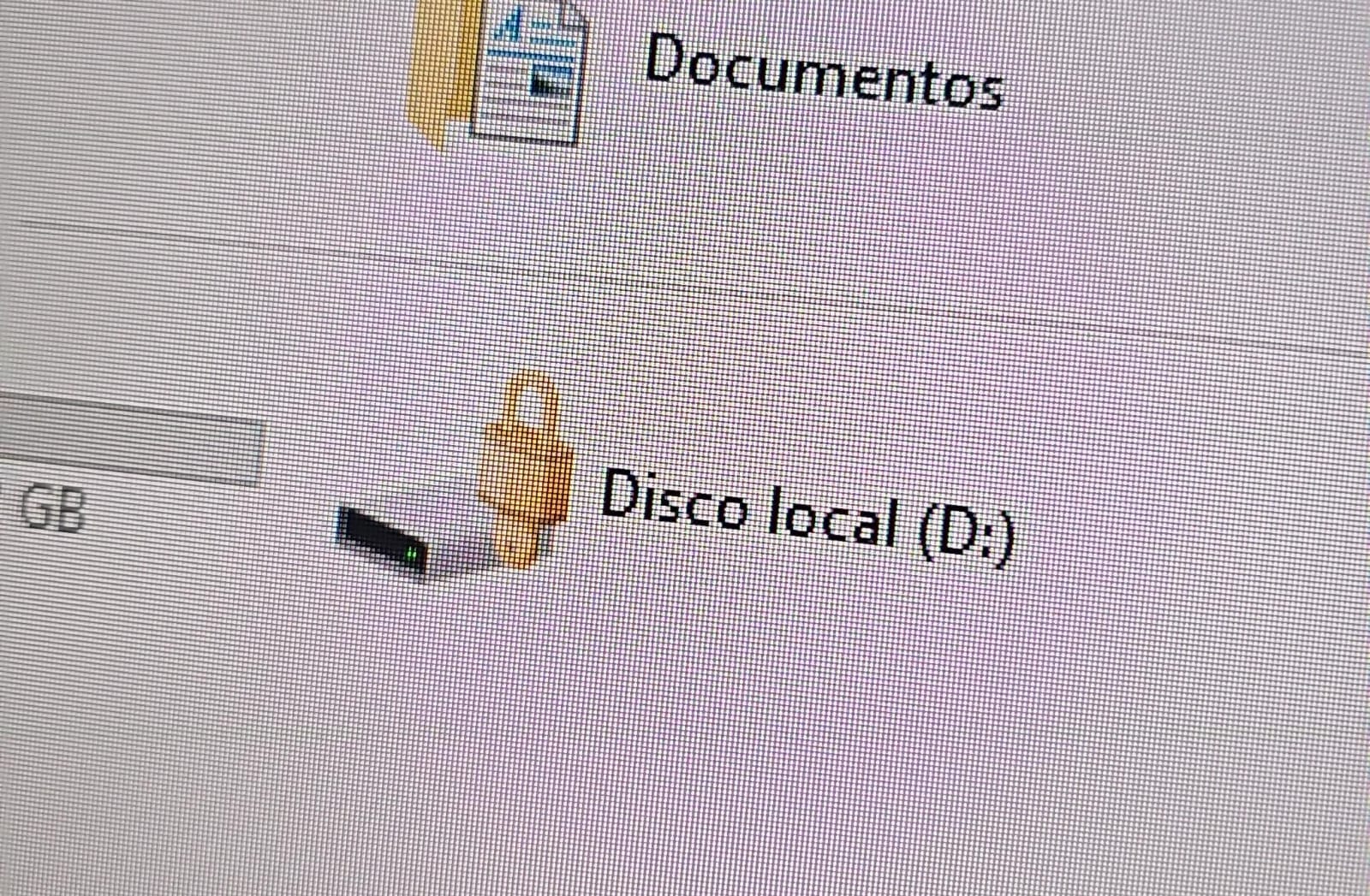
Drive icon indicating that the drive is locked

Drive icon indicating that the drive is locked

A recovery key was required to unlock the drive.
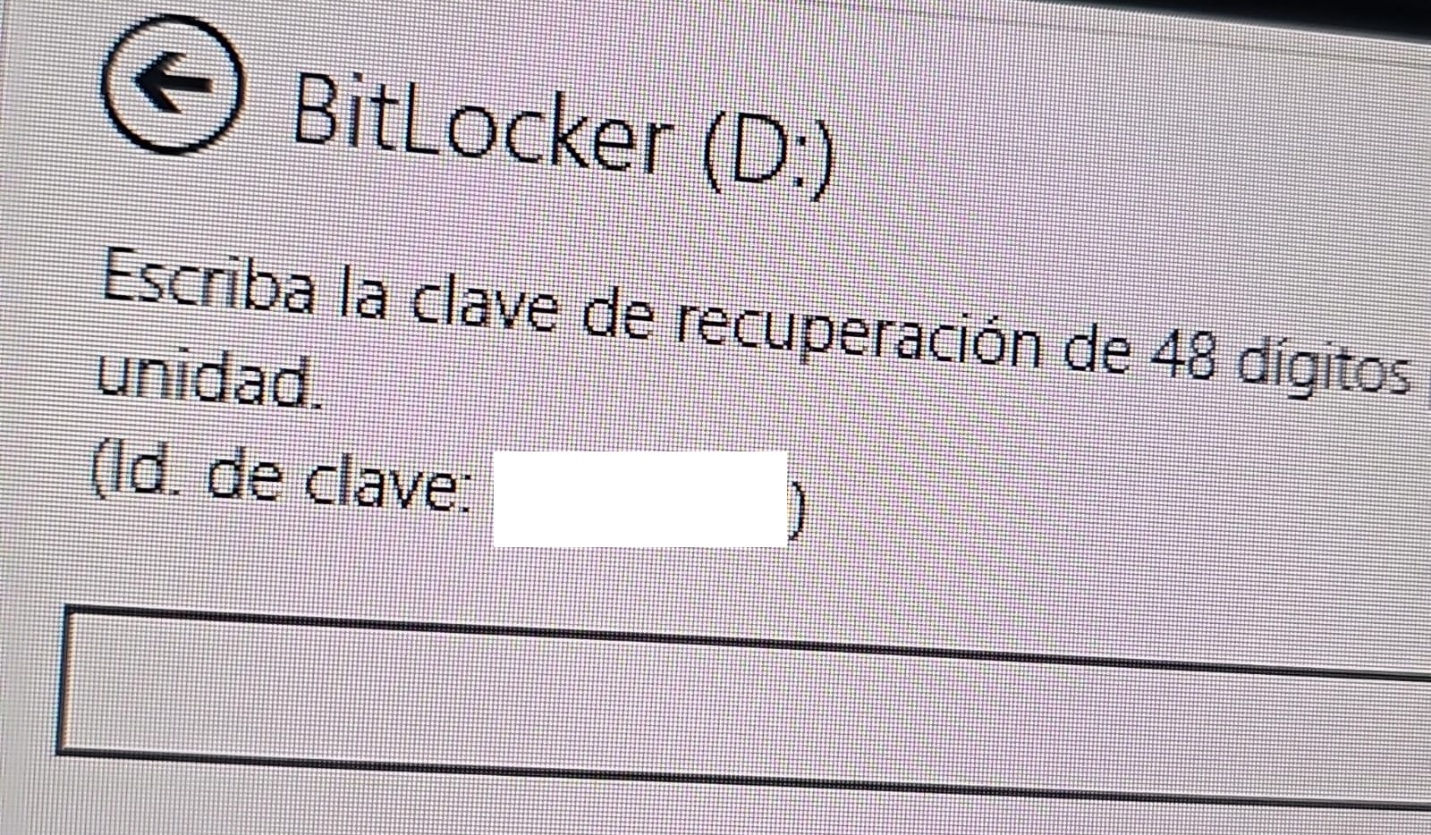
Attempt to access the disk's contents and the prompt for the BitLocker recovery key

Attempt to access the disk’s contents and the prompt for the BitLocker recovery key

This is not the first time we have seen such threats; a few years ago, our team discovered a threat known as ShrinkLocker, which utilized BitLocker to achieve its goals.

First case: abusing RDP to encrypt data

One of the incidents occurred in Colombia in June. The attackers exploited an internet-exposed RDP service on a machine connected to an 8 TB storage device containing mission-critical data. After taking control of the system and manipulating user credentials, the attackers enabled BitLocker exclusively on the drive that primarily stored financial data. Once the encryption was complete, they locked the drive and used the company’s printers to produce ransom notes.

Ransomware note

Ransomware note

Unfortunately, it was not possible to obtain evidence in the case due to the company’s rush to restore the encrypted disk. The communication with the attackers revealed a demand for just $3,000, and the company considered paying the ransom. After that, the system was restored before the forensic team could take any action, eliminating the evidence needed to assess the incident.

Attacker's reply to the victim's email sent to the address in the printed ransom note

Attacker’s reply to the victim’s email sent to the address in the printed ransom note

This attack was made possible by an internet-facing remote desktop service (RDP) with additional open ports, which employees used to access corporate information. By exploiting this network exposure and misconfiguration, attackers breached the system, identified an additional drive, and leveraged BitLocker to encrypt the data and demand a ransom payment. Leaving RDP ports open without proper security controls jeopardizes the security of systems and information, as highlighted in the our “Global Report: Anatomy of a Cyber World“.

Exposed ports identified in the system in recent months

Exposed ports identified in the system in recent months

The company confirmed that, due to compatibility issues with applications required for operation, EPP (Endpoint Protection Platform) protection was disabled on the system, making it easier for attackers to validate, enumerate, and execute applications without revealing malicious activity to central monitoring systems.

Second case: meet the XEntry Team

In another incident, which occurred in Mexico in May, our team identified how the threat actor gained initial access to the infrastructure. They exploited a misconfigured MSSQL service. This allowed them to execute commands on the system after obtaining the database login credentials from code insecurely published on GitHub.
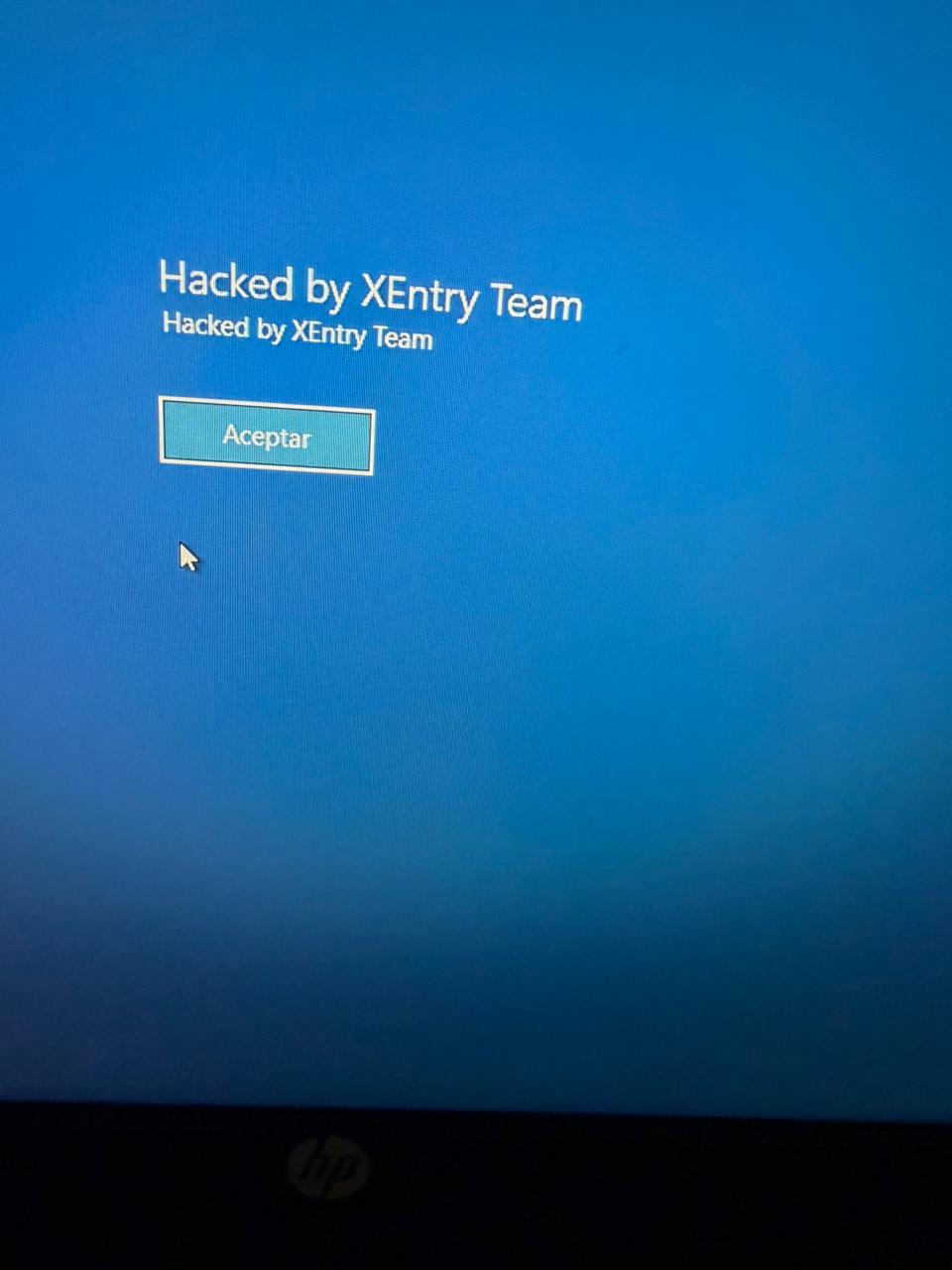
XEntry team attack

XEntry team attack

In this incident, the attack began three months prior to detection, with the intruder discovering and verifying their access to the environment. After confirming their access and privilege level within the MSSQL server settings, which extended beyond the DBMS to the underlying operating system, the attackers initially focused on manipulating certain aspects of the web server configuration on the same system. They lowered the server’s security settings and created web shell files in the publicly accessible folders. Many of these attempts to manipulate the service or create malicious files were contained by existing EPP security controls, but despite the alerts, the necessary investigation to address the activity was not conducted.
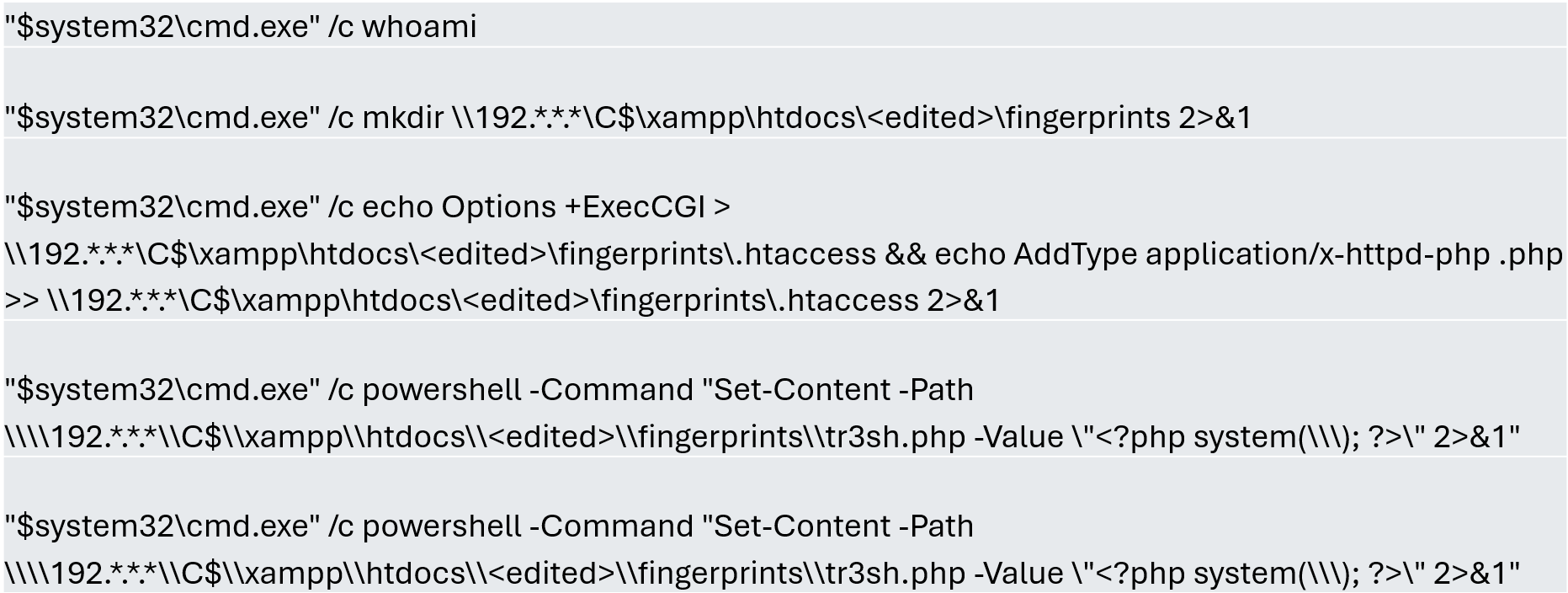
Commands executed when attempting to manipulate the web server

Commands executed when attempting to manipulate the web server

The attackers subsequently confirmed their ability to execute commands locally and set up their attack infrastructure to transmit data via a communications bridge. By exploiting the MSSQL service, they gained access to each of the organization’s internal systems.

The database engine used by the company was Microsoft SQL Server 2019.0150.2160.04, misconfigured to allow operating system сommand execution via the xp_cmdshell extended stored procedure.

Due to this misconfiguration of an internet-exposed service, the attackers established a channel capable of executing any type of command directed at the server and the local infrastructure within its scope.
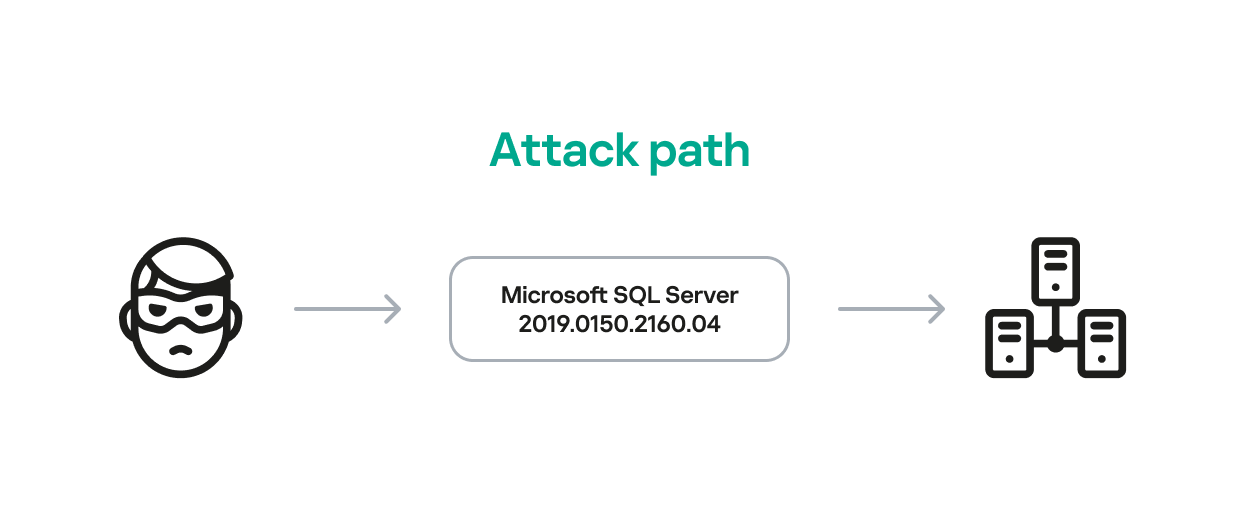
Attack path

One of the main objectives was to identify shared systems and resources that provided access to critical information. Our analysis confirmed the attackers’ access to systems storing configuration parameters for networking, enterprise management, and cloud services, among others.
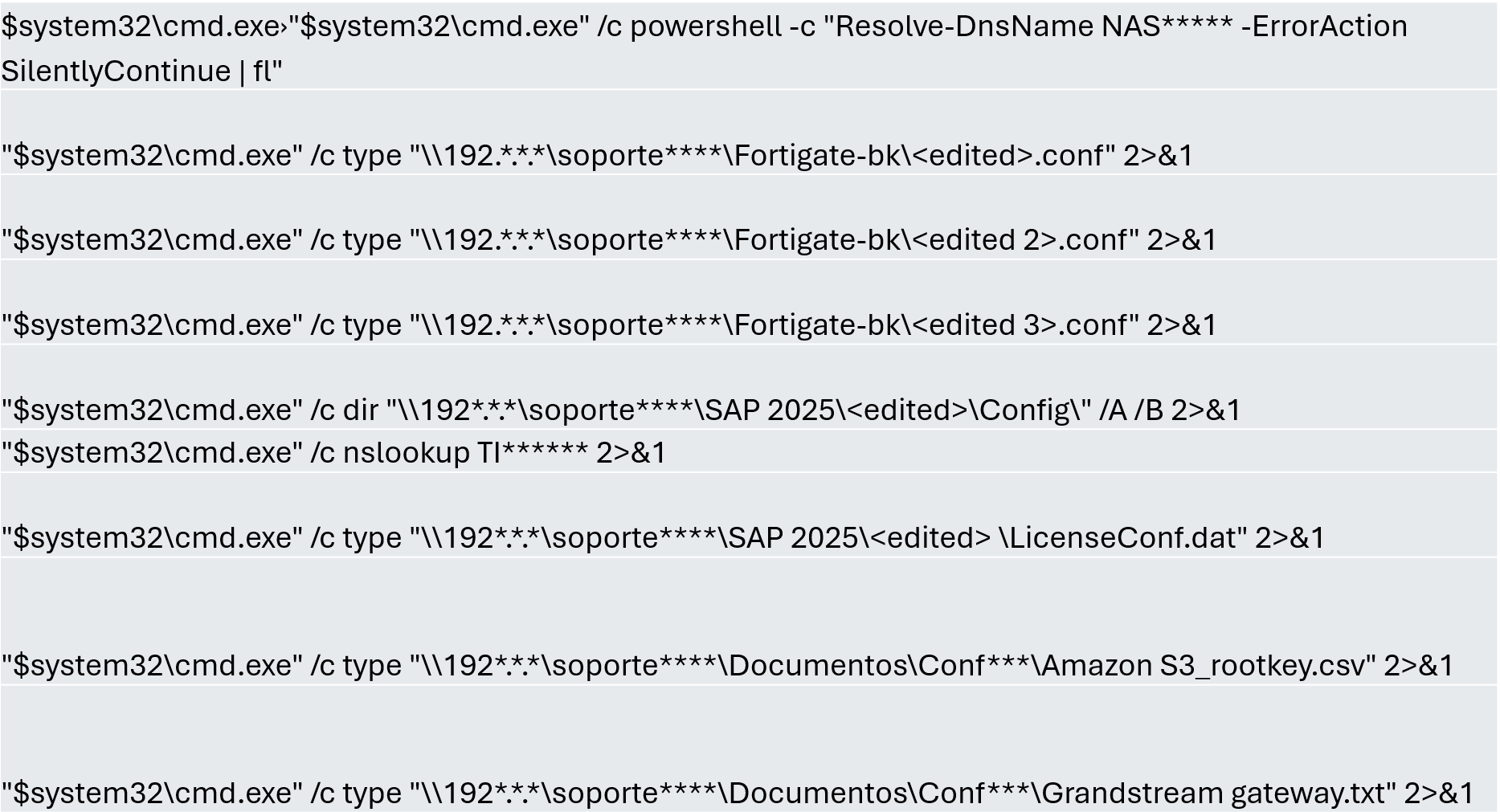
A subset of the critical information identified and collected by the attackers

A subset of the critical information identified and collected by the attackers

In early May, the attackers focused on running additional scans and deploying ManageEngine’s Endpoint Central RMM (Remote Monitoring and Management) to establish persistence and begin the final stages of their intrusion.

Scanning and RMM deployment

Scanning and RMM deployment

Further RMM-type applications, such as Mesh Agent and Tactical RMM, were installed in the days that followed. These were used to deploy scheduled tasks responsible for enabling the BitLocker service and individually encrypting the infrastructure’s disks, generating a key for each encrypted system.
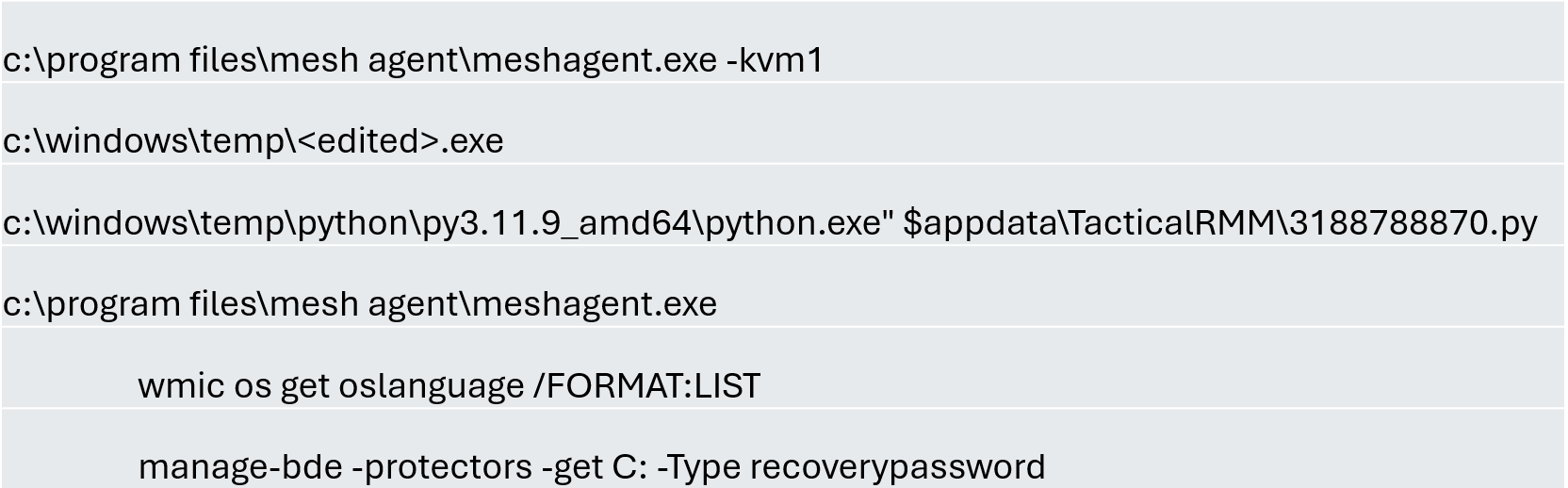
Commands executed through RMM tools to collect Bitlocker keys

Commands executed through RMM tools to collect Bitlocker keys

Finally, in mid-May, the attackers managed to execute a Group Policy Object (GPO) used to deploy activation and encryption tasks, as well as other policies responsible for continued deployment of RMM applications via scheduled tasks. The activity initially targeted critical systems but later spread to every system synchronized with the domain controller. Users became aware of the attack when their machines displayed a blue screen with the message “Hacked by XEntry Team”, and their credentials stopped working to access their systems.

A few hours later, ransom notes began emerging from office printers.

Ransom note printed by the XEntry team

Ransom note printed by the XEntry team

These cases confirm that adversary’s objective is to gain access to infrastructure while avoiding investment in or partnership with ransomware groups. Instead, they leverage built-in Microsoft tools to facilitate data encryption and ransom payments. Monitoring and centralizing logs on protected resources, as well as promptly managing alerts, are critical to countering this type of intrusion.

Conclusions

  • Although the systems under review had security measures in place, there was a lack of proper alert management or inadequate decisions regarding application incompatibilities.
  • We strongly recommend configuring the Remote Desktop Protocol (RDP) in strict accordance with cybersecurity best practices to prevent unauthorized access. This is especially critical: according to our Global Report: Anatomy of a Cyber World, more than 13% of incidents are related to policy violations and configuration errors, confirming that misconfigurations continue to pose a significant risk.
  • Organizations should prioritize strict application control policies and active monitoring of network traffic for command-and-control (C2) communications. This is especially critical: according to the same report, more than 20% of incidents involved the abuse of RMM (Remote Monitoring and Management) tools for execution and C2 strategies. The fact that attackers used more than three distinct tools to gain control during a single incident further underscores the urgent need for these measures.
  • Some questions remain unanswered due to a lack of evidence and a hasty system restoration effort that bypassed critical stages of the incident response process. It is important to ensure an adequate incident response procedure, preserving evidence to confirm all related activities, and adjusting or proposing controls to prevent future incidents involving similar TTPs.
  • Although the ransom notes do not reveal a clear connection between the actors, certain words used in the messages, as well as the method of delivery and communication, may confirm a link:

“As a guarantee, we have no negative online reviews about non-fulfillment of our obligations…” (Ransom note from the first case)

“Our reputation is the guarantee that all content will be fulfilled…” (Ransom note from the second case)

Our teams continue to monitor these threats.

Detection signatures

  • Trojan.Multi.Agent.gen
  • Trojan.Win32.GenAutorunMsSqlServerCommandRun.a
  • Trojan.Win32.Generic
  • Exploit.Win32.SCShell.a