








Although the technology powering them has evolved in performance and efficiency, the core principle of data centers hasn’t changed much in the past two decades.
Every new generation of infrastructure has been designed to shorten the distance to users, reducing latency and increasing reliability. However AI is putting serious strain on that model, and unprecedented demand for data centers is making companies think outside the box.
Terrestrial projects now face challenges from all directions, including land availability, cooling, power and water consumption, and local opposition.
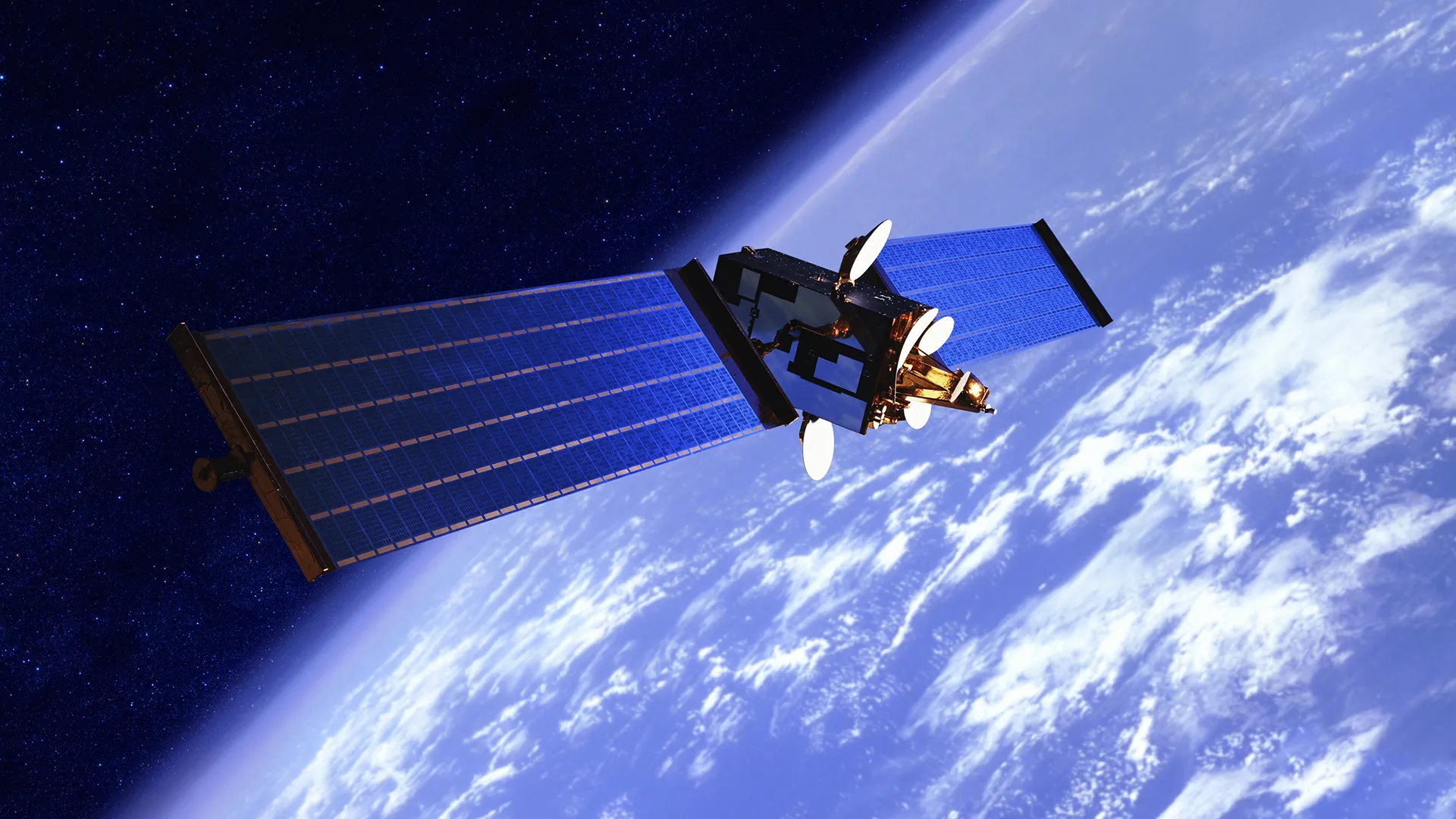
Step in orbital data centers. Some pioneers are now looking to rocket data centers up into space, and the model keeps shifting further from concept and closer to reality.
While enormous technical hurdles remain, advocates argue orbital data centers could eventually complement terrestrial campuses by shifting some of the most energy-intensive AI workloads away from land-based constraints.
Networking is what will define good orbital compute
Some of the benefits include virtually unlimited space to expand, uninterrupted access to green solar energy and cooler environments that don’t require so much cooling.
But while sending compute into space tackles some of the problems we face today, it reverses one of the biggest fixes we’ve spent years improving – latency.
In today’s instant economy, a data center has no use if it can’t exchange information quickly and reliably. Terrestrial networks lean heavily on fiber networks and physical connections, but orbital data centers would need to improve wireless transmission across hundreds of miles.
As work on this progresses, Internet exchange operator DE-CIX CEO Ivo Ivanov says orbital compute should be viewed as another layer in our increasingly distributed digital ecosystem – not an outright replacement for terrestrial compute.
To better understand whether orbital data centers are just another ambitious experiment or whether they could be the next evolution of digital infrastructure, I spoke with Ivanov about the industry’s biggest challenges.
- You noted that SpaceX's IPO has brought the idea of AI data centers in space into the mainstream. Setting the hype aside, how close is this to real, and what's actually driving the biggest companies in the world to look at space?
The idea of placing data centers in orbit is the kind of thing that immediately captures people's imagination. It belongs in the same category of technological ambition as reusable rockets, commercial spaceflight, or landing on the Moon.
For decades it felt like something that belonged in science fiction. Today, for the first time, it's being discussed as a serious infrastructure proposition. But I don’t think the real story here is about space – it’s about AI, and how it’s altering our global trajectory.
Over the last few years, we've seen an extraordinary increase in demand for compute capacity. AI training clusters are growing larger, power requirements are rising, and in many regions the availability of energy, land, and cooling has become a genuine constraint.
These constraints are what drive innovation, and that’s what we’re seeing play out here.
In theory, space offers access to continuous solar energy and room to scale without the physical limitations we experience here on Earth. Having said that, we're still at a very early stage.
I don't think we're talking about replacing terrestrial infrastructure anytime soon. What we're seeing today is the beginning of a serious exploration into how orbital resources could complement the digital infrastructure ecosystem that already exists.
There is still work to be done, particularly around networking – putting an AI data center into orbit would be a milestone achievement, but it won’t count for much if we have to truck hard drives into space to do any training. For now, all anybody can say with confidence is that it's becoming part of a broader conversation about how society will support the next generation of AI workloads.
- What problems could orbital data centers potentially solve that terrestrial infrastructure struggles with today?
I think the broader answer is that orbital infrastructure has the potential to ease some of the physical constraints that have shaped and limited digital infrastructure for decades. We can’t simply keep building more data centers – they need access to land, power, cooling, transport links, and of course, connectivity.
As AI continues to grow, some of those resources will become harder to secure, especially at the pace the industry wants to move.
That's why the industry is starting to look at non-terrestrial alternatives. Suddenly, you're talking about access to potentially unlimited solar energy, plenty of space, and the opportunity to scale at a pace that matches our ambitions for AI.
But putting data centers into orbit, as impressive as it would be, is only the first step. Google’s Project Suncatcher is already exploring how power might be harvested from the sun, while the European Space Agency’s OFELIAS project is exploring how optical feeder links between Earth and orbit can be optimized to reduce latency and disruption. There are lots of moving parts.
- From a networking perspective, what challenges will emerge once data centers move into orbit?
The moment you put a data center into orbit, networking becomes the make-or-break factor. A data center on Earth can usually rely on a dense ecosystem of fiber routes, Internet Exchanges, cloud on-ramps, and interconnection facilities. In orbit, that ecosystem doesn't exist yet.
Every workload, every application, and every AI model depends on data moving between different locations, and suddenly those journeys become much more complex.
A lot of the discussion I’m hearing focuses on bandwidth or speed, but I think predictability is the more interesting challenge. AI systems need data to arrive quickly, but they also need it to arrive consistently.
Optical and laser-based communications have enormous potential, but they also introduce new variables like cloud cover, atmospheric turbulence, satellite handovers, and changing orbital positions that can all affect how data moves between Earth and space.
That's why I believe the real challenge isn't simply connecting an orbital data center to the ground, but creating an interconnection layer that makes orbital, terrestrial, cloud, and edge infrastructure behave as though they're part of the same ecosystem.
That's a much bigger networking challenge than people realize.
- Elon Musk said orbital infrastructure is "only a few milliseconds away." How much could those milliseconds matter, and is latency the biggest challenge?
Those milliseconds absolutely matter. AI systems are fundamentally data-driven, and every additional moment spent moving information between users, applications, models, and infrastructure affects performance and productivity.
That's one of the reasons the industry is investing so heavily in edge computing – the closer you can bring compute resources to the data, applications, and users they serve, the better the experience tends to be.
Certainly, low-Earth orbit is only milliseconds away, but for latency-sensitive use cases, the 20-40 ms it takes to reach the stratosphere will provide a significant challenge for some AI inference use cases. So not all applications can possibly be served from hundreds of kilometers above the ground.
Having said that, performance isn't just a question of latency. A network that consistently delivers twenty-five milliseconds of latency is often more valuable for many enterprise use-cases than one that fluctuates between twenty and a hundred.
Physics determines how quickly data can travel, but factors such as atmospheric conditions, satellite handovers, routing decisions, and network architecture all influence how predictable that experience is.
- If a data center is in orbit and the AI workloads it serves are on Earth, what actually has to happen for those two worlds to behave as one network?
The way I like to think about it is that users shouldn't have to think about where a workload is running. Whether an application is being served from a terrestrial data center, an edge location, a cloud region, or one day an orbital platform, the experience should feel seamless.
Achieving that is much harder than it sounds, because data has to move continuously between different environments, and those environments need to behave as though they're part of the same network, even when they're separated by hundreds or thousands of miles and, increasingly, by the boundary between Earth and space.
That's one of the reasons projects like the ESA's OFELIAS initiative, which I mentioned earlier, are so important. As part of that initiative, DE-CIX is working alongside partners including the German Aerospace Center to explore how optical feeder links between satellites and the ground can become more stable, efficient, and predictable.
Rather than simply building more connections, we need to create an infrastructure foundation that allows terrestrial, satellite, and orbital resources to work together as a single ecosystem.
We've spent decades building that kind of seamless interconnection on Earth, and now we need to take what we’ve learned and combine it with new technologies to bring non-terrestrial infrastructure into the picture.
- Where does this leave terrestrial data centers and interconnection? Will orbital compute compete with what exists on the ground, or depend on it?
I don't see this as a competition at all. Digital infrastructure has a long history of adding new layers rather than replacing existing ones. Cloud computing didn't eliminate enterprise data centers, edge computing hasn't eliminated centralized clouds, and satellite connectivity hasn't replaced terrestrial networks.
Instead, each technology tends to find the role it's best suited to, and the overall ecosystem becomes more capable as a result.
I think orbital compute will follow a similar path. Some AI workloads may benefit from being processed closer to abundant energy sources in orbit, while others will remain in terrestrial edge data centers because they require ultra-low latency inference, regulatory compliance, or proximity to users and applications.
It’s not about choosing one over the other, but creating an architecture where workloads can be placed wherever they make the most sense and where data can move seamlessly between them.
- What should the industry be doing now to prepare networks for orbital compute?
I think the first step is recognizing that orbital compute is more than a compute challenge. It's a networking one. The industry has spent decades building highly interconnected ecosystems on Earth, where data can move efficiently between enterprises, cloud providers, networks, content platforms, and users.
If compute begins expanding into orbit, we'll need to ensure the same level of interconnection exists between terrestrial, satellite, and orbital environments. Advances in satellite communications, laser-based networking, and distributed infrastructure are creating new possibilities that didn't exist a decade ago.
What I'd like to see now is greater collaboration between network operators, cloud providers, infrastructure companies, and space organizations.
The technologies themselves are advancing rapidly, but the challenge is ensuring they evolve as part of a coherent ecosystem rather than a collection of isolated systems.
- Looking ten years ahead, what does a fully interconnected ecosystem spanning terrestrial, edge, cloud, satellite, and orbital infrastructure actually look like? What technologies will make it work?
The most interesting thing about the future is that people probably won't think about infrastructure at all. Today, we spend a lot of time talking about whether something runs in a cloud region, an edge location, a data center, or on a particular network.
Ten years from now, if we succeed with orbital infrastructure, workloads will simply move to wherever they can be processed most efficiently, and data will flow across terrestrial, satellite, and orbital environments as naturally as it moves across continents today.
When we look back at the great infrastructure achievements of the past, whether it's railways, electricity grids, undersea cables, or the Internet itself, their success wasn't measured by the technology, but by how completely they disappeared into everyday life.
People stopped thinking about the infrastructure and started focusing on what it enabled. I think we'll see something similar here. The future of digital infrastructure will be defined by our ability to connect every layer of the ecosystem into something that feels seamless.
That's when we'll know we've succeeded.

Follow TechRadar on Google News and add us as a preferred source to get our expert news, reviews, and opinion in your feeds.