
惯性聚合 高效追踪和阅读你感兴趣的博客、新闻、科技资讯
阅读原文 在惯性聚合中打开

推荐订阅源

J
Java Code Geeks
量子位
MongoDB | Blog
MongoDB | Blog
N
Netflix TechBlog - Medium
奇客Solidot–传递最新科技情报
奇客Solidot–传递最新科技情报
B
Blog
A
About on SuperTechFans
腾讯CDC
The GitHub Blog
The GitHub Blog
云风的 BLOG
云风的 BLOG
雷峰网
雷峰网
Last Week in AI
Last Week in AI
H
Help Net Security
WordPress大学
WordPress大学
博客园 - 司徒正美
钛媒体:引领未来商业与生活新知
钛媒体:引领未来商业与生活新知
H
Hackread – Cybersecurity News, Data Breaches, AI and More
T
Tailwind CSS Blog
博客园 - 【当耐特】
S
SegmentFault 最新的问题
美团技术团队
M
MIT News - Artificial intelligence
L
LangChain Blog
博客园 - 聂微东

Latest from TechRadar

Quordle hints and answers for Monday, April 13 (game #1540) NYT Strands hints and answers for Monday, April 13 (game #771) NYT Connections hints and answers for Monday, April 13 (game #1037) Morbid Metal developer explains why he ditched an origami art direction in favor of gritty sci-fi — 'It worked, but it didn't really feel like me' '71% of US households get routers from ISPs': Why new FCC rules could leave millions stuck with outdated,… 'The CPU is the system’s executive layer': Intel joins SambaNova as both face existential threat from… ‘More bang for your buck’: 7 easy ways to boost your MacBook Neo’s performance for free DJI Romo P vs Roborock Saros 10R — which robot vacuum comes out on top when it comes to dodging obstacles? I put… I spent 6 hours with Genshin Impact on the Galaxy S26 Ultra, and I can't believe how far mobile gaming has come What is the release date for The Testaments episode 4 on Hulu and Disney+? I reviewed the LG G6 for 3 weeks, and it's a fantastic OLED TV that's the new best option for brighter rooms Is your bird feeder camera doing more harm than good? 3 tips for using it safely as RSPB issues urgent disease warning Chelsea vs Man City Live Streams: How to watch Premier League 2025/26 from anywhere in the world, team news How to watch Alcaraz vs Sinner for FREE: TV Channels for Monte-Carlo Masters Final Sunderland vs Tottenham Live Streams: How to watch Premier League 2025/26 from anywhere in the world, team news Are these the best-designed workout headphones ever? I used them for a month to find out How to watch Snooker 900 John Virgo online (it's free) – stream O'Sullivan vs Higgins anywhere I've only just discovered the Walk With Frodo app on Garmin's Connect IQ store — and as as a huge LOTR nerd, it's going to make the next 1,800 miles fly by 'Just not sustainable': Why your monthly £25 broadband internet bill could soon hit £45 How to watch Paris-Roubaix 2026: Free Streams & TV Info as Tadej Pogacar chases third Monument How to watch Euphoria season 3 online – stream Zendaya & Sydney Sweeney drama from anywhere today '$15K bill destroyed a solo developer’s startup': How hackers are using leaked Google API keys to… There's a sneaky way to watch UFC 327 really cheap... NYT Connections hints and answers for Sunday, April 12 (game #1036) NYT Strands hints and answers for Sunday, April 12 (game #770) Quordle hints and answers for Sunday, April 12 (game #1539) Amazon's Ring cameras are the perfect solution to secure your home on a budget — shop today's best deals… I've tested every iPhone since the iPhone 12, and Ceramic Shield 2 is the first iPhone glass I fully trust UFC 327 live stream: how to watch Procházka vs Ulberg, start time, preview, full card We're officially getting the DJI Pocket 4 on April 16, but here's how Insta360 could beat it
New 3D memory architecture revives old camera technology ...
Craig Hale · 2026-05-15 · via Latest from TechRadar
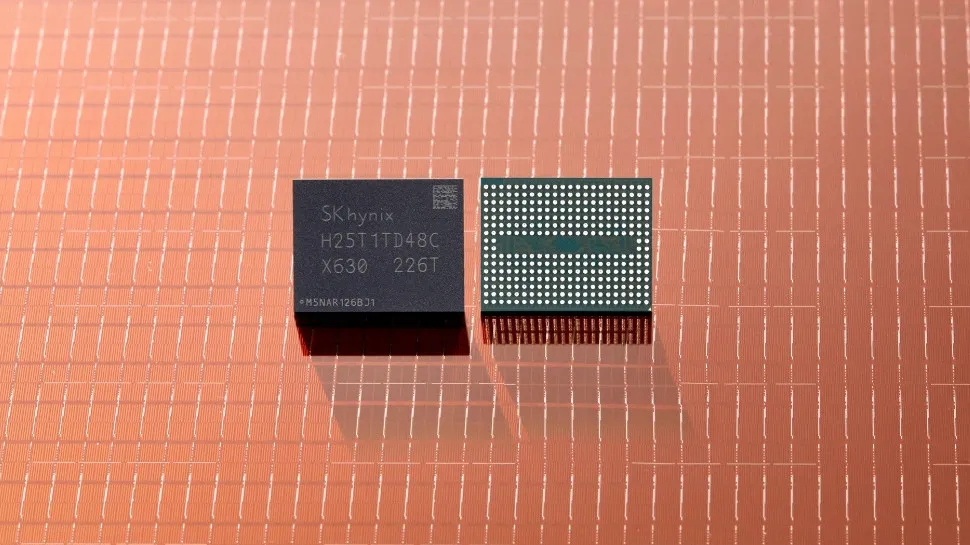
SK hynix NAND
(Image credit: SK hynix)

  • Researchers have created a NAND-DRAM hybrid, inspired by legacy camera tech
  • Indium Gallium Zinc Oxide also promises benefits over silicon
  • For now, this is just a prototype that needs further work

Belgian semiconductor research hub imec has unveiled what it claims to be the first 3D implementation of charge-coupled device (CCD) memory architecture, which revives technology we’ve already seen used before in digital cameras and camcorders, but for a totally different purpose.

With 3D CCD architecture, the researchers were able to break one of the biggest bottlenecks in AI computing today – the memory wall – where GPUs and accelerators spend more time waiting for data than processing it as a result of poor memory bandwidth and power efficiency.

The new design combines the speed and rewritability of DRAM with the density and efficiency of NAND to form a type of hybrid.

Old camera tech could actually lead to future generations of memory

CCD technology is nothing new – charge-coupled devices have long been used in digital cameras, broadcast video equipment, scientific imaging and even astronomy sensors, but CCDs have since been replaced with CMOS image sensors.

Traditionally, CCDs work by physically moving electrical charges between semiconductor gates, and this same principle applies to imec’s research to enable highly efficient memory movement.

Instead of arranging memory cells side-by-side on a flat plane, like conventional DRAM, the design stacks them vertically in a similar sense to 3D NAND, and this is important because DRAM’s limitations include leakage, higher manufacturing costs and a reduction in how quickly density improvements are happening.

The chips also replace silicon with IGZO (Indium Gallium Zinc Oxide), which promises lower leakage, longer data retention, easier low-temperature processing and strong compatibility with dense 3D stacking.

Sign up to the TechRadar Pro newsletter to get all the top news, opinion, features and guidance your business needs to succeed!

With this hybrid architecture, imec has already demonstrated a successful charge transfer at transfer speeds of more than 4MHz, but this is still very early-stage technology and the prototype only uses a small number of stacked layers. In theory, it should be able to scale as well as NAND, with commercial chips now surpassing 200 layers.

CCD architecture looks to promise reduced wear mechanisms and endurance that could even exceed NAND, making it ideal for highly intensive applications across AI training clusters and inference servers.

“Unlike byte-addressable DRAM, our 3D CCD device is designed to provide block-level data access, which is better suited to modern AI workloads,” Program Director for Storage Memory Maarten Rosmeulen added.

“The potential of this CCD device to be used as a buffer memory lies in its ability to be integrated in a 3D NAND Flash string architecture – the most cost-effective way to achieve a scalable, high bit density estimated to go far beyond the DRAM limit.”

The research also details future plans for the promising architecture, positioning it as a CXL Type-3 device, or one that complies with industry standards to connect GPUs, CPUs and accelerators. This is an important consideration, with hyperscalers now turning to CXL as AI models become too big for local GPUs alone.

As a prototype and research product, there are still plenty of hurdles to overcome, including thermal behavior, layer count scaling and of course real-world integration, however if it’s successful then the new hybrid architecture could seriously help to reduce one of the biggest costs in AI infrastructure, DRAM.

Looking ahead, imec proposes that the next phase may involve a totally new class of memory architecture rather than simply evolving existing designs further.


Google logo on a black background next to text reading 'Click to follow TechRadar'

Follow TechRadar on Google News and add us as a preferred source to get our expert news, reviews, and opinion in your feeds.

With several years’ experience freelancing in tech and automotive circles, Craig’s specific interests lie in technology that is designed to better our lives, including AI and ML, productivity aids, and smart fitness. He is also passionate about cars and the decarbonisation of personal transportation. As an avid bargain-hunter, you can be sure that any deal Craig finds is top value!