



惯性聚合 高效追踪和阅读你感兴趣的博客、新闻、科技资讯
阅读原文 在惯性聚合中打开

推荐订阅源

freeCodeCamp Programming Tutorials: Python, JavaScript, Git & More
Jina AI
Jina AI
钛媒体:引领未来商业与生活新知
钛媒体:引领未来商业与生活新知
T
Troy Hunt's Blog
T
The Exploit Database - CXSecurity.com
Microsoft Security Blog
V
Visual Studio Blog
F
Fortinet All Blogs
博客园_首页
P
Proofpoint News Feed
V
Vulnerabilities – Threatpost
The Cloudflare Blog
C
Cyber Attacks, Cyber Crime and Cyber Security
cs.CL updates on arXiv.org
H
Heimdal Security Blog
cs.AI updates on arXiv.org
A
About on SuperTechFans
Cyber Security Advisories - MS-ISAC
AI
AI
奇客Solidot–传递最新科技情报
奇客Solidot–传递最新科技情报
S
Security Affairs
The Register - Security
S
Security @ Cisco Blogs
Hugging Face - Blog
Hugging Face - Blog
OSCHINA 社区最新新闻
OSCHINA 社区最新新闻
博客园 - 聂微东
Schneier on Security
WordPress大学
WordPress大学
Google DeepMind News
GbyAI
GbyAI
T
Tailwind CSS Blog
Hacker News: Ask HN
Hacker News: Ask HN
W
WeLiveSecurity
D
Docker
L
LangChain Blog
B
Blog RSS Feed
The Last Watchdog
The Last Watchdog
Cloudbric
Cloudbric
TaoSecurity Blog
TaoSecurity Blog
N
Netflix TechBlog - Medium
酷 壳 – CoolShell
酷 壳 – CoolShell
I
InfoQ
The Hacker News
The Hacker News
AWS News Blog
AWS News Blog
Exploit-DB.com RSS Feed
宝玉的分享
宝玉的分享
I
Intezer
云风的 BLOG
云风的 BLOG
V2EX - 技术
V2EX - 技术
K
KPMG report finds enterprise disconnect between AI and its ROI | CIO

THP Feed -- all premium articles

Intel Micron commits $500 million to GlobalWafers Anthropic says it can read Claude While the U.S. flip-flops on chip sanctions, China is building its own chip supply market — export controls are creating conditions for a Sino-Russian chip trade alliance Elon Musk receives FTC greenlight to buy Mesh Optical as interconnects emerge as AI Rapidus fab roadmap examined — first new leading-edge chipmaker in decades has one Hokkaido fab, a 2027 deadline, and 60 potential customers SiPearl South Korea Nvidia and Intel tout homegrown American chip supply chain prowess as country bolsters local production, but gaps remain — crucial Blackwell packaging steps remain offshore as projects grow in scope and scale Steam Machine interview full transcript: Valve engineers discuss $1,049 pricing, compact design, component shortages, and Windows support Inside the history of DRAM price-fixing lawsuits — how HBM allocations could make a difference after two decades of failed cases U.S. PC shipments drop 7%, market isn The bifurcated laptop landscape of Computex 2026 – MacBook Neo competitors with 8GB of RAM, and expensive Nvidia laptops promising an agentic-focused future of Windows on Arm Chinese Z.ai Imec Solidigm VP talks PCIe 6.0 SSDs, next-gen floating gate NAND, liquid cooled storage and more — Avi Shetty, VP of AI, Solutions & Market Enablement discusses the future of enterprise storage tech The AI tokenmaxxing party is crashing over spiraling costs — leaked consulting firm audio suggests no one is sure how to measure AI effectiveness US Secures Netherlands for Pax Silica Alliance in key win for strategic chip alliance — tension remains over MATCH Act restrictions China tops the list of fastest supercomputers with a CPU-only behemoth, ending US champion El Capitan Arm servers capture over 45% of data center market revenue — GPU clusters and high-end AI infrastructure fuel a tectonic shift away from x86 Post-silicon era gets closer as industry giants crack the 2D transistor scaling bottleneck with breakthrough tech — imec, ASML, and TSMC fab complementary 2D-material transistors at 50nm pitch on a 300mm wafer Ditching the cloud for local AI — how I use two mini PCs to process millions of tokens a day and save money on costly API fees Intel US pulls the Intel AMD’s massive SP7 socket for EPYC Venice and Intel’s gargantuan 9,324-pin socket for Diamond Rapids appear at Computex — SP7 and LGA9324-1 sockets will power the next generation of AI servers Marvell details vision of optically-interconnected data centers spanning across thousands of kilometers — new interconnects sampling later this year would allow CSPs to pool resources based on workload Nvidia's high-speed AI data center storage servers break cover, touting 2.9 petabytes of storage and extreme PCIe 6.0 performance — Wiwynn shows off SCADA server with GPU-accelerated storage AI is set to consume up to 600 billion gallons of water by 2030 — rising energy consumption primarily to blame as… Google reportedly books Intel for packaging more than 3 million TPUs in 2028 — SK hynix is testing Intel's… Analyzing TSMC's fab expansion roadmap — multi-fab N2 ramp, CoWoS, SoIC, and uncorking bottlenecks Anthropic's warning over AI self-improvement has a hidden message — accelerating development requires more compute before companies ever risk losing control of frontier AI models Demand for data center CPUs has surged, and AI agents are responsible – why the CPU to GPU ratio is more important… Executives are cutting jobs for an AI future that hasn't fully arrived yet, even as productivity gains remain difficult to prove — data neither confirms nor refutes an AI unemployment apocalypse Tom's Hardware Unfiltered: Computex 2026, Day 4 — the B2B shift, and we say farewell to Taipei Qualcomm Roundtable Interview transcript — SVP of Compute and Gaming talks Snapdragon C, RTX Spark, and the… AMD's Helios MI455X AI platform breaks cover, initial systems use UALink-over-Ethernet interconnects — AMD's Vera Rubin rival surfaces, but the downsides of Ethernet could hamstring performance Frore shows off LiquidJet Nexus coldplate for Nvidia Vera Rubin, other AI accelerators — offers up claimed 10% token generation boost over rival liquid-cooling solutions Tom's Hardware Unfiltered: Computex 2026, Day 3 — the heat bites as our team races across Taipei Tom's Hardware Unfiltered: Computex 2026, Day 2 — Interviews, roundtables, and the first day at the Nanggang… The rise of local agentic computing faces a brutal reality: rising DRAM prices —  RTX Spark, Gorgon Halo chips subject to 63% DRAM contract price hike this quarter Astera Labs showcases 320-lane PCIe 6.0 switch for vendor-agnostic scaling in data centers — up to 80 accelerators… Intel Xeon 6+ Computex roundtable interview transcript — Kira Boyko and Tim Wilson on 18A wafer allocation, Clearwater Forest, and dropping hyper-threading Tom's Hardware Unfiltered: Computex 2026, Day 1 — night markets, taking the MRT train, and a slew of demos Intel Arc G3 interview transcript — Intel's Senior Product Director talks new handheld chips, Arrow Lake… Nvidia's RTX Spark could caplitalize where Qualcomm's Arm-based efforts have not —  following the expiration of Qualcomm's Windows on Arm deal, Nvidia stands poised to pick up the slack Qualcomm aims Snapdragon C laptop chip at the budget laptop segment, as manufacturers feel the DRAM squeeze —  analysts warn sub $500 laptop market may disappear before 2028 Access Tom’s Hardware Premium’s Computex 2026 coverage for free — sign up for an account to read… Tom's Hardware Unfiltered: Computex 2026, Day 0 — peek behind the curtain to see how we're covering the… Trailing-edge foundry roadmaps for GlobalFoundries, UMC, and SMIC — mature node chipmakers each pursue differing… AI costs begin to bite as agents may increase token demand by 24 times, says Goldman Sachs report — Uber and Microsoft among companies feeling the bite of tokenized billing IBM spins off America's first quantum chip foundry with $2 billion in federal and private funding — newly-minted 'Anderon' foundry to offer 300mm quantum wafer fab and manufacturing services Imec builds world's first High-NA EUV-fabricated quantum dot qubit device — breakthrough could pull quantum computing onto the same manufacturing roadmap as next-gen AI processors, compressing timelines Analyst says Nvidia poised to capture two-thirds of the x86 server CPU market from Intel and AMD with expected $20 billion in revenue — 'Nvidia is already on track' to deliver 4 million Vera CPUs in FY2027 AI is starting to out-design chip engineers in narrow areas as LLMs accelerate software chip design tool development — "There is still a lot of human guidance" says Berkley researcher The custom AI ASIC state of play (May 2026) — Broadcom deals, Google TPUs, Meta MTIA & beyond Memory makers brace for hydrogen fluoride pricing shock as Hormuz blockade impacts supply chain — key etching and cleaning material faces sharp cost increase amid trade disruption SMIC founder and AMEC CEO urge Chinese fabs to test domestic chipmaking tools on active production lines — equipment makers post record revenue but falling margins Why now is the best time to jump on the OLED monitor bandwagon — breaking down new-gen panel tech and our top… Musk's Colossus 1 AI supercomputer's inefficient mixed-architecture design couldn't be used to train Grok, so Anthropic's using it for inference instead — Musk readies unified Blackwell-only Colossus 2 for frontier training and potential IPO Leading-edge foundry roadmaps for TSMC, Intel and Samsung — outlining the path to 1.4nm nodes and beyond Japanese chemical giant JSR expands to Taiwan for EUV photoresist production near TSMC — plant to fill missing… Why building a quiet PC is harder than you think — what to know, and how to make your rig quieter The tech industry is moving faster than ever. Keep up with Tom’s Hardware Premium, available from just $7 per… Arm's $2 billion in AGI CPU sales are still not enough to penetrate 5% of overall market share, analyst reveals — at least $90 million worth of CPUs to be shipped before FY2027 The Middle East had everything data center builders and hyperscalers could wish for — then the Iran war happened White House reportedly considers mandatory government vetting of AI models before release — executive order under… High-capacity HDD roadmap: the race to 100TB and zettabyte-scale storage — Toshiba, Seagate and WD outline three… Survey shows that nearly half of Americans don't want new data centers built near their homes — 47% oppose… Huawei braces for $12 billion in AI chip revenue driven by homegrown AI model demand —  Chinese fabs can barely keep up as Nvidia's market share craters within the region Steam Controller interview full transcript — Valve programmer and engineer discuss design, latency, prototyping, and the joys of not having a kernel driver Skyrocketing component prices push Big Tech capex to record $725 billion — Microsoft alone attributes $25 billion of AI budget to increased memory and chip costs ASML's roadmap for chipmaking lithography tools examined — from DUV to Low-NA, High-NA, Hyper-NA, and beyond Talent over tokens: AI models are becoming more expensive to run, and productivity gains are limited — efficient workers might be the solution to strained budgets Meta's multi-billion-dollar Graviton deal highlights intensifying CPU shortages in AI infrastructure — the industry signals a shift to Agentic inference workloads, pushing demand TSMC SoIC 3D stacking roadmap outlines path from 6-micron pitches today to 4.5-micron in 2029 — Fujitsu's… OpenAI and Microsoft Inside Google TSMC How a cavalcade of blunders gave unauthorized users access to Claude Mythos — restricted model accessed by third parties, thanks to knowledge from data breach Congress moves to strip the DoC of chip-export discretion with the MATCH Act — DUV lithography machines among those targeted in chipmaking tool crackdown Showstopper Build: Greyscale — building a custom-looped ITX PC that pushes the form factor to its limits Testing PC games using FEX on a high-end Android tablet can yield playable results — but the early tech is still… Chinese chipmakers made record profit in 2025, despite slipping margins — U.S shipments fall 34% as Beijing shores up local chipmaking efforts Local political revolts threaten to derail US data center projects — mounting delays are already costing AI hyperscalers billions Quantum photonics roadmap — how Xanadu and PsiQuantum are looking to transfer qubits through beams of light YMTC Anthropic Our experts review your astonishing PC builds and setups in Rig Rundown — from wall-mounted setups to a system… Why we spent 50+ hours retesting Intel’s Core Ultra 270K Plus and 250K Plus Anthropic's Claude Mythos isn't a sentient super-hacker, it's a sales pitch — claims of 'thousands' of severe zero-days rely on just 198 manual reviews Intel's EMIB-T packaging technology set for fab rollout this year — as TSMC CoWoS capacity remains limited, EMIB-T is preparing for advanced AI accelerator designs A brief history of Denuvo DRM and the new hypervisor bypass — inside the cat-and-mouse game between Denuvo and the… PCI Express roadmap: The path to 1TB/s with PCI 8.0, the challenges of integration, and beyond Why TSMC grew four times faster than its foundry rivals in 2025 — price hikes, vertical integration, and commanding technology lead pay dividends WD Innovation Day 2026 press Q&A transcript: roadmap plans to reach 60TB with ePMR and 100TB via HAMR by 2029 — 'at some point, the laws of physics will require us to transition to HAMR' America’s AI chip rules keep changing — and the rest of the world is paying the price Here’s what the FCC ban on foreign-manufactured routers actually means for consumers China's homegrown silicon suppliers gain traction as Nvidia struggles to get its chips into the market — Huawei, Cambricon and more step up to fill crucial market gap Why Nvidia just poured $2 billion into AI ASIC competitor Marvell — NVLink Fusion turns into soft ecosystem…
The GeForce RTX 30-series upgrade matrix — does your Ampere GPU need an upgrade in 2026?
Jeffrey Kamp · 2026-04-28 · via THP Feed -- all premium articles
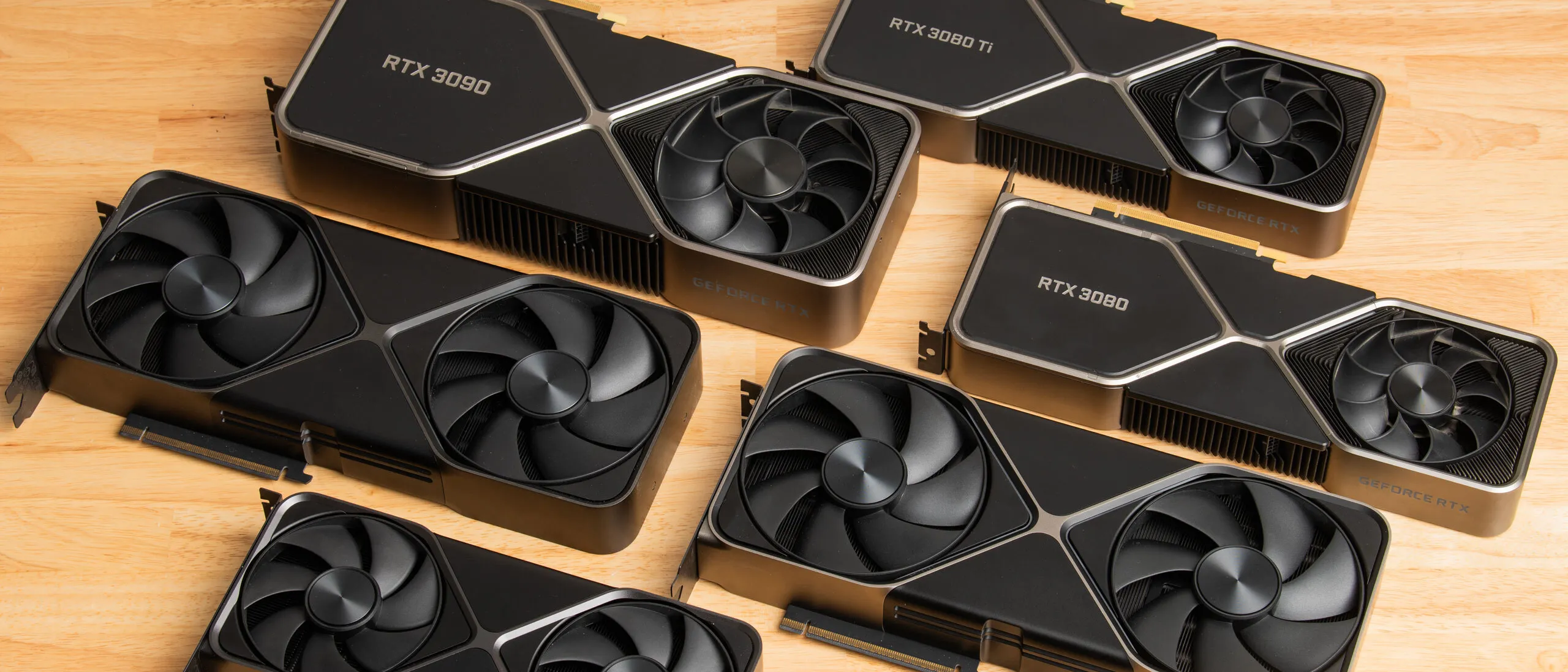
An array of RTX 30-series GPUs on a wooden desk.
(Image credit: Tom's Hardware)

Nvidia’s RTX 30-series graphics cards made a big splash when they began arriving all the way back in 2020. Those products delivered a huge performance leap in their day, but time marches on for us all. The oldest Ampere cards are just a few months away from their sixth birthdays, and even though Nvidia has continued to support 30-series cards with its latest Game Ready driver optimizations and DLSS model upgrades, other signature GeForce features like DLSS Frame Generation are never coming to Ampere.

Even where new software features are technically supported, Ampere comes with big asterisks. DLSS 4.5 is the first upscaling model to take advantage of FP8 acceleration that’s exclusive to RTX 40- and 50-series Tensor Cores. RTX 30-series cards can still technically run DLSS 4.5 upscaling models, but the improved image quality they offer now demands a significant performance penalty from Ampere compared to past DLSS versions. And if you want to experiment with frame generation, you have to deal with the lower image quality of AMD’s cross-platform FSR 3.1 framegen tech, assuming it’s available at all in a given title.

Those software limitations aren’t insurmountable obstacles to a good gaming experience, but VRAM is a different story. Ampere cards arrived when games were less hungry for VRAM than they are today, and even the RTX 3080 has just 10GB to play with. Unless you bought into the highest end of the Ampere range, you’re likely feeling constrained by your card’s 8GB of VRAM with max settings in the latest games at resolutions higher than 1080p.

Article continues below

If any or all of those limitations have you itching for a more powerful, more flexible modern GPU, and you’d rather not navigate our GPU Hierarchy to figure out what constitutes a true upgrade, worry not. We’ve done the hard number-crunching work and thought through the most common gaming scenarios to arrive at the best upgrade path for each common Ampere card.

Monitoring the situation

Before we talk about specific upgrade paths for your GPU, we need to take a moment and consider the monitor you’re using with it. If you only have a 1080p or 60Hz monitor, a fixed-refresh-rate panel, or all of the above, your graphics card likely shouldn’t be your first or only upgrade. It’s overwhelmingly likely that you won’t enjoy a perceptibly smoother or lower-latency gaming experience on a 60Hz monitor than you currently do with the graphics card you already own.

The continuing development of high-quality upscaling tech means that monitor resolution is no longer a hard wall for gaming smoothness and responsiveness. Instead, it’s a hard cap on the image quality you can achieve. To get the most out of DLSS (or FSR), you really want to give those upscalers the highest output resolution and highest refresh rate to work with that you can. Upscaling from lower resolution to 1080p just isn’t worth it anymore unless you absolutely must, while upscaling to 4K using DLSS 4.5 Performance requires only a small frame-rate penalty relative to native 1080p output.

Along with more and more affordable OLED options, we’re seeing plenty of dual-mode monitors that can offer high-refresh-rate 4K output alongside even faster 1080p modes for downright affordable prices. And broadly compatible variable-refresh-rate tech is now in virtually every gaming monitor, so you can likely enable G-Sync or G-Sync Compatible modes with the GPU you already have.

Best of all, displays are one of the few PC gaming products that don’t rely heavily on advanced logic chips or DRAM to work, so prices for gaming monitors have remained reasonable even as everything else has gotten eye-wateringly expensive. If your monitor is older than your Ampere GPU, it’s likely high time for an upgrade. Start there first.

RTX 3080 Ti, RTX 3090, and RTX 3090 Ti: Wait for a compelling upgrade

If you’re one of the lucky gamers with an RTX 3080 Ti, RTX 3090, or RTX 3090 Ti, you can rest easy knowing that your graphics card has plenty of life left in it. Any upgrade right now is elective rather than essential, especially if you’re already using DLSS upscaling. The RTX 3080 Ti’s 12GB of VRAM is the only conceivable pain point we can see in this upper tier of Ampere.
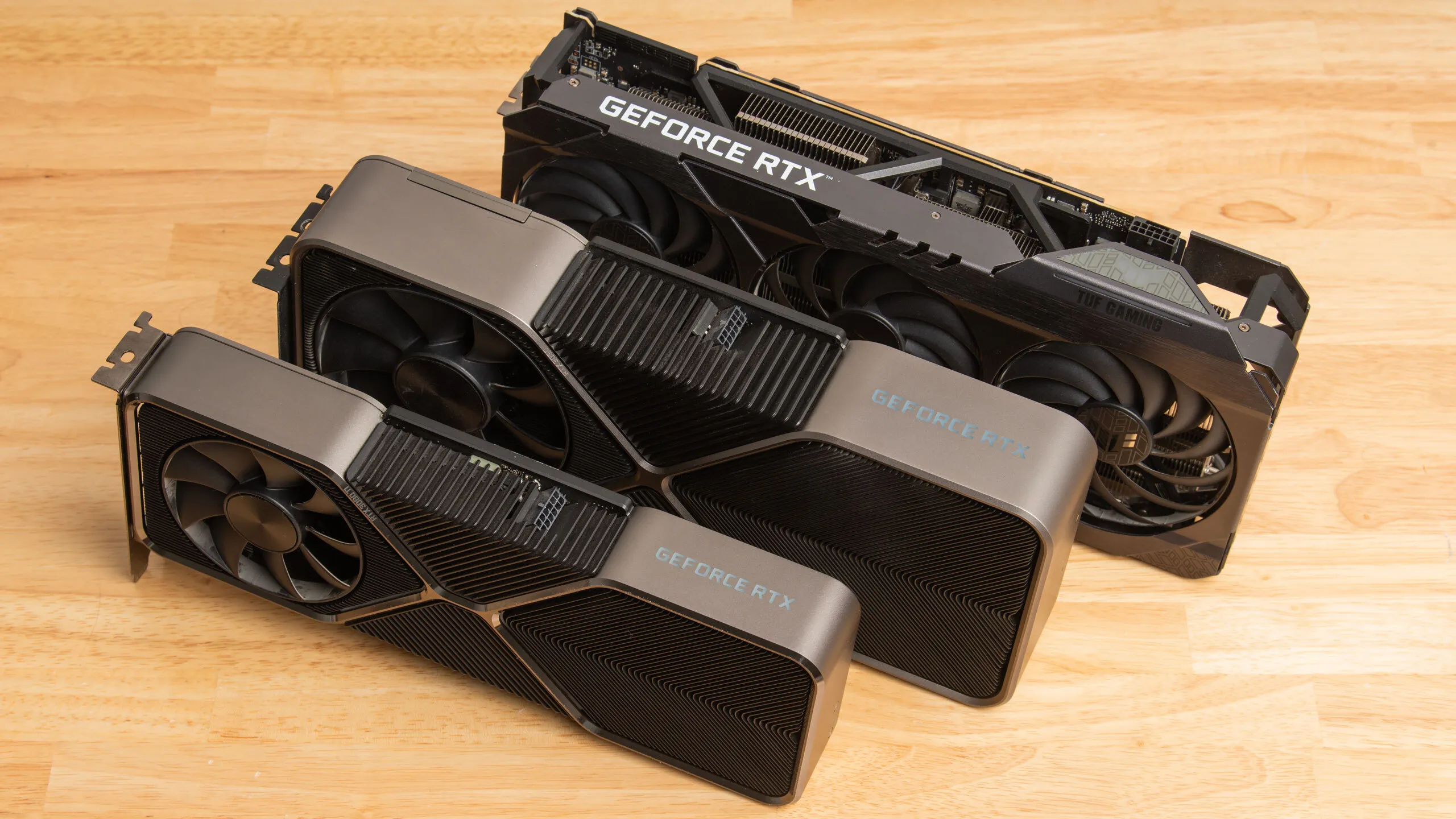
3080 Ti, 3090 and 3090 Ti GPUs on a desk.

(Image credit: Tom's Hardware)

The only cards that are likely to feel like major upgrades for you are the RTX 4090 or RTX 5090, and unless you’re willing to compete with local LLM trailblazers for a used 4090 or put down nearly 2X MSRP for a new 5090, your best bet is to hold onto your current card unless you’re really feeling limited by its ray-tracing or path-tracing horsepower, the lack of FP8 Tensor Core acceleration for DLSS 4.5, or the lack of high-quality framegen support.

If you’re only gaming, 24GB of VRAM isn’t doing much for you, and you might ponder selling your RTX 3090 or 3090 Ti to one of those same LLM enthusiasts while the market is hot and putting the proceeds toward a new RTX 5080, which is substantially faster and more power-efficient than those cards and gives you full-speed access to DLSS 4.5 and MFG. But both of those things are nice to have rather than essentials.

RTX 3080: Upgrade if you’re feeling the VRAM pinch

The RTX 3080 isn’t constrained so much by its compute horsepower, which remains strong in pure raster gaming, as it is by its 10GB of VRAM. Especially if you’re trying to game at 1440p or 4K with max settings and minimal upscaling, you are likely finding that your 3080’s VRAM is the biggest obstacle to achieving the best combo of performance and image quality nowadays.
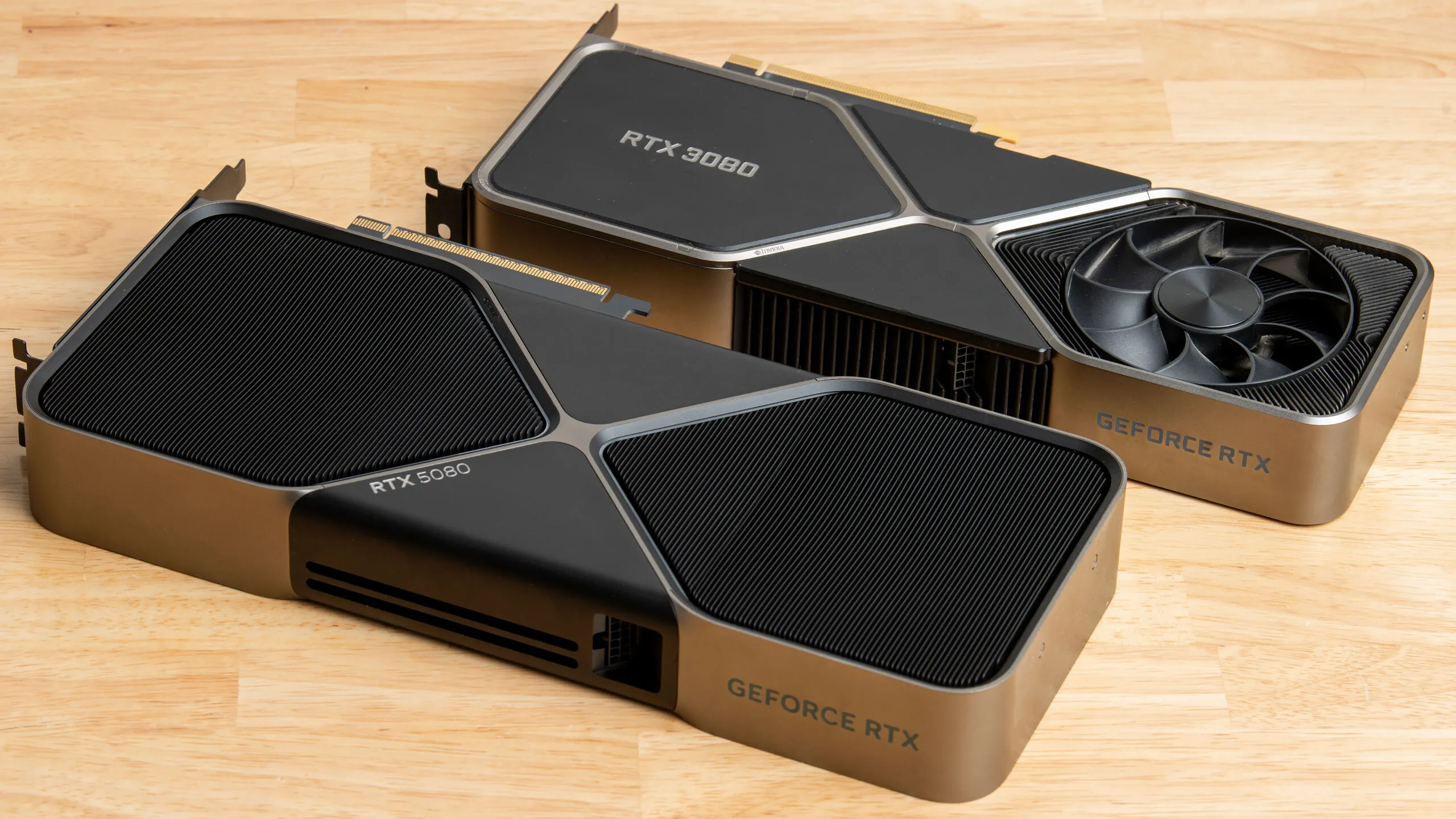
RTX 5080 and RTX 3080 Founder's Edition on a desk.

(Image credit: Tom's Hardware)

Unfortunately, the most tangible upgrades for the 3080 are the currently pricey RTX 5070 Ti or the chronically overpriced RTX 5080. Both of those cards will feel much faster for both raster and ray-traced games, they enable full-speed DLSS 4.5 upscaling for practically free performance boosts, and they give you access to framegen and MFG juice that the 3080 doesn’t support at all.

But you’d have to be really hurting for an upgrade to shell out for either of those cards, given their stiff premiums over MSRP right now. A faster, higher-resolution monitor paired with DLSS 4 upscaling (Preset K in Nvidia App override language) is a cheaper, easier path if you haven’t already tried it.

But if you’re a 3080 gamer looking for that “wow” moment from a new GPU, the RTX 5070 Ti and 5080 are the way, and their prices are what they are.

RTX 3070 and RTX 3070 Ti: Upgrade now

As with the RTX 3080, the biggest performance constraint for the RTX 3070 and 3070 Ti these days isn’t necessarily raw compute, but VRAM. Nvidia only ever offered these cards in 8GB flavors, and they still offer solid 1080p gaming performance with the latest titles. But if you’ve tried to max out settings at 1440p or above, you’ve likely felt the squeeze of that limited VRAM pool.
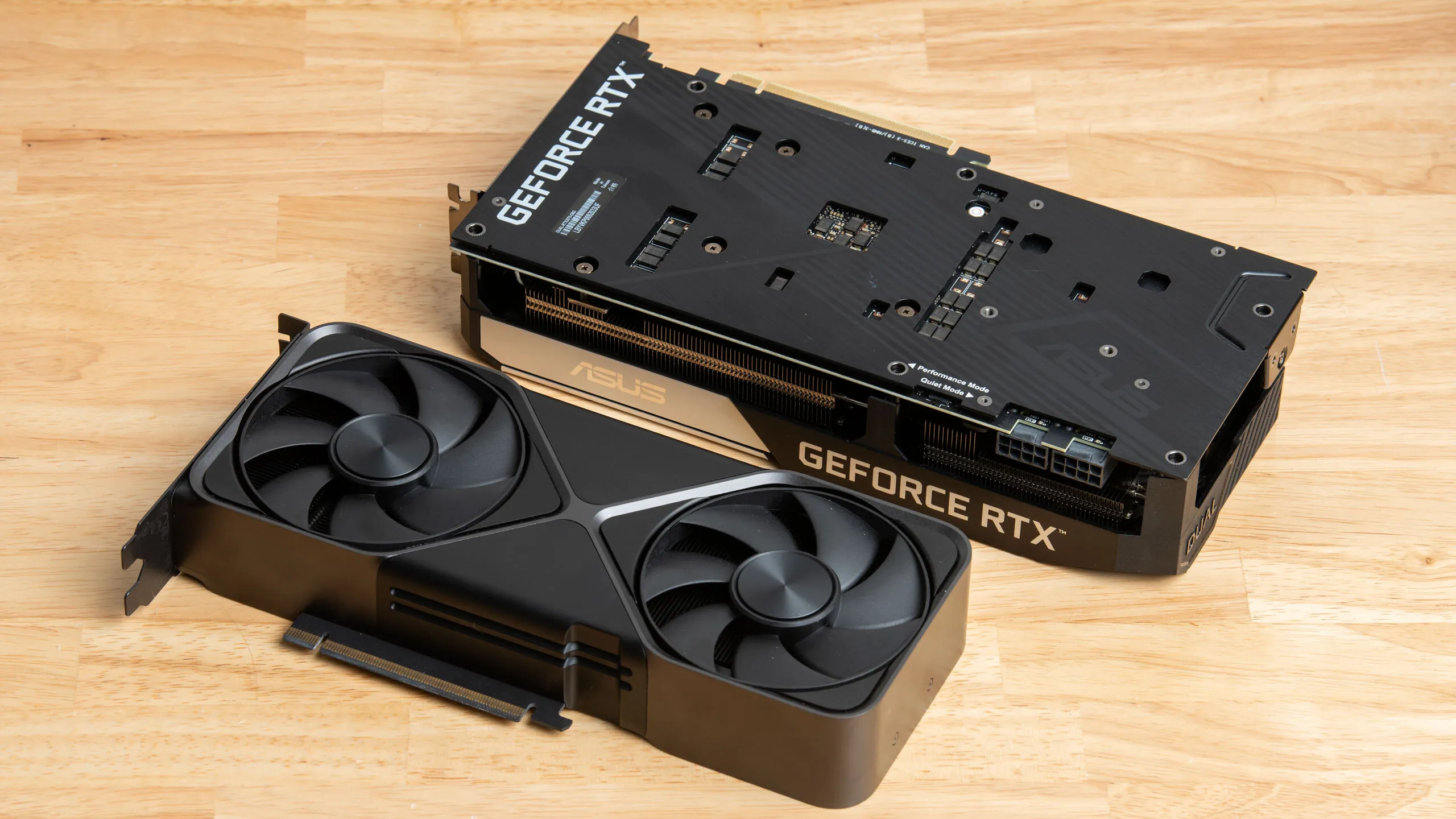
RTX 3070 and RTX 5070 on a desk

(Image credit: Tom's Hardware)

And VRAM-hungry RT gaming is inadvisable on the 3070 and 3070 Ti, as you’re going to be leaning hard on DLSS to even get to a fuzzy 1080p output. It’s just not worth it.

The RTX 5070 neatly solves all of the problems. It delivers the large baseline performance boost we want to see for a true upgrade, it has 12GB of VRAM for more demanding games at higher resolutions, and its support for DLSS 4.5 and MFG unlocks the latest tools for achieving high output image quality and smoothness. And it does all of this at a relatively reasonable price, even in today’s graphics card market.

If you don’t bleed green, you can get even more VRAM and a bit higher performance with the impressively fast and efficient Radeon RX 9070, whose prices also haven’t risen too terribly amid the current RAMpocalypse.

But that move is a bit of a leap of faith given the spotty support for FSR 4 AI upscaling and frame gen in the latest titles, and it also comes with the risk that you’ll be entirely locked out of next-gen features like path tracing, as we’ve seen in the latest Capcom games. If none of that sounds bothersome to you, though, the RX 9070 is worth a look as a possible option.

RTX 3060 Ti: Upgrade now

Like the RTX 3070 and 3070 Ti, Nvidia only ever offered the RTX 3060 Ti in an 8GB flavor, and that’s a tough enough limitation these days. But the 3060 Ti’s somewhat lower compute horsepower is a correspondingly greater liability as games march ever forward.

As with the RTX 3070 and 3070 Ti, your best upgrade bet is the RTX 5070. You’ll feel an even bigger boost in performance than you will with the 3070 duo, and you get more VRAM and better DLSS support than your existing card to go with it. Easy.

RTX 3060 12GB: Upgrade if you can make the 5070 leap

The RTX 3060 12GB keeps going and going thanks to its unusually large VRAM pool for a budget-friendly GPU. But that VRAM is paired with just so-so compute horsepower that’s really showing its age in the latest games.

The most natural upgrade for the 3060 in normal times would be the RTX 5060 Ti 16GB, which delivers the performance leap we want at a reasonable MSRP. But the ongoing RAMpocalypse has made those cards too scarce and too pricey to recommend. And the RTX 5060 Ti 8GB’s performance is all too likely to fall off a cliff due to its small VRAM pool, so we’d never suggest it as an upgrade.

Sorry to repeat ourselves, but the best step up from the 3060 12GB in today’s chaotic market is the RTX 5070, assuming you can afford it. It more than doubles the 3060 12GB’s gaming performance even at 1080p, and that gap becomes even more pronounced at 1440p and beyond.

Critically, the 5070 doesn’t leave you with less VRAM than you already have. Add in vastly better RT performance and support for DLSS Multi Frame Generation, and an RTX 5070 is a truly transformative gaming upgrade.

If you need a more budget-friendly upgrade than the RTX 5070 amid the RAMpocalypse, your only reasonable choice is the Radeon RX 9060 XT 16GB. That card delivers the 1.5x basic performance improvement that we want to see for the money, it runs FSR 4 AI upscaling and framegen where it’s available, and it slots into roughly the same power envelope as the RTX 3060 12GB. But you’ll need to be comfortable with leaving the Nvidia fold, and that might be too big a leap for some.

RTX 3050: Upgrade now

As the entry-level Ampere card, the RTX 3050 was already wimpy when it hit the market, and time hasn’t treated it well. It lands well below the 60 FPS mark in our overall standings, even at 1080p, and we’ve found that its baseline performance is so low that DLSS doesn’t improve things much.

If you’re still gaming on an RTX 3050 and have the freedom not to, it’s dead simple to find a compelling upgrade. Even the humble RTX 5060 handily doubles the 3050’s average frame rate across our tests at 1080p, and assuming you don’t run into VRAM limitations, the 5060 can even deliver a smooth 1440p gaming experience if 60 FPS is an acceptable baseline on average. That major performance boost barely comes with increased power requirements, so you won’t have to budget for a PSU upgrade, either.

But the 5060’s 8GB of VRAM means that you might still run into performance pitfalls in modern games, especially if you want to try out RT and DLSS framegen. If you’re only playing Counter-Strike 2, Fortnite, or Apex Legends, that’s less of a problem than it might be if you’re keen for the latest AAA experiences or PlayStation ports. But you’ll always be thinking about

If you’re looking for a card with greater longevity than the 8GB 5060 and aren’t married to the Nvidia ecosystem, we’d also check out the Radeon RX 9060 XT 16GB. It’s even faster than the 5060 in our tests and will allow you to start properly exploring ray tracing in titles that support it. It offers high-quality FSR 4 upscaling and framegen, and it won’t crush a small or aging PSU.

Bottom line
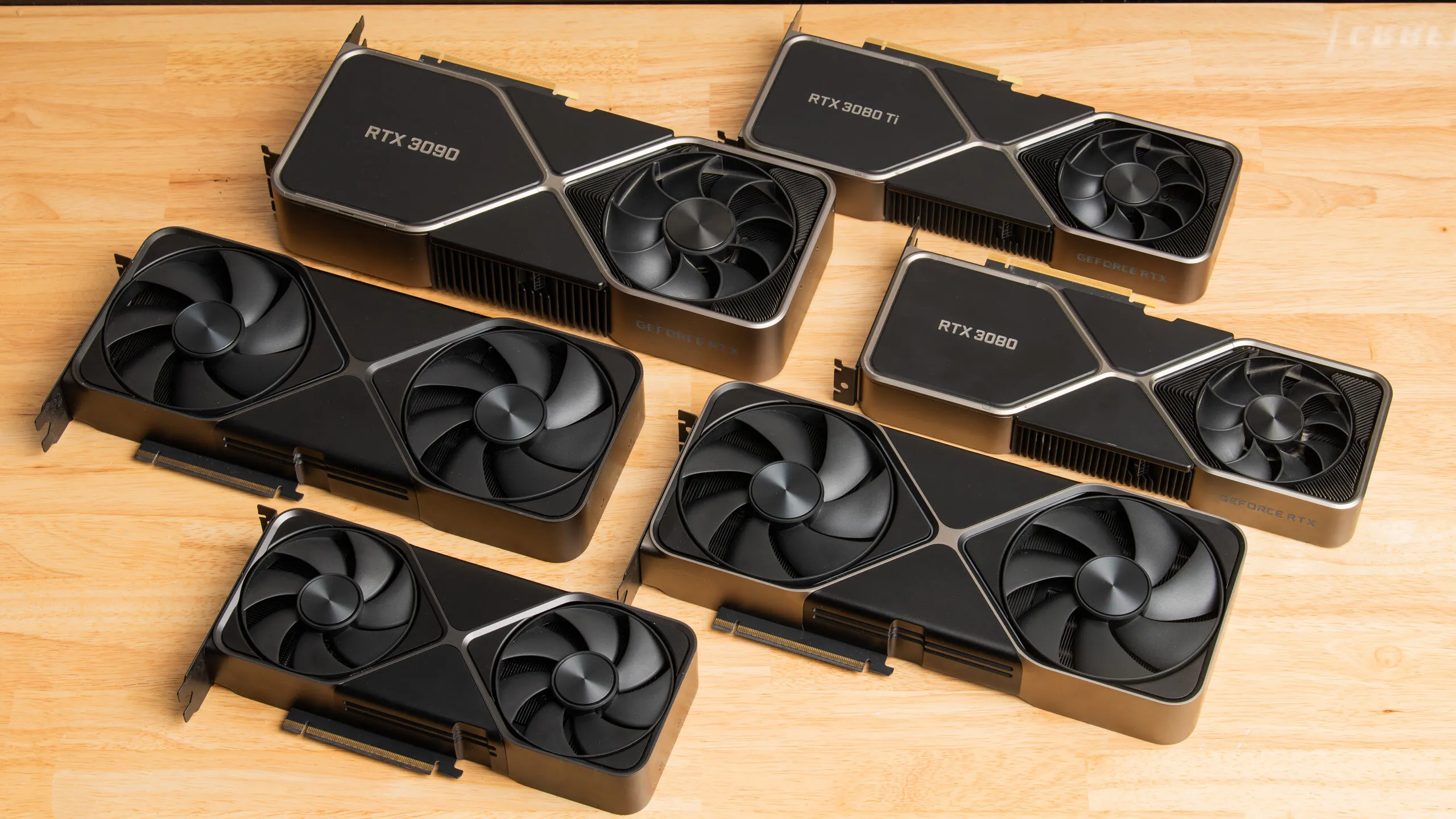
An array of GPUs on a brown desk.

(Image credit: Tom's Hardware)

Nvidia graphics cards are lasting longer than ever, thanks to common architecture capabilities like RT and Tensor Cores, in addition to a continuously improving DLSS software suite that boosts both performance and image quality. But even with those benefits, games are continuously advancing, too, and today’s titles are starting to put pressure on even the top-end RTX 30-series GPUs of yore.

The AI boom and the accompanying RAMpocalypse both make this a tough time to upgrade for gamers’ wallets, but if you’re still using an RTX 30-series GPU and are starting to feel the upgrade itch, the relative stability of gaming GPU roadmaps also means that you can make the leap to a Blackwell card (or competing Radeon) with some confidence that you won’t be taken by a surprise next-generation GPU launch any time soon.

That said, if you’re still happy with your current graphics card and gaming monitor setup, don’t mind missing out on DLSS Multi-Frame Generation, and don’t feel the need to explore maxed-out ray-traced or path-traced effects in the latest titles, we wouldn’t blame you for squeezing every last bit of life out of your Ampere GPU. No matter which path you take, it’s hard to lose.

As the Senior Analyst, Graphics at Tom's Hardware, Jeff Kampman covers everything to do with GPUs, gaming performance, and more. From integrated graphics processors to discrete graphics cards to the hyperscale installations powering our AI future, if it's got a GPU in it, Jeff is on it.