
惯性聚合 高效追踪和阅读你感兴趣的博客、新闻、科技资讯
阅读原文 在惯性聚合中打开

推荐订阅源

D
DataBreaches.Net
IT之家
IT之家
The Cloudflare Blog
Apple Machine Learning Research
WordPress大学
WordPress大学
N
Netflix TechBlog - Medium
阮一峰的网络日志
阮一峰的网络日志
P
Proofpoint News Feed
L
LangChain Blog
博客园 - Franky
美团技术团队
J
Java Code Geeks
Microsoft Security Blog
博客园 - 叶小钗
小众软件
小众软件
Y
Y Combinator Blog
B
Blog RSS Feed
Cyber Security Advisories - MS-ISAC
D
Docker
Hugging Face - Blog
Hugging Face - Blog
Jina AI
Jina AI
罗磊的独立博客
大猫的无限游戏
大猫的无限游戏
Vercel News
Vercel News

Latest from Tom's Hardware in Artificial-intelligence

Microsoft says 'Transformation Paradox' holding back AI adoption in the workplace — 45% of respondents say it's safer to focus on current goals, rather than AI innovation Palantir co-founder Peter Thiel backs $140M wave-powered AI data center startup — Panthalassa aims to run offshore… Google, Microsoft, and xAI agree to let US government test AI models before public release — OpenAI and Anthropic also on board after renegotiating deals with Washington Nvidia CEO Jensen Huang says China should not have Blackwell or Rubin AI GPUs — firmly states US should have 'the first, the most, and the best' when it comes to AI hardware China pushes for 70% homegrown silicon wafer use as domestic firm ramps up 12-inch production — government seeking to localize critical chip supply chain amid AI boom and export restrictions Intel swipes Qualcomm veteran of 25 years to lead client computing — Alex Katouzian jumps ship to oversee consumer… Trump administration considers mandatory pre-release vetting of AI models — Anthropic's Mythos cited as… Nvidia's exposure to Asian supply chains for components hits 90% of its production costs — marked increase from 65% could intensify as physical AI adds even more exposure Anthropic in early talks to buy DRAM-less AI inference chips from UK startup — Fractile's SRAM architecture reduces need for pricey memory during extreme pricing and shortage crunch Chinese court rules companies can't fire workers just because AI is cheaper — ruling says automation alone… Jensen says Nvidia now has 'zero percent' market share in China — says US export policy 'has… US Navy signs deal with AI firm for training underwater drones to detect mines in Strait of Hormuz — $100 million would allow drone minesweepers to update their detection algorithms in days instead of months The Pentagon announces AI deals with OpenAI, Google, Microsoft, Amazon, Nvidia, and more — LLMs to be deployed on classified Department of War networks ‘for lawful operational use’ SoftBank plans robotics and AI firm in the US to build data centers — aims for $100 billion valuation and an IPO… Huawei could seize China’s AI chip crown in 2026 as Nvidia's H200 shipments stall in regulatory limbo — Beijing pushes homegrown AI hardware dominance in a market projected to hit $67 billion by 2030 Talent over tokens: AI models are becoming more expensive to run, and productivity gains are limited — efficient workers might be the solution to strained budgets Samsung and SK hynix warn AI-driven memory shortages could last until 2027 and beyond, as HBM demand explodes — customers already reserving supply years ahead, while the wider DRAM market begins to tighten Victim of AI agent that deleted company's entire database gets their data back — cloud provider recovers critical files and broadens its 48-hour delayed delete policy Exploding number of AI data center build-outs delay Texas housing projects — data centers' high demand for electricians prices out contractors, homes now take two months longer to complete Meta's multi-billion-dollar Graviton deal highlights intensifying CPU shortages in AI infrastructure — the industry signals a shift to Agentic inference workloads, pushing demand OpenAI has effectively abandoned first-party Stargate data centers in favor of more flexible deals — company now prefers to lease compute and says Stargate is an umbrella term Google signs classified Pentagon AI deal but exits $100 million drone swarm program — report claims employees revolted over ethical fears, delivered letter to CEO Pichai Nvidia exec says AI is more expensive than actual workers — yet some companies don't see the extra costs as a… Meta will beam sunlight from space to power AI data centers, solar-collecting satellites will orbit 22,000 miles above Earth — firm reserves 1 Gigawatt of orbital solar energy and 100 Gigawatt-hours of long-duration storage Market slumps as OpenAI reportedly misses internal targets for active users and revenue — Nvidia, Oracle, AMD, and CoreWeave shares all tremble on the news OpenAI and Microsoft News site linked to OpenAI super PAC sent bots posing as journalists to interview real people — site has published nearly 100 articles with real quotes gathered by fake writers Claude-powered AI coding agent deletes entire company database in 9 seconds — backups zapped, after Cursor tool… DeepSeek launches 1.6 trillion parameter V4 on Huawei chips as U.S. escalates AI theft accusations — U.S. gov't alleges IP theft by DeepSeek and other Chinese AI firms NEO Semiconductor's revolutionary 3D X-DRAM for AI processors has passed proof-of-concept validation — company secures funding to develop next-gen memory HBM alternative
Kevin O'Leary claims Chinese propaganda is to blame for a...
Bruno Ferreira · 2026-05-30 · via Latest from Tom's Hardware in Artificial-intelligence
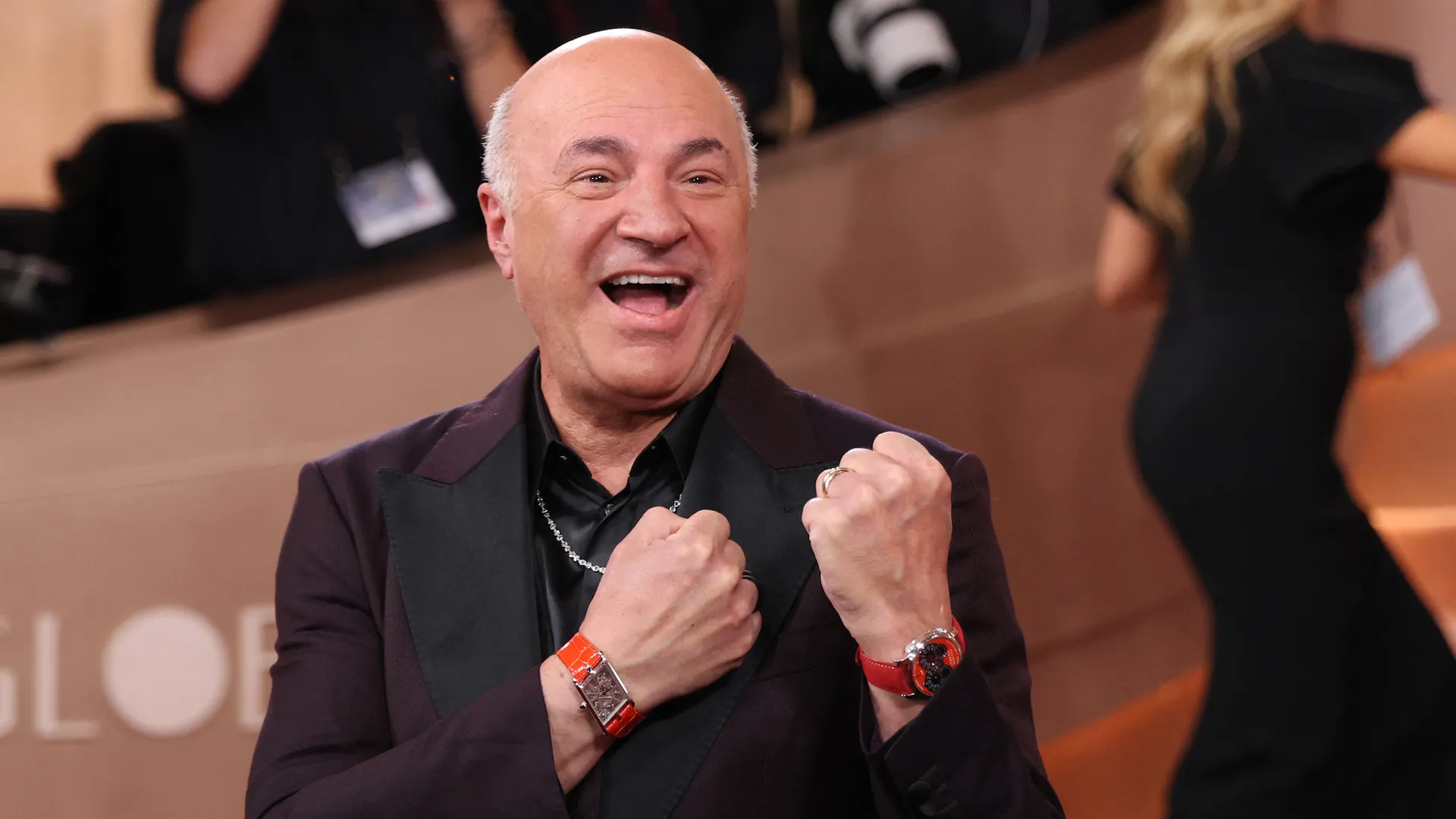
Kevin O'Leary
(Image credit: Getty Images)

To say that data centers are becoming unpopular would be the understatement of the decade. Cities, states, and countries are racing to impose strong restrictions on new buildouts, when they're not banning them altogether. Predictably, Utah residents are up in arms about Shark Tank billionaire investor Kevin O'Leary's new $100-billion, 40,000-acre data center. There's a twist, though: O'Leary, the Trump administration, and pro-industry groups claim the opposition is driven by Chinese propaganda, as detailed in an exposé at The Washington Post.

Go deeper with TH Premium: AI and data centers

O'Leary, or "Mr. Wonderful," as he's known to friends, made this statement for the first time in a May 10 interview with Fox News, further expanding it across subsequent TV interviews and X posts. He added claims that "hundreds of millions of dollars" coming in from China make up the effort, often funneled through other nations to reach paid protesters, which, in the case of Utah, were allegedly 90% bussed in.

The Post report also notes that some U.S. officials have expressed similar views, such as Interior Secretary Doug Burgum, who has stated that "[opposition is] not organic and local. Some of this is foreign source dark money coming in," adding later on that "any place that's trying to build data centers is getting bombarded with foreign-directed propaganda." As of this writing, neither O'Leary nor Burgum has provided verifiable evidence for these claims. Interestingly enough, O'Leary also believes that regular power plant projects are also being targeted by foreign astroturfing.

These allegations have been met with skepticism from various parts, and are a particularly difficult sell when datacenters often rocket power prices in their surrounding areas, drain the pool of potable water, and might even emit infrasonic vibrations.

The public is also becoming increasingly aware of AI-driven component shortages, thanks to the rising prices of laptops, desktops, phones, and other electronics — as well as the rising costs of repairing them. And, of course, the hundreds of thousands, if not millions, of job cuts thanks to the newfound focus on automation, as well as the worsening quality of many services due to the usage of AI bots rather than humans.

Even some parties that support the notion of Chinese interference are aware of the particular optics around this situation. According to The Post, Ryan Fedasiuk of the American Enterprise Institute says the inference issue is real, but also cautions "that China isn't the reason AI buildouts are unpopular in the United States." Likewise, the Bitcoin Policy Institute issued a report where it states there's a "foreign influence campaign against American AI," but also that "Americans do have serious concerns that need to be heard."

Having said that, as sung in the grunge days, "just because you're paranoid, doesn't mean they're not after you." Both the U.S. and China are effectively in an A.I. arms race, pushing government policies that generally favor big tech companies — at least until the financial grim reaper comes. Therefore, however outlandish O'Leary's claims might appear at first glance, it's usually a safe assumption that any superpower will always be meddling with the others' efforts, and attempting to kneecap A.I. development is as good a target as any.

Get Tom's Hardware's best news and in-depth reviews, straight to your inbox.

Google Preferred Source

Follow Tom's Hardware on Google News, or add us as a preferred source, to get our latest news, analysis, & reviews in your feeds.

Bruno Ferreira is a contributing writer for Tom's Hardware. He has decades of experience with PC hardware and assorted sundries, alongside a career as a developer. He's obsessed with detail and has a tendency to ramble on the topics he loves. When not doing that, he's usually playing games, or at live music shows and festivals.