


惯性聚合 高效追踪和阅读你感兴趣的博客、新闻、科技资讯
阅读原文 在惯性聚合中打开

推荐订阅源

量子位
Stack Overflow Blog
Stack Overflow Blog
人人都是产品经理
人人都是产品经理
The GitHub Blog
The GitHub Blog
Engineering at Meta
Engineering at Meta
Vercel News
Vercel News
奇客Solidot–传递最新科技情报
奇客Solidot–传递最新科技情报
Y
Y Combinator Blog
The Cloudflare Blog
Last Week in AI
Last Week in AI
B
Blog
钛媒体:引领未来商业与生活新知
钛媒体:引领未来商业与生活新知
T
Tailwind CSS Blog
V
Visual Studio Blog
博客园 - 三生石上(FineUI控件)
小众软件
小众软件
Google DeepMind News
D
DataBreaches.Net
博客园 - 司徒正美
B
Blog RSS Feed
Microsoft Azure Blog
罗磊的独立博客
Hugging Face - Blog
Hugging Face - Blog
L
LangChain Blog

Latest from Tom's Hardware in Artificial-intelligence

Microsoft says 'Transformation Paradox' holding back AI adoption in the workplace — 45% of respondents say it's safer to focus on current goals, rather than AI innovation Palantir co-founder Peter Thiel backs $140M wave-powered AI data center startup — Panthalassa aims to run offshore… Google, Microsoft, and xAI agree to let US government test AI models before public release — OpenAI and Anthropic also on board after renegotiating deals with Washington Nvidia CEO Jensen Huang says China should not have Blackwell or Rubin AI GPUs — firmly states US should have 'the first, the most, and the best' when it comes to AI hardware China pushes for 70% homegrown silicon wafer use as domestic firm ramps up 12-inch production — government seeking to localize critical chip supply chain amid AI boom and export restrictions Intel swipes Qualcomm veteran of 25 years to lead client computing — Alex Katouzian jumps ship to oversee consumer… Trump administration considers mandatory pre-release vetting of AI models — Anthropic's Mythos cited as… Nvidia's exposure to Asian supply chains for components hits 90% of its production costs — marked increase from 65% could intensify as physical AI adds even more exposure Anthropic in early talks to buy DRAM-less AI inference chips from UK startup — Fractile's SRAM architecture reduces need for pricey memory during extreme pricing and shortage crunch Chinese court rules companies can't fire workers just because AI is cheaper — ruling says automation alone… Jensen says Nvidia now has 'zero percent' market share in China — says US export policy 'has… US Navy signs deal with AI firm for training underwater drones to detect mines in Strait of Hormuz — $100 million would allow drone minesweepers to update their detection algorithms in days instead of months The Pentagon announces AI deals with OpenAI, Google, Microsoft, Amazon, Nvidia, and more — LLMs to be deployed on classified Department of War networks ‘for lawful operational use’ SoftBank plans robotics and AI firm in the US to build data centers — aims for $100 billion valuation and an IPO… Huawei could seize China’s AI chip crown in 2026 as Nvidia's H200 shipments stall in regulatory limbo — Beijing pushes homegrown AI hardware dominance in a market projected to hit $67 billion by 2030 Talent over tokens: AI models are becoming more expensive to run, and productivity gains are limited — efficient workers might be the solution to strained budgets Samsung and SK hynix warn AI-driven memory shortages could last until 2027 and beyond, as HBM demand explodes — customers already reserving supply years ahead, while the wider DRAM market begins to tighten Victim of AI agent that deleted company's entire database gets their data back — cloud provider recovers critical files and broadens its 48-hour delayed delete policy Exploding number of AI data center build-outs delay Texas housing projects — data centers' high demand for electricians prices out contractors, homes now take two months longer to complete Meta's multi-billion-dollar Graviton deal highlights intensifying CPU shortages in AI infrastructure — the industry signals a shift to Agentic inference workloads, pushing demand OpenAI has effectively abandoned first-party Stargate data centers in favor of more flexible deals — company now prefers to lease compute and says Stargate is an umbrella term Google signs classified Pentagon AI deal but exits $100 million drone swarm program — report claims employees revolted over ethical fears, delivered letter to CEO Pichai Nvidia exec says AI is more expensive than actual workers — yet some companies don't see the extra costs as a… Meta will beam sunlight from space to power AI data centers, solar-collecting satellites will orbit 22,000 miles above Earth — firm reserves 1 Gigawatt of orbital solar energy and 100 Gigawatt-hours of long-duration storage Market slumps as OpenAI reportedly misses internal targets for active users and revenue — Nvidia, Oracle, AMD, and CoreWeave shares all tremble on the news OpenAI and Microsoft News site linked to OpenAI super PAC sent bots posing as journalists to interview real people — site has published nearly 100 articles with real quotes gathered by fake writers Claude-powered AI coding agent deletes entire company database in 9 seconds — backups zapped, after Cursor tool… DeepSeek launches 1.6 trillion parameter V4 on Huawei chips as U.S. escalates AI theft accusations — U.S. gov't alleges IP theft by DeepSeek and other Chinese AI firms NEO Semiconductor's revolutionary 3D X-DRAM for AI processors has passed proof-of-concept validation — company secures funding to develop next-gen memory HBM alternative
Trump signs AI executive order seeking 30-day government ...
Luke James · 2026-06-03 · via Latest from Tom's Hardware in Artificial-intelligence
Trump
(Image credit: Getty / Bloomberg)

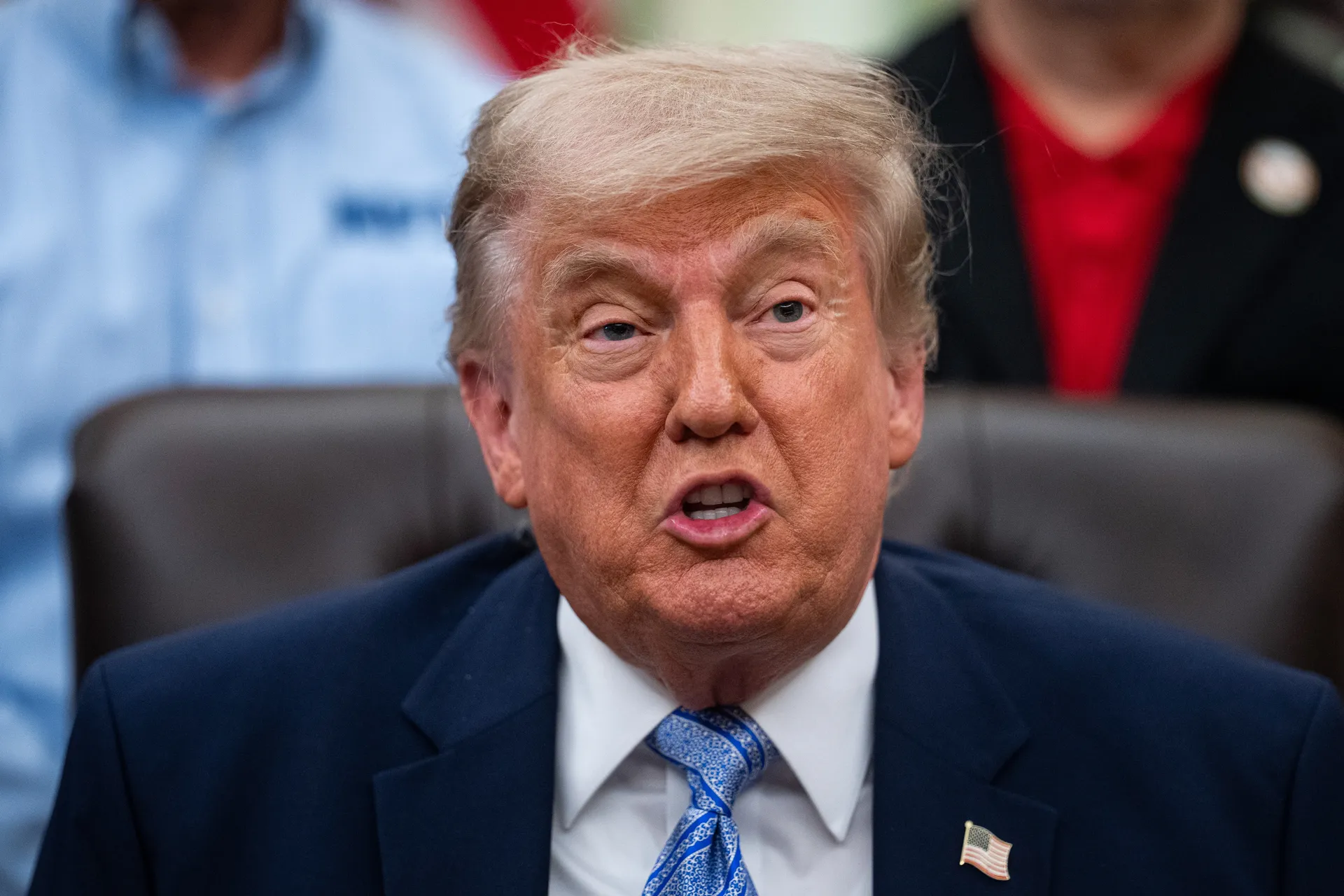
President Donald Trump signed an executive order on Tuesday that asks AI companies to give the federal government early access to their most capable models for up to 30 days before any wider release, a window trimmed from the 90 days written into a draft he walked away from last month.

Go deeper with TH Premium: AI and data centers

While it’s a voluntary framework that creates no licensing or pre-clearance requirement, it tasks the National Security Agency, the Cybersecurity and Infrastructure Security Agency (CISA), and the National Institute of Standards and Technology with building a classified benchmark that decides which systems qualify as a "covered frontier model."

The 30-day review only applies to models that meet the classified threshold, which the NSA will set in consultation with the National Cyber Director and CISA. Developers who opt in would open their models to agency review before the systems reach other trusted partners, and the order puts those same agencies in the room to help choose the partners. Section three states that nothing in it authorizes mandatory government licensing, pre-clearance, or permitting for new models, including frontier models.

The order also directs the Treasury Department to stand up an "AI cybersecurity clearinghouse" that coordinates vulnerability scanning, validation, and patch distribution alongside AI firms and operators of critical infrastructure such as rural hospitals, community banks, and local utilities. Separate provisions steer federal grant money toward companies building AI vulnerability detection and widen the U.S. Tech Force's cybersecurity hiring pathways.

In April, Anthropic's Claude Mythos preview identified thousands of zero-day vulnerabilities across major operating systems and web browsers, and the company has since grown its Project Glasswing early-access program for the model. It’s clear that the order has come in response to Mythos and other increasingly powerful frontier models, with reports suggesting that the Trump administration had been weighing pre-release vetting since at least the spring, when officials briefed Anthropic, Google, and OpenAI on an order that an early, unsigned draft would have made mandatory.

The trusted-partner provision of the order is likely to draw extensive criticism because ot places the government in the room when labs decide who gets first access to their strongest models. Speaking to The Register, Cato Institute policy analyst Juan Londoño said that such moves could “open the door to potential weaponization against companies that have any sort of conflict with the administration.”

This isn’t a hypothetical, either; the Department of Defense labeled Anthropic a supply chain risk shortly before the Mythos preview shipped, a designation that bars defense contractors from using the company's technology, and Anthropic has sued to overturn it. That litigation remains unresolved.

Get Tom's Hardware's best news and in-depth reviews, straight to your inbox.

Google Preferred Source

Follow Tom's Hardware on Google News, or add us as a preferred source, to get our latest news, analysis, & reviews in your feeds.

Luke James is a freelance writer and journalist.  Although his background is in legal, he has a personal interest in all things tech, especially hardware and microelectronics, and anything regulatory.