
惯性聚合 高效追踪和阅读你感兴趣的博客、新闻、科技资讯
阅读原文 在惯性聚合中打开

推荐订阅源

Google DeepMind News
I
InfoQ
Engineering at Meta
Engineering at Meta
D
DataBreaches.Net
L
LangChain Blog
Cyber Security Advisories - MS-ISAC
奇客Solidot–传递最新科技情报
奇客Solidot–传递最新科技情报
Recent Announcements
GbyAI
GbyAI
爱范儿
爱范儿
Microsoft Security Blog
腾讯CDC
美团技术团队
罗磊的独立博客
Microsoft Azure Blog
WordPress大学
WordPress大学
T
The Blog of Author Tim Ferriss
freeCodeCamp Programming Tutorials: Python, JavaScript, Git & More
雷峰网
雷峰网
M
MIT News - Artificial intelligence
D
Docker
MongoDB | Blog
MongoDB | Blog
F
Fortinet All Blogs
博客园 - 叶小钗

Latest from Tom's Hardware in News

Analytics group signals possible delays at 40% of AI data center construction sites — companies deny schedule holdups, but satellite imagery indicates otherwise Intel hires tenured Samsung exec to lead Foundry Services — signals company focus on winning business from potential Foundry suitors Elon Musk pushing forward with Terafab at Microsoft's April patch puts Windows domain controllers into reboot loops — third known issue from KB5082063… AMD Ryzen 9 9950X3D2 appears on Amazon with $1,000 pre-order price — AMD confirms recommended pricing is still set… AMD's market cap hits all-time high, Intel hits 25-year high on Agentic AI's insatiable demand for CPUs Meta raising Quest headset prices due to AI-driven RAM shortage — Quest 3 to cost $600, Quest 3S $350 from April… Elegoo announces the Jupiter 2 resin 3D printer for $949, early bird price of $849 — new model offers massive print volume but is still physically smaller than previous models Pragmata PC performance tested: 18 GPUs take us to the Moon Chinese fabs import record volumes of US chipmaking equipment via Singapore and Malaysia — homegrown tool makers booked record 2025 revenues as price competition squeezes margins US appeals court restarts $3 billion patent infringement lawsuit against Intel — VLSI case from 2017 returns after… Two US citizens get combined 16 years in prison for running North Korean laptop farms — fake remote IT work scheme netted DPRK $5 million in around three years Intel launches Wildcat Lake as Core Series 3 for value laptops and edge systems — six consumer SKUs built on 18A promise Legendary Qualcomm, Apple, and Nuvia alumni form new CPU startup — Nuvacore promises to Bambu updates its 3D printers to print unique hues or gradients using two or three filaments — company acknowledges OrcaSlicer-FullSpectrum fork as the basis for the color prediction part of the new feature Broadcom to supply Meta with custom silicon through 2029 — Broadom CEO Hock Tan departs Meta Anonymous perps behind 86 million files scraped from Spotify hit with $322 million court judgement — Anna Non-functioning counterfeit Samsung 990 Pro SSDs are circulating in Europe — Despite convincing packaging, blue… Oklahoma farmer arrested and jailed for trespassing during AI data center town hall — removed by officers after going a few seconds over allotted speaking time, trying to hand paperwork to counselors Virginia voter support for new data centers collapses from 69% in 2023 to 35% in new poll — Multi-gigawatt, 37-building Digital Gateway project abandoned Struggling shoemaker and apparel brand Albird pivots to AI data centers, stock jumps 580% in a single day — sells core business and leveraging $50 million in financing to become a GPU-as-a-Service and AI cloud solutions provider IPv6 usage reaches historic 50% across Google services, matching IPv4 — increased usage eases pressure on the IPv4 address market as 'new' protocol designed in 1998 finally hits its stride Engineer open-sources DIY radar system that's 95% cheaper than $250,000 commercial offerings, has 20 kilometer range — Moroccan engineer designs Aeris-10 radar, shares it on GitHub Elon Musk demonstrates first sample of Tesla AI5 processor, accidentally thanks TSC rather than TSMC  — claims 40X performance boost over the predecessor Valve might be adding a 30-day price tracker to Steam — feature is already available in some EU countries to spoof… Memory cards and flash drives prices rocket 124%, some products peak at 261% jump — increases from 2025 driven by AI chip shortage across a range of formats and capacities Netgear secures conditional approval from the FCC following router ban — company can continue importing foreign-made routers through October 2027 China tests deep-sea electro-hydrostatic actuator that can cut undersea cables at a depth of 3,500 meters — state hails successful trial and hints at deployment readiness Iran reportedly bought an in-orbit Chinese satellite to target US military sites in the Middle East — purchase agreement included ongoing ground control services based in China Our lifestyle tech colleagues at Tom's Guide have overhauled their site for smarter shopping — more video and access to experts make it 'the biggest relaunch in our history'
Lenovo says the
https://www.tomshardware.com/author/zak-killian · 2026-06-28 · via Latest from Tom's Hardware in News
Google
(Image credit: Google)

Hardware enthusiasts, server administrators, and all regular readers of this site will be well aware of the ongoing "RAMpocalypse," the memory and storage shortage affecting nearly every market and raising prices across the board in the tech sector. If you were hoping for relief, don't hold your breath; at the International Supercomputing Conference this past week, Lenovo reportedly said "it will never be like it was last year." Underlining the point, one of Lenovo's presentation slides was titled "The 5 Step RAMaggeddon Survival Guide."

That comes to us by way of our German friends over at ComputerBase, who note that "never" was said with a smirk, thus implying that it wasn't meant to be taken literally. Instead, the message from Lenovo is that memory prices were unusually low in early 2025, and it will be a long time before we see comparatively low prices on RAM, flash memory, and other components, as the #1 worldwide PC OEM expects AI demand to continue growing.

According to ComputerBase's report from ISC 2026, Lenovo's broader message is that the economics of the memory industry have fundamentally changed. The company reportedly argued that even as significant new manufacturing capacity comes online beginning around 2028, demand from AI infrastructure is expected to absorb much of that additional output, preventing DRAM and NAND prices from returning to the lows seen over the past two years.

The report points to SK hynix's recently announced plans to triple its memory production capacity by 2034 as supporting evidence. Lenovo's reasoning is straightforward: the notoriously profit-hungry memory manufacturers would be unlikely to invest so heavily in expanding production if they expected a return to the razor-thin margins and oversupply that characterized parts of the market in early 2025.

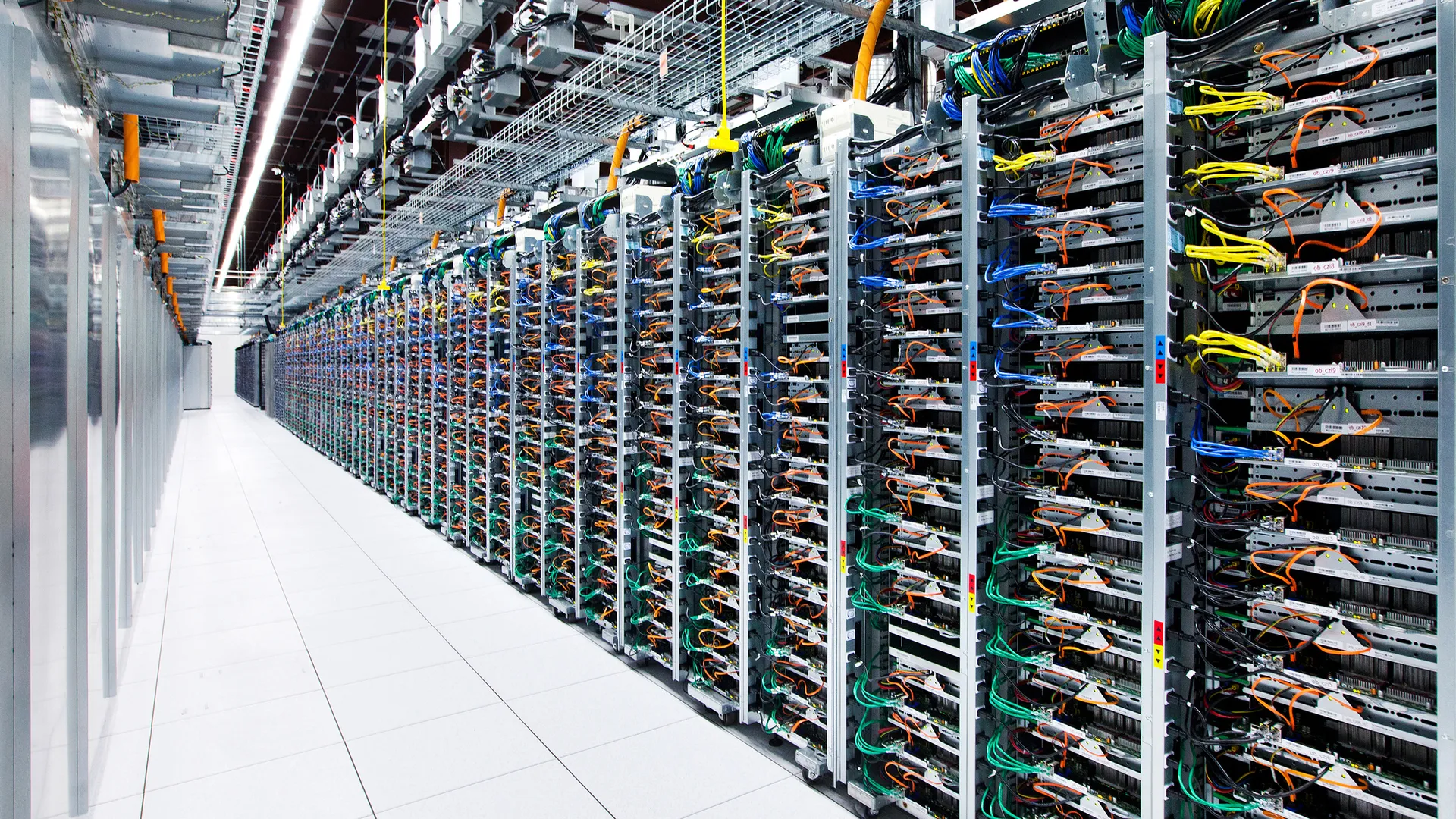
In case you needed extra evidence for its argument, Lenovo also suggested that memory capacity itself is becoming an increasingly important consideration when designing and purchasing servers. While vendors have traditionally advertised the maximum supported memory capacity of new platforms, actually populating those DIMM slots has become far more expensive. New dual-socket servers are on the way next year with 16 memory channels per processor, meaning that even a relatively modest configuration can require around 1 TB of installed memory to fully utilize the available bandwidth.
Nvidia Vera Rubin

(Image credit: Nvidia/YouTube)

Lenovo is far from the only company predicting a prolonged memory crunch, although the industry's incentives are worth keeping in mind. Micron recently told investors it expects supply to remain constrained through at least 2027, with only gradual improvement beginning in 2028, while SK hynix has warned the shortage could persist until around 2030 as AI infrastructure continues absorbing wafer capacity. Those forecasts are backed by multi-year supply agreements worth roughly $100 billion that Micron has already signed with customers, underscoring how seriously hyperscalers are treating long-term memory availability.

Even companies that traditionally wield enormous purchasing power are feeling the squeeze. Apple reportedly has sought permission from the U.S. government to source DRAM from Chinese memory maker CXMT, a Pentagon-blacklisted company, illustrating just how valuable additional memory supply has become as prices continue to climb. At the same time, memory vendors are enjoying some of the strongest pricing power (and profit margins) they've seen in years, giving them little incentive to accelerate a return to the boom-and-bust pricing cycles that once defined the DRAM market.

Get Tom's Hardware's best news and in-depth reviews, straight to your inbox.

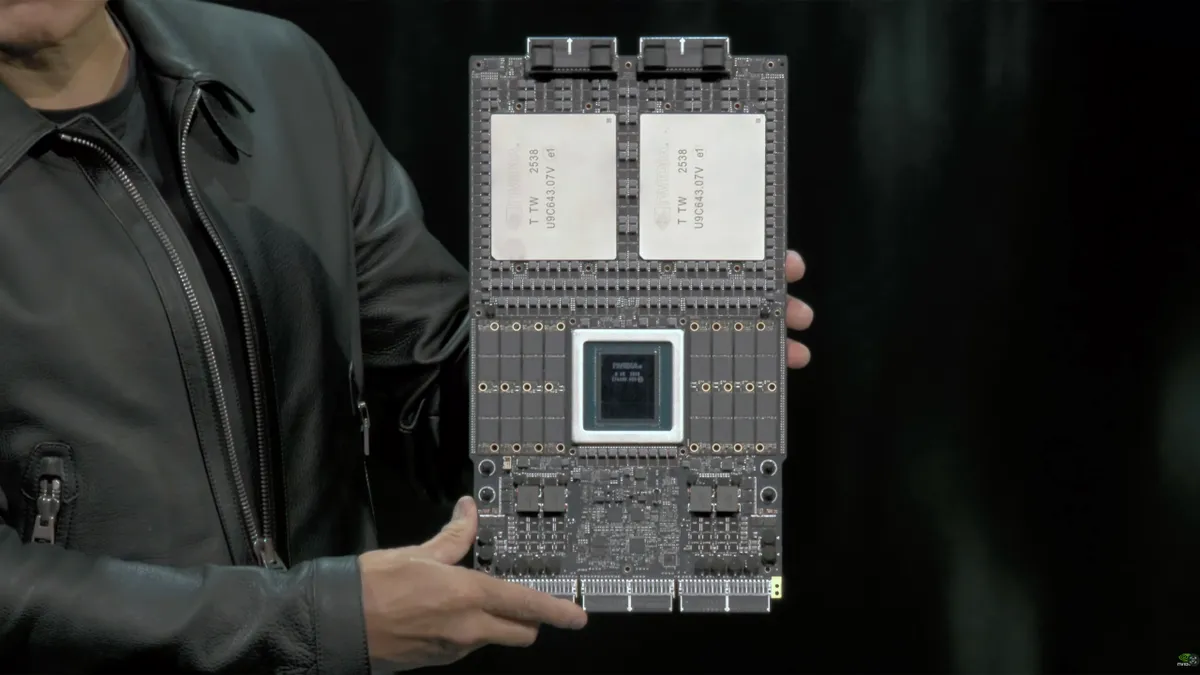
Ironically, one consequence of the ongoing memory shortage is that HBM is becoming more economically attractive relative to conventional system memory. DRAM manufacturers have redirected significant production capacity toward higher-margin HBM for AI accelerators, reducing the supply of commodity DDR5 and LPDDR5 while demand for both remains elevated. As a result, the premium for HBM-backed computing has narrowed, not because HBM has become inexpensive, but because traditional system memory has become dramatically more expensive. Hyperscalers were going to buy the GPUs anyway, so maximizing their utilization to reduce DDR5 requirements suddenly becomes an attractive proposition.

That shift helps explain Lenovo's suggestion that GPU-accelerated computing may now make more financial sense for some workloads. If an application can keep much of its working set in GPU-attached HBM, it may require significantly less DDR5 installed in the host system. With system DRAM now representing a much larger share of overall server cost than it did just a year ago, reducing memory capacity requirements can materially lower the price of deploying large-scale infrastructure.

Obviously, we don't know whether Lenovo's long-term outlook will prove accurate, but memory pricing has historically been cyclical, with periods of oversupply often followed by sharp corrections. With hyperscalers continuing to pour billions into AI infrastructure and memory vendors increasingly prioritizing high-margin enterprise products, the company believes the unusually inexpensive DRAM and NAND prices of 2024 and early 2025 may prove to have been an anomaly.

Google Preferred Source

Follow Tom's Hardware on Google News, or add us as a preferred source, to get our latest news, analysis, & reviews in your feeds.

Zak is a freelance contributor to Tom's Hardware with decades of PC benchmarking experience who has also written for HotHardware and The Tech Report. A modern-day Renaissance man, he may not be an expert on anything, but he knows just a little about nearly everything.