
惯性聚合 高效追踪和阅读你感兴趣的博客、新闻、科技资讯
阅读原文 在惯性聚合中打开

推荐订阅源

WordPress大学
WordPress大学
Microsoft Azure Blog
aimingoo的专栏
aimingoo的专栏
Vercel News
Vercel News
U
Unit 42
L
LangChain Blog
J
Java Code Geeks
钛媒体:引领未来商业与生活新知
钛媒体:引领未来商业与生活新知
The Cloudflare Blog
F
Fortinet All Blogs
小众软件
小众软件
I
InfoQ
P
Proofpoint News Feed
D
DataBreaches.Net
Martin Fowler
Martin Fowler
H
Help Net Security
T
Tailwind CSS Blog
N
Netflix TechBlog - Medium
有赞技术团队
有赞技术团队
Y
Y Combinator Blog
Recent Announcements
B
Blog RSS Feed
酷 壳 – CoolShell
酷 壳 – CoolShell
B
Blog

Latest from Tom's Hardware in News

Analytics group signals possible delays at 40% of AI data center construction sites — companies deny schedule holdups, but satellite imagery indicates otherwise Intel hires tenured Samsung exec to lead Foundry Services — signals company focus on winning business from potential Foundry suitors Elon Musk pushing forward with Terafab at Microsoft's April patch puts Windows domain controllers into reboot loops — third known issue from KB5082063… TSMC ups revenue guidance and CapEx, buoyed by AMD Ryzen 9 9950X3D2 appears on Amazon with $1,000 pre-order price — AMD confirms recommended pricing is still set… AMD's market cap hits all-time high, Intel hits 25-year high on Agentic AI's insatiable demand for CPUs Meta raising Quest headset prices due to AI-driven RAM shortage — Quest 3 to cost $600, Quest 3S $350 from April… Elegoo announces the Jupiter 2 resin 3D printer for $949, early bird price of $849 — new model offers massive print volume but is still physically smaller than previous models Pragmata PC performance tested: 18 GPUs take us to the Moon Chinese fabs import record volumes of US chipmaking equipment via Singapore and Malaysia — homegrown tool makers booked record 2025 revenues as price competition squeezes margins US appeals court restarts $3 billion patent infringement lawsuit against Intel — VLSI case from 2017 returns after… Two US citizens get combined 16 years in prison for running North Korean laptop farms — fake remote IT work scheme netted DPRK $5 million in around three years Intel launches Wildcat Lake as Core Series 3 for value laptops and edge systems — six consumer SKUs built on 18A promise Legendary Qualcomm, Apple, and Nuvia alumni form new CPU startup — Nuvacore promises to Bambu updates its 3D printers to print unique hues or gradients using two or three filaments — company acknowledges OrcaSlicer-FullSpectrum fork as the basis for the color prediction part of the new feature Broadcom to supply Meta with custom silicon through 2029 — Broadom CEO Hock Tan departs Meta Anonymous perps behind 86 million files scraped from Spotify hit with $322 million court judgement — Anna Non-functioning counterfeit Samsung 990 Pro SSDs are circulating in Europe — Despite convincing packaging, blue… Oklahoma farmer arrested and jailed for trespassing during AI data center town hall — removed by officers after going a few seconds over allotted speaking time, trying to hand paperwork to counselors Virginia voter support for new data centers collapses from 69% in 2023 to 35% in new poll — Multi-gigawatt, 37-building Digital Gateway project abandoned Struggling shoemaker and apparel brand Albird pivots to AI data centers, stock jumps 580% in a single day — sells core business and leveraging $50 million in financing to become a GPU-as-a-Service and AI cloud solutions provider IPv6 usage reaches historic 50% across Google services, matching IPv4 — increased usage eases pressure on the IPv4 address market as 'new' protocol designed in 1998 finally hits its stride Engineer open-sources DIY radar system that's 95% cheaper than $250,000 commercial offerings, has 20 kilometer range — Moroccan engineer designs Aeris-10 radar, shares it on GitHub Elon Musk demonstrates first sample of Tesla AI5 processor, accidentally thanks TSC rather than TSMC  — claims 40X performance boost over the predecessor Valve might be adding a 30-day price tracker to Steam — feature is already available in some EU countries to spoof… Memory cards and flash drives prices rocket 124%, some products peak at 261% jump — increases from 2025 driven by AI chip shortage across a range of formats and capacities Netgear secures conditional approval from the FCC following router ban — company can continue importing foreign-made routers through October 2027 China tests deep-sea electro-hydrostatic actuator that can cut undersea cables at a depth of 3,500 meters — state hails successful trial and hints at deployment readiness Iran reportedly bought an in-orbit Chinese satellite to target US military sites in the Middle East — purchase agreement included ongoing ground control services based in China
New tech can see a CPU's transistors in action — terahert...
Aaron Klotz · 2026-04-14 · via Latest from Tom's Hardware in News
ASML
(Image credit: ASML)

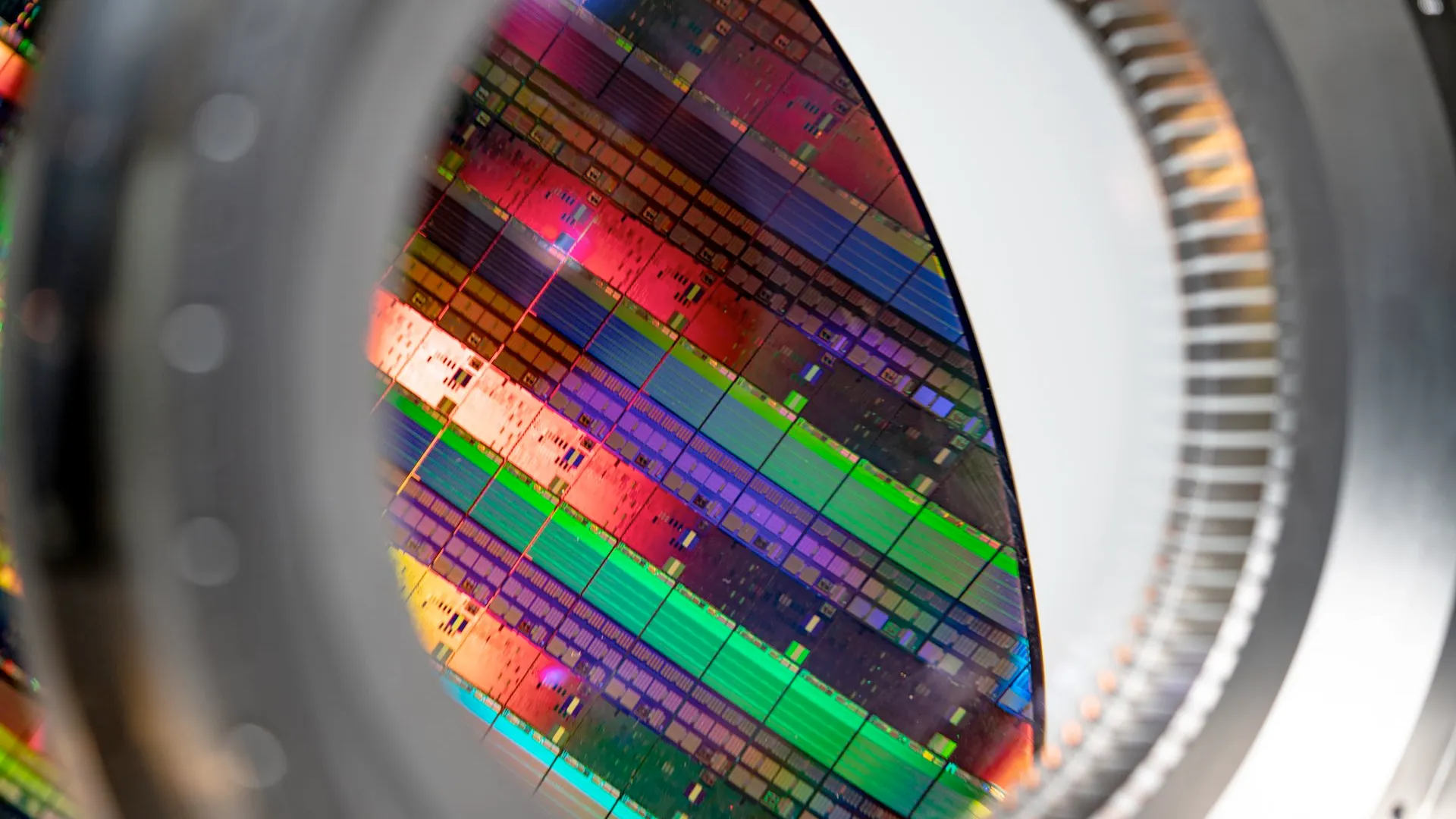
Researchers at Adelaide University have made a discovery that could change the way we test semiconductors for good. As reported by IEEE Spectrum, these researchers have discovered a method of detecting a chip's transistor activity using terahertz radiation.

Go deeper with TH Premium: Chipmaking

The process involves using a laboratory tool known as a vector network analyzer or VNA, which generates a microwave signal "with a known frequency and phase." A VNA frequency extender converts the microwave signal into a terahertz wave, which then gets beamed onto a microchip using a focusing lens.

Testing requires the chip to be turned on and to be doing work. As the transistors inside switch on and off, the terahertz signal reflects these changes and returns to a receiver in the VNA extender. Afterward, the signal is "down-converted" to microwave and compared to the original signal by detecting tiny differences in amplitude and phase using a homodyne quadrature receiver.

One of the researchers, Withawat Withayachumnankul, revealed his team had to hack the receiver to make it work in the terahertz domain. The device was only designed to compare microwave frequencies. The use of a homodyne detector was critical, as it is allegedly the only device that can detect the small differences between the two frequencies. Terahertz signals are physically larger than the transistors being probed by the signal, making any adjustments in the returning signal difficult to detect without a homodyne detector. Additionally, noise from the oscillator in the VNA can reportedly easily obscure any changes in signal difference as well.

The most intriguing part of this new technology is its ability to peer into a processor's internals while it is working. This is something that is reportedly not possible with any other tooling and opens up new possibilities for technicians to diagnose and test processors.

However, there are issues that need to be ironed out before this technology goes mainstream. Measuring CPUs with terahertz radiation can reportedly be problematic with complex chips that have multitudes of layers of components stacked on top of one another, such as CPUs equipped with 3D stacked chiplets, potentially. Specifically, the radiation can't detect which layer of a chip it is reading from if the "over-layers are opaque". To get around this, techniques are being discussed to increase the VNA's sensitivity to accurately test densely packed chips.

Another issue with this technology is the potential for attackers to probe into a CPU as it is running to steal data. Likely, this will only happen once the technology matures, but it is something that the security industry will likely need to start countermeasuring eventually. What makes this attack so dangerous is that outgoing encryption standards can't counter it, since CPUs have to decrypt data before processing it.

Get Tom's Hardware's best news and in-depth reviews, straight to your inbox.

Follow Tom's Hardware on Google News, or add us as a preferred source, to get our latest news, analysis, & reviews in your feeds.

Google Preferred Source

Aaron Klotz is a contributing writer for Tom’s Hardware, covering news related to computer hardware such as CPUs, and graphics cards.