



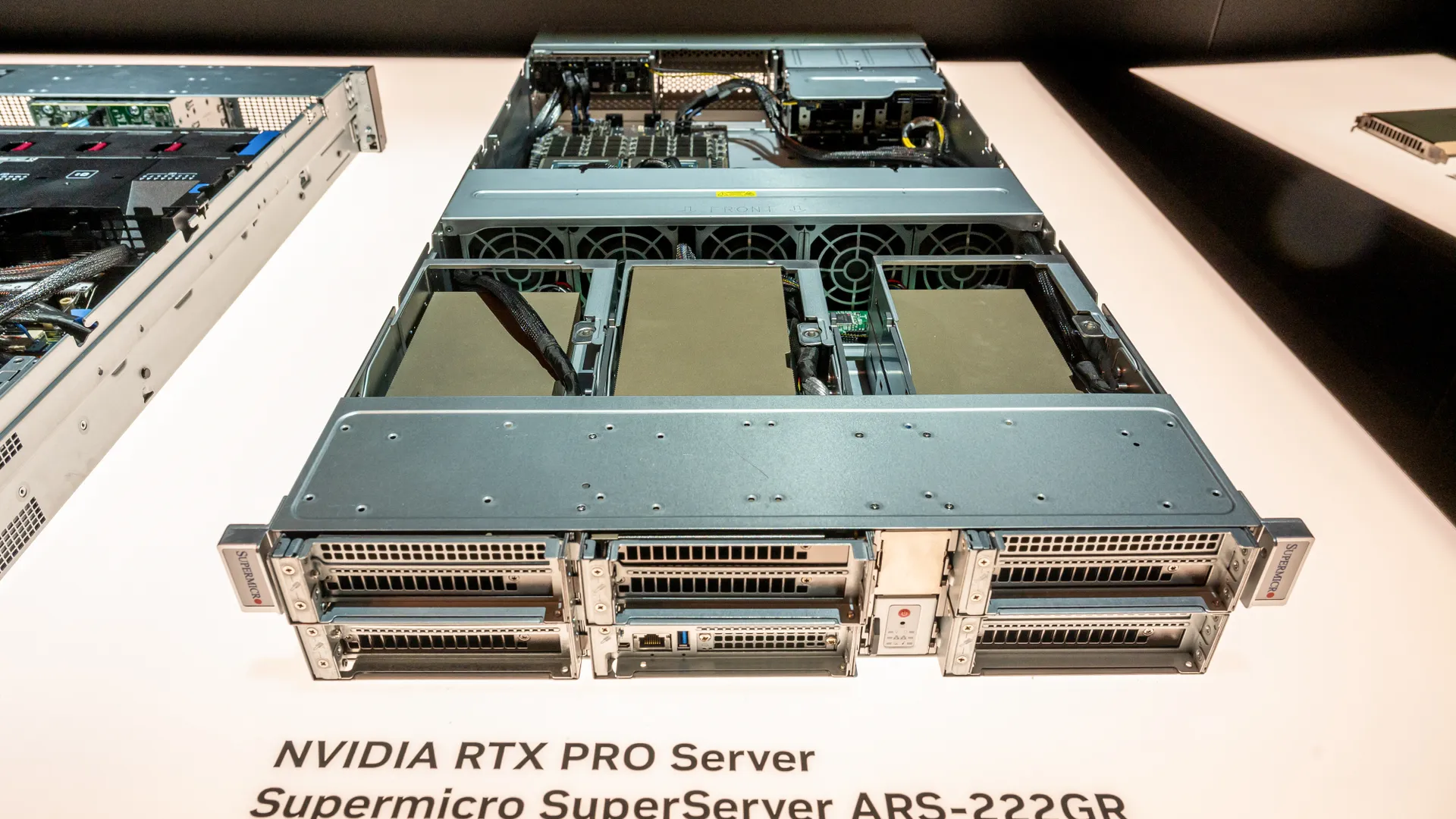
Prosecutors from the Taiwan Keelung District Office arrested three individuals last week, suspected of smuggling Nvidia chips to China. According to Bloomberg, the Taiwanese authorities also seized 50 Super Micro servers with falsified documents that were reportedly ultimately destined for Hong Kong via Japan. Aside from the seized servers, authorities say that an earlier batch of shipments had already been smuggled successfully using fake documentation.
This is the first arrest Taiwan has made in connection with the U.S. crackdown on AI chip smuggling, and the first to reveal Japan as a transshipment point for these illicit goods. Many smuggling operations have been using Southeast Asian nations to route Nvidia chips to China. However, countries like Singapore and Malaysia have started cracking down on these outfits, meaning smugglers need to look for other ways to get the banned hardware under the radar.
It is surprising that the recently broken-up operation in Taiwan routed the servers to Japan, especially as the country is known for its strict customs enforcement. The latter is a staunch U.S. ally and is one of the key pillars of the United States’ strategy in the Pacific to contain China. However, some Chinese AI companies also use the country to rent Nvidia AI chips owned by foreign firms that they otherwise wouldn’t be able to access domestically — a route that’s currently allowed by Washington’s export control rules. Japanese authorities from the Ministry of Finance's Customs Bureau and the Ministry of Economy, Trade, and Industry have remained silent on the issue, and they also did not confirm if they’ve been in touch with their Taiwanese counterparts regarding the arrest.
While the arrested individuals were illegally dealing Supermicro servers powered by Nvidia chips, the Taiwanese authorities have refrained from accusing both companies of breaking U.S. export control laws. Nevertheless, Nvidia CEO Jensen Huang said that the company explains the rules and regulations to its partners and is urging the company to fix its compliance systems. “Ultimately Super Micro has to run their own company,” Huang said to reporters. “I hope that they will enhance and improve their regulation compliance and avoid that from happening in the future.”
It’s unclear which chips were being smuggled, but the last-generation Nvidia H200 have already received clearance from the White House for export to China. However, Chinese customs officials were instructed to block these chips at the border, with the order recently being expanded to RTX 5090D V2 gaming GPUs.

Follow Tom's Hardware on Google News, or add us as a preferred source, to get our latest news, analysis, & reviews in your feeds.