
惯性聚合 高效追踪和阅读你感兴趣的博客、新闻、科技资讯
阅读原文 在惯性聚合中打开

推荐订阅源

月光博客
月光博客
freeCodeCamp Programming Tutorials: Python, JavaScript, Git & More
N
Netflix TechBlog - Medium
大猫的无限游戏
大猫的无限游戏
爱范儿
爱范儿
Martin Fowler
Martin Fowler
OSCHINA 社区最新新闻
OSCHINA 社区最新新闻
The Register - Security
IT之家
IT之家
博客园_首页
Microsoft Security Blog
钛媒体:引领未来商业与生活新知
钛媒体:引领未来商业与生活新知
博客园 - 三生石上(FineUI控件)
I
InfoQ
CTFtime.org: upcoming CTF events
Jina AI
Jina AI
Apple Machine Learning Research
M
MIT News - Artificial intelligence
博客园 - Franky
C
Check Point Blog
T
The Blog of Author Tim Ferriss
V
Visual Studio Blog
Cyber Security Advisories - MS-ISAC
T
Tailwind CSS Blog
Recent Announcements
云风的 BLOG
云风的 BLOG
美团技术团队
The Cloudflare Blog
Y
Y Combinator Blog
H
Hackread – Cybersecurity News, Data Breaches, AI and More
MyScale Blog
MyScale Blog
The GitHub Blog
The GitHub Blog
D
DataBreaches.Net
Google DeepMind News
V
V2EX
aimingoo的专栏
aimingoo的专栏
GbyAI
GbyAI
G
Google Developers Blog
S
SegmentFault 最新的问题
Hugging Face - Blog
Hugging Face - Blog
奇客Solidot–传递最新科技情报
奇客Solidot–传递最新科技情报
U
Unit 42
罗磊的独立博客
量子位
MongoDB | Blog
MongoDB | Blog
Last Week in AI
Last Week in AI
Stack Overflow Blog
Stack Overflow Blog
小众软件
小众软件
D
Docker
人人都是产品经理
人人都是产品经理

Latest from Tom's Hardware in News

Analytics group signals possible delays at 40% of AI data center construction sites — companies deny schedule holdups, but satellite imagery indicates otherwise Intel hires tenured Samsung exec to lead Foundry Services — signals company focus on winning business from potential Foundry suitors Elon Musk pushing forward with Terafab at Microsoft's April patch puts Windows domain controllers into reboot loops — third known issue from KB5082063… TSMC ups revenue guidance and CapEx, buoyed by AMD Ryzen 9 9950X3D2 appears on Amazon with $1,000 pre-order price — AMD confirms recommended pricing is still set… AMD's market cap hits all-time high, Intel hits 25-year high on Agentic AI's insatiable demand for CPUs Meta raising Quest headset prices due to AI-driven RAM shortage — Quest 3 to cost $600, Quest 3S $350 from April… Elegoo announces the Jupiter 2 resin 3D printer for $949, early bird price of $849 — new model offers massive print volume but is still physically smaller than previous models Pragmata PC performance tested: 18 GPUs take us to the Moon Chinese fabs import record volumes of US chipmaking equipment via Singapore and Malaysia — homegrown tool makers booked record 2025 revenues as price competition squeezes margins US appeals court restarts $3 billion patent infringement lawsuit against Intel — VLSI case from 2017 returns after… Two US citizens get combined 16 years in prison for running North Korean laptop farms — fake remote IT work scheme netted DPRK $5 million in around three years Intel launches Wildcat Lake as Core Series 3 for value laptops and edge systems — six consumer SKUs built on 18A promise Legendary Qualcomm, Apple, and Nuvia alumni form new CPU startup — Nuvacore promises to Bambu updates its 3D printers to print unique hues or gradients using two or three filaments — company acknowledges OrcaSlicer-FullSpectrum fork as the basis for the color prediction part of the new feature Broadcom to supply Meta with custom silicon through 2029 — Broadom CEO Hock Tan departs Meta Anonymous perps behind 86 million files scraped from Spotify hit with $322 million court judgement — Anna Non-functioning counterfeit Samsung 990 Pro SSDs are circulating in Europe — Despite convincing packaging, blue… Oklahoma farmer arrested and jailed for trespassing during AI data center town hall — removed by officers after going a few seconds over allotted speaking time, trying to hand paperwork to counselors Virginia voter support for new data centers collapses from 69% in 2023 to 35% in new poll — Multi-gigawatt, 37-building Digital Gateway project abandoned Struggling shoemaker and apparel brand Albird pivots to AI data centers, stock jumps 580% in a single day — sells core business and leveraging $50 million in financing to become a GPU-as-a-Service and AI cloud solutions provider IPv6 usage reaches historic 50% across Google services, matching IPv4 — increased usage eases pressure on the IPv4 address market as 'new' protocol designed in 1998 finally hits its stride Engineer open-sources DIY radar system that's 95% cheaper than $250,000 commercial offerings, has 20 kilometer range — Moroccan engineer designs Aeris-10 radar, shares it on GitHub Elon Musk demonstrates first sample of Tesla AI5 processor, accidentally thanks TSC rather than TSMC  — claims 40X performance boost over the predecessor Valve might be adding a 30-day price tracker to Steam — feature is already available in some EU countries to spoof… Memory cards and flash drives prices rocket 124%, some products peak at 261% jump — increases from 2025 driven by AI chip shortage across a range of formats and capacities Netgear secures conditional approval from the FCC following router ban — company can continue importing foreign-made routers through October 2027 China tests deep-sea electro-hydrostatic actuator that can cut undersea cables at a depth of 3,500 meters — state hails successful trial and hints at deployment readiness Iran reportedly bought an in-orbit Chinese satellite to target US military sites in the Middle East — purchase agreement included ongoing ground control services based in China Our lifestyle tech colleagues at Tom's Guide have overhauled their site for smarter shopping — more video and access to experts make it 'the biggest relaunch in our history' Alienware's new OLED monitor disrupts the market at just $350, features a 27-inch 240 Hz panel — The 'AW2726DM' is limited to 200 nits, but comes with a 3-year warranty Nvidia releases open AI models for quantum computing tasks — 'Ising' said to be 2.5x faster and 3x more accurate than existing tools for decoding Sony launches 720 Hz dual-mode OLED QHD gaming monitor — 27-inch Inzone M10S II is aimed at hardcore eSports… Intel Nvidia quashes rumor it’s planning to purchase a major PC manufacturer — says that it’s ‘not engaged in discussions to acquire any PC maker’ China News outlets are blocking Wayback Machine from archiving their pages — 23 outlets concerned AI companies might abuse fair use and use it to train their models Mark Zuckerberg reportedly working on AI clone of himself — Meta insiders claim 3D photoreal animated Zuck will be able to engage with employees on his behalf Veteran Windows dev shows off AI running on 47-year-old PDP11 with 6 MHz CPU and 64KB of RAM — 'gloriously absurd' project runs transformer model written in PDP-11 assembly language Half of all US employees now use artificial intelligence at work, crossing landmark threshold for first time — Gallup data shows daily and weekly usage hitting all-time high of 28% in Q1 2026, with 65% feeling positive about its impact on productivity China has spent 3.6 times more than the US on chipmaking subsidies over the past decade — $142 billion and counting, easily outweighs CHIPS Act FAA approves military use of drone-killing laser weapons in US airspace — decision comes after it was decided ‘systems do not present an increased risk to the flying public’ Nvidia says AI cuts 10-month, eight-engineer GPU design task to overnight job — company is still 'a long way' from AI designing chips without human input Small Missouri town ousts half its city council after $6 billion AI data center approval — petition calls for mayor's removal as frustration (and violence) over AI data centers mounts New tech can see a CPU's transistors in action — terahertz radiation can potentially steal data as a chip is… Intel's Nova Lake CPUs gear up to seize AMD’s 3D V-Cache gaming throne — early leak points to up to 52 cores, blazing DDR5-8000 support, and massive 175W TDP NZXT to cough up $3.45 million over 'predatory' Flex PC rental scheme in RICO class-action settlement — in-debt customers to get up to $5,000 of relief, eligible renters to be granted ownership Bulbous 15x fan PC case side panel dubbed the ‘Superdome’ lowers temps by 20 degrees —  $600 worth of Noctua fans arrayed in 3D-printed structure Approvals for Nvidia and AMD AI chip exports to China stall under government bottleneck —  20% staff turnover… 'CopprLink' destroys every eGPU standard in new test, achieves near-native-level performance with an RTX 5090 — setup requires $2,300 worth of additional hardware Website backup crippled by 1.6MB Friends GIF that was replicated 246,173 times, breaking Linux's EXT4 filesystem limit — Jennifer Aniston's 'happy dance' animation ate up 377 gigabytes of data due to security policy Lenovo hikes Legion Go 2 handheld gaming PC to almost $3,000 for 2 TB model — Handheld now costs more than AMD's Strix Halo devices despite relatively weaker Z2 Extreme chip Iran's forced nationwide internet blackout becomes second-longest on record as it passes 1,000 hours offline — possessing Starlink terminals punishable by death, country using 'military-grade jamming' against service Tiny 3-inch cube PCs bring a splash of color to the passive PC market with red, orange, green and blue options — Intel Twin Lake-powered Kubb Mini PCs start at $500 Veteran Microsoft engineer says original Task Manager was only 80KB so it could run smoothly on 90s computers — original utility used a smart technique to determine whether it was the only running instance Tech enthusiast gets Doom to run on a 40-year-old printer controller — ancient Agfa Compugraphic 9000PS came with a Motorola 68020 onboard for fast processing Startup secures $30 million contract to 3D print jet engines for the USAF — company to test and develop small… Linux 7.0 enables three new AI-specific keys for keyboards, an apparent expansion beyond the Copilot key — Google… $27 platypus PCIe adapter converts half-height GPUs into full-height while adding two M.2 slots for SSDs — enthusiast demos low-profile RTX 4060 with two SSDs thanks to PCIe bifurcation South Korea’s telecom giants surprise 7 million users with unlimited, universal internet — net access declared a 'basic telecommunications right,' 400 Kbps data after monthly plans run out Valve engineer shocks Linux community with game-changing VRAM hack for 8GB GPUs — breakthrough solution turbocharges gaming by prioritizing VRAM for games while background tasks take a back seat Rockstar Games confirms it was hacked by malicious group — 'ShinyHunters' takes credit, gives until April 14 to pay ransom or it will release confidential data Denuvo properly cracked in Resident Evil: Requiem, bypasses become plug-and-play — cracked version runs faster,… Chinese Nvidia Cloud Partner procured 300 servers with banned AI GPUs worth $92 million — shares of data center supplier Sharetronic plummet following Super Micro smuggling arrest Original Apollo 11 code open-sourced by NASA — original Command Module and Lunar Module code repos are now public… Garage sale haul finds 2013 'trash can' Mac Pro nestled inside 2010 Mac Pro enclosure — Mac Pro inception still needs some work to get running Benchmarking Nvidia's RTX Neural Texture Compression tech that can reduce VRAM usage by over 80% FAA courts gamers to become air traffic controllers — boasts $155k average annual salary after three years as the… Clippy, Microsoft’s hapless Office assistant, was retired 25 years ago today — its irritating spirit lives… Two manufacturers commit to keep Blu-ray alive after others quit manufacturing — Verbatim and I-O Data extend… MacBook user explains why he files the sharp metal edges off his Apple laptops — unibody design facilitates a… Tests show $30,000 AI GPUs are terrible password crackers — RTX 5090 gaming GPU outperforms Nvidia H200 and AMD… Microsoft simplifies Windows Insider program — fewer channels, and switching without wiping your device HWMonitor and CPU-Z developer CPUID breached by unknown attackers — cyberattack forced users to download malware… Framework founder says that ‘personal computing as we know it is dead’ — vows to keep building ‘computers that you can own at the deepest level’ French government says it's ditching Windows for Linux — country accelerates plans to ditch US-based software… Vdura hikes its enterprise SSD pricing, now costs 22.6x more than hard drives — the price of a 30TB SSD has… Embattled streamer goes viral after playing Red Dead Redemption 2 at 4 FPS — ‘i5-8300H and a 1050ti with 4GB’ setup takes 12 hours to play through the first chapter, would make the game 471 hours long After jumping 2,200% over the last twelve months, DDR4 spot prices fall 5%, the first decline in nearly a year — DDR5 pricing sees some relief in China channel market US cybersecurity agency issues an urgent alert as Iranian hackers attack critical infrastructure — CISA guidance warns organizations to immediately shield certain programmable logic controllers from the internet to thwart future attacks Newbie overclocker destroys $5,000 RTX 5090 Lightning Z GPU they used 'to learn how to solder' — practicing newfound hobby goes wrong in the most expensive way imaginable Engineer installs 3.5-inch floppy drive in a Tesla — modern EV recognizes and runs ancient storage device, even… Ambitious hacker reduces worst-case memory latency by up to 93%, but with severe downsides — 1960s bottleneck overcome by hedging memory accesses to avoid running into DRAM refresh stalls Fueled by Musk's TeraFab tie-in, Intel's market cap hits highest level in 25 years — tops $300 billion… Geekbench 6.7 adds Intel BOT detection to spoof out 'unrealistic' CPU scores — Benchmark runs with BOT enabled will be marked as invalid Intel's EMIB-T packaging technology set for fab rollout this year — as TSMC CoWoS capacity remains limited, EMIB-T is preparing for advanced AI accelerator designs Intel Arc GPUs can finally boot up and play 'Crimson Desert' — but you'll probably want to wait for… Alleged images of the long-awaited Nvidia N1/N1X SoC surface on laptop motherboard — board features 128 GB of LPDDR5X memory alongside 8+6+2 phase VRM Intel and Google announce multi-year chip deal — Google will deploy Intel Xeon with custom IPUs for next-gen AI,… Bryson DeChambeau to use 3D-printed 5-iron at 2026 Masters in golfing first — club he fabricated himself… UK navy tracked three Russian submarines near undersea cables, damage would 'have serious consequences,' Putin warned — US and allies expand seabed protection efforts Intel developing two-lever retention mechanism for LGA 1954 socket, according to new leak — Premium Nova Lake-S motherboards will feature 2L-ILM sockets Korean government to take action over soaring DRAM costs, including monitoring markets and pricing — internet data plans to be restructured and recycled PCs to be distributed to vulnerable groups Go maintainer joins collective klaxon about encryption-breaking quantum computers — developer urges immediate switch to post-quantum methods to prevent worldwide disaster Steam files suggest Valve is developing  internal 'SteamGPT' AI bot — aimed at tackling customer support tickets and CS2 anti-cheat $21 billion stolen from more than 1 million Americans due to cybercrime in 2025 — $11 billion come from stolen crypto, $8.6 billion taken from investment scams, while AI-related attacks cost $893 million 10 petabytes of sensitive data stolen from China's National Supercomputing Center, hackers claim — daring heist would be largest ever China hack, covering 6,000 clients across science, defense, and beyond Intel and SambaNova team up on heterogenous AI inference platform — different hardware performs different… AMD reveals $899 price tag for Ryzen 9 9950X3D2 — first dual-cache X3D CPU is $200 more expensive than the Ryzen 9…
30 years of Lexar: What a look inside its R&D labs and factory reveals about its plans for an AI-ready future
editors@tomshardware.com (Jowi Morales) · 2026-04-10 · via Latest from Tom's Hardware in News
The Lexar office Zhongshan, China
(Image credit: Tom's Hardware)

Lexar recently invited Tom’s Hardware, along with several other journalists, to visit its Shenzhen office, which sits north of Hong Kong, as well as its research and development facilities at Zhongshan across the bay. From there, the company took us to their Suzhou factory, about an hour and a half to the west of Shanghai, to explore their automotive storage production line.

The company is primarily known for its flash memory products, particularly for high-performance microSD, SD, and CFexpress cards for cameras and other portable devices, as well as flash drives and card readers. However, the company has recently been making a push towards modern SSDs and RAM modules, and it’s also working on the next generation of AI-ready storage solutions.

Article continues below

Moving beyond memory cards and flash drives

Lexar has continued producing removable storage solutions after its 2017 acquisition by Longsys. Just one year after the purchase, the brand was the first to commercially release a 1TB SD card. The company also claimed that it had the world’s fastest CFexpress Type B cards in 2022, which is crucial for both photographers shooting in burst mode and videographers shooting at high-resolution 4K video. Just last year, the company also released the world’s first stainless steel SD cards, featuring an IP68 environmental protection rating while also providing much more strength than regular plastic SD card models.

But now that Lexar was under the wing of Longsys, the company had access to formidable resources for research and development, as well as the nearly two decades of experience that its parent firm had in working with flash storage. Although the company had already been making USB flash drives before 2017, it was only after the Longsys purchase that the company started making and selling proper drives.

One of the first Lexar SSDs we’ve seen is the NM600 M.2 NVMe SSD, which, although it did not offer mind-bending performance, was an affordable and efficient SSD that offered a great solution for those looking for relatively affordable storage. Since then, Lexar has released several NVMe SSDs, like the NM790, which offered excellent sustained read and write speeds while staying power efficient and is priced competitively, especially at the 4TB capacity, as well as the 1TB Lexar Play M.2 2230 SSD, which is one of the best solutions for expanding storage on gaming handheld devices.

Image

1

of

2
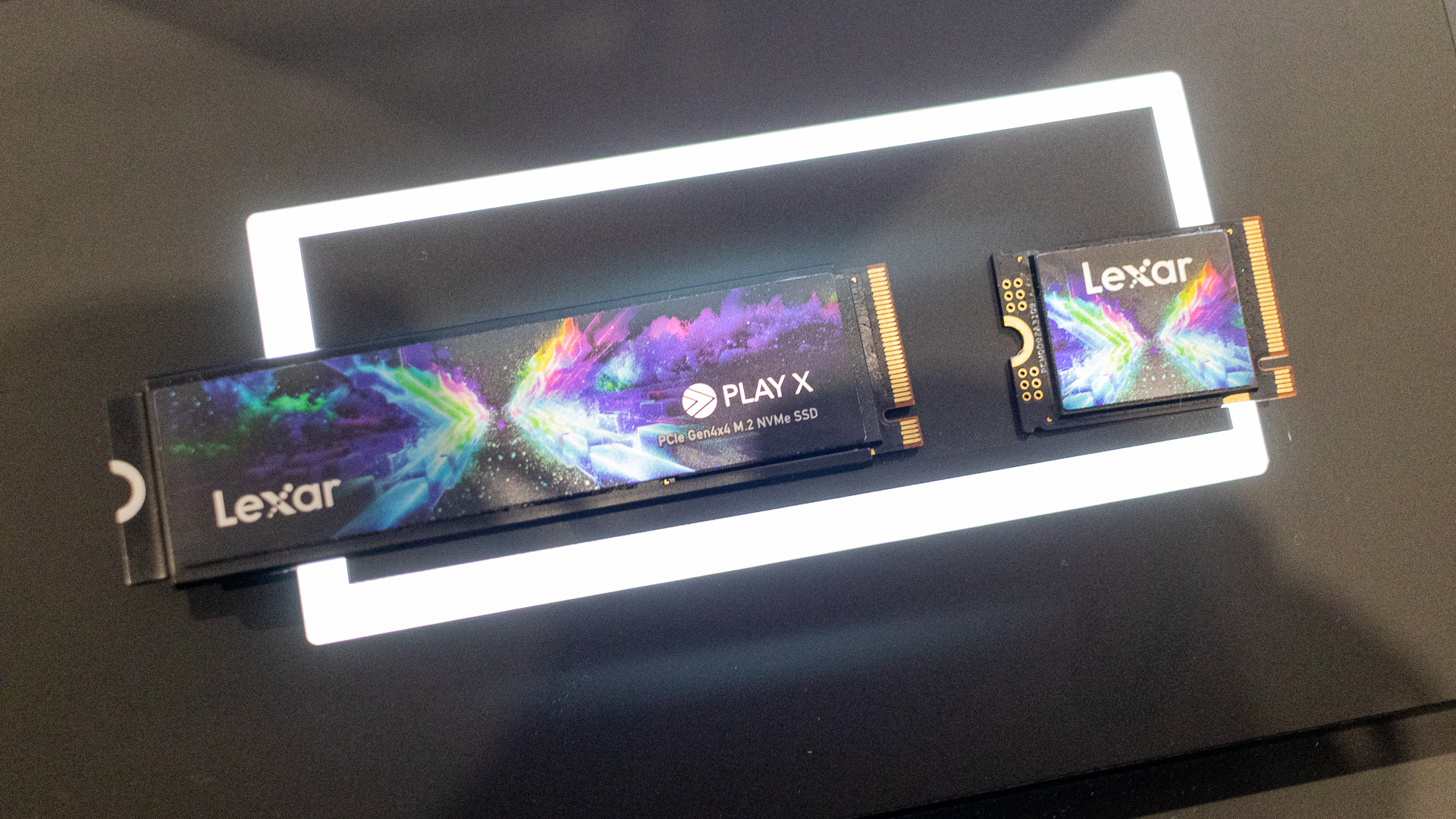
Lexar microSD and SSDs
(Image credit: Tom's Hardware)

The company has also started building its own storage controllers, which manage how data is stored, moved, corrected, and retrieved from the NAND flash chips used by memory cards. This would allow Lexar to have more in-depth control of how its memory products would perform and differentiate its offerings from the competition. At the moment, Lexar’s Silver Plus microSD, Blue microSD, Silver Plus SD, and Silver SD cards already use in-house controllers.

Get Tom's Hardware's best news and in-depth reviews, straight to your inbox.

Aside from building its own storage controllers and expanding into solid state drives, the company also ventured into RAM with its basic DDR4-2666 C19 memory modules in 2020 and the Hades gaming RAM the following year. By 2023, the company made the Ares RGB DDR5-6000 C34 gaming RAM, which supports both Intel XMP 3.0 and AMD EXPO.

Of course, Lexar also saw the need for specialized storage in the age of AI. Because of this, it’s planning to release its AI Storage Core solution, which is more than just a faster, more performant memory solution. Of course, these will have higher read and write speeds, which is crucial for the massive amounts of data that AI handles, but will also have better encryption to protect the sensitive data handled by AI models. Lexar also says that they’ll be more robust, especially for applications in AI-powered vehicles and robots, as well as having hot-swapping capabilities to make it more convenient to switch devices without requiring a reboot.

Lexar AI Core Storage devices

(Image credit: Tom's Hardware)

The company says that it will offer multiple configuration options for AI Storage Core devices, ensuring that manufacturers and end-users can pick one that’s optimized for their application. It’s also working with various AI vendors, ensuring that Lexar’s storage solutions will be supported in future AI applications, allowing for easier and direct access to the data stored within them. There’s also development of supporting snapshots directly on the storage device’s firmware, giving users a secure backup directly on the device and making it easier to restore their data in case something goes wrong during the AI workflow, making it easier to roll back to an earlier snapshot.

Of course, Lexar cannot achieve all its plans without putting in the effort to develop new technologies. So, the company invited us to explore their various sites to see what it’s doing to achieve its goal of “Bridging Continents and Powering the World.”

Lexar 30 theme

(Image credit: Lexar)

Research and development for next-generation storage technologies

One of the first places we visited was the Longsys Innovation Laboratory, located in the Foresee Building at Zhongshan. This is where Lexar’s parent company works on developing next-generation products, including DDR5 and LPDDR5/5X memory modules, PCIe 5.0 storage solutions, UFS4.1 memory cards, as well as CXL2.0/3.0 for data centers and AI systems. The lab covers an area of over 9,000 square feet and is staffed by over 50 personnel, of which 20 are full-time engineers, scientists, and researchers.

Everything begins at the Design Simulation & Signal Analysis Lab, where new Lexar products are developed, validated, and engineered. The Design Simulation Lab is where upcoming storage solutions are tested for thermal performance, structural rigidity, and signal and power integrity, while the Signal Analysis lab looks at the high-speed signals being sent throughout the entire system to ensure everything stays in spec and operates reliably.

Since Lexar relies on third-party suppliers for NAND and DRAM supplies, it must ensure the quality of the dies it receives and know exactly what’s inside each product it manufactures. This is where the Chip Resource Analysis Lab comes in, where multiple high-end machines test timings, memory redundancy, and the memory core, as well as running accelerated aging under stress (also known as burn-in testing), to ensure the quality and reliability of Lexar products over time.

Image

1

of

2
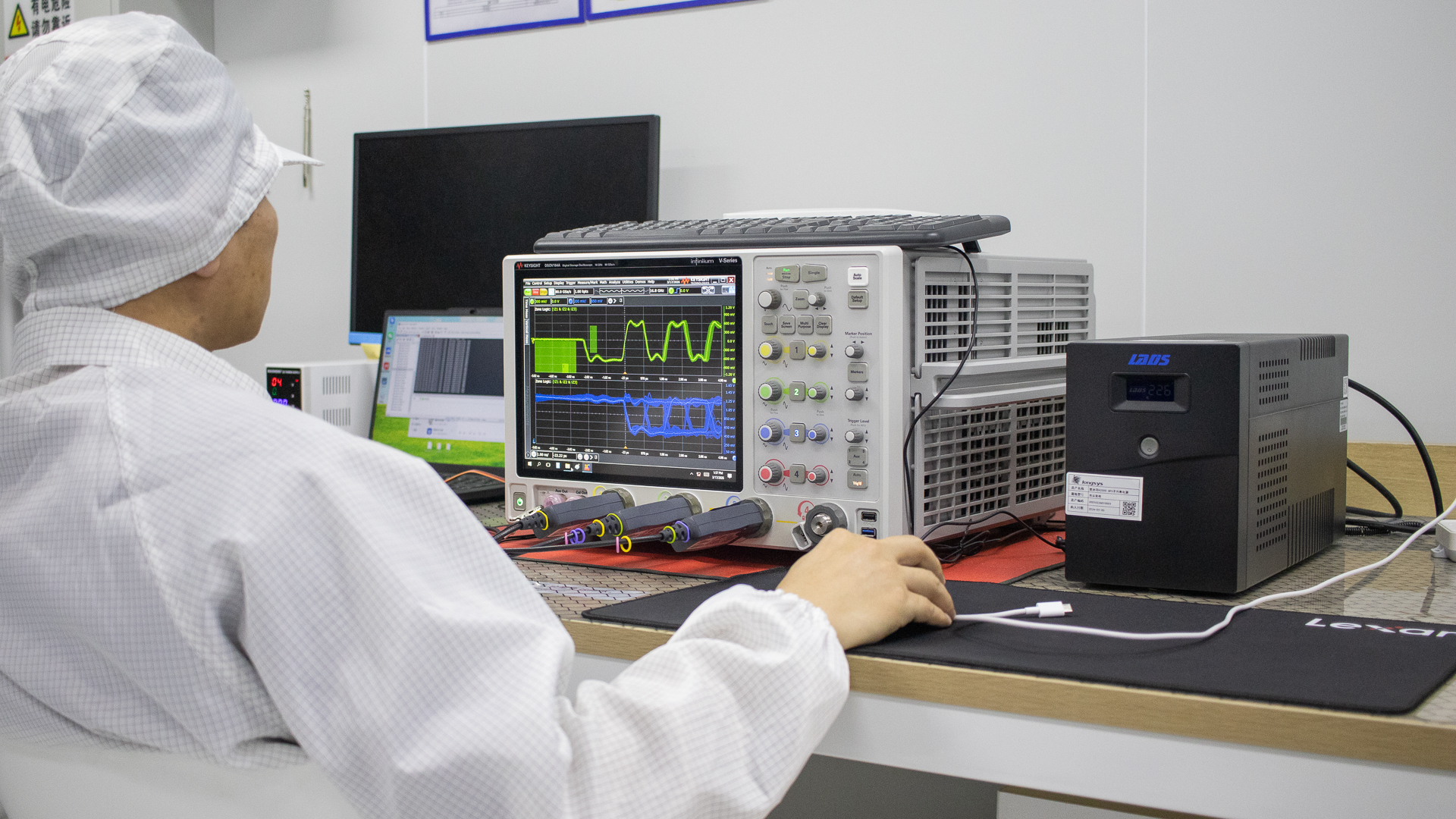
Signal Analysis testing at the R&D lab
Signal Analysis testing at the Lexar R&D lab(Image credit: Tom's Hardware)

There are several labs that deal with completed products. There’s the System Verification Lab, where finished storage and memory items are tested for their power draw and timings, ensuring that Lexar DRAM meets JEDEC specifications. Lexar has a high-end gaming PC installed in the lab so that they can run their hardware on various benchmarking apps like AIDA64, 3DMark, and PCMark.

The Reliability Lab is where things are getting interesting, as Lexar puts its various products through their paces here. It has various testing machines, including the Drop Tester for simulating dropping an item from a height of up to 1.5 meters or 4 feet to a concrete or steel floor and the Roller Drop Tester, which continuously tumbles items between 5 to 25 RPM. There’s also the Plug-in/out Force Test machine, which simulates plugging in a memory card into a slot thousands of times and with various levels of force, the Tensile Test machine, which basically pulls on materials to see how much strength it takes to break them apart, and several other devices that check the durability of their prototypes and other products.

Aside from physical strength, the company also tests for electrostatic discharge resistance in its ESD lab, ensuring that its memory cards, storage drives, and memory modules aren’t killed by everyday static that people build up from their environment.

The tests we’ve mentioned above are mostly limited to day-to-day use. At the end of the hall sits the Environmental Lab, where Lexar puts its prototypes and products through the wringer. There are four testing machines here — the Salt Spray Test, which accelerates aging through a corrosive environment, the Precision High-Temperature Oven, where Lexar products are exposed to high temperatures while they are running, the Highly-Accelerated Stress Test, for reliability failure analysis, and the Dye Penetration Test, which looks at the effects of thermal shock on various components.

Image

1

of

3
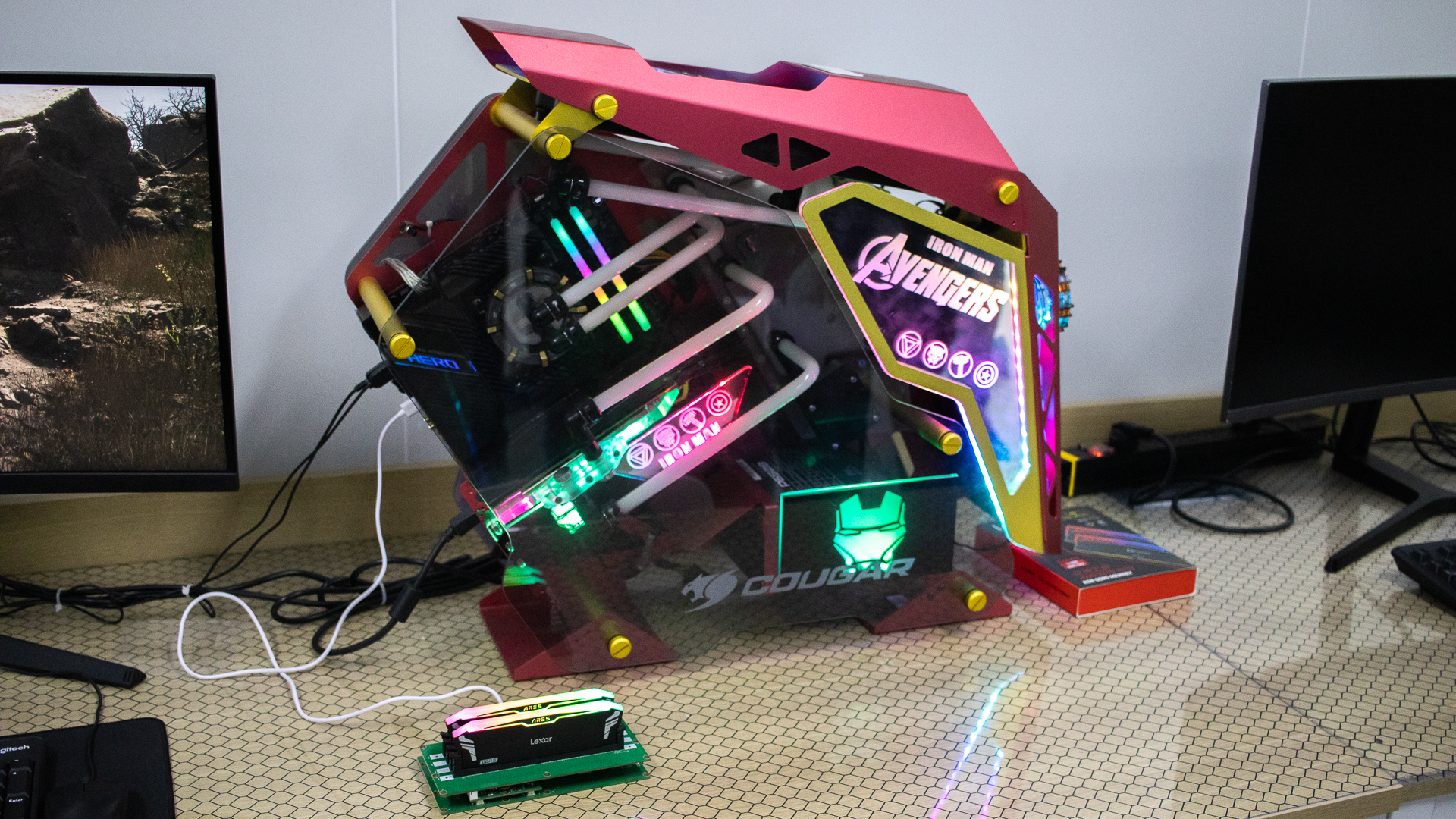
A Gaming PC in the Systems Verification Lab
A Gaming PC in the Systems Verification Lab(Image credit: Tom's Hardware)

Besides the ESD Lab, you’d find the X-ray Lab, where the tiny wiring and connections in the chip are analyzed. Inside it, you’ll find a combined 2D X-Ray and CT Scan machine, allowing Lexar engineers to find minute, microscopic defects. There’s also the Failure Analysis Lab, which looks at how the items fail after this series of tests, allowing Lexar to figure out what went wrong with them and rectify their shortcomings, ensuring that they do not fail once out in the real world.

Last, but not least, we visited the Materials Analysis Labs, where the scientists and engineers visually inspect the chips. Note that they do not just place them under a microscope — instead, this is an involved process where they would put the memory or storage module they want to inspect in resin and then use a precision cutter machine to exactly slice the material and reveal the area where the suspected damage is.

Image

1

of

3
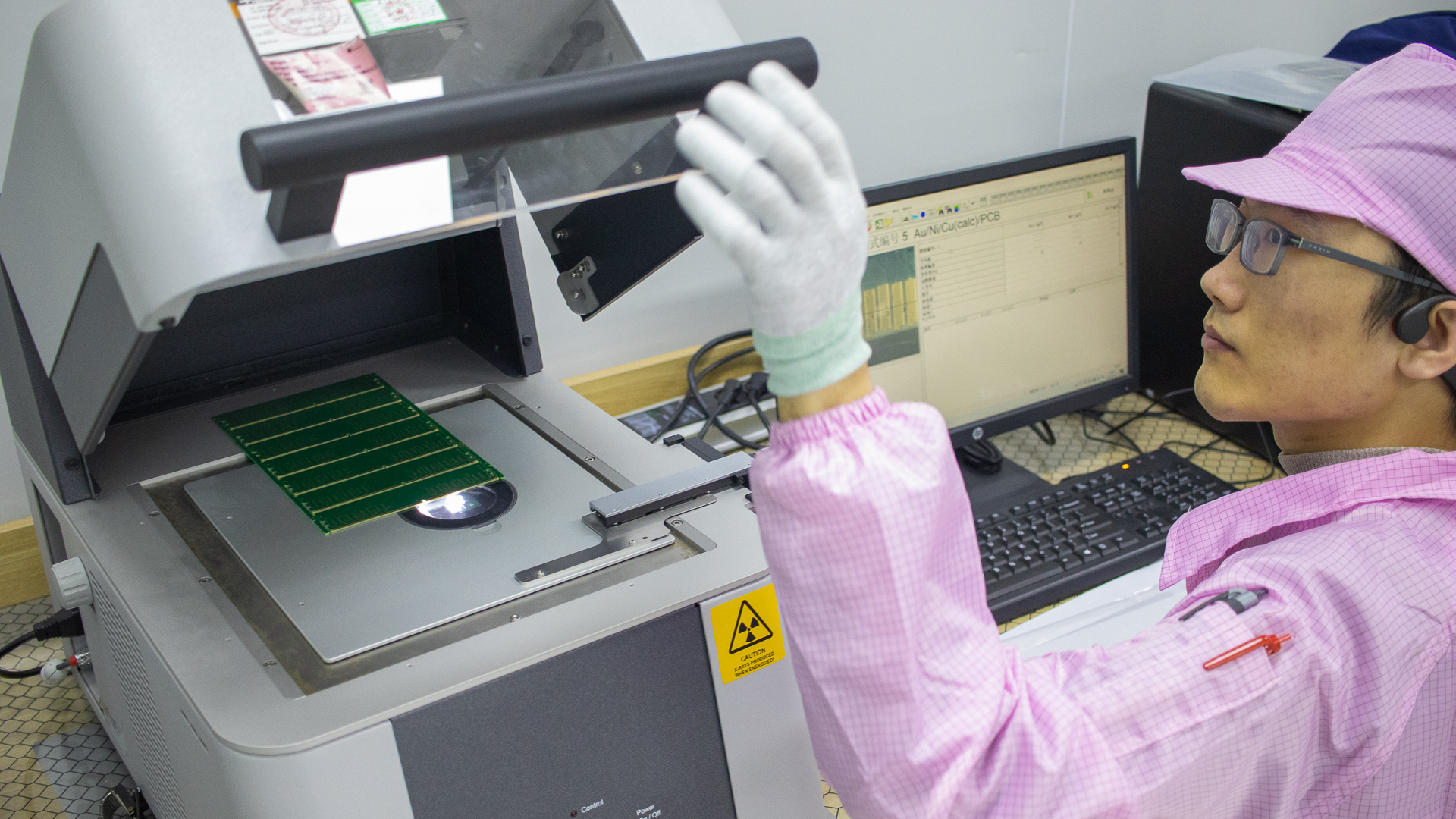
An engineer at work in the Failure Analysis lab
An engineer at work in the Failure Analysis lab(Image credit: Tom's Hardware)

Now, all the testing here is done directly on the Lexar products and prototypes. However, storage and memory do not exist in a vacuum — instead, they must work with a massive number of different devices, like cameras, drones, security cameras, gaming handheld devices, desktops, laptops, tablets, dashcams, and so much more. So, our next stop was the Longsys Quality Labs.

An extensive compatibility testing lab

Lexar has an extensive portfolio of memory and storage products, including CFexpress cards, SD cards, microSD cards, the NM card for some Huawei phones, portable SSDs, USB flash drives, M.2 and SATA SSDs, DDR4 and DDR5 memory modules, card readers, enclosures, and more. If Lexar plans to release any new product, it must ensure that it will work across a wide range of devices already on the market. Because of this, Longsys Quality Labs keeps more than 1,200 different gadgets across 35 categories to ensure that it can test its products before release.

For example, we saw more than 30 handheld gaming consoles on one desk, featuring popular brands and models like the Steam Deck, ROG Ally X, Lenovo Legion Go, and the Nintendo Switch 2, as well as from more niche brands like OneX Player, Ambernic, and more. There are also several drones and action cameras from DJI, as well as shelves of DSLRs, mirrorless, and point-and-shoot cameras from Canon, Nikon, Sony, and Fujifilm. The Lexar team also had multiple phones, including those from Chinese brands like Huawei, Xiaomi, Vivo, and Oppo, as well as popular international brands such as iPhone and Samsung. Aside from these flash devices, other rooms also stored a ton of more mundane gadgets, like dashcams, security cameras, and even automotive modules.

Image

1

of

5
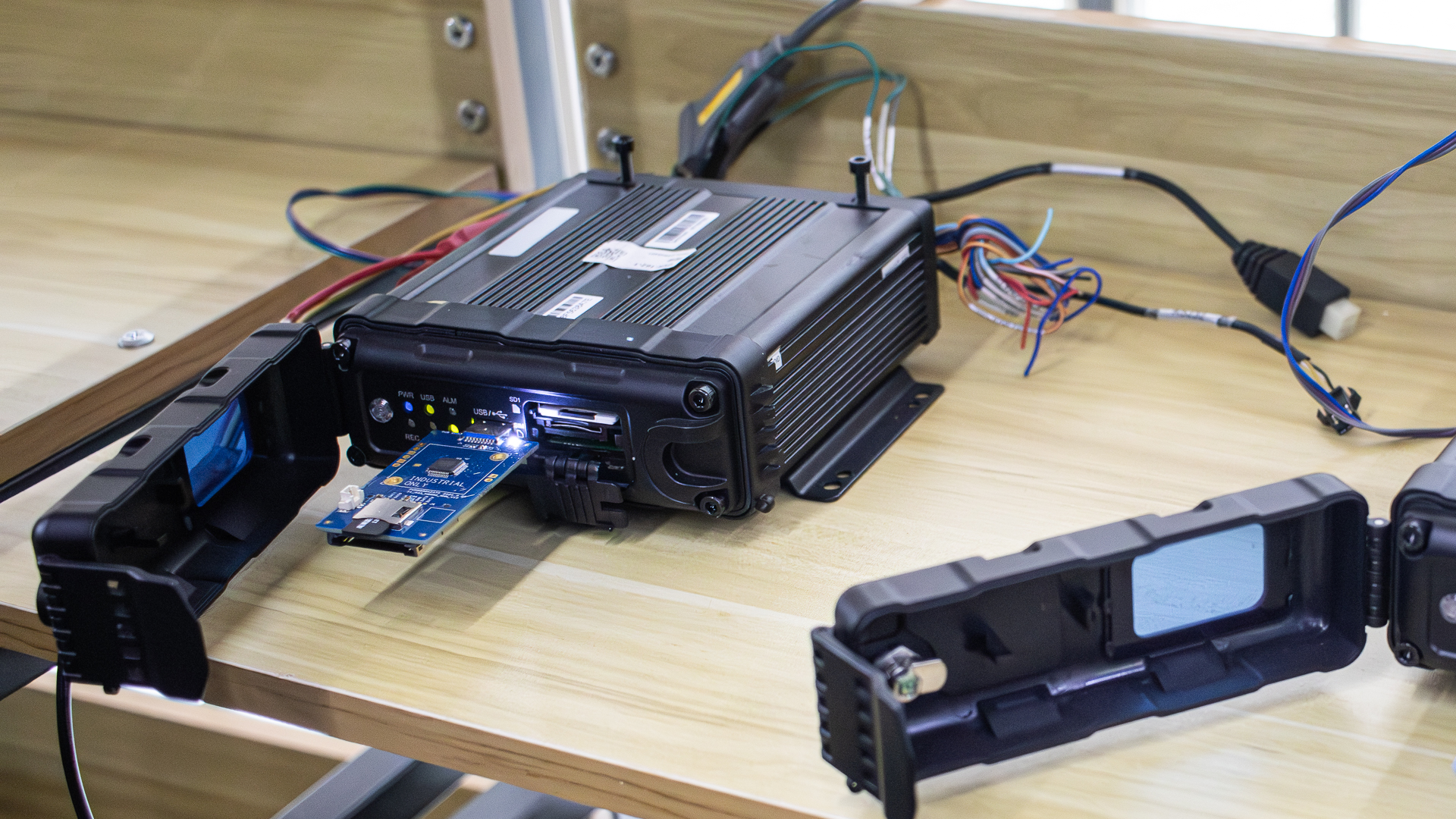
Different devices in the Longsys Quality Labs
(Image credit: Tom's Hardware)

After exploring the lab, we visited the Memory History Museum, where Lexar showed how storage technologies developed from prehistoric knots to the SSDs that we know today. We ended our day there, as our next stop would be the company’s manufacturing base in Suzhou, a two-hour flight from Shenzhen, which we took the following day.

Exploring the Longforce automotive storage production facility

Our entire group landed in Shanghai, and we took a one-and-a-half-hour drive to the Longforce Technology (Suzhou) Co., Ltd., which is the company’s manufacturing arm. We then made our way to the company’s production line for automotive storage, where we saw how NAND silicon wafers are turned into automotive-grade storage solutions. Since this is a silicon production line, we all had to wear cleanroom suits and get blasted with air jets before entering the actual production area. That way, we minimize the chances of bringing in contaminants that would affect yield rates.

Image

1

of

2

The Longforce building in Suzhou
(Image credit: Tom's Hardware)

The NAND arrives from the suppliers in wafer form, where it must first undergo taping, which is the mounting of the wafer to a backing material to ensure its rigidity during processing. That’s because a silicon wafer is extremely thin, and the backing material will protect it from cracking. From here, the wafer first undergoes pre-grinding, which thins out the wafer and makes it ready for cutting. It’s then cut into pieces with a laser using a technique called stealth dicing, because the cuts were made under the surface. From there, the wafer is finally fully ground to bring the wafer to its final thickness.

Once all of that is completed, the wafer is then finally mounted, and the tape is removed through DDS. It then goes through various processes until the die is mounted onto a substrate. From there, it will go through wire bonding, which connects all the layers of the die to the substrate, and be packaged via a C-Mold process. From there, it receives branding, and solder balls are attached to the underside of the substrate to make it ready for attachment to a PCB.

Image

1

of

3
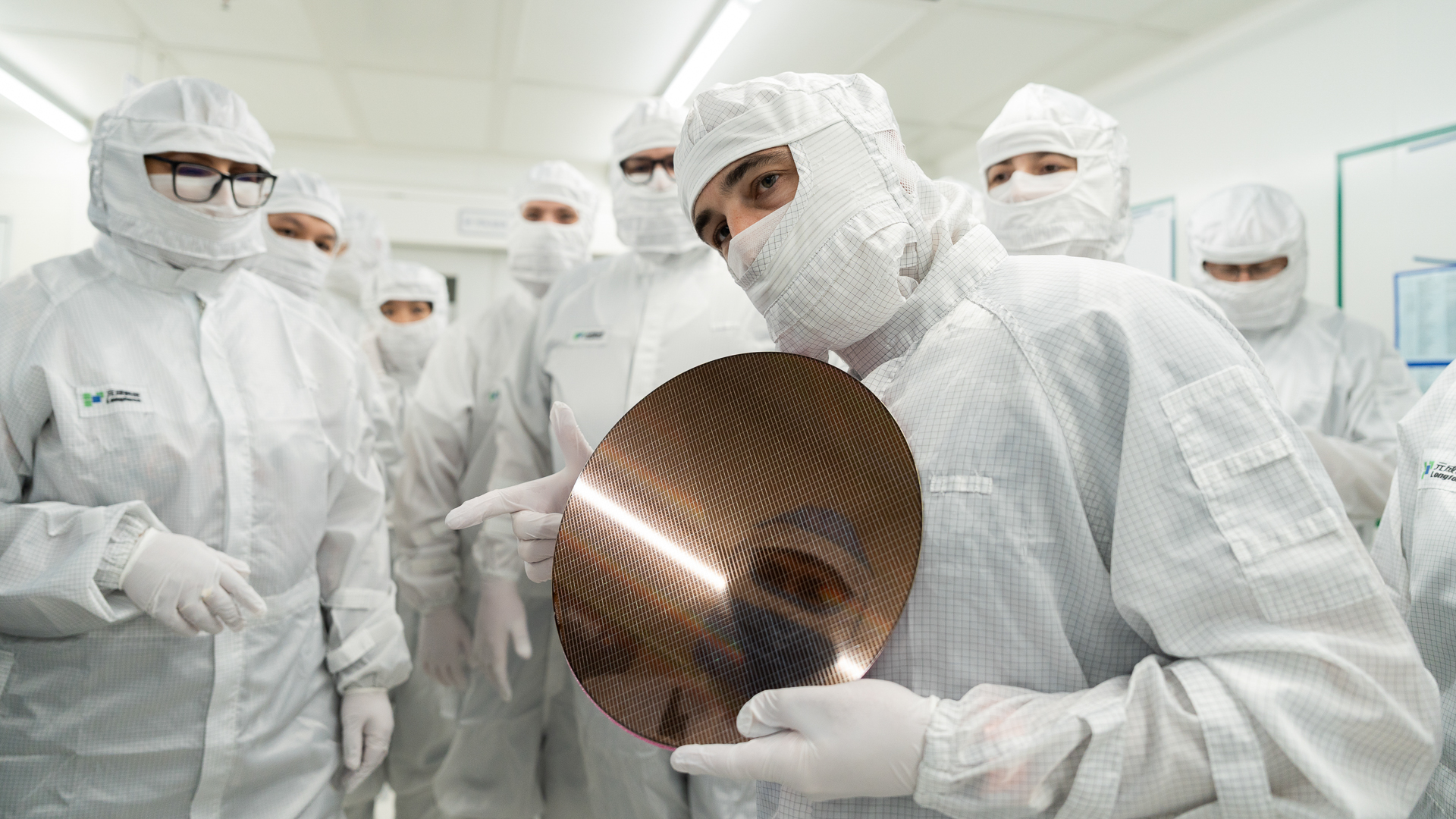
Exploring the Longforce production line
(Image credit: Lexar)

Note that the process does not end there, as the chips are all built together into a single molded panel. They must first be cut into individual pieces through singulation. Once that is done, they go through final testing and quality control, and then the chips are packaged for delivery to clients.

Let's move to the executive Q and A on the following page.

Jowi Morales is a tech enthusiast with years of experience working in the industry. He’s been writing with several tech publications since 2021, where he’s been interested in tech hardware and consumer electronics.