
惯性聚合 高效追踪和阅读你感兴趣的博客、新闻、科技资讯
阅读原文 在惯性聚合中打开

推荐订阅源

V
Visual Studio Blog
Engineering at Meta
Engineering at Meta
月光博客
月光博客
钛媒体:引领未来商业与生活新知
钛媒体:引领未来商业与生活新知
T
Tailwind CSS Blog
博客园 - Franky
The GitHub Blog
The GitHub Blog
大猫的无限游戏
大猫的无限游戏
The Cloudflare Blog
B
Blog RSS Feed
云风的 BLOG
云风的 BLOG
小众软件
小众软件
罗磊的独立博客
Microsoft Azure Blog
I
InfoQ
美团技术团队
H
Hackread – Cybersecurity News, Data Breaches, AI and More
OSCHINA 社区最新新闻
OSCHINA 社区最新新闻
V
V2EX
C
Check Point Blog
WordPress大学
WordPress大学
博客园 - 【当耐特】
博客园 - 司徒正美
D
Docker

Latest from Tom's Hardware in Semiconductors

Intel Intel’s performance-enhanced 18A-P process enters risk production — drop-in 18A upgrade promises 9% performance improvement at iso-power, cuts thermal resistance by 40% Chinese fab SMIC TSMC says panel packaging won Analyzing TSMC's fab expansion roadmap — multi-fab N2 ramp, CoWoS, SoIC, and uncorking bottlenecks Chinese startup claims photonic chip production without DUV lithography, says nanoimprint process cuts costs by 90%… ASML becomes Europe's most valuable company ever as analysts bet on higher EUV output — its market cap hit… TSMC CEO C.C. Wei says, ‘It will be a long time before we can meet customer demand’ — tells shareholders that he will keep prices stable, refrain from implementing price hikes Samsung shows first HBM5 mockup with Heat Path Block cooling — thermal race with SK hynix shaping up Seven hospitalized after toxic gas fire at SK hynix advanced memory plant — Cheongju 4th campus incident today led… TikTok owner ByteDance is reportedly developing its own custom AI CPUs — company looks to ease China's… Trailing-edge foundry roadmaps for GlobalFoundries, UMC, and SMIC — mature node chipmakers each pursue differing… Chinese university builds 3D chip design tool tailored to Huawei's ‘LogicFolding’ architecture — 3D design delivers increased performance and better thermal management China adds homegrown AI chips to 'secure and reliable' procurement list for the first time — nine options added as move away from Nvidia continues SK hynix unveils 'iHBM' thermal architecture that cools AI memory at the source — integrated cooling elements inside HBM interface cut thermal resistance by 30%, target next-gen HBM5 accelerators and dense AI data centers Imec builds world's first High-NA EUV-fabricated quantum dot qubit device — breakthrough could pull quantum computing onto the same manufacturing roadmap as next-gen AI processors, compressing timelines Huawei claims sanctions-busting breakthrough with 1.4nm-class chips by 2031, claims 55% higher transistor density — firm claims new LogicFolding chip architecture can bypass EUV restrictions, introduces 'Tau Scaling Law' to replace Moore's Law Samsung's $400,000 payout for memory workers sparks revolt as other divisions get only $4,000, fueling intentional production slowdowns — internal resentment disrupts packaging operations, major AI chip project decisions to a complete halt The custom AI ASIC state of play (May 2026) — Broadcom deals, Google TPUs, Meta MTIA & beyond AMD begins production ramp of 256-core EPYC Venice — first 2nm HPC chip claims 70% performance leap Intel kicks off development on next-decade 10A and 7A process technologies — 14A node remains on track for… SMIC founder and AMEC CEO urge Chinese fabs to test domestic chipmaking tools on active production lines — equipment makers post record revenue but falling margins Russia’s Mikron is selling framed test wafers with up to 120,000 processors as souvenirs — 12 designs, priced around $170 each, sold alongside $2 vials of cleanroom air Trump calls $14 billion Taiwan arms deal a 'negotiating chip' with China after Xi said Taiwan issue could lead to 'clashes and even conflicts' — Trump says 'Taiwan would be very smart to cool it a little bit' Leading-edge foundry roadmaps for TSMC, Intel and Samsung — outlining the path to 1.4nm nodes and beyond TSMC allocates $20 billion to Arizona expansion — project faces water and labor shortages, complicated by visa… NASA partners with Microchip to build next-generation spaceflight chips with 100x the power of current offerings — chip designed to withstand radiation for extended missions on the Moon and Mars Intel, SK hynix shares surge following reports of chip packaging partnership — SK is said to be testing… Apple reportedly strikes deal for Intel to make some of its chips — two tech giants reached a preliminary… Global semiconductor sales hit nearly $300 billion in Q1 2026 — chips are on track to top $1 trillion for this…
TSMC is reportedly hiking prices for
https://www.tomshardware.com/author/etiido-uko · 2026-06-24 · via Latest from Tom's Hardware in Semiconductors
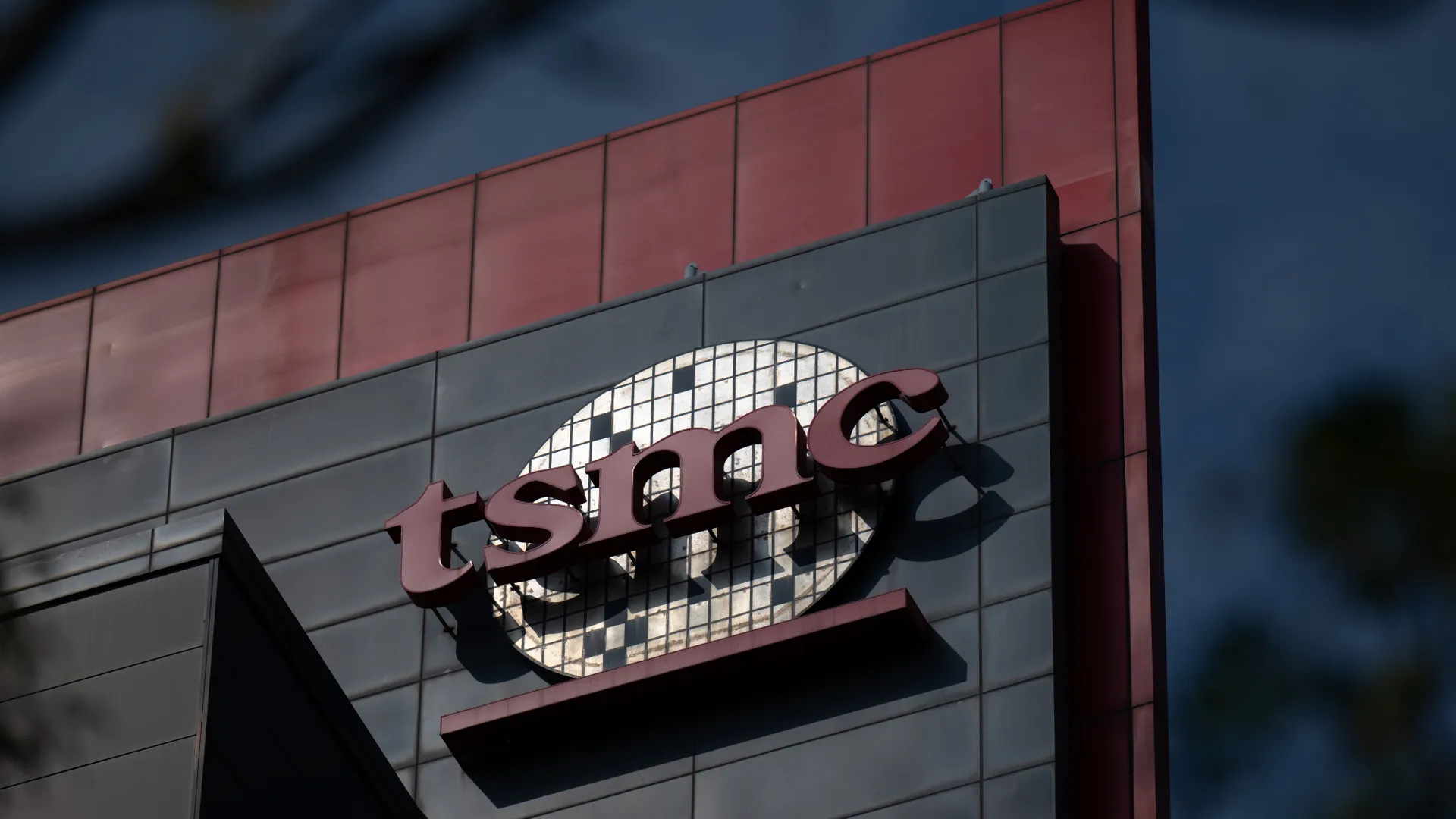
TSMC
(Image credit: Getty / Bloomberg)

TSMC has reportedly told customers to prepare for price increases across its advanced chipmaking portfolio, extending the hikes beyond the newer 3nm process to include 7nm and even legacy products. According to a June 23rd Culpium report, the increases would affect the bulk of TSMC’s wafer revenue and could raise costs for major chip designers, including Apple, Nvidia, AMD, Qualcomm, Broadcom, and MediaTek.

The exact size of the increases remains unclear, as figures would reportedly vary by customer, node, and product category, but generally appear to fall in the 5% to 10% range. TSMC price increases have reportedly already started rolling out in some cases, while other customers have been told to build the higher cost structure into future purchase orders.

The company declined to discuss specific pricing with Culpium. “TSMC does not comment on pricing. Our pricing strategy is strategic, not opportunistic,” the company said in a statement to the publication. “We will continue to work closely with customers and sell our value to them.” Although the company had earlier said it would refrain from raising prices.

Earlier reports from Taiwanese media had mainly pointed to increases at TSMC’s 3nm node, one of its most advanced processes currently used for premium smartphones, PC, and AI chips, with price pressure also expected at the newest 2nm-class production. However, Culpium reports that TSMC has informed clients that “all advanced nodes” will become more expensive, meaning the hikes would extend beyond 3nm and 2nm to include older but still advanced processes such as 5nm and 7nm.

3nm alone accounted for 25% of TSMC’s wafer revenue in the first quarter of 2026, while the company’s full advanced-node portfolio — defined by TSMC as 7nm and more advanced technologies — accounted for 74% of wafer revenue. Therefore, the hikes would span nearly three-quarters of the company’s wafer business.

The inclusion of 7nm is especially notable because the node is no longer TSMC’s flagship technology. However, it's not exactly surprising as 7nm remains heavily used across processors, accelerators, networking silicon, and other high-performance chips. Many products remain on older, more advanced nodes because they offer better cost, yield, and maturity than the newest processes, especially when a design does not require the density or efficiency gains of 3nm or 2nm.

The client notices follow weeks of public comments from TSMC executives suggesting that higher prices were at least under consideration. At the company’s annual shareholders’ meeting in Hsinchu on June 4, CEO C.C. Wei said customers remained positive on the AI demand outlook, while also acknowledging cost pressures and the widening gap between chip demand and available manufacturing capacity. CFO Wendell Huang also said earlier that TSMC did not rule out price increases as inflation, overseas expansion, and advanced manufacturing costs continue to rise.

Get Tom's Hardware's best news and in-depth reviews, straight to your inbox.

The timing of the price increases reflects TSMC’s strong negotiating position. The company remains the dominant manufacturer of leading-edge logic chips, and its most advanced capacity is in high demand among AI accelerator vendors, smartphone chip designers, and custom ASIC developers. With customers competing for access to the same manufacturing lines, TSMC has more room to pass on rising costs than it would in a weaker cycle.

The move also comes as TSMC benefits from a surge in AI-related demand. In its first-quarter results, the company reported $35.9 billion in revenue and a 66.2% gross margin, both supported by strong demand for high-performance computing and advanced-node production. TSMC has also raised its 2026 revenue growth target to more than 30%, with capital spending expected to remain elevated as the company expands capacity in Taiwan, the U.S., Japan, and Germany. The company’s Arizona manufacturing capacity has been sold out through 2027 since early 2025.

The reported increases are still far smaller than the recent price spikes seen in the memory market, where AI-driven demand for HBM and other high-end memory products has allowed suppliers to push through much steeper increases. Conversely, TSMC does not need memory-style pricing to meaningfully improve its margins. Because advanced nodes account for most of its wafer revenue, even a mid-single-digit increase across that base could add billions of dollars in annual revenue if demand remains strong.

For chip designers, the immediate impact is a higher manufacturing bill. For consumers, the effect is less direct but still important. A 5% to 10% wafer price increase does not automatically translate into a 5% to 10% increase in the price of a GPU, CPU, smartphone, or laptop, since the wafer is only one part of the final product cost. However, when combined with higher memory prices, packaging constraints, AI demand, and rising manufacturing costs, it creates another reason for device makers and component vendors to raise prices or protect margins by cutting costs elsewhere.

Google Preferred Source

Follow Tom's Hardware on Google News, or add us as a preferred source, to get our latest news, analysis, & reviews in your feeds.

Etiido Uko is a news contributor for Tom's Hardware covering the latest updates in big tech and the PC industry. He is a mechanical engineer and senior technical writer with over nine years of experience in documentation and reporting. He is deeply passionate about all things engineering and technology, and is an expert in gadgets, manufacturing, robotics, automotive, and aerospace.