

惯性聚合 高效追踪和阅读你感兴趣的博客、新闻、科技资讯
阅读原文 在惯性聚合中打开

推荐订阅源

T
Tenable Blog
MyScale Blog
MyScale Blog
罗磊的独立博客
Hugging Face - Blog
Hugging Face - Blog
Threat Intelligence Blog | Flashpoint
爱范儿
爱范儿
博客园 - 司徒正美
D
Darknet – Hacking Tools, Hacker News & Cyber Security
量子位
N
News | PayPal Newsroom
S
Secure Thoughts
酷 壳 – CoolShell
酷 壳 – CoolShell
L
LINUX DO - 热门话题
有赞技术团队
有赞技术团队
V
Visual Studio Blog
T
Tailwind CSS Blog
奇客Solidot–传递最新科技情报
奇客Solidot–传递最新科技情报
Project Zero
Project Zero
B
Blog RSS Feed
J
Java Code Geeks
Google Online Security Blog
Last Week in AI
Last Week in AI
Cyberwarzone
Cyberwarzone
Exploit-DB.com RSS Feed
小众软件
小众软件
博客园 - 【当耐特】
Latest news
Latest news
T
Threat Research - Cisco Blogs
aimingoo的专栏
aimingoo的专栏
博客园_首页
博客园 - 三生石上(FineUI控件)
Engineering at Meta
Engineering at Meta
D
Docker
Forbes - Security
Forbes - Security
Help Net Security
Help Net Security
Apple Machine Learning Research
P
Proofpoint News Feed
cs.CV updates on arXiv.org
Simon Willison's Weblog
CTFtime.org: upcoming CTF events
V2EX - 技术
V2EX - 技术
N
Netflix TechBlog - Medium
The Last Watchdog
The Last Watchdog
让小产品的独立变现更简单 - ezindie.com
T
Threatpost
Cloudbric
Cloudbric
T
The Exploit Database - CXSecurity.com
钛媒体:引领未来商业与生活新知
钛媒体:引领未来商业与生活新知
博客园 - 叶小钗
Webroot Blog
Webroot Blog

The Oakland Post

In that sea there be monsters Opinion: Michigan lawmakers should hold DTE accountable The anticipation is rising: World Cup final is less than one week away Tigers enter All-Star break with optimism for second half The voice above Oakland Royal Birkdale ready to test golf’s best at the Open Championship Dive into summer: Shark films to watch The Dylan Larkin dilemma: Detroit faces a franchise-altering decision A week in the heat Obsession: Lonely love Board of Trustees approves three new degree programs Sounds of the summer: Nostalgic throwback songs Sounds of the summer: Nostalgic throwback songs Detroit trades up, continues building around Cade Cunningham Opinion: Beyond the data center The best is yet to come: HBO kicks of season 3 of House of the Dragon with two of its highest rating episodes ever Sixty countries: One campus A call for compassion A roaring end to the ace? Reading’s death and the spell that killed it When history met the octagon: gaethje’s defining moment World cup enters critical week as favorites battle for knockout spots American Sign Language club marks public debut with National Anthem performance Olivia Rodrigo brings the cure with new album Professor Ilias Cholis brings OU to the Moon and back The era of “Will they, wont they?” Hurricanes end 20-year drought, capture stanley cup in six games A new era of New York: Knicks win NBA championship Bookstore blues House passes Iran war powers resolution The great cat caper Flesh eating worm identified in US cattle More teams, more cities, more history: 2026 FIFA World Cup arrives Oakland’s Eid is fit for Hallmark Channel Oakland’s Eid is fit for Hallmark Channel Opinion: Family courts should consider infidelity Opinion: Family courts should consider infidelity Redemption road: knicks, spurs meet for NBA title Redemption road: knicks, spurs meet for NBA title Justice for Allie Act: How Michigan is preventing online sex abuse Justice for Allie Act: How Michigan is preventing online sex abuse Opinion: AI anxiety, from campus to cathedral Opinion: AI anxiety, from campus to cathedral A collision course for the stanley cup A collision course for the stanley cup Behind the game: mental health concerns in athletes Behind the game: mental health concerns in athletes Michigan’s “right to disconnect” bill Michigan’s “right to disconnect” bill Knicks, Thunder take control in conference finals Knicks, Thunder take control in conference finals OU faculty earn global recognition as top scientists OU faculty earn global recognition as top scientists “One family, one judge” bill advances The race continues: Stanley Cup conference finals Madison Beer shines on “locket deluxe” album Congress pushes against Chinese-made vehicles Rinaldi Sausages sponsors Oakland baseball The Road Ahead: Breaking Down the Lions’ 2026 Schedule Pistons’ postseason run signals a shift for the franchise A new era of hockeytown: PWHL expands to Detroit Motown Sports Village jazzing up Romulus Silk cages: The Emirate’s royal runaways OU implements water advisory Oakland County graduates left with a delayed start to adulthood More than a meal: Kroger empowers OU Why are so many scientists missing? Spirit Airlines shutdowns Dating on a budget at Oakland Gas prices rise amid Iran conflict Eight teams remain in the race for the Stanley Cup Reacting to the Lions’ 2026 NFL draft The long way around Stanley Cup Playoffs set for wide‑open, highly competitive field U.S. and Italy’s relations weaken after comment regarding Pope Leo XIV Outlandish changes to a cult classic One move, five years: A new era for the transfer portal From crush to craft with Ross Gay Addie’s Albums: Sunday In Heaven The last war correspondent YHC presents: The happiness showcase Desert dreams: The magic of Coachella Thank you to The Oakland Post The final lecture: Celebrating Garry Gilbert’s legacy First Lady Melania Trump denies close relationship to Epstein Oakland’s offseason hinges on fixing size, rebounding and rim protection Love respectfully at OU Detroit Red Wings share sports marketing insights Oakland Artists Collective presents music you can see Celebrating LGBTQ+ voices in books America’s backbone is struggling: Let’s talk about it “Project Hail Mary”: A mission to save humanity Cassettes scream of punk rock again in Mexico
A game of inches: how ABS is redefining baseball’s strike zone
Matt Lewakow · 2026-05-06 · via The Oakland Post

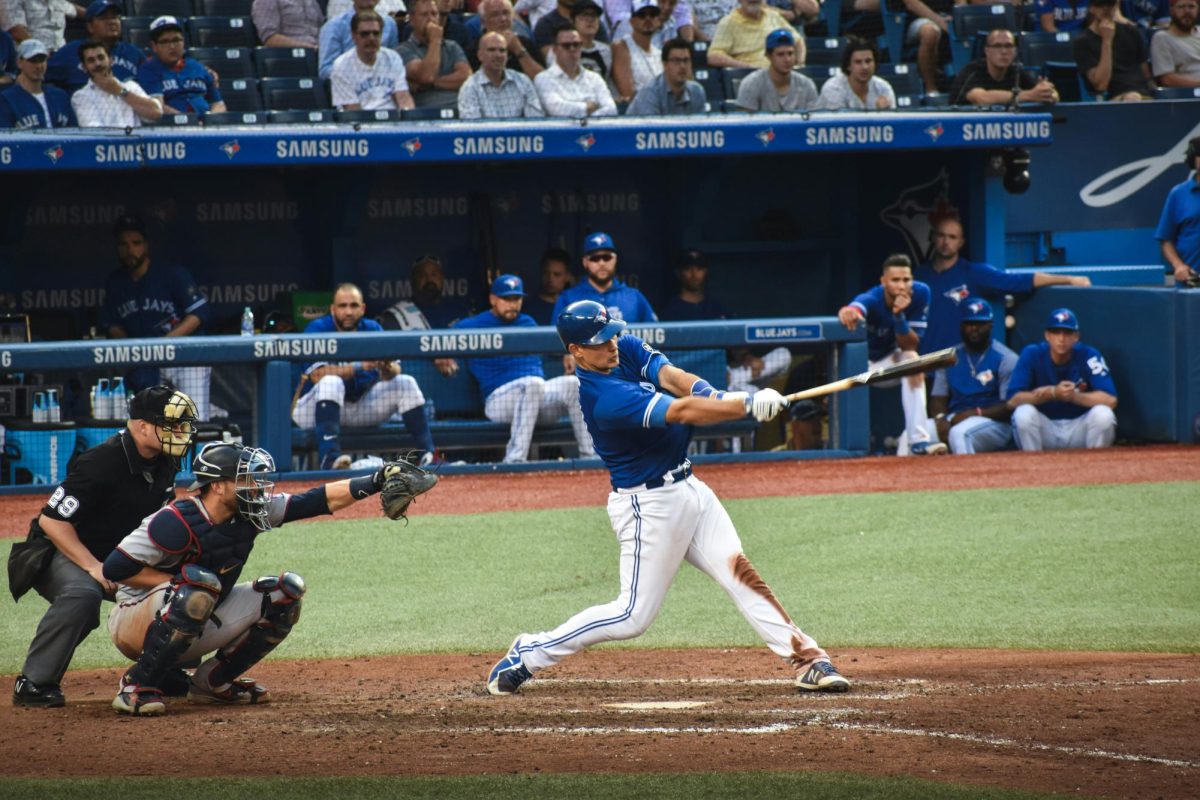
Photo Courtesy of UnSplash

Major League Baseball’s introduction of the Automated Ball-Strike (ABS) challenge system in 2026 represents one of the most significant technological shifts in the sport’s modern history. 

Designed to improve accuracy and fairness, the system allows players to challenge an umpire’s ball-or-strike call using tracking technology similar to tennis line-calling systems. Yet despite its promise, ABS has quickly become one of the most controversial developments in baseball.

At its core, ABS is meant to solve a longstanding problem: inconsistent strike zones. For decades, arguments over balls and strikes have been a defining part of the game, even accounting for a large percentage of ejections. 

The new system attempts to reduce these disputes by letting players appeal questionable calls. Each team gets a limited number of challenges per game, and early results show that more than half of challenged calls are overturned, highlighting how often human umpires can be wrong. In theory, this improves fairness and ensures that critical moments are decided correctly.

However, the controversy begins with what ABS is changing, not just correcting. One major issue is the redefinition of the strike zone itself. The system uses a mathematically precise zone based on a batter’s height, which has resulted in a slightly smaller strike zone compared to previous years. 

This has already altered gameplay, leading to fewer called strikes and a noticeable increase in walks across the league. Critics argue that this isn’t just fixing mistakes, it’s fundamentally reshaping how baseball is played.

Another point of contention is the system’s precision. While ABS is marketed as highly accurate, it still has a margin of error, reportedly around one-sixth of an inch. That may seem negligible, but in a sport where inches matter, it has sparked debate. 

Some analysts question whether it makes sense to overturn umpire calls based on such fine margins, especially when those margins are comparable to the system’s own uncertainty. The result is a paradox: a system designed to eliminate controversy is instead creating new, more technical arguments.

The human element is also at stake. Baseball has long prided itself on the role of umpires, whose judgment and personality are part of the game’s fabric. With ABS, that authority is being challenged, sometimes literally.

Reports from earlier this year show increased tension between players and umpires, with disputes arising even after challenges are resolved. Some former umpires have warned that frequent overturns could undermine credibility and erode respect for officiating.

At the same time, ABS has introduced new strategic and entertainment elements. The act of challenging a call, often signaled by a player tapping their helmet, has become a dramatic moment, drawing strong reactions from fans. 

In some cases, the reveal of a successful challenge generates as much excitement as a big hit. Supporters argue that this added drama enhances the viewing experience and modernizes the sport.

Still, not all situations are covered by the system, which adds another layer of frustration. Certain calls, like check swings, remain outside the scope of ABS, meaning controversy hasn’t disappeared; it has simply shifted. 

Additionally, the league’s decision to remove the on-screen strike zone box from broadcasts has confused some fans, who now must trust the system without visual confirmation.

Ultimately, the ABS sits at the intersection of tradition and innovation. It promises greater accuracy but challenges the sport’s longstanding norms. For some, it represents progress, a necessary step toward fairness in a data-driven era. For others, it risks stripping baseball of its human nuance and unpredictability.

As the 2026 season unfolds, one thing is clear: ABS has not eliminated controversy. Instead, it has transformed it, shifting debates from missed calls to the very definition of a strike, and raising fundamental questions about how much technology should shape the future of the game.