
惯性聚合 高效追踪和阅读你感兴趣的博客、新闻、科技资讯
阅读原文 在惯性聚合中打开

推荐订阅源

J
Java Code Geeks
F
Fortinet All Blogs
云风的 BLOG
云风的 BLOG
MyScale Blog
MyScale Blog
D
DataBreaches.Net
Stack Overflow Blog
Stack Overflow Blog
A
About on SuperTechFans
Google DeepMind News
Microsoft Security Blog
腾讯CDC
The GitHub Blog
The GitHub Blog
Jina AI
Jina AI
B
Blog RSS Feed
I
InfoQ
N
Netflix TechBlog - Medium
T
The Blog of Author Tim Ferriss
Microsoft Azure Blog
Recent Announcements
GbyAI
GbyAI
H
Help Net Security
L
LangChain Blog
M
MIT News - Artificial intelligence
Y
Y Combinator Blog
aimingoo的专栏
aimingoo的专栏

Latest from TechRadar in Pro

VodafoneThree gets Ofcom approval to bring satellite connectivity to your smartphone Is this the tipping point for AI at work? New Gallup survey finds half of all US employees now use it in some way 'Every Apple user needs to know about this nasty scam': Fake warnings tell users their iCloud data will be… 'Makes it even more disappointing': Microsoft backs fossil fuel big time with $7 billion deal in race for AI… 'Maybe it’s not science fiction': Solar panels are causing rainwater to fall in one of the driest places… Maine becomes first US state to pass data centre construction ban Dozens of WordPress plugins hijacked to target thousands of sites Drone-killing laser weapons greenlit for use in US airspace – FAA and Defense Department say high-energy weapons are ‘ready to protect all air travelers from illicit drone use’ despite airspace restrictions and friendly-fire incidents 'We are currently being extorted' — crypto giant Kraken says it is facing extortion attack, here's… I tried 7 free MTD software – now I've ranked my top picks as a freelancer Jackery McGraw Hill becomes latest to see its Salesforce data hacked Looking for a new PC? Now might be great time to upgrade, as Gartner figures claim shipments are rising — while… The new engineering playbook: how AI design copilots are reshaping product development Farewell Surface Hub — Microsoft kills off its super-sized touchscreen displays, but you might still be able to get one if you act fast 'We have no interest in patient data in the UK': Palantir UK head defends record as criticisms rise Amazon’s new AI Bio Discovery tool can provide ‘every researcher’ with ‘lab-in-the-loop drug discovery’ – 40+ AI biology models can filter 300,000 novel antibody candidates down to the top results for testing in just weeks Over 100 Chrome Web Store extensions found stealing user data from thousands of accounts Europe wants tech sovereignty but is this realistic? Enterprise AI governance cannot live in a prompt. So where is the safety net? Why 2026 is the year of flexibility without friction: solving the multi-platform crisis OpenAI reveals its Mythos rival designed for cybersecurity pros When cyberattacks are inevitable, recovery becomes the strategy Closing the cloud complexity gap LaLiga uses AI to fight illegal streaming that costs its clubs $800m a year Intel and Google expand long-term chip partnership to power AI systems 'Chatbots respond not just to what you ask, but how you ask it': Report finds AI agents might be sucking up to… 'Smartphones have physical limitations': Report explains why AI is kickstarting a billion-dollar hardware arms… 'I’m pretty sure actually we really do not need to work for five days' Zoom CEO calls for end of traditional work schedules — says 3-day working week should become the norm 'It's more common than you think': Experts reveal how hackers are trying to hijack your inbox with these…
Quote of the day by AMD CEO Lisa Su: "The age of traditio...
Keumars Afifi-Sabet · 2026-05-29 · via Latest from TechRadar in Pro
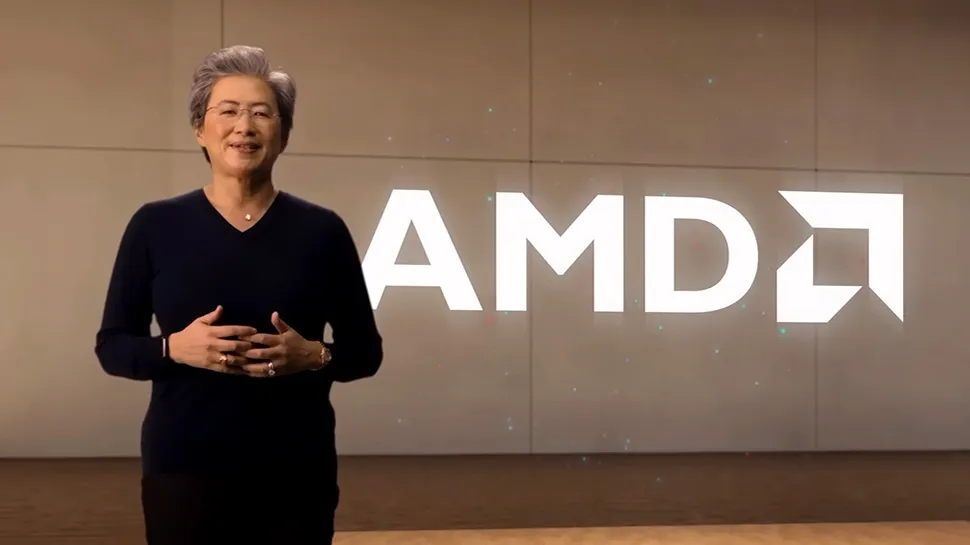
AMD CEO Lisa Su
(Image credit: AMD)

Although AMD has been at the heart of the recent components craze, with its stock surging by more than 3,000% in the last few years, the company hasn't been as essential to the AI buildout as Nvidia. However, its leadership in the form of Lisa Su has, for a long time, been attuned to the changing landscape of the industry.


Overcoming bottlenecks

The world of computing was a little different in 2013, when Lisa Su delivered remarks at the International Solid-State Circuits Conference (ISSCC) about the challenges in continuing to scale up processing power.

Quote of the day

This article is part of TechRadar Pro's QOTD project to provide an insight into the minds of the brightest and most recognized figures in the technology industry today and in years gone by. Read the full series here.

CPUs were still the dominant component then, but Su, who was then AMD's senior vice president and general manager for its global business units, hinted at a future in which other breeds of computing architectures would come to the fore.

The solution that Su proposed — known as heterogeneous computing — essentially involved combining CPUs with GPUs and specialized accelerators to offload processors onto chips or components that are best suited to efficiently carry them out. With these systems, shared memory pools would allow the different processors to work in harmony.

Building for the AI supercycle

If that system sounds familiar, it's because it's exactly the sort of arrangement that goes into designing systems like AMD's Instinct MI400 family of components or Nvidia's Vera Rubin platform. These are superchips that are integral to the ongoing AI buildout.

Although the rise of AI in the way that it ensued wasn't on the cards in 2013, Su, who was appointed as AMD's chief in 2014 shortly after this presentation, articulated a vision that has been realized with full force more than ten years on.

The traditional era of computing, in which CPUs are the dominant technological force within a computing system, has given way to that more heterogeneous environment — not only in data centers but in consumer devices too — with GPUs, NPUs, accelerators, and other components, all cooperating (and often pooling memory) to run as efficiently as possible.

Sign up to the TechRadar Pro newsletter to get all the top news, opinion, features and guidance your business needs to succeed!


Keumars Afifi-Sabet is a freelance contributor for Tech Radar and the Technology Editor for Live Science. He has written for a variety of publications including ITPro, The Week Digital and ComputerActive. He has worked as a technology journalist for more than five years, having previously held the role of features editor with ITPro. In his previous role, he oversaw the commissioning and publishing of long form in areas including AI, cyber security, cloud computing and digital transformation.