


惯性聚合 高效追踪和阅读你感兴趣的博客、新闻、科技资讯
阅读原文 在惯性聚合中打开

推荐订阅源

腾讯CDC
The Cloudflare Blog
IT之家
IT之家
V
V2EX
雷峰网
雷峰网
MyScale Blog
MyScale Blog
P
Proofpoint News Feed
Stack Overflow Blog
Stack Overflow Blog
博客园 - Franky
Engineering at Meta
Engineering at Meta
S
SegmentFault 最新的问题
GbyAI
GbyAI
Microsoft Azure Blog
博客园 - 司徒正美
云风的 BLOG
云风的 BLOG
小众软件
小众软件
博客园 - 叶小钗
Blog — PlanetScale
Blog — PlanetScale
C
Check Point Blog
A
About on SuperTechFans
B
Blog
月光博客
月光博客
宝玉的分享
宝玉的分享
Last Week in AI
Last Week in AI

Latest from TechRadar in Pro

VodafoneThree gets Ofcom approval to bring satellite connectivity to your smartphone Is this the tipping point for AI at work? New Gallup survey finds half of all US employees now use it in some way 'Every Apple user needs to know about this nasty scam': Fake warnings tell users their iCloud data will be… 'Makes it even more disappointing': Microsoft backs fossil fuel big time with $7 billion deal in race for AI… 'Maybe it’s not science fiction': Solar panels are causing rainwater to fall in one of the driest places… Maine becomes first US state to pass data centre construction ban Dozens of WordPress plugins hijacked to target thousands of sites Drone-killing laser weapons greenlit for use in US airspace – FAA and Defense Department say high-energy weapons are ‘ready to protect all air travelers from illicit drone use’ despite airspace restrictions and friendly-fire incidents 'We are currently being extorted' — crypto giant Kraken says it is facing extortion attack, here's… I tried 7 free MTD software – now I've ranked my top picks as a freelancer Jackery McGraw Hill becomes latest to see its Salesforce data hacked Looking for a new PC? Now might be great time to upgrade, as Gartner figures claim shipments are rising — while… The new engineering playbook: how AI design copilots are reshaping product development Farewell Surface Hub — Microsoft kills off its super-sized touchscreen displays, but you might still be able to get one if you act fast 'We have no interest in patient data in the UK': Palantir UK head defends record as criticisms rise Amazon’s new AI Bio Discovery tool can provide ‘every researcher’ with ‘lab-in-the-loop drug discovery’ – 40+ AI biology models can filter 300,000 novel antibody candidates down to the top results for testing in just weeks Over 100 Chrome Web Store extensions found stealing user data from thousands of accounts Europe wants tech sovereignty but is this realistic? Enterprise AI governance cannot live in a prompt. So where is the safety net? Why 2026 is the year of flexibility without friction: solving the multi-platform crisis OpenAI reveals its Mythos rival designed for cybersecurity pros When cyberattacks are inevitable, recovery becomes the strategy Closing the cloud complexity gap LaLiga uses AI to fight illegal streaming that costs its clubs $800m a year Intel and Google expand long-term chip partnership to power AI systems 'Chatbots respond not just to what you ask, but how you ask it': Report finds AI agents might be sucking up to… 'Smartphones have physical limitations': Report explains why AI is kickstarting a billion-dollar hardware arms… 'I’m pretty sure actually we really do not need to work for five days' Zoom CEO calls for end of traditional work schedules — says 3-day working week should become the norm 'It's more common than you think': Experts reveal how hackers are trying to hijack your inbox with these…
'5.6 million names headed to the Moon': Here's how to buy...
waynewilliam · 2026-04-19 · via Latest from TechRadar in Pro
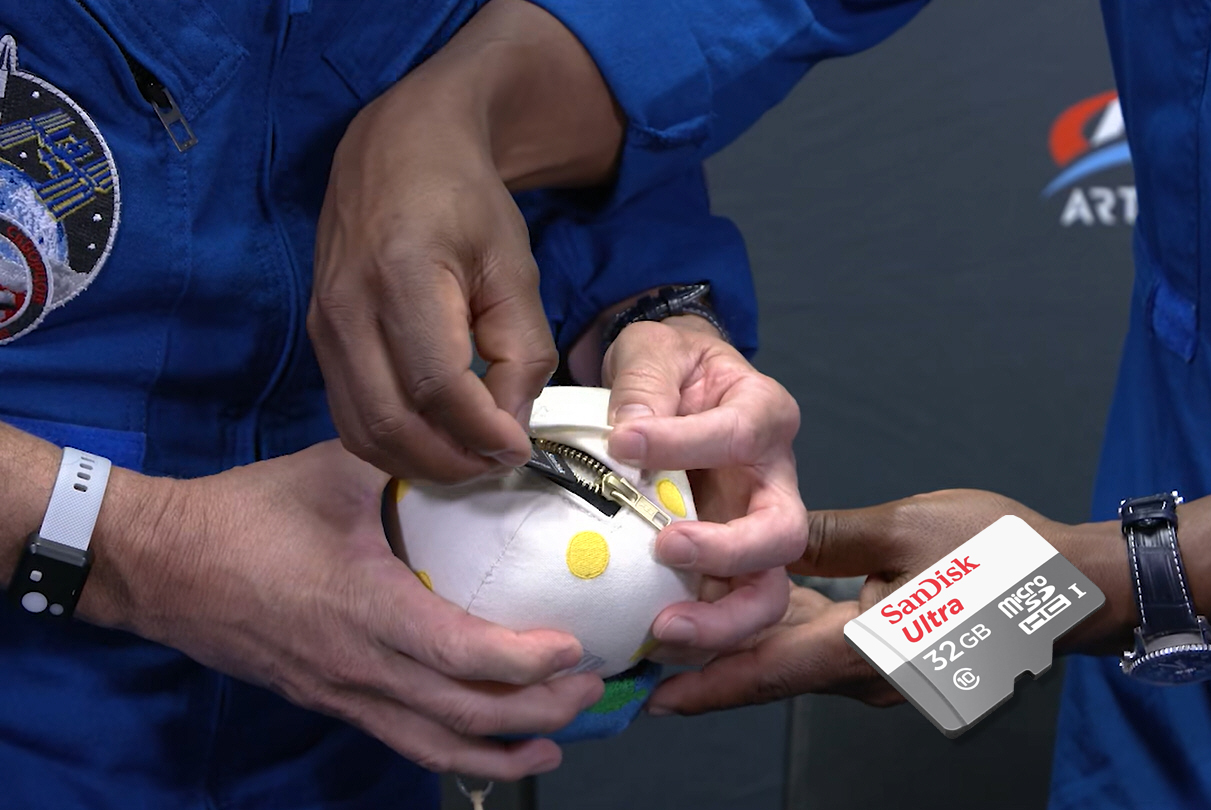
Artemis II microSD card (Image credit: NASA)

Only a very lucky few people ever get to travel into space, but more than 5.6 million names just completed a journey around the Moon, stored on a microSD card carried aboard NASA’s Artemis II mission.

That flight sent four astronauts farther from Earth than humans have ever traveled, completing a roughly 10-day mission that orbited the Moon before safely returning to Earth.
Today's top memory card deal

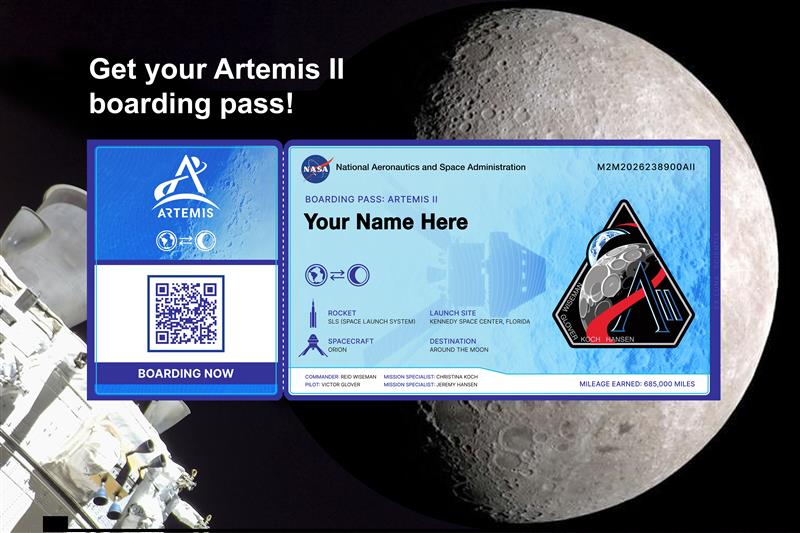
Artemis II Boarding Card

(Image credit: NASA)

The microSD card, carrying 5,647,889 submitted names, was zipped into Rise, the mission’s mascot, a cartoonish Moon wearing a cap covered in stars. The mascot itself was designed by a year three student from California, called Lucas Ye, whose artwork was selected from more than 2,600 entries from over 50 countries.

While the specific card zipped inside Rise was certified for spaceflight conditions, it traces its lineage to the SanDisk Ultra series used by people here on Earth inside cameras, handheld devices, and portable recording gear.

The consumer version of the SanDisk Ultra microSD series comes in 16 and 32GB capacities and supports both microSD and microSDHC formats, making it compatible with a wide range of devices used for everyday recording and storage tasks.

Rated at Class 10 speeds, the card supports read speeds of up to 80MB/s, which suits Full HD video capture, burst photography, and quick file transfers.

It's durable, with protection against water, temperature extremes, and X-ray exposure, and maybe (but we wouldn't bet on it), trips around the Moon.

After splashdown, the mission mascot didn’t stay tucked away inside the spacecraft as it should have done according to NASA's mission rules, Artemis II commander Reid Wiseman later revealed on X.

“I was supposed to leave Rise in Integrity….but that was not something I was going to do. I stuffed that little guy in a dry bag we had in our survival kit and hooked the bag onto my pressure suit,” he wrote.

Sign up to the TechRadar Pro newsletter to get all the top news, opinion, features and guidance your business needs to succeed!

Wayne Williams is a freelancer writing news for TechRadar Pro. He has been writing about computers, technology, and the web for 30 years. In that time he wrote for most of the UK’s PC magazines, and launched, edited and published a number of them too.

You must confirm your public display name before commenting

Please logout and then login again, you will then be prompted to enter your display name.