
惯性聚合 高效追踪和阅读你感兴趣的博客、新闻、科技资讯
阅读原文 在惯性聚合中打开

推荐订阅源

博客园 - Franky
J
Java Code Geeks
腾讯CDC
奇客Solidot–传递最新科技情报
奇客Solidot–传递最新科技情报
Jina AI
Jina AI
博客园 - 司徒正美
Stack Overflow Blog
Stack Overflow Blog
美团技术团队
L
LangChain Blog
WordPress大学
WordPress大学
A
About on SuperTechFans
Martin Fowler
Martin Fowler
月光博客
月光博客
Y
Y Combinator Blog
U
Unit 42
D
Docker
Recent Announcements
Hugging Face - Blog
Hugging Face - Blog
B
Blog
OSCHINA 社区最新新闻
OSCHINA 社区最新新闻
G
Google Developers Blog
Last Week in AI
Last Week in AI
T
The Blog of Author Tim Ferriss
让小产品的独立变现更简单 - ezindie.com

Latest from TechRadar in Pro

VodafoneThree gets Ofcom approval to bring satellite connectivity to your smartphone Is this the tipping point for AI at work? New Gallup survey finds half of all US employees now use it in some way 'Every Apple user needs to know about this nasty scam': Fake warnings tell users their iCloud data will be… 'Makes it even more disappointing': Microsoft backs fossil fuel big time with $7 billion deal in race for AI… 'Maybe it’s not science fiction': Solar panels are causing rainwater to fall in one of the driest places… Maine becomes first US state to pass data centre construction ban Dozens of WordPress plugins hijacked to target thousands of sites Drone-killing laser weapons greenlit for use in US airspace – FAA and Defense Department say high-energy weapons are ‘ready to protect all air travelers from illicit drone use’ despite airspace restrictions and friendly-fire incidents 'We are currently being extorted' — crypto giant Kraken says it is facing extortion attack, here's… I tried 7 free MTD software – now I've ranked my top picks as a freelancer Jackery McGraw Hill becomes latest to see its Salesforce data hacked Looking for a new PC? Now might be great time to upgrade, as Gartner figures claim shipments are rising — while… The new engineering playbook: how AI design copilots are reshaping product development Farewell Surface Hub — Microsoft kills off its super-sized touchscreen displays, but you might still be able to get one if you act fast 'We have no interest in patient data in the UK': Palantir UK head defends record as criticisms rise Amazon’s new AI Bio Discovery tool can provide ‘every researcher’ with ‘lab-in-the-loop drug discovery’ – 40+ AI biology models can filter 300,000 novel antibody candidates down to the top results for testing in just weeks Over 100 Chrome Web Store extensions found stealing user data from thousands of accounts Europe wants tech sovereignty but is this realistic? Enterprise AI governance cannot live in a prompt. So where is the safety net? Why 2026 is the year of flexibility without friction: solving the multi-platform crisis OpenAI reveals its Mythos rival designed for cybersecurity pros When cyberattacks are inevitable, recovery becomes the strategy Closing the cloud complexity gap LaLiga uses AI to fight illegal streaming that costs its clubs $800m a year Intel and Google expand long-term chip partnership to power AI systems 'Chatbots respond not just to what you ask, but how you ask it': Report finds AI agents might be sucking up to… 'Smartphones have physical limitations': Report explains why AI is kickstarting a billion-dollar hardware arms… 'I’m pretty sure actually we really do not need to work for five days' Zoom CEO calls for end of traditional work schedules — says 3-day working week should become the norm 'It's more common than you think': Experts reveal how hackers are trying to hijack your inbox with these…
'1,000x faster internet': New Chinese crystal breakthroug...
Efosa Udinmw · 2026-04-19 · via Latest from TechRadar in Pro
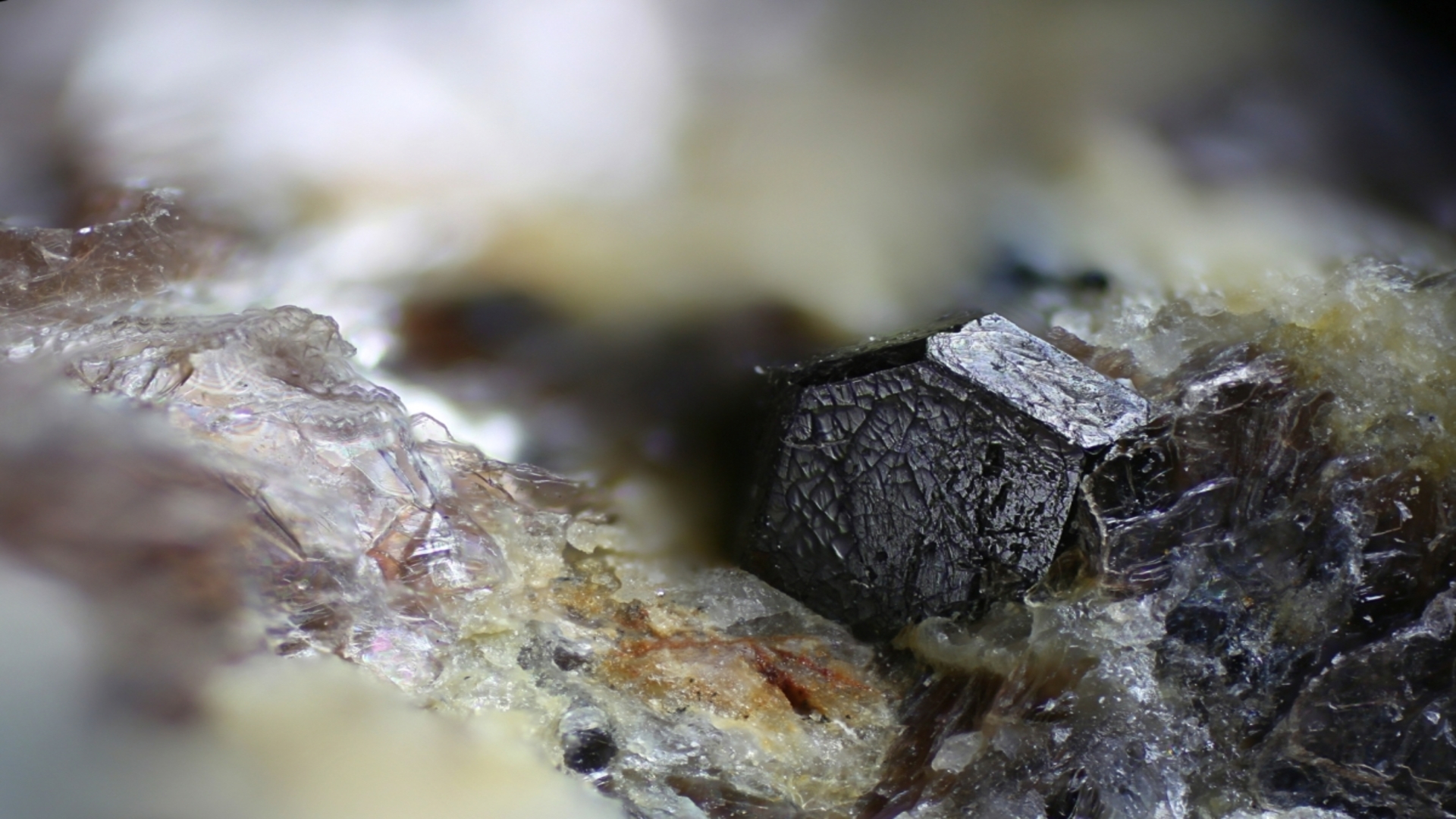
Thorium Crystal (Image credit: Al Majalla)
  • Nuclear clocks promise accuracy far beyond existing atomic timekeeping systems
  • Thorium 229 offers a rare pathway to practical nuclear time measurement
  • Ultraviolet breakthrough reduces one of the hardest barriers in nuclear clock development

A new crystal developed by Chinese scientists has broken the world record for ultraviolet light conversion, bringing nuclear clock technology closer to reality.

The fluorinated borate compound pushes laser light to a wavelength of 145.2nm, beating the previous benchmark of 150nm set by a Chinese crystal from the 1990s.

This wavelength is suitably short to meet a key requirement for ultra-precise portable nuclear clocks being developed in the United States, China, and other countries.

Article continues below

Nuclear clocks - a major upgrade to GPS

Nuclear clocks keep time using vibrations inside an atomic nucleus rather than electron vibrations used in atomic clocks.

Atomic nuclei are far more stable than electrons and less affected by temperature, external vibration, and magnetic fields, meaning nuclear clocks could be 10 to 1,000 times more accurate than today’s atomic clocks.

Such precision would enable navigation in places where GPS does not work, including deep space and underwater.

Submarines currently need to surface for GPS fixes, making them vulnerable to detection - so a nuclear clock could allow them to navigate freely underwater using dead reckoning based on speed, direction, and elapsed time.

Sign up to the TechRadar Pro newsletter to get all the top news, opinion, features and guidance your business needs to succeed!

The research team, led by Pan Shilie at the Xinjiang Technical Institute of Physics and Chemistry, turned to thorium 229 for its work.

This element is special because its nucleus vibrates at a very low energy level, making it relatively easy to monitor and measure.

However, measuring it requires extremely precise UV lasers with wavelengths around 148.3nm, which have been very hard to produce.

The new crystal converts laser light to 145.2nm, still short of the target but a major step forward.

The team wrote that its work "paves the way for the practical development of the thorium 229 nuclear clock."

If the magic number is ever achieved, the crystal could also help missiles become immune to navigation jamming, an advantage during wartime.

For spacecraft, autonomous deep space navigation without Earth-based corrections would become possible, and signals from stars, pulsars, and radio sources could also serve as navigation aids.

The work also offers a new way to design next-generation deep ultraviolet materials for various applications.

In theory, the extreme precision of nuclear clocks could enable far tighter network synchronization, potentially leading to faster internet speeds in future systems.

However, such clocks will likely not render GPS entirely redundant but will help reduce reliance on these systems if perfected.

GPS can be jammed or spoofed with fake signals, making it vulnerable during wartime, and it does not work well underwater or underground. A thorium nuclear clock would address all these limitations.

Google logo on a black background next to text reading 'Click to follow TechRadar'

Follow TechRadar on Google News and add us as a preferred source to get our expert news, reviews, and opinion in your feeds.

Efosa has been writing about technology for over 7 years, initially driven by curiosity but now fueled by a strong passion for the field. He holds both a Master's and a PhD in sciences, which provided him with a solid foundation in analytical thinking.

You must confirm your public display name before commenting

Please logout and then login again, you will then be prompted to enter your display name.