
惯性聚合 高效追踪和阅读你感兴趣的博客、新闻、科技资讯
阅读原文 在惯性聚合中打开

推荐订阅源

S
SegmentFault 最新的问题
博客园 - 三生石上(FineUI控件)
WordPress大学
WordPress大学
博客园 - 【当耐特】
月光博客
月光博客
Vercel News
Vercel News
D
Docker
I
InfoQ
Apple Machine Learning Research
博客园 - 叶小钗
MongoDB | Blog
MongoDB | Blog
GbyAI
GbyAI
有赞技术团队
有赞技术团队
雷峰网
雷峰网
博客园 - 聂微东
小众软件
小众软件
Y
Y Combinator Blog
腾讯CDC
L
LangChain Blog
The GitHub Blog
The GitHub Blog
宝玉的分享
宝玉的分享
Stack Overflow Blog
Stack Overflow Blog
大猫的无限游戏
大猫的无限游戏
T
The Blog of Author Tim Ferriss

Latest from TechRadar in Pro

VodafoneThree gets Ofcom approval to bring satellite connectivity to your smartphone Is this the tipping point for AI at work? New Gallup survey finds half of all US employees now use it in some way 'Every Apple user needs to know about this nasty scam': Fake warnings tell users their iCloud data will be… 'Makes it even more disappointing': Microsoft backs fossil fuel big time with $7 billion deal in race for AI… 'Maybe it’s not science fiction': Solar panels are causing rainwater to fall in one of the driest places… Maine becomes first US state to pass data centre construction ban Dozens of WordPress plugins hijacked to target thousands of sites Drone-killing laser weapons greenlit for use in US airspace – FAA and Defense Department say high-energy weapons are ‘ready to protect all air travelers from illicit drone use’ despite airspace restrictions and friendly-fire incidents 'We are currently being extorted' — crypto giant Kraken says it is facing extortion attack, here's… I tried 7 free MTD software – now I've ranked my top picks as a freelancer Jackery McGraw Hill becomes latest to see its Salesforce data hacked Looking for a new PC? Now might be great time to upgrade, as Gartner figures claim shipments are rising — while… The new engineering playbook: how AI design copilots are reshaping product development Farewell Surface Hub — Microsoft kills off its super-sized touchscreen displays, but you might still be able to get one if you act fast 'We have no interest in patient data in the UK': Palantir UK head defends record as criticisms rise Amazon’s new AI Bio Discovery tool can provide ‘every researcher’ with ‘lab-in-the-loop drug discovery’ – 40+ AI biology models can filter 300,000 novel antibody candidates down to the top results for testing in just weeks Over 100 Chrome Web Store extensions found stealing user data from thousands of accounts Europe wants tech sovereignty but is this realistic? Enterprise AI governance cannot live in a prompt. So where is the safety net? Why 2026 is the year of flexibility without friction: solving the multi-platform crisis OpenAI reveals its Mythos rival designed for cybersecurity pros When cyberattacks are inevitable, recovery becomes the strategy Closing the cloud complexity gap LaLiga uses AI to fight illegal streaming that costs its clubs $800m a year Intel and Google expand long-term chip partnership to power AI systems 'Chatbots respond not just to what you ask, but how you ask it': Report finds AI agents might be sucking up to… 'Smartphones have physical limitations': Report explains why AI is kickstarting a billion-dollar hardware arms… 'I’m pretty sure actually we really do not need to work for five days' Zoom CEO calls for end of traditional work schedules — says 3-day working week should become the norm 'It's more common than you think': Experts reveal how hackers are trying to hijack your inbox with these…
"Relying on a single, centralized mine represents a risk"...
waynewilliam · 2026-04-21 · via Latest from TechRadar in Pro

  • US targets processing bottleneck rather than searching for new rare earth deposits
  • Parallel extraction concept seeks profitability despite higher domestic labor and environmental costs
  • Distributed processing model attempts reducing reliance on single vulnerable mining sites

China is responsible for much of the world’s rare earth refining capacity, giving it control over supply chains during trade disputes. That advantage was built by handling the costly and messy processing stage at scale, often with lower costs and fewer environmental restrictions.

The United States has spent years trying to rebuild its rare earth supply chain, but mining alone hasn’t fixed the core problem. Processing remains the sticking point, and as Data Centre Dynamics reports, that’s where the Defense Advanced Research Projects Agency is placing a high-risk bet.

Rare earth elements aren’t, as the name suggests, truly rare, and the US already has access to large volumes of ore. DARPA's new Smash program moves away from finding new deposits and toward solving the processing bottleneck.

Article continues below

SMASH - Proposers Day - YouTube SMASH - Proposers Day - YouTube
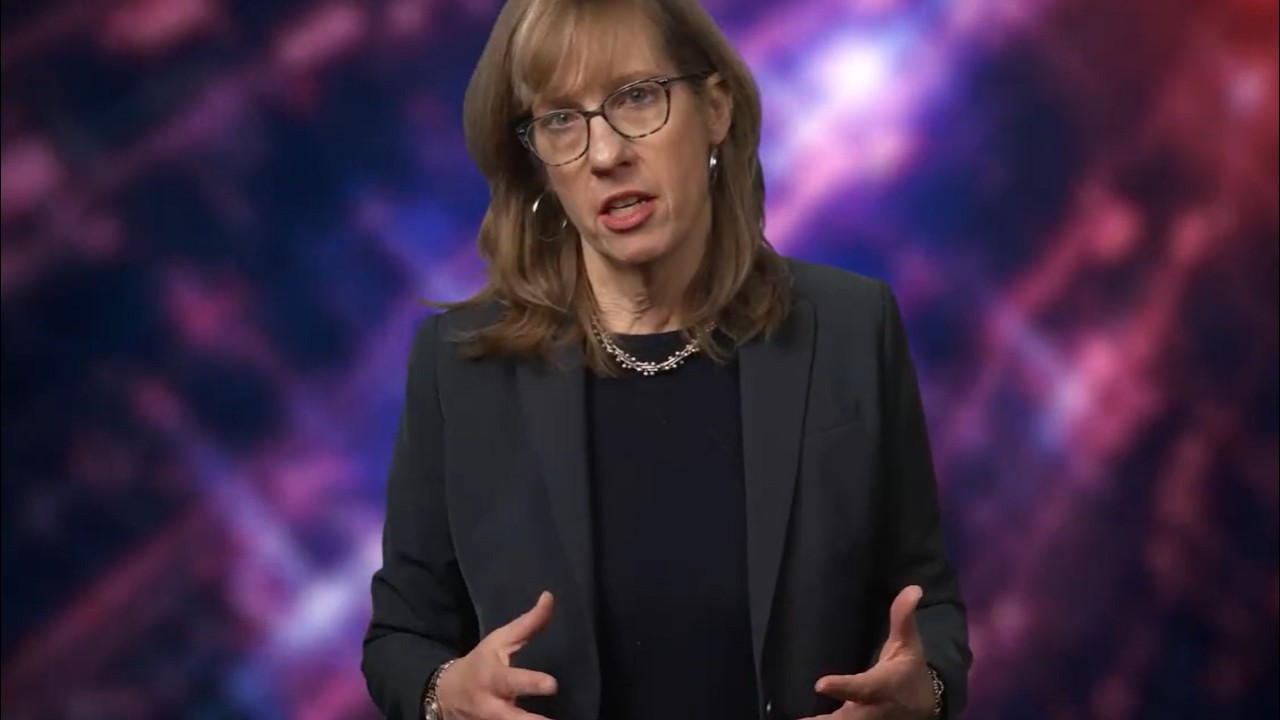
Watch On

Near-zero-waste separation

DARPA’s approach centers on what it calls near-zero-waste separation across the periodic table. The goal isn’t just rare earth elements but up to 80 stable elements that could be recovered from existing ore and waste streams.

“So the challenge is processing, not mining,” said Julian McMorrow, Smash lead and program manager at DARPA’s Microsystems Technology Office. “We want to develop technologies to take the industry from wasting over 99 percent of its feedstock to making use of the entire feedstock.”

Traditional mining wastes enormous amounts of material during refinement. More than two tons of ore and 13 tons of water can produce just one kilogram of copper, leaving most of the original material discarded.

Smash explores a parallel processing model that attempts to extract nearly everything from a shovel of dirt at once. That concept borrows ideas from industries such as petroleum refining, where multiple outputs are separated efficiently from a single input.

Sign up to the TechRadar Pro newsletter to get all the top news, opinion, features and guidance your business needs to succeed!

The program also reflects concerns about relying on a single major site such as the Mountain Pass mine which once dominated global rare earth output but struggled when refining costs became uncompetitive.

DARPA notes that concentrating production in one location creates vulnerability if disruptions occur. A distributed model using varied feedstocks, including mining waste and recycled materials, could cut that exposure.

Smash will run as a 48-month effort split into two phases. The first will focus on proof-of-concept experiments, while the second will move toward working prototypes suitable for industrial mining environments.

Even if the technology succeeds in laboratory settings, scaling it economically could be tricky. Achieving profitability while maintaining strict environmental and labor standards will be the real test.


Target elements for Smash

(Image credit: DARPA)

Google logo on a black background next to text reading 'Click to follow TechRadar'

Follow TechRadar on Google News and add us as a preferred source to get our expert news, reviews, and opinion in your feeds.