



惯性聚合 高效追踪和阅读你感兴趣的博客、新闻、科技资讯
阅读原文 在惯性聚合中打开

推荐订阅源

V
Visual Studio Blog
S
Schneier on Security
博客园 - 聂微东
奇客Solidot–传递最新科技情报
奇客Solidot–传递最新科技情报
月光博客
月光博客
美团技术团队
Last Week in AI
Last Week in AI
罗磊的独立博客
小众软件
小众软件
Hugging Face - Blog
Hugging Face - Blog
大猫的无限游戏
大猫的无限游戏
V
V2EX
博客园_首页
博客园 - 司徒正美
IT之家
IT之家
S
SegmentFault 最新的问题
宝玉的分享
宝玉的分享
雷峰网
雷峰网
量子位
钛媒体:引领未来商业与生活新知
钛媒体:引领未来商业与生活新知
T
Tailwind CSS Blog
J
Java Code Geeks
博客园 - Franky
Apple Machine Learning Research
P
Privacy International News Feed
C
CERT Recently Published Vulnerability Notes
freeCodeCamp Programming Tutorials: Python, JavaScript, Git & More
阮一峰的网络日志
阮一峰的网络日志
The Cloudflare Blog
AWS News Blog
AWS News Blog
cs.CL updates on arXiv.org
T
Threat Research - Cisco Blogs
Jina AI
Jina AI
V
Vulnerabilities – Threatpost
酷 壳 – CoolShell
酷 壳 – CoolShell
L
LINUX DO - 最新话题
N
News and Events Feed by Topic
H
Hacker News: Front Page
腾讯CDC
cs.CV updates on arXiv.org
WordPress大学
WordPress大学
爱范儿
爱范儿
T
Tor Project blog
博客园 - 【当耐特】
T
The Exploit Database - CXSecurity.com
K
Kaspersky official blog
Latest news
Latest news
博客园 - 叶小钗
Know Your Adversary
Know Your Adversary
有赞技术团队
有赞技术团队

Portfolio – Silicon Republic

How can modern professionals navigate security risks in 2026? Report: 60pc of large companies report mental health issues among IT workers China blocks Meta’s $2bn Manus acquisition Ireland’s solar sector hits 1GW of energy for first time After Amazon, Google commits up to $40bn in Anthropic Cohere buys Aleph Alpha to forge sovereign AI alternative to US Big Tech 4 easy ways to stay on top of cybersecurity in the workplace 15 companies you’ll see at NIBRT Careers in Biopharma 2026 Bloomberg: Bezos’ Project Prometheus bags $10bn at $38bn value Meta to lay off 10pc of its workforce amid an AI push China's DeepSeek unveils long-awaited V4 AI model Intel’s shares soar as Q1 results signal brighter future MongoDB to create 200 new jobs as it invests €74m into Irish operations Why it's full STEAM ahead for young people upskilling in Ireland's west Swedish legal-tech Legora buys AI legal research start-up Qura Belfast’s Cloudsmith eyes ‘massive growth’ with $72m raise France's Univity raises €27m to allow European telecoms to compete with Starlink AI race intensifies with Google's new agent management platform Government launches new AI initiative for greater access to essential skills Free and inexpensive cybersecurity courses to undertake in 2026 UL looking for ‘changemakers’ amid Research Week 2026 OpenAI taps Airbnb exec as first EMEA managing director EAM platform Blue Mountain acquires Cork’s CompuCal Calibration Solutions SpaceX agrees right to buy AI coding darling Cursor for $60bn Anthropic probing reported Mythos leak on Discord Professional job openings across Ireland increased in Q1, finds report Contract hiring evidence of a cautious jobs market, finds report Can you rely on AI chatbots for medical advice? €6.9m awarded to final four National Challenge Fund winners Amazon investing up to $25bn in Anthropic AI infrastructure deal Vodafone Ireland to invest €360m over the next four years Tim Cook passes Apple leadership to hardware head John Ternus Stripe alum's Seapoint raises €7.5m as ‘financial home’ to start-ups When it comes to leadership, do companies know what they are doing? Amazon gets go-ahead for subsea cable landing station in Cork Communication and storytelling key skills, finds strategy manager Space-tech Mbryonics plans new production facility in Shannon Irish co-founded AI start-up Lua raises $5.8m AIM Centre strengthening medtech and life sciences link with new Galway base Kerry Group expands Cork facility as lactose-free demand grows Are electric vehicles about to take off for good? Nearly 75pc of AI’s economic value captured by just 20pc of companies Major gap between leaders' traits and employee expectations, finds report Dublin tech company Vox Talk raises €1.35m in pre-seed round Netflix shares fall on Q2 forecast as co-founder Hastings steps aside OpenAI to rival Google’s AlphaFold with new AI model for life sciences research Irish-founded Ulysses raises $46m in rounds featuring A16Z How are balance, inclusion and skills critical to the workforce of the future? Anthropic’s Mythos to bolster cybersecurity at UK banks Solidroad raises $25m as demand for QA product sparks fresh hiring Are we ready to place lab experiments in non-human hands? Danish finance AI start-up Spektr raises $20m What interview mistakes are jobseekers still making in 2026? Irish space AI start-up Ubotica on board for NASA’s FAME Dublin's Audrey AI closes $1.8m pre-seed funding round The Leaders' Room: Equinix's Peter Lantry on powering Ireland sustainably ‘No more excuses’ as EU launches free age verification app Waterford's HCS unveils €13.2m investment, plans 125 new jobs The death of ETL: Is zero-copy a ‘liberation’ for data teams? Snap cuts 16pc workforce to prioritise AI and savings Do data and AI talent needs conflict with a workforce seeking stability? Amazon buys Globalstar to bolster Leo's satellite capabilities Dublin start-up Otel AI raises €2m to expand hotel AI platform Boston Scientific announces €75m R&D investment in Galway After Anthropic, OpenAI launches cyber-specific AI model ASML forecasts €36bn in 2026 net sales amid AI race chip demand The Interview: Dentons' Carlo Salizzo on three forces defining digital law How this master’s programme is building tech leadership talent Nvidia unveils open-source quantum AI model Ising Bull and Equal1 to advance next gen of hybrid quantum tech in Europe Anthropic's Mythos a game-changer, NCSC chief tells Oireachtas Klaviyo building out its engineering team at Dublin facility Stanford: China ‘effectively’ closes AI model performance gap to US Mythos just first of power models to come: Anthropic co-founder Ireland to invest €17m in leading facilities for AI, medtech and more UK neobank Monzo makes Irish launch after US market exit How can you make your memory work more effectively? Cork Airport to get Ireland's largest solar carport next year New XP95 hacker group targets Dublin recruitment platform Healthdaq OpenAI apps for MacOS exposed by threat Mythos testing begins as governments raise cyber concerns The biopharma senior associate whose career was fuelled by FUEL Opinion: The future of insurance is AI, so why the hesitation? Meta to pay CoreWeave $21bn for additional cloud capacity Investing in part of the workforce creates an AI skills gap, finds report Digital rights group EFF leaves X Alibaba leads $293m round in Chinese AI start-up after HappyHorse reveal Anthropic reportedly mulls designing own chips amid shortage How are software engineering graduates adjusting to AI? OpenAI pauses Stargate UK over energy costs The diverse responsibilities of a principal software engineer Dublin AI SaaS provider Apex B2B launches with €1.5m backing Equal1 partners with Q-Ctrl for quantum data centre deployment Meta’s Superintelligence Labs debuts first product Muse Spark US court won't pause Anthropic ban, but wants case expedited Agentic commerce and purchase disputes: Did you mean to buy that? Circuléire makes fresh call for 2026 accelerator applicants ‘Positive workplace culture starts with respect, trust and communication' Anthropic's Glasswing project employs Mythos to prevent AI cyberattacks Medtech start-up Vertigenius raises €2.55m for US expansion
New Artemis II images give fresh look at our lunar neighbour
2026-04-08 · via Portfolio – Silicon Republic

Earth as captured by the Artemis II crew from behind the cratered surface of the moon. Image: NASA

From ancient lunar lava to personal tributes, the new images released from the Artemis II space mission capture fresh perspectives of our celestial neighbour.

Yesterday (7 April), NASA released the first images of the moon captured by the Artemis II astronauts during their historic test flight.

The Artemis II mission took off last week (1 April) from the Kennedy Space Center in Florida, beginning an approximately 10-day mission for NASA astronauts Reid Wiseman, Victor Glover, Christina Koch and Canadian Space Agency astronaut Jeremy Hansen.

Yesterday’s images were taken on 6 April during the crew’s seven-hour pass over the lunar far side – the first crewed lunar flyby in more than 50 years – and provide a fresh look at Earth’s closest celestial neighbour.

From an eclipse to ancient lava, here is just a handful of some of the most interesting images captured by the Artemis II crew so far.

Near and far
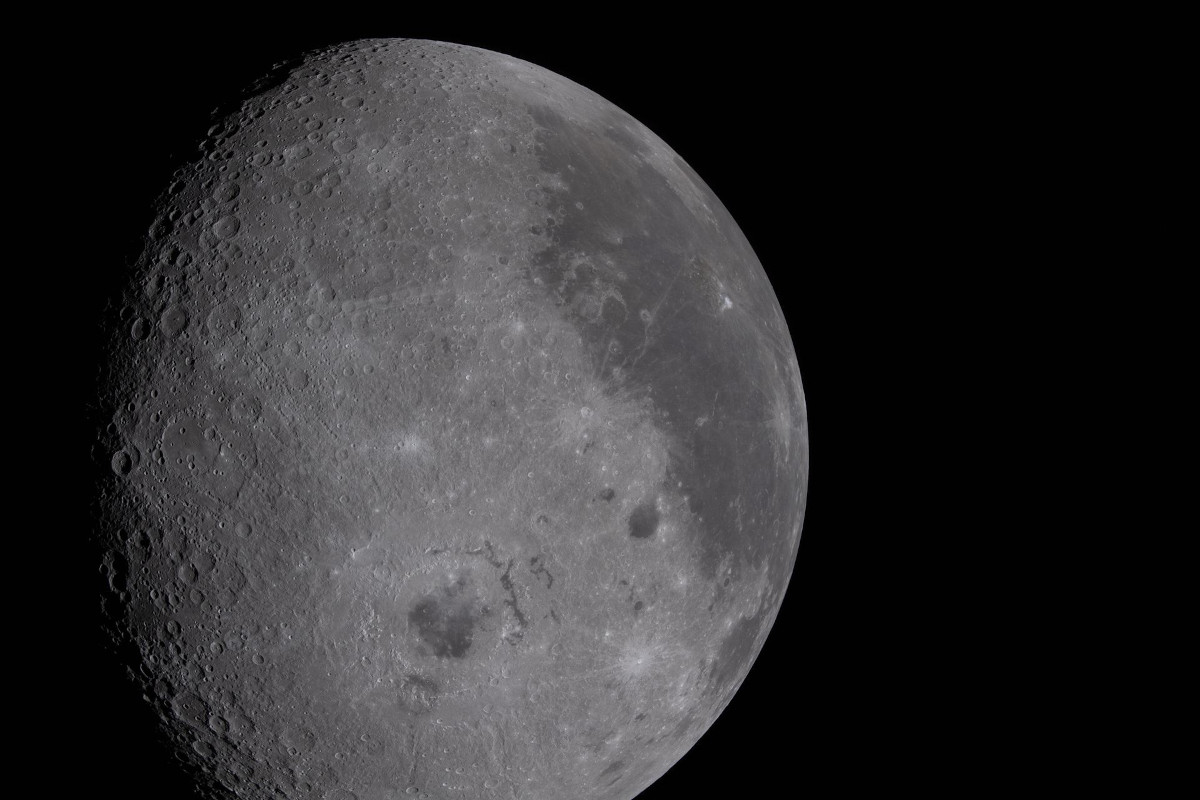
A wide picture of the moon, showing a grey landscape filled with craters and a darker grey patch to the right of the moon.

A picture capturing two-thirds of the moon. Towards the bottom of the image, the Orientale basin can be seen. North-east of the Orientale, seen as a dark spot, is the Grimaldi crater. Image: NASA

One of the crew’s most striking images captures two-thirds of the moon, showcasing the “intricate features of the near side”, according to NASA. The 600-mile-wide impact crater, the Orientale basin, lies along the transition between the near and far sides and can be seen at the bottom of the image.

The round black spot north-east of Orientale is the Grimaldi crater, known for its exceptionally “dark mare lava floor and heavily degraded rim”.

In-space eclipse
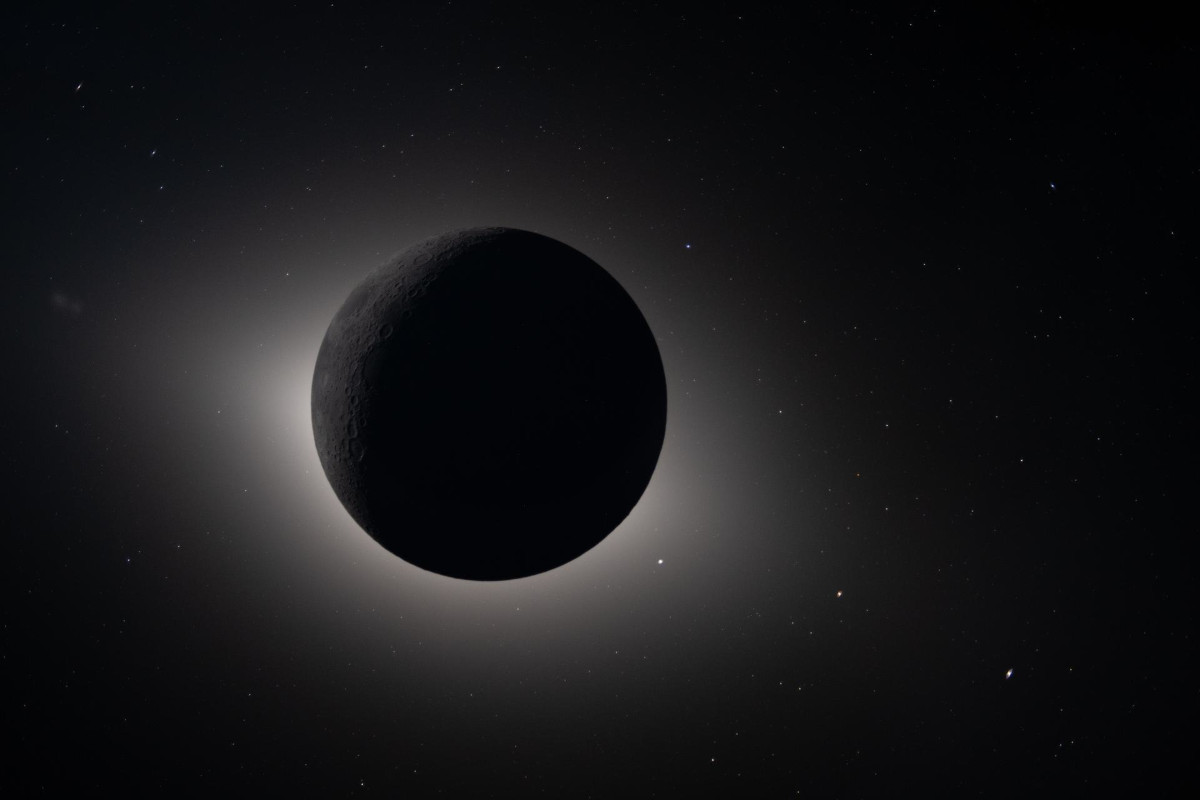
An image of the moon covering the face of the sun in space. A faint bright halo can be seen around a dark moon.

The moon fully eclipsing the sun, as taken by the Artemis II crew. Image: NASA

One of the most unique images taken by the Artemis II crew captures the moon fully eclipsing the sun. The corona of the sun forms a glowing halo around the moon, while light reflected off Earth forms a faint, glowing outline of the near side of the moon.

Nearly 54 minutes of totality – when the moon completely blocks the bright face of the sun – was observed by the crew.

Stars are also visible around the spectacle, which are typically too faint to see when imaging the moon, but are readily visible with the moon in darkness.

“This unique vantage point provides both a striking visual and a valuable opportunity for astronauts to document and describe the corona during humanity’s return to deep space,” according to NASA.

A different perspective
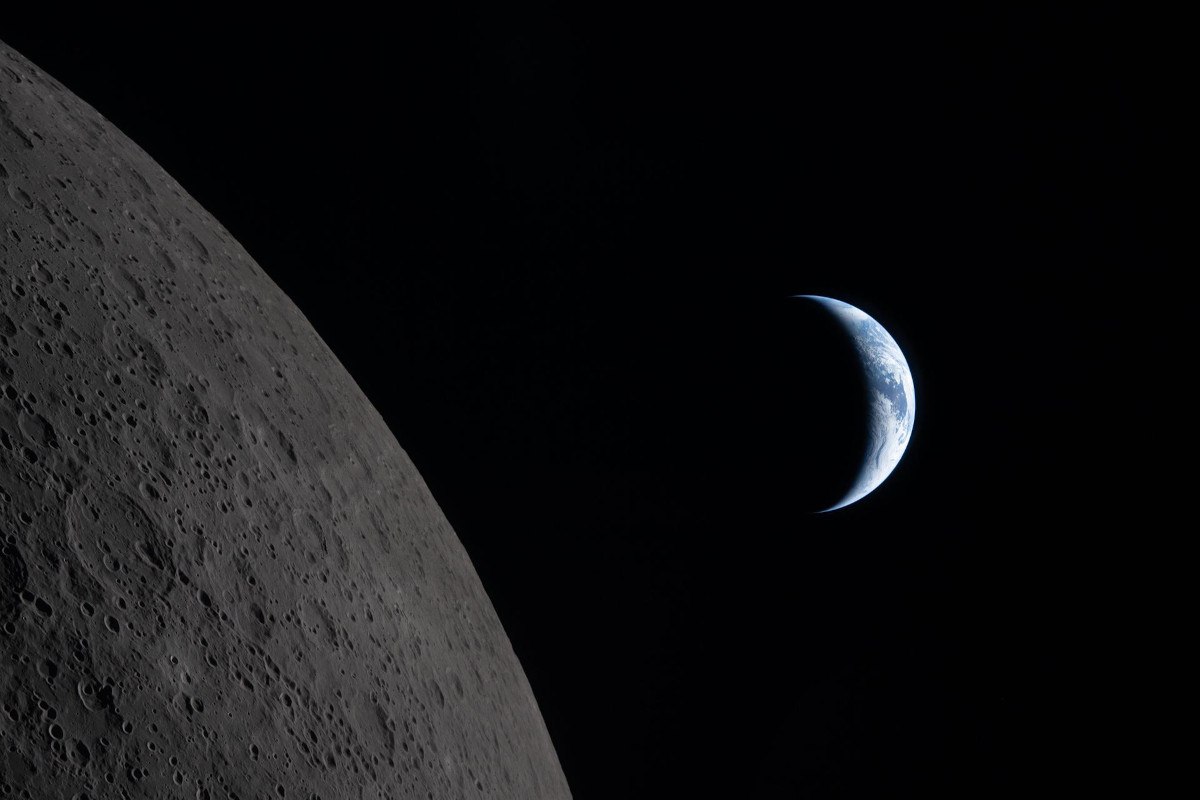
A picture taken of Earth in a crescent phase next to the grey darker side of the moon in space.

Earth in a crescent phase showing the cutoff between day and night on the planet, as seen from the Artemis II spacecraft as it conducted the lunar flyby. Image: NASA

Another image captured during the lunar flyby shows Earth split between daytime and nighttime.

Earth can be seen in a crescent phase, with sunlight coming from the right of the image. On the day side, swirling clouds are visible over the Australia and Oceania region.

Meanwhile, the lines of small indentations seen on the moon’s surface to the left of the image are secondary crater chains. These structures are formed by material ejected during a violent primary impact.

Ancient lava
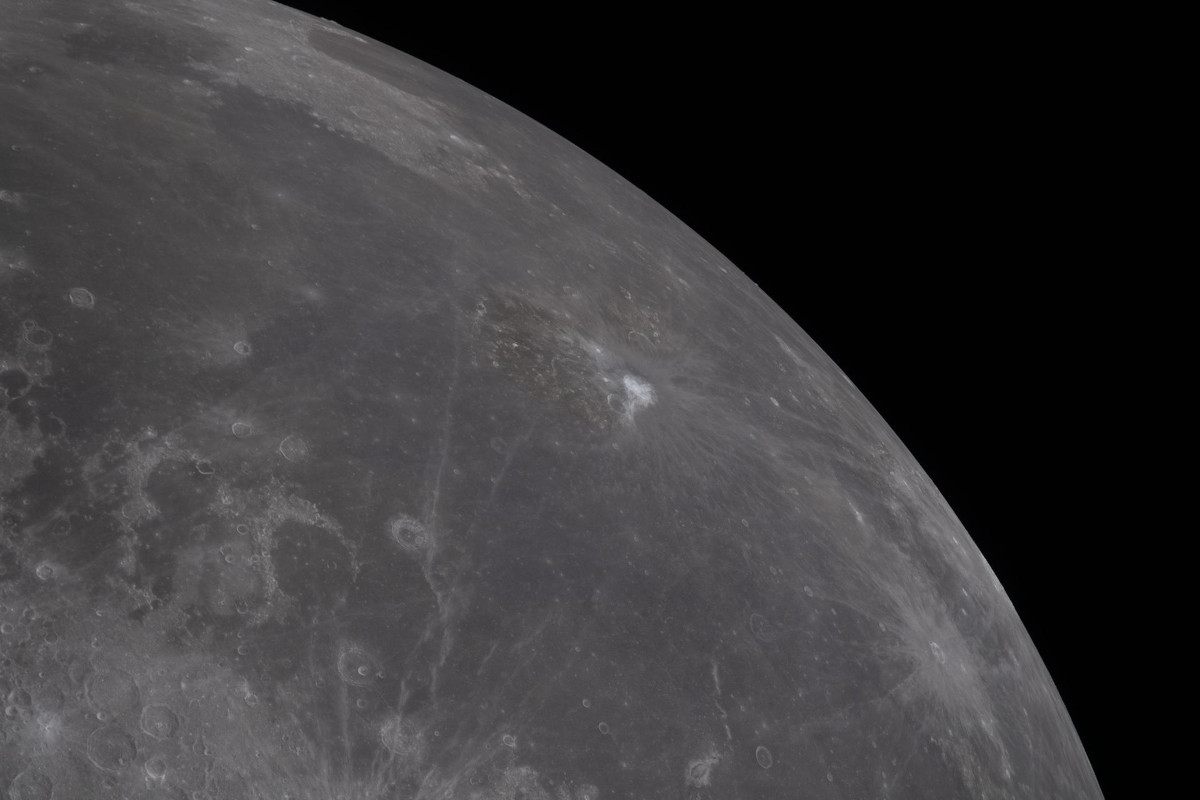
A picture of the moon's surface with bright circles representing craters and dark patches representing ancient lava.

A close-up snapshot of the moon as the crew approached for the flyby. The Aristarchus crater is the bright white dot in the middle of a dark grey lava flow at the top of the image. Image: NASA

In one close-up shot of the moon’s surface, taken as the NASA Orion spacecraft approached for the lunar flyby, an interesting ancient remnant can be observed.

According to NASA, dark patches visible on the top third of the lunar disc represent ancient lava.

Meanwhile, the bright white dot in the middle of a dark grey lava flow at the top of the image is the Aristarchus crater, which measures at a depth of 2.7km – making it deeper than the Grand Canyon.

A personal tribute
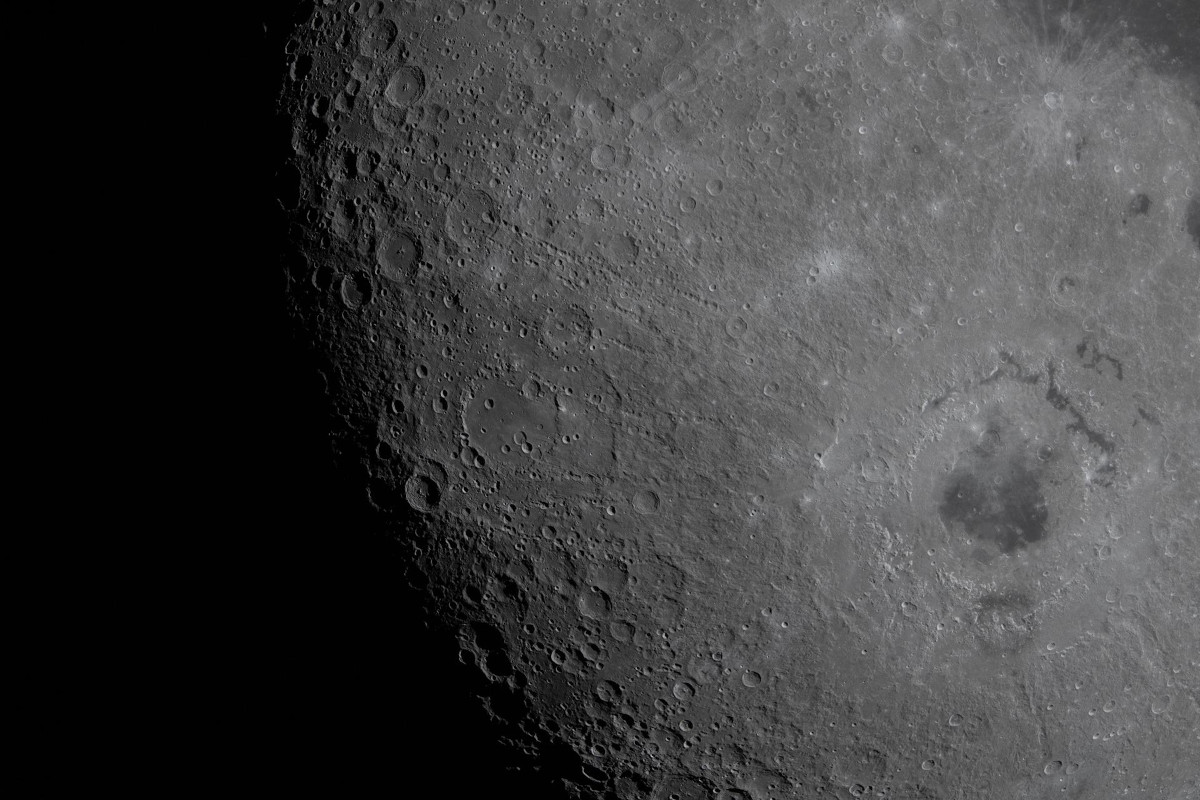
A picture of the moon's surface displaying a number of craters and basins.

A picture of the Orientale basin, seen in the middle right of the image. The first crater named by the crew, called Integrity, lies just above the centre of the image. North of the Orientale at the top right corner of the image is the Glushko crater. To the north-west of that is the second crew-named crater, seen as a bright white spot, which the crew has called Carroll. Image: NASA

During the mission’s lunar flyby observation period, the Artemis II crew snapped an image showing the rings of the Orientale basin, one of the moon’s youngest and best-preserved large impact craters.

According to NASA, these concentric rings offer scientists a rare window into how massive impacts shape planetary surfaces, “helping refine models of crater formation and the moon’s geologic history”.

At the 10 o’clock position of the Orientale basin, two smaller craters are visible. The Artemis II astronauts submitted names for these two craters for approval by the International Astronomical Union: the first being Integrity, named after the crew’s spacecraft; and the second being Carroll, named after mission commander Reid Wiseman’s late wife.

“A number of years ago, we started this journey in our close-knit astronaut family and we lost a loved one,” said mission specialist Hansen to mission control at the time of the proposal. “And there is a feature in a really neat place on the moon, and it is on the near side/far side boundary. In fact, it’s just on the near side of that boundary, and so at certain times of the moon’s transit around Earth, we will be able to see this from Earth.

“And so we lost a loved one. Her name was Carroll, the spouse of Reid, the mother of Katie and Ellie. And if you want to find this one, you look at Glushko, and it’s just to the northwest of that, at the same latitude as Ohm, and it’s a bright spot on the moon. And we would like to call it Carroll.”

‘A human story’

Eight days into the Artemis II mission, and a number of remarkable moments have been observed in humanity’s latest major space voyage, including the crew surpassing the record for human spaceflight’s farthest distance at 248,655 miles from Earth.

But for many, the human side of the voyage – such as the crew’s sentimental proposal to name a crater – have stuck as dually important alongside the mission’s technical feats.

This rings true with award-winning Irish scientist Dr Niamh Shaw, who was present on the Kennedy Space Center’s media lawn for the historic launch.

“Space has always been a kind of compass in my life,” she told SiliconRepublic.com. “It has a way of stripping everything back, reminding me of what matters, of how small we are and how extraordinary it is that we are here at all.

“It keeps me grounded in my questions. In curiosity. In wonder. And also in responsibility. Because one of the things space teaches us, very clearly, is that there is no rescue mission coming for Earth. No one arriving to solve our problems.”

Shaw told us that what struck her just as much as the launch itself was “what happened afterwards”.

“The level of interest, the appetite for connection … People want to understand, to feel part of it, to ask questions,” she explained.

“I haven’t stopped: media calls, messages, Zooms with my Town Scientist families.

“And I found myself trying to share it in a way that made it personal for them – sending photos, describing moments, answering questions,” she added.

“Because I genuinely believe that’s where the real impact lies. Not just in the engineering achievement, extraordinary as it is. But in how it reaches people.

“In how it shifts perspective, even slightly. In how it reminds us that we are all part of something much bigger and that the story of space exploration is, ultimately, a human story.”

Don’t miss out on the knowledge you need to succeed. Sign up for the Daily Brief, Silicon Republic’s digest of need-to-know sci-tech news.