











If your organization is using SonicWall SSL VPN, this is the official vendor recommendation - "SonicWall urges admins to disable SSLVPN amid rising attacks" - to tackle the recent zero-day vulnerability.
Since mid-July 2025, SonicWall has been targeted by the Akira ransomware group, exploiting a zero-day flaw in their SSL VPNs. We, at NetBird, have repeatedly highlighted why traditional VPNs are flawed.
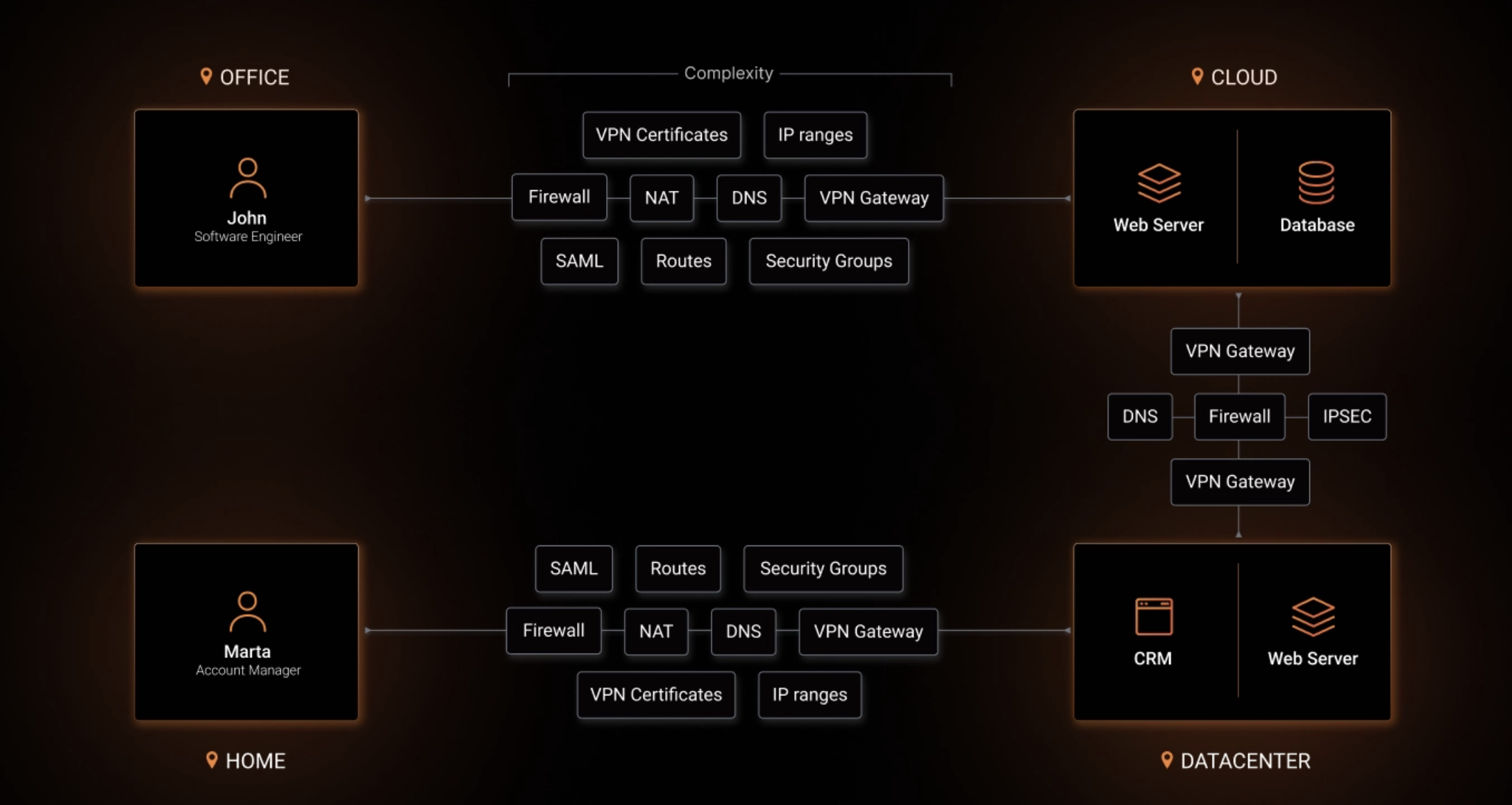
Traditional VPN Architecture
NetBird Zero Trust Network Access Architecture
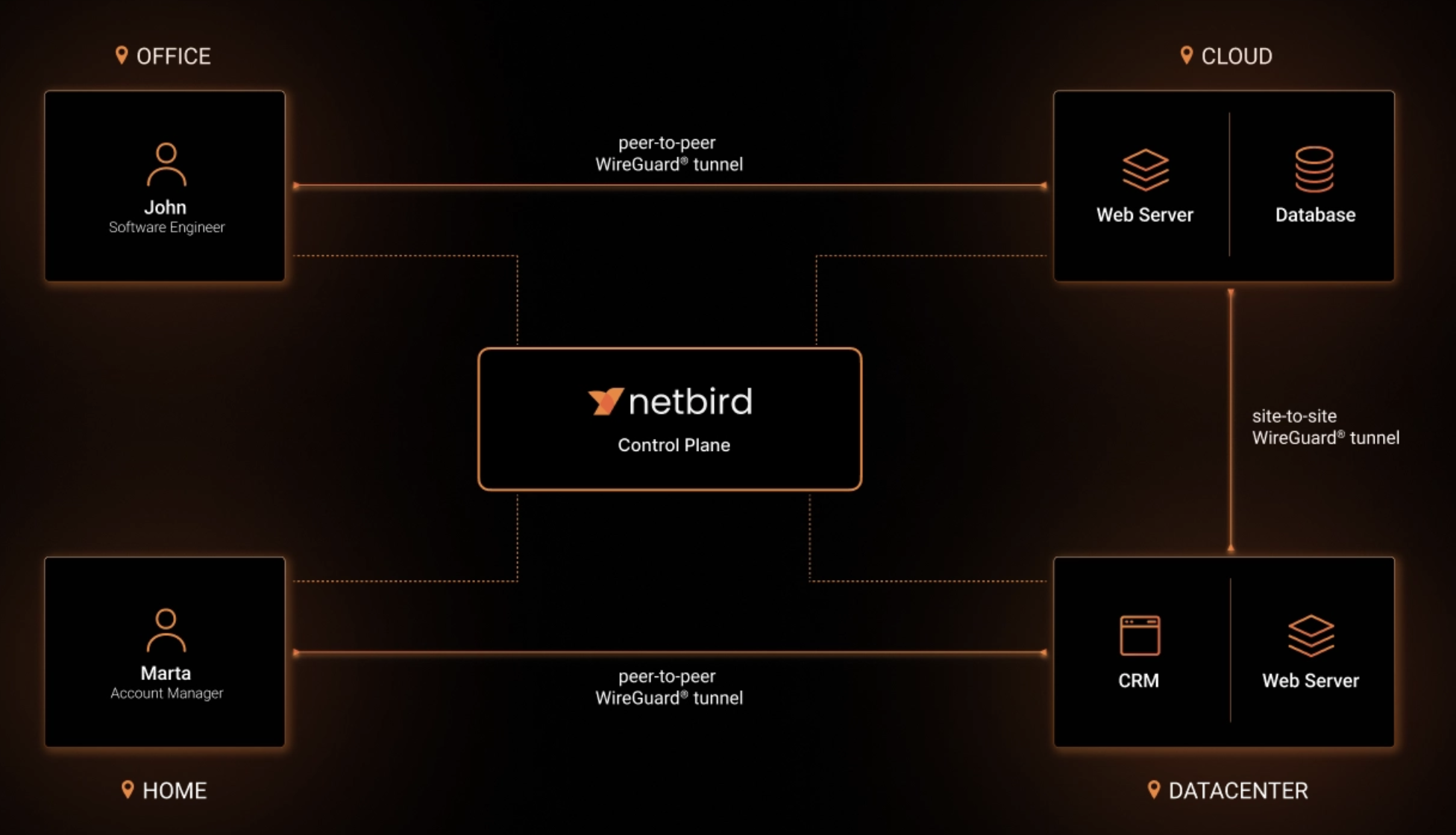
This recent zero-day vulnerability highlights the urgency for organizations to consider migrating to NetBird - a decentralized, WireGuard-based Zero Trust Network Access solution, to effortlessly protect their networks and relieve them from unending patch cycles and CVE vulnerabilities.
The traditional, centralized VPN architecture is a publicly exposed gateway, always listening for connections. This means that you’re constantly defending a large attack surface that can never be fully secured. Every vulnerability, be it the most recent Akira ransomware attack or the CVE-2024-53704 (an Improper Authentication vulnerability in the SSLVPN authentication mechanism allows a remote attacker to bypass authentication.), leaves the main door to your entire network wide open to adversaries.
So, is constant patching an answer? It’s been observed by Arctic Wolf researchers that, “In some instances, fully patched SonicWall devices were affected following credential rotation. Despite [time-based one-time password] [multi-factor authentication] being enabled, accounts were still compromised in some instances.” This is a cause for concern, because:
Even patched devices were successfully attacked: The Akira ransomware campaign compromised even fully patched SonicWall devices, even after credential rotation.
MFA bypassed: The attacks succeed even when multi-factor authentication (MFA) is enabled. This means that a pre-authentication exploit renders your most important security control useless. The attack targets the infrastructure, not the user's identity.
Urgent Vendor Guidance: SonicWall has advised their customers to disable SSL VPN services as a primary mitigation for the on-going zero-day vulnerability.
What’s the way forward? The path forward involves adopting a solution that adheres to the core tenets of Zero Trust. By implementing a Zero Trust approach with NetBird, your internal resources become invisible to the public internet, thereby eliminating this attack surface entirely.
NetBird is an open-source Zero Trust Networking platform designed by engineers, for engineers. NetBird makes it radically simple to deploy secure private networks for modern organizations. Built on the trusted, high-performance WireGuard® protocol, NetBird eliminates the limitations of traditional VPNs by establishing high-throughput, low-latency decentralized private networks. NetBird’s robust architecture provides a single, intuitive management console to enforce granular, identity-based access policies, integrating with your existing Identity Provider (IdP) for SSO and MFA.
NetBird eliminates the slow, centralized VPN gateway architecture with decentralized, encrypted overlay networks that connect your devices securely, eliminating bottlenecks and single points of failure. Unlike traditional centralised VPNs, which backhauls all traffic through a central appliance, NetBird facilitates direct, encrypted tunnels between peers for faster, more resilient connections.
NetBird, built on the trusted WireGuard® protocol, simplifies secure connectivity between devices, teams, and cloud environments - your computers, devices, machines, and servers connect to each other directly over a fast encrypted tunnel. Why WireGuard®? Because it is lean, fast, and secure by design.
NetBird is a native ZTNA solution that operates on the principle of "never trust, always verify".
Identity-aware security: Access is tied to user and device identity, not IP addresses. NetBird integrates with your Identity Provider (IdP) to enforce SSO and MFA policies natively. Least-privilege access: Granular, group-based access policies define exactly which users can connect to which resources, on which ports, preventing the lateral movement that is common in traditional VPNs. Cloaked attack surface: NetBird establishes encrypted tunnels between your user devices and routing peers without a need for open ports, effectively ‘cloaking’ your critical resources from the public internet. This means that your critical resources will no longer have their public IPs exposed, to be scanned, probed or exploited by adversaries. Continuous verification: For stronger security, NetBird supports posture and context checks — the foundation of a strong Zero Trust approach. With posture checks, you can restrict access based on the state or attributes of peers:
| Posture Checks | NetBird | SonicWall SSL VPN |
|---|---|---|
| OS version & patch level | Granular control for minimum versions of Windows, Linux (kernel), macOS, Android, and iOS | Basic checks via End Point Control (EPC). Requires separate SonicWall Capture Client for broader checks |
| Geolocation | Granular policies to allow/deny access based on country and city | Not available natively |
| Running processes | Access policies based on existence of specific running processes, like antivirus (Windows, macOS, Linux) | Requires separate SonicWall Capture Client |
| Firewall status | Yes, via running process check (e.g. check if Windows Defender Firewall service is active) | Requires separate SonicWall Capture Client |
| EDR/MDM integration | Native integrations with EDRs such as CrowdStrike, Microsoft Intune (and more) | Requires separate SonicWall Capture Client |
| Peer approvals | Every new device can require manual admin approval before joining the network; can be automated via EDR integration | Not applicable |
With contextual access control, you can enforce dynamic, policy-based controls, based on: Identity (who), the resource accessed (what), geolocation (where), and network environment (how).
| Category | NetBird | SonicWall SSL VPN |
|---|---|---|
| Foundational architecture | Decentralized, encrypted overlay networks | Centralized, client-server |
| Security model | Zero Trust Network Access (ZTNA) | Traditional perimeter security |
| Protocol | WireGuard® (with Rosenpass for quantum resistance) | SSL/TLS, Point-to-Point Protocol (PPP) |
| Performance | Low latency, high throughput | Performance and reliability influenced by the underlying hardware/gateway |
| Authentication | Native OIDC integrations with IdPs (Google, Microsoft, Okta, etc.,) | Requires additional/complex integrations and configurations |
| Device posture (see table above) | Built-in posture checks (OS version, process, EDR) | Additional components, deployment and configuration (Endpoint protection with SonicWall Capture Client) |
| Management | Simple, intuitive unified console | Complex SonicOS interface with a steep learning curve |
| Deployment model | Flexible cloud and self-hosted models with agent-based and agentless deployment options | Appliance-centric |
| Platform support | Windows, macOS, Linux, Docker, OpenWRT, serverless, iOS, Android | Windows, Linux, macOS, iOS, Android, ChromeOS |
| Open source | Yes | Proprietary with vendor lock-in overhead |
| MSP/MSSP readiness | Native multi-tenancy, consolidated billing, tenant permission management | Via SonicWall Unified Management tools |
| Licensing | Predictable pricing; Per active user/month. Optional free tier. | Inflexible, perpetual license, along with appliance costs and support contracts |
While traditional VPNs like SonicWall SSL VPN have been workhorses of corporate networking for many years, their architectural and security models are no longer suitable for modern organizations dealing with sophisticated adversaries. NetBird, built from the ground up on the principles of Zero Trust, and leveraging modern technologies like WireGuard®, offer a more secure, efficient, agile, and scalable path forward.
Talk to us - We will help you switch to NetBird seamlessly, with minimal disruption.
此内容由惯性聚合(RSS阅读器)自动聚合整理,仅供阅读参考。 原文来自 — 版权归原作者所有。