
惯性聚合 高效追踪和阅读你感兴趣的博客、新闻、科技资讯
阅读原文 在惯性聚合中打开

推荐订阅源

Threat Intelligence Blog | Flashpoint
Microsoft Azure Blog
Cloudbric
Cloudbric
I
InfoQ
V
V2EX
博客园_首页
The Register - Security
cs.CV updates on arXiv.org
S
Secure Thoughts
Vercel News
Vercel News
Forbes - Security
Forbes - Security
云风的 BLOG
云风的 BLOG
PCI Perspectives
PCI Perspectives
L
LINUX DO - 最新话题
D
DataBreaches.Net
H
Hacker News: Front Page
Application and Cybersecurity Blog
B
Blog RSS Feed
A
About on SuperTechFans
N
News and Events Feed by Topic
Apple Machine Learning Research
Help Net Security
Help Net Security
Attack and Defense Labs
N
Netflix TechBlog - Medium
Spread Privacy
Spread Privacy
F
Full Disclosure
Recorded Future
Recorded Future
AWS News Blog
AWS News Blog
博客园 - 【当耐特】
The Cloudflare Blog
T
Threatpost
T
Tor Project blog
Google DeepMind News
C
CXSECURITY Database RSS Feed - CXSecurity.com
CTFtime.org: upcoming CTF events
Recent Announcements
M
MIT News - Artificial intelligence
A
Arctic Wolf
C
Check Point Blog
Stack Overflow Blog
Stack Overflow Blog
T
Threat Research - Cisco Blogs
Security Archives - TechRepublic
Hacker News - Newest:
Hacker News - Newest: "LLM"
WordPress大学
WordPress大学
Cyberwarzone
Cyberwarzone
小众软件
小众软件
C
Cyber Attacks, Cyber Crime and Cyber Security
P
Proofpoint News Feed
Security Latest
Security Latest
The Last Watchdog
The Last Watchdog

Life – Silicon Republic

‘Waking the Feminists’ social media campaign sees theatres commit to change Why is Ireland sweeping digital education under the carpet? Dylan Collins: Why is Ireland going for lowest age for digital consent? Digital safety: Why society needs to get smarter about smartphones Safer Internet Day 2018: Tips for parents and teachers Are Irish people becoming addicted to their smartphones? WhatsApp debuts feature that allows users to delete accidental messages Inspirefest: The Podcast makes its debut with stellar first episode Irish teachers and parents don’t feel equipped to discuss online safety Rents in Dublin have ballooned by 37pc since 2012, report shows Game of Thrones fans can now plan location tours with new digital map New survey finds millennials are leading the digital finance charge Switching off: 17pc of under-30s have stopped buying TV licences Tweet success: Twitter says action against trolls is working Facebook will soon put up paywalls and free limits for certain articles Check out all 66 winning images from international photo awards New Twitter tweaks make it easier for you to shut out the trolls Leaving cert exam ‘not compromised’ after paper appears online Is it a case of more funding, fewer women in the arts?
Google starting to prompt users with a quiz if it thinks they’re depressed
Colm Gorey · 2017-08-24 · via Life – Silicon Republic

Google users in the US will now be prompted with a questionnaire if they search for the term ‘clinical depression’.

Google is hoping to use its dominance in the online search world to help those who feel they might be depressed, and try to get them the help they need.

As part of a partnership with the National Alliance on Mental Illness (NAMI), Google users in the US who search for the term ‘clinical depression’ on mobile devices will be presented with a questionnaire that will try to determine if the person has depression.

The set of questions are based on the PHQ-9 standardised test, which is generally used to see if a person could be unknowingly experiencing the condition, though it is not 100pc accurate.
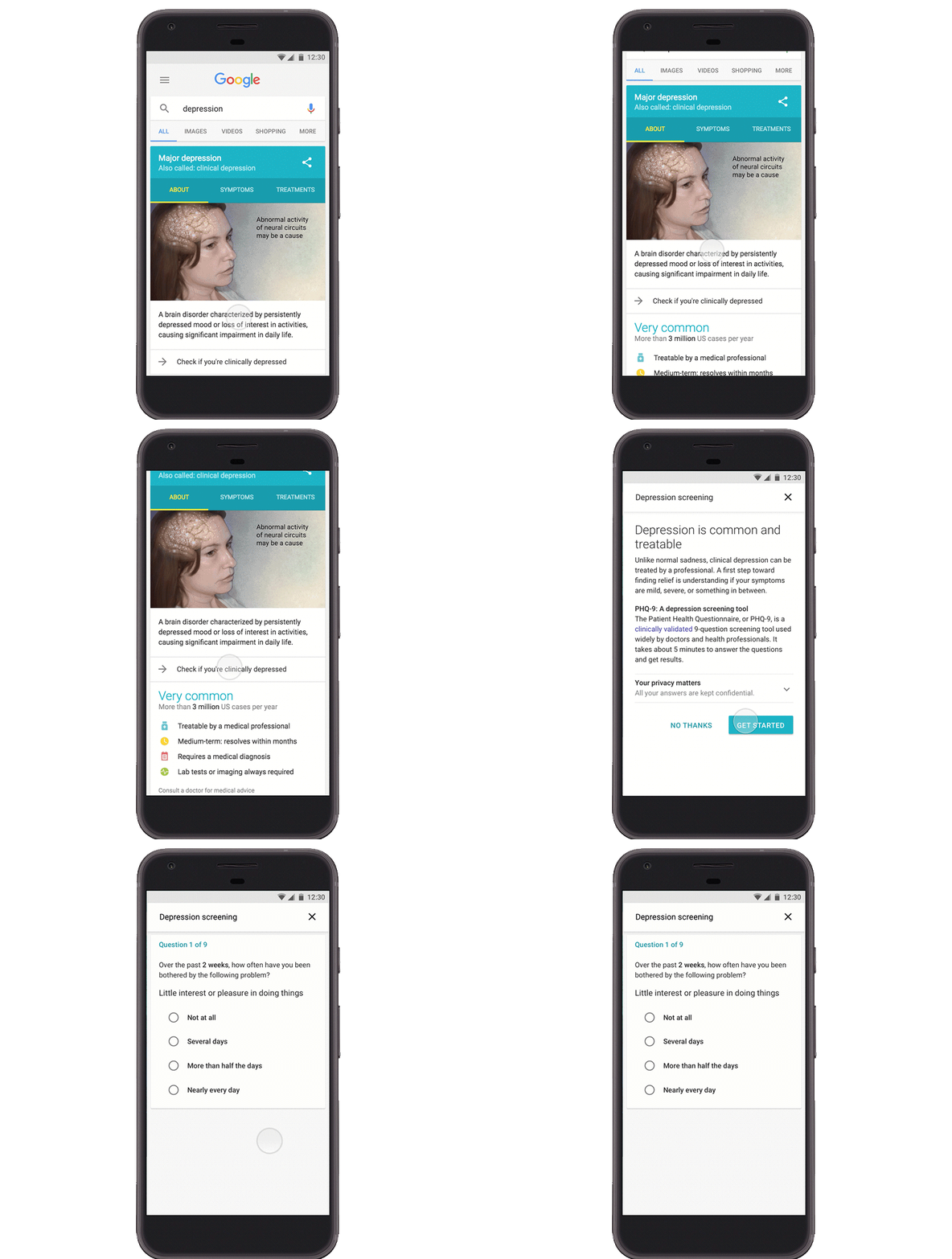
GIF: Google

Making people aware of depression

Rather, the end goal of the project is to raise awareness of depression, particularly among the younger generation, as only about 50pc of people in the US who have depression actually undertake treatment.

In a Google blog post, Mary Giliberti, CEO of NAMI, said: “We hope that by making this information available on Google, more people will become aware of depression, and seek treatment to recover and improve their quality of life.”

It is unclear as of yet if Google will roll out this tool to other parts of the world.

The search giant is not the first in Silicon Valley to use its sway online to help people overcome mental health issues.

Last year, Facebook announced it was to expand its suicide-prevention tools to include an expanded set of options for the at-risk user, from reaching out to a friend to contacting helplines.

Instagram, another company owned by Facebook, revealed its own set of tools, which include allowing friends to flag a post if they think a person might be going through a difficult time and needs support.