Payments are no longer defined by moving money alone. They are defined by the quality, speed and intelligence of the data surrounding each transaction.
A new report from PYMNTS Intelligence and FIS finds issuer processing is evolving from what was traditionally a back-end utility into a “decisioning layer” that determines how payments are approved, optimized and secured in real time. Commerce itself is becoming more automated, personalized and AI-driven, especially as agentic commerce models emerge.
The report’s central finding is that not all data are equal. Historical transaction records alone are no longer sufficient for modern payments environments where AI systems increasingly initiate or influence transactions.
Issuers and processors are being pushed to aggregate behavioral, contextual and real-time operational data that can improve authorization decisions, reduce fraud and minimize checkout friction.
Traditional issuer processing systems were built primarily for execution reliability and speed, according to the report. But those rules-based systems struggle in environments where transactions are increasingly shaped by contextual signals, consumer behavior and AI-enabled commerce flows. The report estimates that issuer false declines contribute to roughly $30 billion in annual lost sales globally.
From Processing Transactions to Orchestrating Decisions
That friction becomes even more problematic in agentic commerce environments, where artificial intelligence agents may eventually initiate purchases on behalf of consumers without the traditional cues associated with card-present transactions. The report notes that payments are no longer simply triggered by users but increasingly by systems acting on their behalf, elevating the importance of infrastructure capable of evaluating and authorizing those transactions in real time.
Advertisement: Scroll to Continue
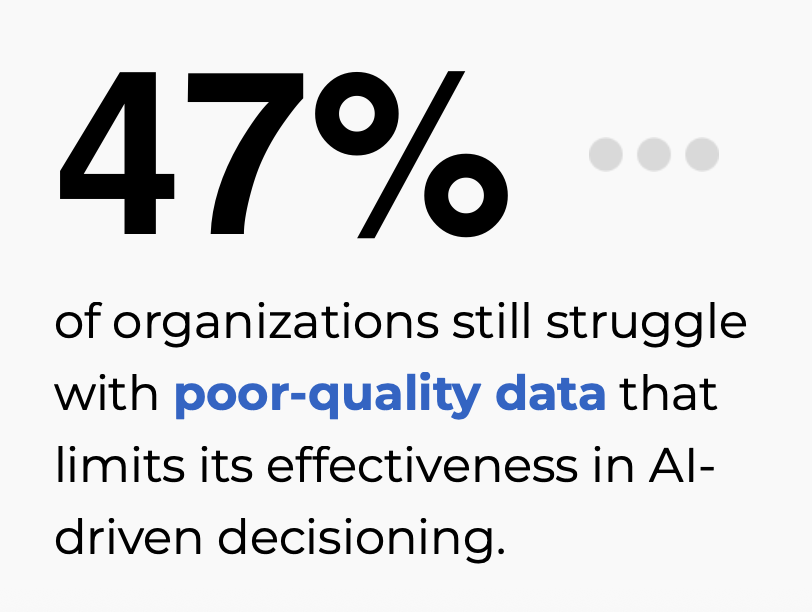
The data requirements for that future are extensive. Machine learning systems rely on transaction histories, risk indicators, spending patterns, behavioral insights and contextual data to make effective decisions. The report found that 47% of organizations still struggle with poor-quality data that limits AI effectiveness in decision-making.
For agentic commerce specifically, the report points to several critical data types that will become increasingly valuable.
Behavioral data is one of the most important because artificial intelligence systems need to distinguish legitimate autonomous activity from fraud or anomalous behavior. Spending histories and transaction patterns help create models capable of recognizing when an AI agent is operating within expected consumer preferences.
Credential and authentication data also become essential. In agentic commerce, AI systems may need to validate payment credentials, apply spending controls and execute transactions without direct user intervention. That raises the stakes for identity verification and real-time authorization frameworks.
Operational and contextual data are equally important. The report notes that more modern payment data is emerging as a real-time signal of customer behavior and operational performance. That includes device information, timing patterns, merchant characteristics and ecosystem-level connectivity data that help determine whether a transaction should proceed.
The report’s findings indicate that firms capable of aggregating and activating those data streams at scale will gain a significant competitive advantage. Rather than merely processing payments, issuer platforms are evolving into orchestration layers that connect data, processing and ecosystem participants in real time.
Agentic Commerce Raises the Stakes for Data Readiness
Still, the report makes clear that many organizations are not fully prepared for the transition to data-centric payments infrastructure.
One challenge is fragmentation. Legacy systems often isolate fraud tools, authorization systems and customer data into separate silos, limiting the ability to create unified, real-time intelligence layers. Another issue is activation. Simply collecting data is no longer enough. The report emphasizes that the differentiator increasingly lies in operationalizing data into actionable insights that can improve approvals, reduce false declines and adapt dynamically to changing conditions.
To prepare for agentic commerce, the FIS and PYMNTS Intelligence report outlines several areas where organizations need to focus. Those include improving how issuer data is captured and integrated, investing in platforms that support real-time decisioning, strengthening ecosystem connectivity and leveraging AI analytics to improve fraud management and authorization outcomes.
The broader implication is that payments infrastructure is shifting from systems of record to systems of action. In an AI-driven commerce environment, the winners may not necessarily be the organizations with the most data, but those most capable of transforming fragmented information into real-time intelligence that supports autonomous, secure and frictionless transactions.