惯性聚合 高效追踪和阅读你感兴趣的博客、新闻、科技资讯
阅读原文 在惯性聚合中打开

推荐订阅源

A
About on SuperTechFans
D
DataBreaches.Net
K
KPMG report finds enterprise disconnect between AI and its ROI | CIO
V
Visual Studio Blog
奇客Solidot–传递最新科技情报
奇客Solidot–传递最新科技情报
B
Blog RSS Feed
Recent Announcements
The Register - Security
S
Secure Thoughts
Y
Y Combinator Blog
The Last Watchdog
The Last Watchdog
L
LINUX DO - 最新话题
V2EX - 技术
V2EX - 技术
腾讯CDC
GbyAI
GbyAI
G
Google Developers Blog
博客园 - 司徒正美
博客园 - 三生石上(FineUI控件)
T
The Exploit Database - CXSecurity.com
T
Threat Research - Cisco Blogs
P
Proofpoint News Feed
Schneier on Security
Microsoft Security Blog
Jina AI
Jina AI
WordPress大学
WordPress大学
aimingoo的专栏
aimingoo的专栏
MyScale Blog
MyScale Blog
Help Net Security
Help Net Security
K
Kaspersky official blog
P
Privacy & Cybersecurity Law Blog
www.infosecurity-magazine.com
AI
AI
MongoDB | Blog
MongoDB | Blog
Scott Helme
Scott Helme
J
Java Code Geeks
Engineering at Meta
Engineering at Meta
H
Heimdal Security Blog
H
Help Net Security
D
Darknet – Hacking Tools, Hacker News & Cyber Security
云风的 BLOG
云风的 BLOG
Microsoft Azure Blog
S
Security Affairs
TaoSecurity Blog
TaoSecurity Blog
The GitHub Blog
The GitHub Blog
Hacker News: Ask HN
Hacker News: Ask HN
Martin Fowler
Martin Fowler
cs.AI updates on arXiv.org
Project Zero
Project Zero
T
The Blog of Author Tim Ferriss
Last Week in AI
Last Week in AI

PYMNTS.com

Treasury Calls for Programmable Financial Enforcement Across Crypto DeepSeek Seeks $20 Billion Valuation as Tech Giants Weigh Investment Google Accelerates Agentic AI Shift With New Enterprise Platform OpenAI Begins Briefing Governments on Cybersecurity Capabilities DeFi Security Suffers New Blow With $3 Million Volo Exploit Uninvited Users Access Anthropic’s Mythos AI Model Block and Uber Expand Partnership Across Several Global Markets OpenAI Pledges $1.5 Billion to PE Enterprise AI Project Podcast: Inside the $9 Billion DeFi Hack That’s Shaking Crypto’s Foundations Synchrony CFO Flags Momentum in Spending and Credit Banks Risk Slowing the Emerging Middle Market Firms Driving Growth Paysafe Expands Digital Wallet Availability Across 18 European Markets Bad Data Can Break Good AI in Payments 50% More Digital Shopping Days Put Parents at the Center of Retail’s Shift 65% Call Insurance Essential. Why Most Spending Isn’t So Clear-Cut Amazon Recasts Marketplace Fraud as a Broader Trust Problem Capital One’s Q1 Shifts Attention From Spending to Strategy Lawmakers Question JetBlue About Surveillance Pricing Allegations Small Businesses Stop Chasing Amazon on Delivery Speed Google Embeds AI Into Chrome for 3.5 Billion Users Adobe Plans Outcome-Based Pricing for New AI Product Suite UnitedHealth Spends $1.5 Billion on AI and Wants Double Back MiCA Forces Crypto Firms to Get Licensed or Get Out Prediction Market Kalshi Targets Crypto Perpetuals New York Sues Coinbase and Gemini Over Prediction Markets Amazon and Anthropic Deepen Ties With Investment and Hardware Pact Agentic B2B Is Here. Are Your Contracts and Invoices Ready? Apple Hardware Leader John Ternus to Succeed CEO Tim Cook The Web Is Gaslighting AI Agents and Nobody Can Tell OCC Enters the Interchange Fight and Raises the Stakes Amazon Dismisses New Evidence in California Antitrust Suit AI Finds Its Best Customer on Main Street Coinbase Opens Services Marketplace for Agentic Commerce Feds Start Processing $127 Billion in Tariff Refunds for Importers Payments Modernization Is Insurance’s Next Big Margin Engine How Visa Is Rewiring Bank Infrastructure for the AI Era Instant Payments Grow but the Real Barrier Is Human The Old-School Card Product Banks May Need Most 43% of SMBs Would Pay to Make Purchases in Installments The Real AI Edge in Payments Comes From Better Judgment In the Age of Agentic AI, Data Control Is Power Verizon’s Dan Schulman Tells CEOs to Be Open About AI Job Cuts Walmart Eyes Stores as Warehouse Space for Same-Day Delivery France’s CB Payments Network Aims to Take on Visa/Mastercard in EU QVC Was TikTok Shop Before TikTok Shop Loop Raises $95 Million to Bridge Supply Chain Data Gap Cursor Eyes $50 Billion Valuation as AI Coding Demand Surges Commercial Lending Rescues Regional Banks From Consumer Slowdown Anthropic and White House Aim to Make Peace in Friday Meeting Home Depot Buys SIMPL Automation to Support Same-Day Delivery The Riskiest Words in B2B: This Is How We’ve Always Done It France Urges Euro Stablecoins to Break Dollar Dependency Importers Prep for Monday Opening of Tariff Refund Portal Permitting Hurdles and Labor Shortages Threaten AI Data Center Timelines Token Freezes Force CFOs to Rethink Stablecoin Risk X Money Tests Whether Social Commerce Can Hold Consumer Deposits Anthropic Briefs EU Regulators on Mythos Cybersecurity Concerns Welcome to Vibe Ordering, ChatGPT Is Taking Your Order Now Nvidia Says AI Can Finally Make Quantum Computing Work QVC Files Chapter 11 to Slash Debt and Pursue Growth Uber Eats Lets Customers Return Their Retail Purchases Financial Officials Sound Alarm About Anthropic’s Banking Risk 71% of Billion-Dollar Firms Face Agent Identity Threats OpenAI Targets Pharma Giants With Purpose-Built AI Model California Claims Amazon Punishes Sellers for Lower Prices on Other Sites CFTC Chairman Says AI Helps Agency Run More Like a Business Global Finance Chiefs Call for Mythos Information Sharing Big Bank Earnings Show Digital Activity Drives Deposits OCC Clears JPMorgan Chase After Trade Surveillance Program Upgrade Accounts Receivable Gets an AI Upgrade BNY’s AI Strategy Signals a New Era of Platform Banking Bank of England Probes AI Threats to UK Financial Stability Rising AI Adoption Is Driving Up Enterprise Costs Google Faces EU Order to Share Search Data With Rivals Delivery Robots Lead Grab’s AI Expansion Circle Chief Says China Could Issue Stablecoin in 3 to 5 Years Amex Acquires Hyper to Boost AI and Expense Management Offerings Anthropic Ready to Offer Mythos to British Banks Issuers Face a New Reality as Credit Goes Real Time How Payments Gaps Are Limiting Deposit Growth at Community Banks AI May Run Payments but Humans Still Own the Risk 90% of Millennials Feel Pressure at the Grocery Store The New Checkout Is Where the Best Offer Wins Apple Pushes Siri Programmers to Adopt AI Coding Tools Amazon Sellers Protest Policy Changes With One-Day Ad Boycott FanDuel and DraftKings Fund $41 Million Lobbying Effort by Super PAC Live Nation Loses Antitrust Case Brought by 33 States Fed Beige Book Finds Tax Refund Relief Running Into Higher Gas Prices Anthropic’s New Design Tool Rivals Adobe and Figma Goldman Sachs Seeks SEC Approval for New Bitcoin ETF What AI-Driven Attack Chains Mean for CFOs and CISOs Healthcare’s AI Boom Moves From Bedside to Back Office Accel Prepares to Pour $5 Billion Into Global AI Breakouts Nearly 4 in 10 Financially Stressed Shoppers Choose Walmart Over Amazon Synchrony Bets on Teachers to Fix Financial Literacy Mastercard’s Mark Barnett Says the Real Currency for SMBs Is Payment Timing SoFi Uses Galileo to Power Real-Time FedNow Transfers Palo Alto Founder Eyes Liberty Bank for AI Banking Experiment Surcharge Surge Hits Consumers as Fee Fatigue Sets In Walmart CFO Says Marketplace Revenue Up 20% Over 2025
63% of Firms Face Check Fraud as Paper Payments Linger
PYMNTS · 2026-04-27 · via PYMNTS.com

By  |  April 27, 2026

 | 

person writing check

The biggest obstacle to real-time payments adoption may not be fraud, but the fear of fraud.

That’s the central finding of “Reality Check: Fact vs. Fiction in Real-Time Payments Fraud,” a PYMNTS Intelligence report produced in collaboration with The Clearing House. The report puts hard data against widely held assumptions, and the gap is striking: real-time payment rails carry substantially lower fraud rates than traditional methods including checks, wires and ACH. Yet many financial institutions remain on the sidelines, limiting themselves to receive-only participation.
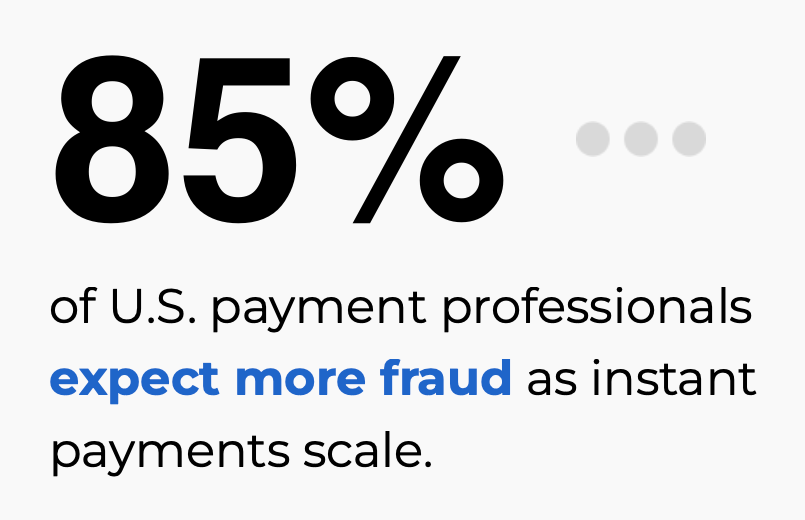
fraud stat

The report’s conclusion is pointed: misperception, not actual exposure, is the primary drag on adoption. Aligning perception with reality could unlock the full promise of faster payments.

While many banks remain cautious, often limiting participation to receive-only capabilities, the findings indicate.

Findings

  • 63% of firms report check fraud, compared with just 2% reporting fraud on real-time rails such as RTP and FedNow, highlighting a wide gap between legacy and instant payment risk.
  • 85% of U.S. payments professionals expect fraud to increase as instant payments scale, even as current data shows lower fraud rates on those rails.
  • 96% of banks support identity verification tools such as Confirmation of Payee, signaling broad agreement on how to mitigate fraud risk in real-time environments.

Beyond those figures, the report points to a structural issue in how the industry approaches innovation. Many institutions are still calibrating risk based on the speed of transactions rather than the controls embedded in modern payment systems.

Real-time rails operate in environments that emphasize push payments, tokenization and immediate confirmation, which can limit certain types of unauthorized activity. Yet those advantages are often overshadowed by concerns tied to scams and user error, particularly authorized push payment fraud.

Advertisement: Scroll to Continue

That dynamic is shaping real-world behavior. A large share of institutions are opting to roll out instant payments with restricted functionality, delaying full send-and-receive capabilities. This approach may reduce perceived exposure, but it also creates bottlenecks that limit the network effects of faster payments. The report suggests that this cautious stance, while understandable, may slow the broader shift toward always-on money movement.

At the same time, the data offers a more constructive view of the path forward. Fraud on real-time rails is not only lower in frequency but often lower in impact, with most incidents categorized as minor. Financial institutions are also coalescing around a set of tools to address remaining risks, including real-time monitoring, multifactor authentication and AI-driven detection. Network operators are reinforcing these efforts with shared frameworks and collaborative data approaches, which can help identify and stop fraud before funds move.

The broader takeaway is that faster payments have reached a point where the technology and controls are largely in place. What remains is a shift in mindset. As institutions align their risk models with the realities of modern payment infrastructure, real-time rails could move from cautious adoption to a more central role in the payments ecosystem.

Education and coordination will determine how quickly that shift happens. Closing the perception gap between risk and reality could unlock broader participation, giving banks and payments providers a clearer path to scale real-time offerings while maintaining strong protections for consumers and businesses alike.

At PYMNTS Intelligence, we work with businesses to uncover insights that fuel intelligent, data-driven discussions on changing customer expectations, a more connected economy and the strategic shifts necessary to achieve outcomes. With rigorous research methodologies and unwavering commitment to objective quality, we offer trusted data to grow your business. As our partner, you’ll have access to our diverse team of PhDs, researchers, data analysts, number crunchers, subject matter veterans and editorial experts.