惯性聚合 高效追踪和阅读你感兴趣的博客、新闻、科技资讯
阅读原文 在惯性聚合中打开

推荐订阅源

D
Docker
AI
AI
博客园 - 三生石上(FineUI控件)
腾讯CDC
freeCodeCamp Programming Tutorials: Python, JavaScript, Git & More
Y
Y Combinator Blog
大猫的无限游戏
大猫的无限游戏
H
Hackread – Cybersecurity News, Data Breaches, AI and More
雷峰网
雷峰网
NISL@THU
NISL@THU
S
Schneier on Security
T
Threatpost
T
Tenable Blog
Application and Cybersecurity Blog
IT之家
IT之家
宝玉的分享
宝玉的分享
T
Tailwind CSS Blog
C
Cybersecurity and Infrastructure Security Agency CISA
P
Privacy & Cybersecurity Law Blog
I
Intezer
Microsoft Azure Blog
月光博客
月光博客
T
Threat Research - Cisco Blogs
SecWiki News
SecWiki News
AWS News Blog
AWS News Blog
博客园 - Franky
钛媒体:引领未来商业与生活新知
钛媒体:引领未来商业与生活新知
P
Proofpoint News Feed
V
V2EX
Recorded Future
Recorded Future
Microsoft Security Blog
S
Secure Thoughts
Google DeepMind News
MongoDB | Blog
MongoDB | Blog
Apple Machine Learning Research
Project Zero
Project Zero
PCI Perspectives
PCI Perspectives
G
GRAHAM CLULEY
Help Net Security
Help Net Security
Cloudbric
Cloudbric
Recent Announcements
V
Visual Studio Blog
Hacker News: Ask HN
Hacker News: Ask HN
N
News and Events Feed by Topic
C
CERT Recently Published Vulnerability Notes
The Cloudflare Blog
Forbes - Security
Forbes - Security
C
Cisco Blogs
O
OpenAI News
www.infosecurity-magazine.com

PYMNTS.com

Treasury Calls for Programmable Financial Enforcement Across Crypto DeepSeek Seeks $20 Billion Valuation as Tech Giants Weigh Investment Google Accelerates Agentic AI Shift With New Enterprise Platform OpenAI Begins Briefing Governments on Cybersecurity Capabilities DeFi Security Suffers New Blow With $3 Million Volo Exploit Uninvited Users Access Anthropic’s Mythos AI Model Block and Uber Expand Partnership Across Several Global Markets OpenAI Pledges $1.5 Billion to PE Enterprise AI Project Podcast: Inside the $9 Billion DeFi Hack That’s Shaking Crypto’s Foundations Synchrony CFO Flags Momentum in Spending and Credit Banks Risk Slowing the Emerging Middle Market Firms Driving Growth Paysafe Expands Digital Wallet Availability Across 18 European Markets Bad Data Can Break Good AI in Payments 50% More Digital Shopping Days Put Parents at the Center of Retail’s Shift 65% Call Insurance Essential. Why Most Spending Isn’t So Clear-Cut Amazon Recasts Marketplace Fraud as a Broader Trust Problem Capital One’s Q1 Shifts Attention From Spending to Strategy Lawmakers Question JetBlue About Surveillance Pricing Allegations Small Businesses Stop Chasing Amazon on Delivery Speed Google Embeds AI Into Chrome for 3.5 Billion Users Adobe Plans Outcome-Based Pricing for New AI Product Suite UnitedHealth Spends $1.5 Billion on AI and Wants Double Back MiCA Forces Crypto Firms to Get Licensed or Get Out Prediction Market Kalshi Targets Crypto Perpetuals New York Sues Coinbase and Gemini Over Prediction Markets Amazon and Anthropic Deepen Ties With Investment and Hardware Pact Agentic B2B Is Here. Are Your Contracts and Invoices Ready? Apple Hardware Leader John Ternus to Succeed CEO Tim Cook The Web Is Gaslighting AI Agents and Nobody Can Tell OCC Enters the Interchange Fight and Raises the Stakes Amazon Dismisses New Evidence in California Antitrust Suit AI Finds Its Best Customer on Main Street Coinbase Opens Services Marketplace for Agentic Commerce Feds Start Processing $127 Billion in Tariff Refunds for Importers Payments Modernization Is Insurance’s Next Big Margin Engine How Visa Is Rewiring Bank Infrastructure for the AI Era Instant Payments Grow but the Real Barrier Is Human The Old-School Card Product Banks May Need Most 43% of SMBs Would Pay to Make Purchases in Installments The Real AI Edge in Payments Comes From Better Judgment In the Age of Agentic AI, Data Control Is Power Verizon’s Dan Schulman Tells CEOs to Be Open About AI Job Cuts Walmart Eyes Stores as Warehouse Space for Same-Day Delivery France’s CB Payments Network Aims to Take on Visa/Mastercard in EU QVC Was TikTok Shop Before TikTok Shop Loop Raises $95 Million to Bridge Supply Chain Data Gap Cursor Eyes $50 Billion Valuation as AI Coding Demand Surges Commercial Lending Rescues Regional Banks From Consumer Slowdown Anthropic and White House Aim to Make Peace in Friday Meeting Home Depot Buys SIMPL Automation to Support Same-Day Delivery The Riskiest Words in B2B: This Is How We’ve Always Done It France Urges Euro Stablecoins to Break Dollar Dependency Importers Prep for Monday Opening of Tariff Refund Portal Permitting Hurdles and Labor Shortages Threaten AI Data Center Timelines Token Freezes Force CFOs to Rethink Stablecoin Risk X Money Tests Whether Social Commerce Can Hold Consumer Deposits Anthropic Briefs EU Regulators on Mythos Cybersecurity Concerns Welcome to Vibe Ordering, ChatGPT Is Taking Your Order Now Nvidia Says AI Can Finally Make Quantum Computing Work QVC Files Chapter 11 to Slash Debt and Pursue Growth Uber Eats Lets Customers Return Their Retail Purchases Financial Officials Sound Alarm About Anthropic’s Banking Risk 71% of Billion-Dollar Firms Face Agent Identity Threats OpenAI Targets Pharma Giants With Purpose-Built AI Model California Claims Amazon Punishes Sellers for Lower Prices on Other Sites CFTC Chairman Says AI Helps Agency Run More Like a Business Global Finance Chiefs Call for Mythos Information Sharing Big Bank Earnings Show Digital Activity Drives Deposits OCC Clears JPMorgan Chase After Trade Surveillance Program Upgrade Accounts Receivable Gets an AI Upgrade BNY’s AI Strategy Signals a New Era of Platform Banking Bank of England Probes AI Threats to UK Financial Stability Rising AI Adoption Is Driving Up Enterprise Costs Google Faces EU Order to Share Search Data With Rivals Delivery Robots Lead Grab’s AI Expansion Circle Chief Says China Could Issue Stablecoin in 3 to 5 Years Amex Acquires Hyper to Boost AI and Expense Management Offerings Anthropic Ready to Offer Mythos to British Banks Issuers Face a New Reality as Credit Goes Real Time How Payments Gaps Are Limiting Deposit Growth at Community Banks AI May Run Payments but Humans Still Own the Risk 90% of Millennials Feel Pressure at the Grocery Store The New Checkout Is Where the Best Offer Wins Apple Pushes Siri Programmers to Adopt AI Coding Tools Amazon Sellers Protest Policy Changes With One-Day Ad Boycott FanDuel and DraftKings Fund $41 Million Lobbying Effort by Super PAC Live Nation Loses Antitrust Case Brought by 33 States Fed Beige Book Finds Tax Refund Relief Running Into Higher Gas Prices Anthropic’s New Design Tool Rivals Adobe and Figma Goldman Sachs Seeks SEC Approval for New Bitcoin ETF What AI-Driven Attack Chains Mean for CFOs and CISOs Healthcare’s AI Boom Moves From Bedside to Back Office Accel Prepares to Pour $5 Billion Into Global AI Breakouts Nearly 4 in 10 Financially Stressed Shoppers Choose Walmart Over Amazon Synchrony Bets on Teachers to Fix Financial Literacy Mastercard’s Mark Barnett Says the Real Currency for SMBs Is Payment Timing SoFi Uses Galileo to Power Real-Time FedNow Transfers Palo Alto Founder Eyes Liberty Bank for AI Banking Experiment Surcharge Surge Hits Consumers as Fee Fatigue Sets In Walmart CFO Says Marketplace Revenue Up 20% Over 2025
FIS Says Agentic Commerce Needs Proof, Not Promises
PYMNTS · 2026-04-29 · via PYMNTS.com

By  |  April 29, 2026

 | 

PYMNTS eBook, FIS

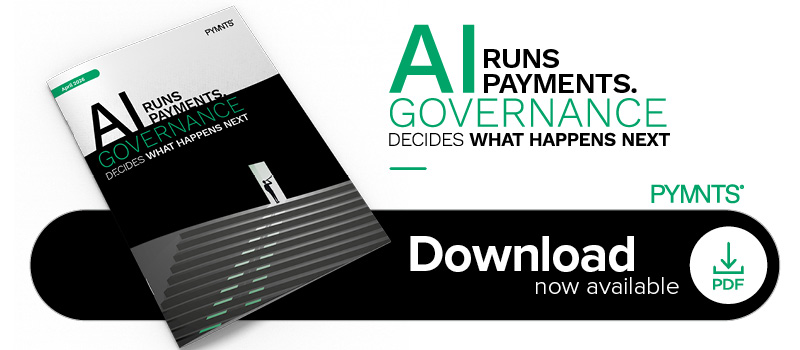
Integration is key to ensuring effective AI governance, FIS Head of Product Management, Payment Networks Mladen Vladic writes in a new PYMNTS eBook, “AI Runs Payments. Governance Decides What Happens Next.”

The shift from transactional to relational payments is accelerating. We are entering the era of agentic commerce, where AI agents act on behalf of shoppers to source, negotiate and complete purchases. Artificial intelligence is no longer just a back-end tool — it is becoming the primary engine of customer engagement, which represents a new, unique opportunity for brands to reimagine consumer lifecycle engagement strategies that have been in place for many years. That shift has forced us to rethink governance frameworks we had taken for granted.

With AI agents projected to help orchestrate up to $1 trillion in U.S. retail revenue by 2030, AI algorithms are already influencing real-time decisions, financial access and customer trust. The core question is no longer whether we adopt AI, but how we govern it to ensure shared success across the ecosystem.

Where Governance Breaks Down

In our experience, AI governance most often breaks down at the point of integration. We see ecosystems where AI models operate in silos — where purchase-event signals and item-level intelligence do not communicate securely within a single infrastructure. When that happens, visibility is lost. Governance fails when organizations treat AI solely as a post-purchase optimization tool rather than embedding it directly into authorization, authentication and dispute networks from the start. We learned early that governance has to be architected into the payment flow itself, not layered on after the fact.

The Speed vs Governance Trade-Off

The hardest trade-off we navigate is balancing the rapid deployment of hyper-personalized offers against the strict governance of item-level data. Consumers expect frictionless, instant rewards at checkout. But building solutions we can stand behind has required us to prioritize secure, receipt-backed proof of performance over simply rushing a model to market. Speed without precision creates risk at scale. That has meant making deliberate choices to slow down in places where others might not — and those choices have paid off in the durability of what we have built.

Advertisement: Scroll to Continue

Governing Across Third Parties

Governing AI across third-party networks requires a funder-agnostic approach grounded in universal standards. Card issuers, merchants and consumer brands must operate within a tightly integrated ecosystem where intelligence travels securely with the payment itself.  Whether we are analyzing the purchase event or the specific items in a basket, we enforce strict data guardrails so that agents can transact safely across all participating partners. That discipline is what makes a four-party model — consumers, merchants, issuers and brands — actually work.

The Decision I Wish We Had Made Earlier

If there is one governance decision I wish the industry had made sooner, it is defining exactly what AI can “see” and act upon. Establishing firm boundaries around item-aware decisioning from day one — clearly distinguishing between a total-receipt view and a digital-receipt view, for example — prevents privacy bottlenecks downstream and builds consumer trust that agentic commerce depends on. We have seen firsthand how retroactively drawing those lines is far more costly than setting them at the outset.

The Question Boards Should Be Asking

Executive teams frequently ask whether their AI infrastructure is secure. The better question is: how does our AI governance scale when algorithms, rather than humans, initiate the purchase?

In an agentic world, trust is the ultimate currency. The data is available and the technology is ready. The leaders who invest now in governance frameworks that turn every AI-initiated interaction into a secure moment of value creation will define the next era of payments.

PYMNTS eBook download button

