惯性聚合 高效追踪和阅读你感兴趣的博客、新闻、科技资讯
阅读原文 在惯性聚合中打开

推荐订阅源

腾讯CDC
IT之家
IT之家
有赞技术团队
有赞技术团队
WordPress大学
WordPress大学
Apple Machine Learning Research
OSCHINA 社区最新新闻
OSCHINA 社区最新新闻
人人都是产品经理
人人都是产品经理
The Cloudflare Blog
钛媒体:引领未来商业与生活新知
钛媒体:引领未来商业与生活新知
freeCodeCamp Programming Tutorials: Python, JavaScript, Git & More
博客园 - 【当耐特】
V
V2EX
Last Week in AI
Last Week in AI
H
Help Net Security
The GitHub Blog
The GitHub Blog
S
SegmentFault 最新的问题
F
Fortinet All Blogs
I
InfoQ
宝玉的分享
宝玉的分享
A
About on SuperTechFans
MongoDB | Blog
MongoDB | Blog
Microsoft Azure Blog
Blog — PlanetScale
Blog — PlanetScale
B
Blog

PYMNTS.com

Treasury Calls for Programmable Financial Enforcement Across Crypto DeepSeek Seeks $20 Billion Valuation as Tech Giants Weigh Investment Google Accelerates Agentic AI Shift With New Enterprise Platform OpenAI Begins Briefing Governments on Cybersecurity Capabilities DeFi Security Suffers New Blow With $3 Million Volo Exploit Uninvited Users Access Anthropic’s Mythos AI Model Block and Uber Expand Partnership Across Several Global Markets OpenAI Pledges $1.5 Billion to PE Enterprise AI Project Podcast: Inside the $9 Billion DeFi Hack That’s Shaking Crypto’s Foundations Synchrony CFO Flags Momentum in Spending and Credit Banks Risk Slowing the Emerging Middle Market Firms Driving Growth Paysafe Expands Digital Wallet Availability Across 18 European Markets Bad Data Can Break Good AI in Payments 50% More Digital Shopping Days Put Parents at the Center of Retail’s Shift 65% Call Insurance Essential. Why Most Spending Isn’t So Clear-Cut Amazon Recasts Marketplace Fraud as a Broader Trust Problem Capital One’s Q1 Shifts Attention From Spending to Strategy Lawmakers Question JetBlue About Surveillance Pricing Allegations Small Businesses Stop Chasing Amazon on Delivery Speed Google Embeds AI Into Chrome for 3.5 Billion Users Adobe Plans Outcome-Based Pricing for New AI Product Suite UnitedHealth Spends $1.5 Billion on AI and Wants Double Back MiCA Forces Crypto Firms to Get Licensed or Get Out Prediction Market Kalshi Targets Crypto Perpetuals New York Sues Coinbase and Gemini Over Prediction Markets Amazon and Anthropic Deepen Ties With Investment and Hardware Pact Agentic B2B Is Here. Are Your Contracts and Invoices Ready? Apple Hardware Leader John Ternus to Succeed CEO Tim Cook The Web Is Gaslighting AI Agents and Nobody Can Tell OCC Enters the Interchange Fight and Raises the Stakes
New Report Shows Clear Path for Credit Unions to Catch Up...
PYMNTS · 2026-05-05 · via PYMNTS.com

 | 

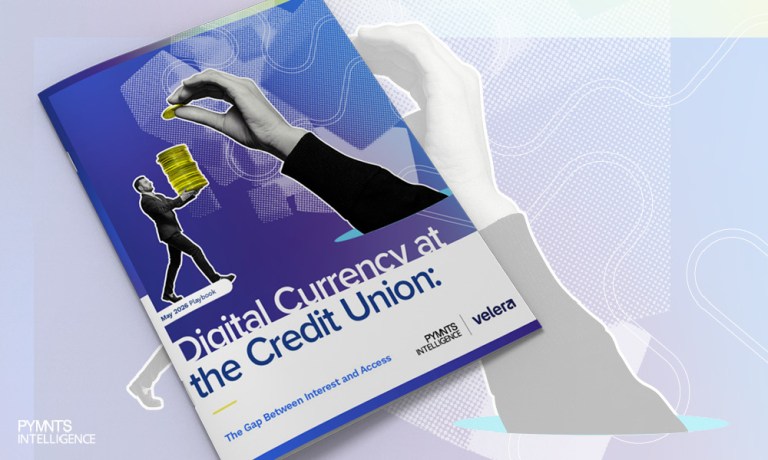
Featured image for the PYMNTS Intelligence and Velera May 2026 Report, Digital Currency at the Credit Union. PYMNTS Intelligence and Velera examine digital currency demand at credit unions and why digital wallets may close the access gap.

Digital Currency at the Credit Union: The Gap Between Interest and Access” is a collaboration between PYMNTS Intelligence and Velera. The report examines the growing disconnect between what younger consumers want from their financial institutions and what many credit unions currently provide regarding digital currencies.

While interest in cryptocurrency and stablecoins remains limited among the broader population, the data shows that millennials and Gen Z are far more engaged. Many already see digital assets as a normal part of the financial landscape, whether for investing, payments or future financial flexibility. Yet most credit union members still do not know whether their institution offers any form of crypto or stablecoins access, and many assume the answer is no.

That gap creates a strategic challenge for credit unions. The report makes clear that digital currency does not yet demand a full-scale institutional pivot, and it does not suggest that most members are ready to use bitcoin or stablecoins in everyday spending. At the same time, doing nothing carries its own risk. Younger consumers who want these tools are already learning to find them elsewhere, often through digital-first platforms such as Coinbase, Robinhood or Cash App. Over time, that behavior could shape broader banking relationships, especially as younger members make bigger decisions about where to save, borrow and invest.

The report points to a more measured path forward: focus on digital wallet capabilities that make digital currency access feel familiar, simple and low friction rather than treating crypto as a standalone product strategy. Across the survey, wallet-based access consistently lifts interest in both cryptocurrency and stablecoins, suggesting that interface and ease of use may be more important than launching an expansive digital asset offering.

Download the Playbook Digital Currency at the Credit Union: The Gap Between Interest and Access

In “Digital Currency at the Credit Union: The Gap Between Interest and Access,” learn how:

  • Consumer uncertainty is shaping the opportunity. Two-thirds of credit union members do not know whether their institution supports cryptocurrency, and 70% are unsure about stablecoins. That signals a wide gap between emerging interest and current awareness of digital currency.
  • Stablecoins still lack a clear consumer identity. The report finds that consumers do not sharply distinguish stablecoins from crypto, even though the industry does. Interest in stablecoins payments trails crypto payments only slightly, suggesting the sector has more work to do to explain stablecoins’ practical use cases.
  • Wallet design may be the most practical next move. Interest in both cryptocurrency and stablecoins rises when access is framed through a digital wallet, including among credit union members overall. For many institutions, that points to wallet infrastructure and partnerships as the clearest near-term opening.

About the Playbook

Digital Currency at the Credit Union: The Gap Between Interest and Access” is based on a survey of 13,918 U.S. consumers alongside credit union decision-makers, conducted between Oct. 31 and Dec. 30, 2025. The consumer sample was balanced to reflect the U.S. adult population by age, gender, education and income. The report examines consumer demand for cryptocurrency and stablecoin services, as well as credit unions’ plans to meet that demand.