惯性聚合 高效追踪和阅读你感兴趣的博客、新闻、科技资讯
阅读原文 在惯性聚合中打开

推荐订阅源

Stack Overflow Blog
Stack Overflow Blog
Vercel News
Vercel News
Cyber Security Advisories - MS-ISAC
J
Java Code Geeks
M
MIT News - Artificial intelligence
Microsoft Azure Blog
B
Blog RSS Feed
MongoDB | Blog
MongoDB | Blog
G
Google Developers Blog
Engineering at Meta
Engineering at Meta
量子位
S
SegmentFault 最新的问题
钛媒体:引领未来商业与生活新知
钛媒体:引领未来商业与生活新知
A
About on SuperTechFans
P
Proofpoint News Feed
Last Week in AI
Last Week in AI
Recent Announcements
腾讯CDC
I
InfoQ
F
Fortinet All Blogs
Hugging Face - Blog
Hugging Face - Blog
Blog — PlanetScale
Blog — PlanetScale
H
Help Net Security
爱范儿
爱范儿

PYMNTS.com

Treasury Calls for Programmable Financial Enforcement Across Crypto DeepSeek Seeks $20 Billion Valuation as Tech Giants Weigh Investment Google Accelerates Agentic AI Shift With New Enterprise Platform OpenAI Begins Briefing Governments on Cybersecurity Capabilities DeFi Security Suffers New Blow With $3 Million Volo Exploit Uninvited Users Access Anthropic’s Mythos AI Model Block and Uber Expand Partnership Across Several Global Markets OpenAI Pledges $1.5 Billion to PE Enterprise AI Project Podcast: Inside the $9 Billion DeFi Hack That’s Shaking Crypto’s Foundations Synchrony CFO Flags Momentum in Spending and Credit Banks Risk Slowing the Emerging Middle Market Firms Driving Growth Paysafe Expands Digital Wallet Availability Across 18 European Markets Bad Data Can Break Good AI in Payments 50% More Digital Shopping Days Put Parents at the Center of Retail’s Shift 65% Call Insurance Essential. Why Most Spending Isn’t So Clear-Cut Amazon Recasts Marketplace Fraud as a Broader Trust Problem Capital One’s Q1 Shifts Attention From Spending to Strategy Lawmakers Question JetBlue About Surveillance Pricing Allegations Small Businesses Stop Chasing Amazon on Delivery Speed Google Embeds AI Into Chrome for 3.5 Billion Users Adobe Plans Outcome-Based Pricing for New AI Product Suite UnitedHealth Spends $1.5 Billion on AI and Wants Double Back MiCA Forces Crypto Firms to Get Licensed or Get Out Prediction Market Kalshi Targets Crypto Perpetuals New York Sues Coinbase and Gemini Over Prediction Markets Amazon and Anthropic Deepen Ties With Investment and Hardware Pact Agentic B2B Is Here. Are Your Contracts and Invoices Ready? Apple Hardware Leader John Ternus to Succeed CEO Tim Cook The Web Is Gaslighting AI Agents and Nobody Can Tell OCC Enters the Interchange Fight and Raises the Stakes
FDIC Finds Steep Rise in Loans From Banks to Nonbanks
PYMNTS · 2026-04-24 · via PYMNTS.com

By  |  April 23, 2026

 | 

FDIC nonbank loans

A new FDIC report monitors the sharp rise in lending from banks to nonbanks.

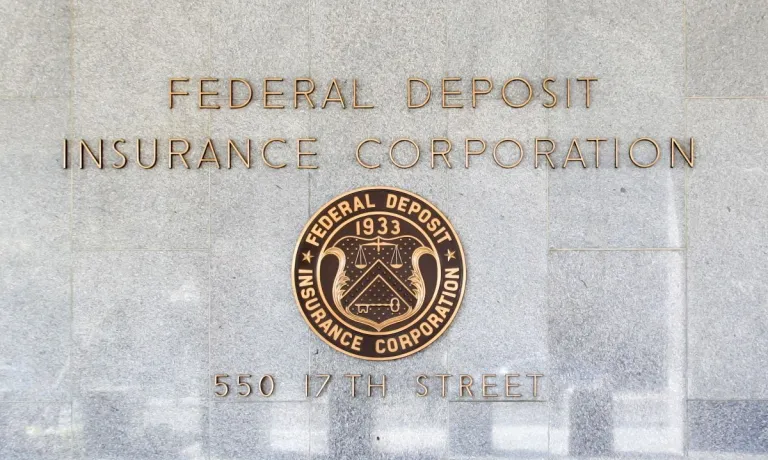
That’s according to the Federal Deposit Insurance Corp.’s (FDIC) 2026 Risk Review, which noted that outstanding balances of bank loans to so-called nondepository financial institutions (NDFIs) have increased at a compound growth rate of 22.7%.

That’s more than triple the rate of the next largest category (multifamily lending), the banking regulator said in its report, issued Thursday (April 23). The FDIC said entities classified as NDFIs include private equity/private credit firms, insurers and mortgage lenders. The FDIC says there’s a risk here, though an indirect one.

“In an economic downturn, NDFIs may need to sell assets, causing downward pressure on asset values that can affect valuations for assets pledged for collateral or held by other NDFIs and banks,” the report said.

“NDFIs that rely on less stable funding sources could also face significant liquidity stress due to margin calls on collateral pledged under their bank facilities.”

By the end of 2025, outstanding balances to NDFIs reached $1.4 trillion, representing 5.6% of total industry assets. While 2025 saw a 35.2% year-over-year growth, the FDIC noted that part of this spike was driven by revised reporting requirements.

Advertisement: Scroll to Continue

These new rules provide a granular look at where the money is going: roughly 57% of NDFI lending is now directed toward credit intermediaries that provide mortgage, business and consumer loans.

The report underscores a deep interconnectivity between traditional banks and the “shadow banking” sector. This lending is heavily concentrated among the nation’s largest players; 86% of NDFI loan balances are held by banks with more than $100 billion in assets.

At the very largest institutions (those with assets of more than $250 billion), NDFI loans have surged from just 1.2% of total loans in 2010 to 15.6% today.

The FDIC also noted figures from the Federal Reserve, as covered here last year, showing that bank loans to NDFIs reached roughly $1.14 trillion last year.

The findings come amid an ongoing debate over the rise of private credit, as PYMNTS wrote recently. Private credit funds have attracted investors seeking higher yields than those available in public bond markets. 

“The asset class exists largely outside the transparency standards applied to traditional banking or public debt markets,” PYMNTS wrote last month.

“Loans are normally held in private portfolios and valued internally by the funds that originate them, which can mask deteriorating credit conditions until stress becomes impossible to ignore.

“The overarching concern may not herald an imminent crisis, but the structure of the market could amplify shocks if credit conditions deteriorate.”