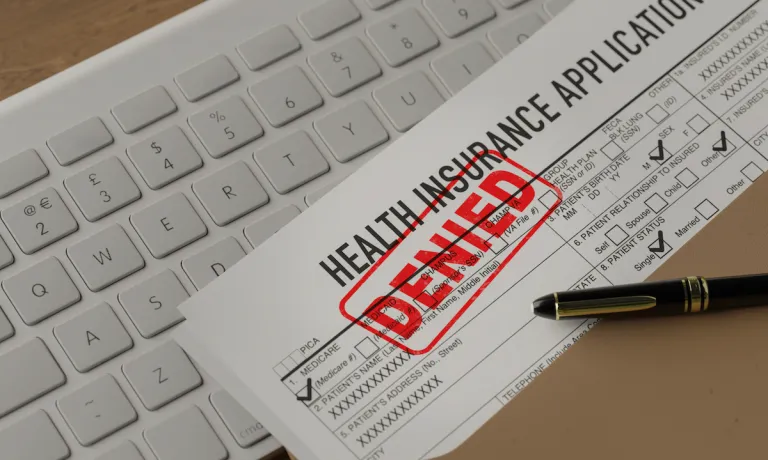
A patient is denied coverage for a drug he has taken for 18 years. His insurer says he should try a cheaper alternative. He finds an AI tool, submits his case and sends the resulting letter to his insurer. The denial is reversed before the end of the day.
That outcome is still rare. But the tool that produced it is not. A new class of AI startups is automating the appeals process for denied healthcare claims, generating letters, escalating cases and filing on behalf of patients at a cost and speed that manual appeals can’t match. They sit between payers and patients in a revenue cycle that has always been a two-party contest. Now, there are three.
Insurers have deployed AI to process and deny claims faster. Health systems have responded with their own tools to manage prior authorization and appeals volume. The startups entering the space are targeting the gap both sides have left open: the patient, according to Becker’s Hospital Review. Fewer than 1% of patients appeal denied claims. When they do, insurers uphold the original decision more than half the time.
How It Works
Claimable was co-founded in 2023 by Warris Bokhari, a British physician, alongside Co-founders Alicia Graham and Zach Veigulis, a former chief data scientist at the Department of Veterans Affairs.
The company uses a large language model trained on insurance laws, legal precedents and medical literature to generate appeal letters, then sends them to the insurer’s appeals department and, in some cases, to executives, politicians and journalists to add external pressure, Bloomberg reported on Wednesday (April 22).
The model carries a deliberate constraint. To prevent hallucinations, the team confined the software to a curated knowledge set including medical studies, insurance law, prior appeals and clinical policies. The tradeoff is speed. Claimable can currently automate appeals for 28 conditions and 90 treatments. Adding a new condition used to take months. It now takes days.
Advertisement: Scroll to Continue
The company has raised $10 million from investors including Mark Cuban, and reports about that 3 in 4 users seeing their denials reversed, according to Bloomberg. At $50 per case, the economics favor the patient. A denied treatment that costs thousands is worth a $50 filing fee.
Counterforce Health, a nonprofit, takes a similar approach at no charge.
Its AI generates customized appeal letters based on a patient’s insurance policy and the current record of successful appeals, and copies state insurance regulators on filings to alert them to denial patterns, according to NBC News. A clinical coordinator at a North Carolina rheumatology practice told NBC News she began receiving same-day and next-day approvals after switching from manual appeals to Counterforce.
Expansion Into Enterprise and Litigation
The consumer model is the first layer. The enterprise model is where the economics scale.
Claimable began negotiating deals with drugmakers and hospital systems last year to appeal on behalf of patients who have had treatments denied, with four drugmaker deals signed, according to Bloomberg Businessweek. One early investor told Bloomberg that the direct-to-consumer model alone doesn’t work at scale. The enterprise channel is where volume becomes viable.
For pharmaceutical manufacturers, the incentive is direct. A denied claim for a branded drug is lost revenue. A successful appeal is a filled prescription. Claimable has already helped patients seeking a class action against CVS Health to file appeals after the insurer denied prescriptions for the weight-loss drug Zepbound in favor of a rival, Bloomberg reported. The company is also exploring a formal litigation arm to pursue class-action suits when it identifies patterns of wrongful denials across payers.
A Structural Shift
The broader context is an AI competition running simultaneously on both sides of the claims process. Insurers are deploying AI not just for efficiency but as a defensive tool against increasingly sophisticated fraud, with deepfake-related incidents and synthetic voice attacks accelerating denial and review processes across the industry, as PYMNTS reported. The faster and more automated the denial process becomes, the larger the gap between what patients are owed and what they successfully claim.
For all PYMNTS AI and digital transformation coverage, subscribe to the daily AI and Digital Transformation Newsletters.