


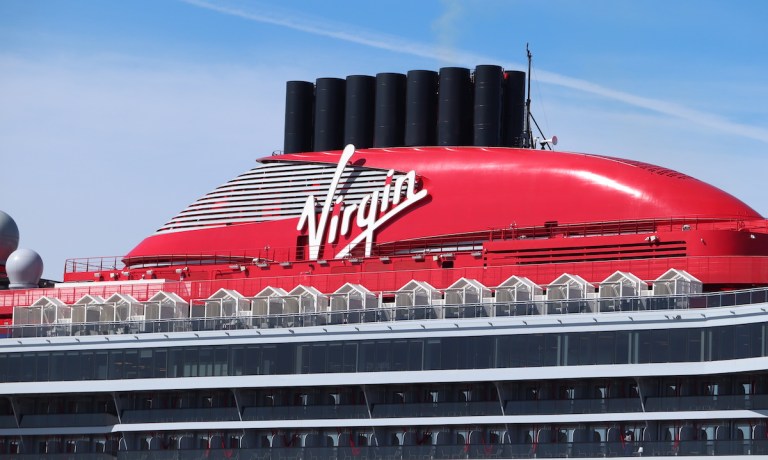
Virgin Voyages now runs more than 1,500 active artificial intelligence (AI) agents across its shoreside and shipboard operations. The results are showing up in the revenue line.
That’s up from 50 when it launched its Google Cloud partnership in October, a 2,900% increase in four months. Content production time fell 60%. Promotional campaign output doubled. The time from insight to action dropped 75%. January and February notched record sales and revenue growth. Together, those numbers frame this less as a technology deployment and more as an organizational rebuild.
Agents as Org Chart
Each of those 1,500 agents handles a single discrete workflow rather than functioning as a general-purpose assistant. Email Ellie is trained on Virgin Voyages’ specific editorial voice and manages brand communications. WaveMaker handles the logistics of group bookings. The VoyageFair Choices Agent supported the customer service team during a policy transition, equipping agents with detailed knowledge of new options before they talked to customers. Know Your Sailors analyzes Sailor profile data to inform personalization decisions downstream.
The company also built an agent called Ask Nirmal Anything, a clone of CEO Nirmal Saverimuttu, to help internal teams make faster decisions.
That level of specialization reflects a deliberate architecture. Rather than deploying a single AI system and routing requests through it, Virgin Voyages treats agents the way it treats departments: purpose-built, accountable for specific outputs and measured against them.
Measuring the Machine
The metrics Virgin Voyages chose to disclose are telling. The company didn’t lead with cost savings or headcount efficiency. It led with campaign velocity, customer satisfaction scores and revenue growth, outputs that map to business performance, not technology adoption.
Advertisement: Scroll to Continue
Content production time fell 60% on average. Promotional campaign output doubled at no incremental cost. The time from insight to action dropped 75%. Customer satisfaction scores moved up. January and February 2026 saw record sales and revenue growth for the company. Virgin Voyages said Email Ellie contributed to record-breaking sales performance in its first month alone.
Virgin Voyages has one of the highest repeat rates in the premium cruise sector. Chief Marketing Officer Nathan Rosenberg said the brand’s goal isn’t efficiency but an experience customers can’t forget and that AI lets the company move at the speed of culture rather than the speed of a campaign. Rosenberg framed the shift in architectural terms: once companies stop treating AI as incremental and start treating it as foundational, “everything changes.”
What the Travel Industry Looks Like Next
Google Cloud’s Gemini Enterprise platform runs the entire agent fleet. Virgin Voyages said it’s on track for 100% Gemini Enterprise adoption across the organization by end of the second quarter.
The governance structure Virgin Voyages has built around its agents maps closely to what enterprise AI vendors are now treating as table stakes. PYMNTS reported that OpenAI’s thesis with its Frontier platform is that agents are more like digital co-workers than standalone scripts: they need business context, governed permissions and a management layer that tracks performance and outcomes. Without that structure, enterprises risk productivity gains in one area and governance blind spots everywhere else.
The company has also built in weekly AI Discovery Time, a structured window for every crew member, on ship and ashore, to experiment with AI tools. It’s a governance move as much as a cultural one. As agents take on more workflow ownership, the humans working alongside them have to understand what the agents are doing.
For all PYMNTS AI coverage, subscribe to the daily AI Newsletter.