


惯性聚合 高效追踪和阅读你感兴趣的博客、新闻、科技资讯
阅读原文 在惯性聚合中打开

推荐订阅源

F
Fox-IT International blog
Recent Announcements
D
Docker
IT之家
IT之家
B
Blog
Jina AI
Jina AI
奇客Solidot–传递最新科技情报
奇客Solidot–传递最新科技情报
博客园 - 【当耐特】
Google DeepMind News
F
Fortinet All Blogs
量子位
C
Check Point Blog
Microsoft Azure Blog
罗磊的独立博客
博客园 - 司徒正美
李成银的技术随笔
美团技术团队
Blog — PlanetScale
Blog — PlanetScale
雷峰网
雷峰网
The GitHub Blog
The GitHub Blog
让小产品的独立变现更简单 - ezindie.com
J
Java Code Geeks
T
The Blog of Author Tim Ferriss
酷 壳 – CoolShell
酷 壳 – CoolShell
MongoDB | Blog
MongoDB | Blog
P
Proofpoint News Feed
L
LangChain Blog
Cyber Security Advisories - MS-ISAC
OSCHINA 社区最新新闻
OSCHINA 社区最新新闻
Y
Y Combinator Blog
大猫的无限游戏
大猫的无限游戏
有赞技术团队
有赞技术团队
钛媒体:引领未来商业与生活新知
钛媒体:引领未来商业与生活新知
V
Visual Studio Blog
T
Tailwind CSS Blog
H
Help Net Security
Engineering at Meta
Engineering at Meta
小众软件
小众软件
B
Blog RSS Feed
Stack Overflow Blog
Stack Overflow Blog
月光博客
月光博客
M
Microsoft Research Blog - Microsoft Research
宝玉的分享
宝玉的分享
人人都是产品经理
人人都是产品经理
freeCodeCamp Programming Tutorials: Python, JavaScript, Git & More
GbyAI
GbyAI
H
Hackread – Cybersecurity News, Data Breaches, AI and More
Last Week in AI
Last Week in AI
Martin Fowler
Martin Fowler
Stack Overflow Blog
Stack Overflow Blog

Vectra AI Blog

AI-Driven Network Detection and Response: Insights from a 2026 Gartner® Magic Quadrant™ Leader Securing AI Adoption Starts with Visibility by Aakash Gupta The Missing Data Layer Behind SIEM and SOAR Why Most SIEM/SOAR Integrations Break — and How to Fix Them Shai-Hulud Part 2: When the Worm Forged Its Own Security Certificate Improve SIEM and SOAR Workflows with Better Security Signal by Gearóid Ó Fearghaíl ShinyHunters isn’t a group. It’s a pattern. How Vectra AI Secures the AI Enterprise AI agents: the new workforce — and attack surface. by Tiffany Nip How Vectra AI Scoring Helps Security Teams Focus on What Matters First What’s Next for the Enterprise After Two GenAI Tidal Waves? If An Identity was Compromised, Would We Know? Help Over Hype: Claude Mythos, Project Glasswing and the Real Questions CISOs Want Answered Azure Logging just Changed - Your Detections May be Missing it by Alex Groyz When the Defender Becomes the Door: BlueHammer, RedSun, and UnDefend in the Wild by Justin Howe 4 Ways to Improve SOC Efficiency with AI by Jesse Kimbrel Why triage alerts - when AI can do it for you? Attackers Don’t Hack In — They Log In: The MFA Blind Spot The rise of supply chain-driven data theft in SaaS environments by Lucie Cardiet AI-Assisted Search: Clarity at the Speed of a Question What We Learned from Analyzing Millions of Alerts FortiClient EMS Zero-Day: When the Control Plane Becomes Initial Access by Lucie Cardiet Detecting Compromise After the Axios Supply Chain Attack. by Yusri Mohd Yusop Who’s Doing What on Your Network? by Mark Wojtasiak Breaking down the axios supply chain incident by Lucie Cardiet Detecting Sliver C2: When Advanced Beaconing Tries to Hide in Plain Sight Prompt Control: How Context Becomes the Command-and-Control Layer for AI Agents How Attackers Move Through Hybrid Networks After the Initial Breach What the Stryker Incident Reveals About Handala’s Attack Playbook Why Cyber Resilience is Lagging in the AI Era 5-Minute Hunt: Six Queries to Detect Iranian APT Activity AI-Powered Attacks Are Here, But So Is AI-Powered NDR to Stop Them What is hiding in AI traffic AWS Compromised by AI Agents in Minutes The UX of Cybersecurity AI: Designing for Behavior at Machine Speed Molt Road and the Automation of Underground Marketplaces Moltbook and the Illusion of “Harmless” AI-Agent Communities From Network Detections to Understanding Risk: The Vectra AI Take on Gartner’s Redefinition of NDR From Clawdbot to OpenClaw: When Automation Becomes a Digital Backdoor Securing the AI Enterprise: How I’m Thinking About It as a CEO Cybersecurity Predictions 2026: AI, Agents, and SOC Defense OPSEC Failures: How Threat Actor Mistakes Help Defenders How Threat Actors Turned AI Into a Weapon CVE-2025-14847 MongoBleed in the Wild: Identifying MongoDB Exposure and Exploitation with Network Metadata by Fabien Guillot Pro-Russia Hacktivists Are Targeting Critical Infrastructure How Vectra AI Connects Network Detections to Endpoint Processes Automatically by Dale O’Grady How Vectra AI and CrowdStrike Deliver Complete Context Across Endpoint and Network by Tiffany Nip You are the Blackboard - AI Agent Assisted Bug Hunting TCP Reset Does Not Stop Modern Attacks – Here's Why Shai-Hulud: When a Supply-Chain Incident Turns Into a Worm How Typhoon APTs Infiltrate Infrastructure Without Leaving a Trace Think Your Microsoft Environment Is Resilient to Attacks? Think Again by Tiffany Nip Operation ENDGAME and the Battle for Initial Access by Lucie Cardiet What 400+ NDR Power Users Taught Us About Network Visibility How Attackers Gain Initial Access in Hybrid Environments Can Your SOC's AI Actually Think? Evaluating LLMs with the Vectra AI MCP Server How Vectra AI Hybrid NDR Enables Proactive Threat Hunting and Outcome-Driven Defense by Tiffany Nip Introducing the Vectra AI MCP Server for On-Premises (QUX) by Fabien Guillot From Conti to Black Basta to DevMan: The Endless Ransomware Rebrand by Lucie Cardiet How the F5 Breach Exposed Critical Edge Security Gaps Qilin’s 2025 Playbook, and the Security Gap it Exposes by Lucie Cardiet Vectra Fusion: Extending the Vectra AI Platform to Build Resilience Both Pre and Post Compromise Seeing Beneath the Surface: What Crimson Collective Reveals About Cloud Detection Depth Cl0p Is Back, Exploiting Supply Chains Again. How to Choose the Best NDR for Hybrid Environments Red Hat GitLab Breach Shows Why Consulting Data is a Goldmine for Attackers When GoAnywhere Lets Attackers Go Everywhere by Lucie Cardiet Vectra AI with Netography Redefining the SOC Platform around Modern Attack Resilience Beyond Endpoints: How BRICKSTORM Exposed Security Blind Spots by Lucie Cardiet EDR Isn’t Enough: Why Forward-Thinking CISOs Are Turning to Network + Identity by Mark Wojtasiak What Modern SOCs Should Know About NDR Alternatives Scattered Lapsus$ Hunters Announce They Are Going Dark but the Threat Remains LockBit is Back: What’s New in Version 5.0 The Npm Exploit Is The Entry Point, What Follows Is Just As Critical. How AI is Fueling Cybercrime and Why Security Gaps Are Growing by Lucie Cardiet 5-Minute Hunt: Detecting Risky Multi-Tenant Apps in Microsoft 365 GLOBAL RaaS: Dissecting a Modern Ransomware Franchise What the CISA Advisory Reveals About Nation-State Attacks New Technologies bring new risks: MCP-Powered Swarm C2 4 Real-World Attacks That Show Why SOCs Need NDR Why insider threats go undetected by security tools Black Hat USA 2025: What Security Teams Asked Us in Las Vegas Vectra AI and Google Security Operations: Breaking Down Security Silos by Zoey Chu Black Hat Takeaway: Everyone Talks Prevention, But Who Detects Compromise? Black Hat USA 2025: What It Told Me About Protecting the Modern Network from Modern Attacks Introducing the Vectra AI MCP Server Cloud Security Grey Zone: Who Owns the Risk of Managed Identities? CVE-2025-53770: A 9.8/10 Critical Exploit Targeting SharePoint 5 Ways Security Teams Can Start Driving Outcomes with Agentic AI Behind the Hunt: Real-World Threat Hunting Practices and How Vectra AI Makes the Difference Vectra AI named in Gartner hype cycle for security operations 2025 Choosing the Right NDR: Gartner’s 5 Questions Every Security Buyer Should Be Asking Gartner Security and Risk Conference – Chaos meets Opportunity Are Iranian APTs Already inside Your Hybrid Network? You Have the Right Tools. So Why Are Attackers Still Getting In? Vectra AI Named a Leader and Outperformer in the 2025 GigaOm Radar Report for Network Detection and Response (NDR) The Two Control Points That Will Define the Future of Cybersecurity – Network and Identity Challenges in Microsoft Log Monitoring: Insights for Your SOC Sanofi Uses Vectra to Stop Cyberattack in Real Time The Cutting Edge: AI’s Inevitable Rise in Offensive Security
How Attackers Establish Persistence in Hybrid Environments
2026-03-16 · via Vectra AI Blog

Once attackers get in, they don’t leave.

Security discussions often focus on the moment an attacker breaks in. That moment matters, but it rarely defines the outcome of the intrusion.

What determines whether an incident becomes a breach is persistence.

Persistence is how attackers stay inside your environment after gaining access. It allows them to return even after being removed, maintain long-term control, and quietly explore the network for valuable systems and data.

In modern hybrid environments, persistence is often more dangerous than the initial compromise itself.

Attackers don’t need to break in again if they never truly left.

Why Persistence Is Easier in Hybrid Networks

The modern enterprise network is no longer a single environment. It spans:

  • on-premises infrastructure
  • cloud workloads
  • SaaS platforms
  • remote devices
  • identity platforms

Each of these layers provides opportunities for attackers to hide activity and maintain control.

Hybrid networks also introduce gaps between tools. Endpoint detection may only monitor managed devices. IAM platforms see authentication events but not what happens afterward. Cloud tools monitor configuration, not runtime behavior.

Attackers exploit these blind spots.

Once inside, their goal is simple: establish a foothold that survives disruption.

This is persistence.

Real-World Techniques Attackers Use for Persistence

Persistence rarely relies on a single method. Attackers often combine several techniques so that if one access point is removed, another remains. Below are the most common approaches used by attackers.

1. Backdoors and Hidden Remote Access

One common tactic is installing a backdoor, software that allows remote access to a compromised system while appearing legitimate.

Some attackers deploy hidden remote desktop environments using tools like Hidden VNC (hVNC). These create invisible desktop sessions that only the attacker can see.

The victim continues working normally while the attacker controls a separate hidden environment on the same machine.
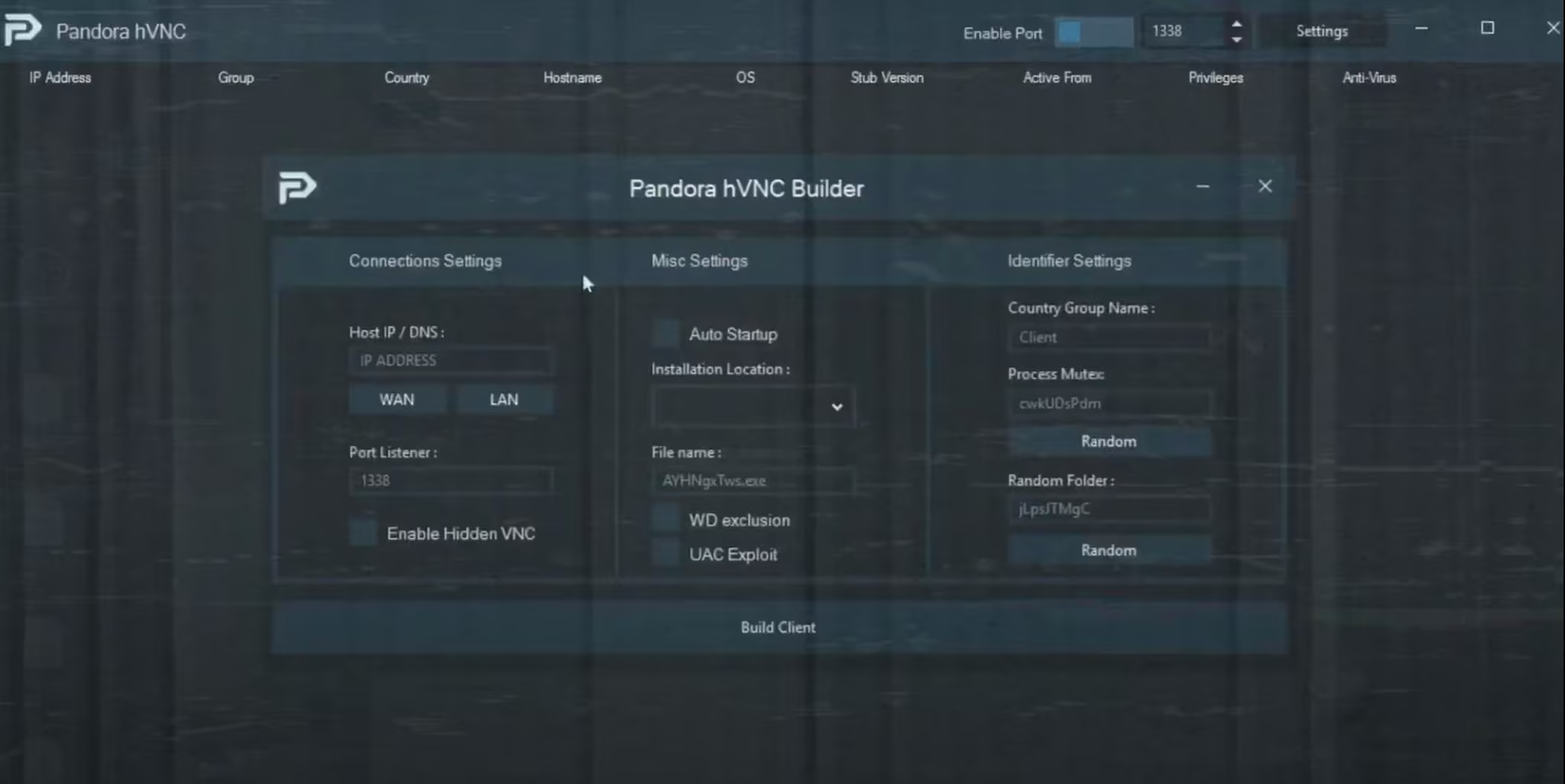
The Pandora hVNC user interface

Other backdoors operate as lightweight proxies or remote shells. These tools quietly relay traffic between the attacker and internal systems, turning the compromised machine into a permanent access point inside the network. Once installed, these tools often restart automatically after system reboots.

2. Persistent Network Tunnels

Instead of maintaining a traditional remote shell, attackers frequently create persistent tunnels. Tools such as reverse SOCKS proxies or fast reverse proxies allow the attacker to route traffic through the compromised system and access internal resources remotely.
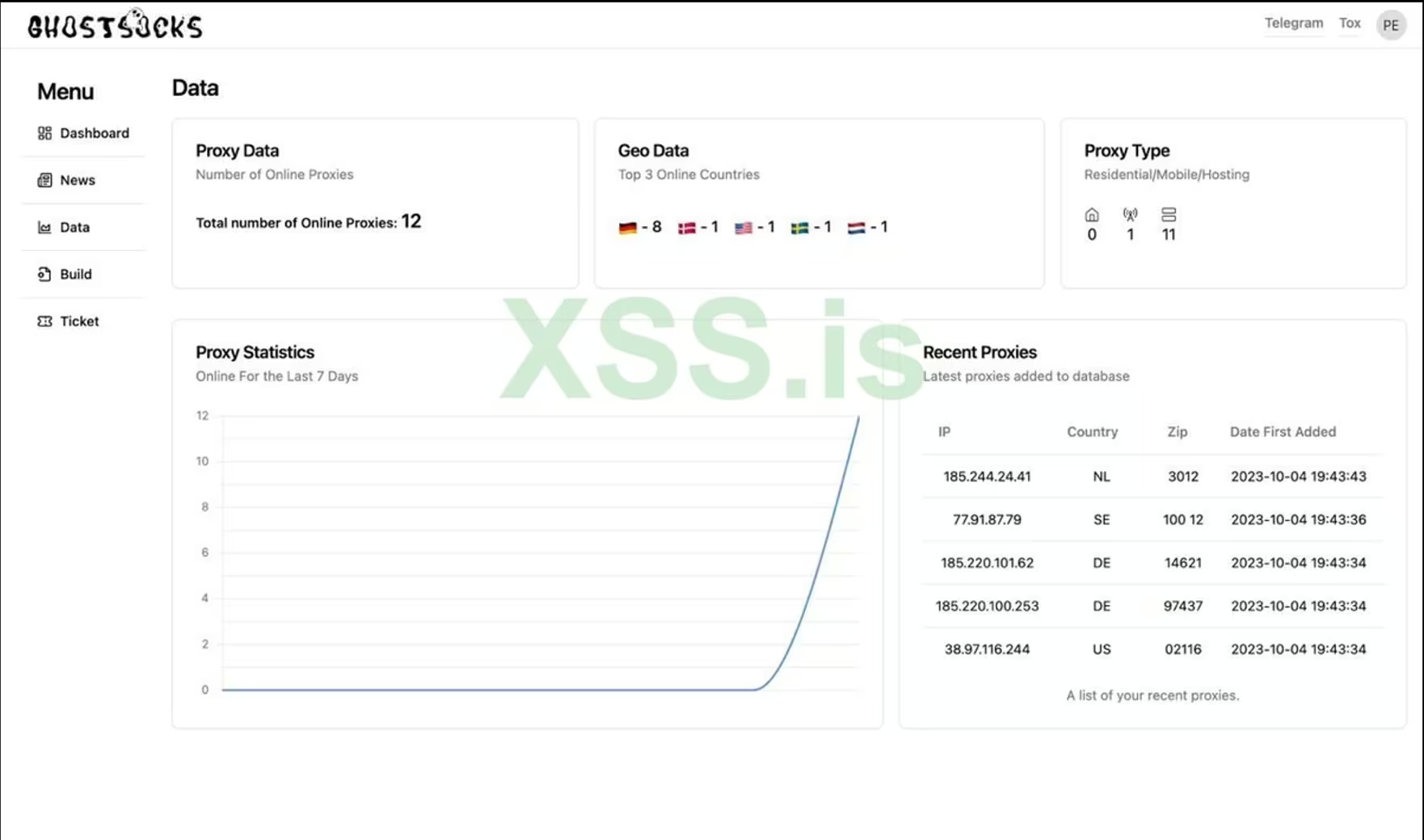
The Ghostsocks UI

This technique effectively transforms a compromised host into a stepping stone inside the network.

From the defender’s perspective, traffic may appear to be normal outbound HTTPS communication.

From the attacker’s perspective, it becomes a stable internal pivot point.

3. Command-and-Control Beacons

Many intrusion frameworks rely on beacons that periodically contact attacker infrastructure.

Tools such as Cobalt Strike or Brute Ratel deploy small agents that “check in” at regular intervals to receive commands. These agents can:

  • execute commands remotely
  • download additional payloads
  • reinstall persistence mechanisms if removed
  • coordinate lateral movement across the network

Because these beacons communicate intermittently and often use encrypted channels, they blend easily into normal network traffic.

4. Token Abuse and Identity Persistence

Persistence doesn’t always involve malware.

In many cases, attackers simply exploit the way authentication systems work.

For example, cloud services often rely on tokens to maintain authenticated sessions. These tokens can allow users or applications to reconnect without logging in again.

In the Snowflake supply-chain compromise, attackers leveraged authentication tokens that allowed them to maintain access even after defenders believed the intrusion had been removed.

If attackers possess long-lived tokens or the ability to generate new ones, they can quietly regain access without triggering traditional login alerts.

"I can still run commands because I have the ‘masterToken’ for every account."
Ellyel8 – the attacker behind the Snowflake Breach*
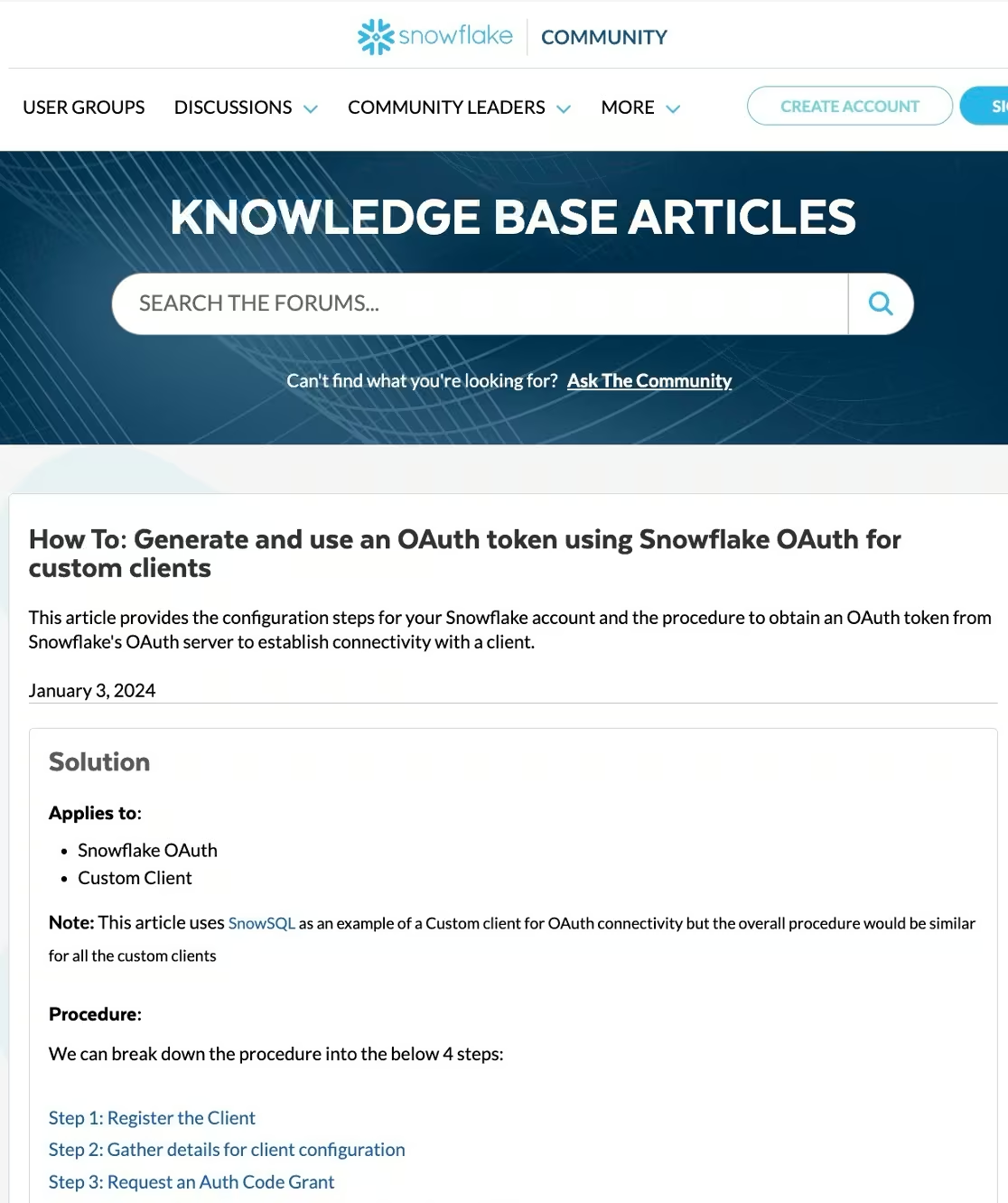
Ellyel8 read the Snowflake KB and understood how to exploit tokens to persist in the network

5. Living Off the Land

Many sophisticated attackers avoid installing obvious malware altogether.

Instead, they rely on tools already built into the operating system.

This technique, known as living off the land, uses legitimate administrative tools such as:

  • PowerShell
  • Windows Management Instrumentation (WMI)
  • scheduled tasks

These tools allow attackers to execute commands, gather system information, and schedule recurring activity that survives system restarts.
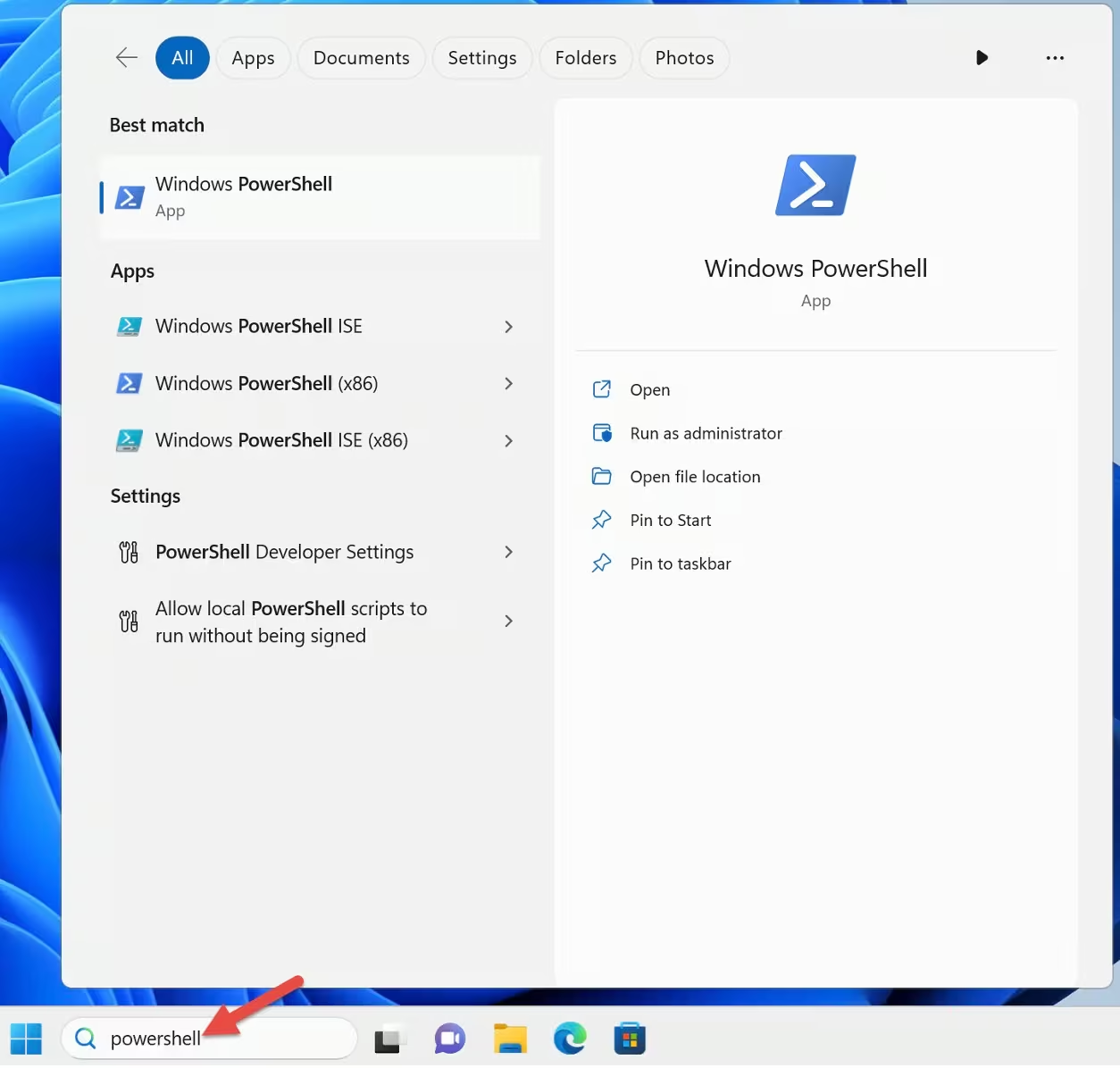
Screenshot of Powershell in the Windows UI

From a defender’s perspective, these actions often resemble routine administrative activity. That ambiguity is precisely why attackers prefer them.

Why Prevention Tools Miss Persistence

Preventive controls remain essential. MFA, EDR, and vulnerability management all reduce the chances of an initial compromise.

But persistence often operates outside their visibility.

Attackers commonly exploit several limitations:

  • Attackers operate from unmanaged or trusted endpoints where EDR isn’t installed.
  • Traffic is tunneled through encrypted DNS or HTTPS sessions that appear legitimate.
  • Logs are deleted before SIEM platforms ingest them.
  • Administrative tools generate activity that looks identical to normal operations.

When legitimate credentials and built-in tools are involved, prevention alone cannot reliably distinguish attackers from administrators.

Detection must focus on behavior.

Detecting Persistence Before It Becomes a Breach

Persistence leaves patterns. Even stealthy attackers generate signals across identity systems, network traffic, and cloud activity.

SOC teams should look for behaviors such as:

  • unusual outbound tunnels or proxy connections
  • command-and-control beacon patterns
  • abnormal token usage or session activity
  • administrative commands executed from unexpected systems
  • identity behavior inconsistent with historical activity

Detecting persistence requires visibility across environments.

How the Vectra AI Platform Reveals Hidden Footholds

Persistence mechanisms are designed to survive cleanup efforts. Backdoors restart after reboots, authentication tokens renew sessions automatically, and command-and-control channels blend into normal encrypted traffic.

Many of these techniques operate outside endpoint visibility.

The Vectra AI Platform detects persistence by observing the behaviors attackers cannot easily conceal. Network communications, identity interactions, and command patterns reveal when compromised systems maintain contact with external infrastructure or when identities begin behaving in ways inconsistent with normal operations.

Because detection happens at the network and identity layers, attackers cannot disable this visibility by stopping agents or clearing local logs. Persistent tunnels, beacon traffic, and abnormal identity activity still generate signals that expose the foothold.

For SOC teams, this provides a reliable way to identify attackers who believe they are already hidden.

Your Next Steps

Once attackers gain access, their priority shifts from entry to survival.

Persistence techniques allow them to stay inside the environment even after partial remediation. Backdoors, command-and-control channels, authentication tokens, and scheduled tasks all help attackers quietly maintain control.

In Attack Lab Episode 2: Persistence – How attackers hide in the network, we break down how real attackers establish these footholds and why many traditional security tools struggle to detect them.

If you're curious about what they do next, watch Episode 3: Lateral Movement - How attackers move through the network.

---

*Quote from Vinny Troia’s book “Grey Area: Dark Web Data Collection and the Future of OSINT”