







In 1958, Mao ordered every village in China to produce steel. Farmers melted down their cooking pots in backyard furnaces and reported spectacular numbers. The steel was useless. The crops rotted. Thirty million people starved.
In 2026, every other company is having top down mandate on AI transformation.
Same energy.
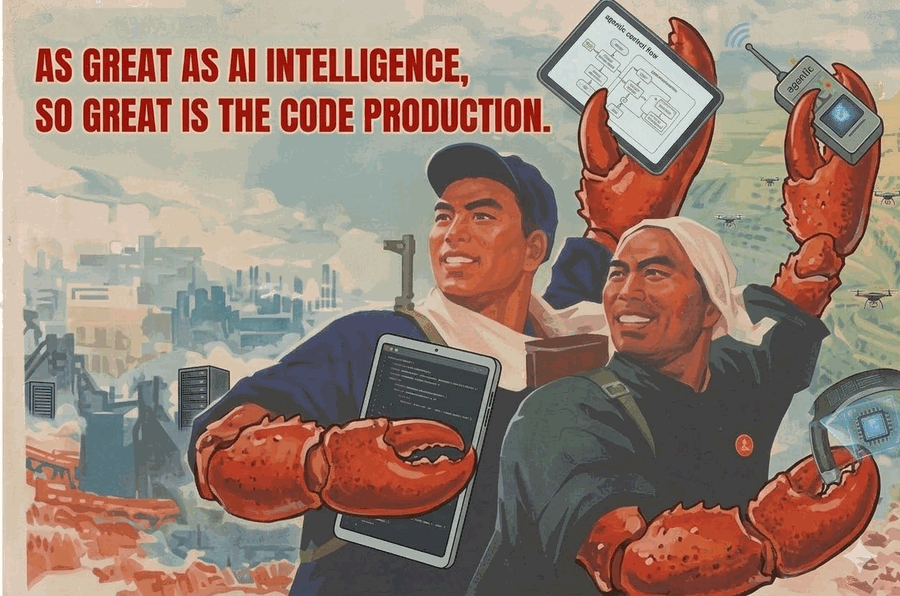
Backyard Furnaces
The rallying cry of the Great Leap Forward was 超英趕美 — surpass England, catch up to America. Every province, every village, every household was expected to close the gap with industrialized Western nations by sheer force of will. Peasants who had never seen a factory were handed quotas for steel production. If enough people smelt enough iron, China becomes an industrial power overnight. Expertise was irrelevant. Conviction was sufficient.
The mandate today is identical, just swap the nouns. Every company, every function, every individual contributor is expected to close the AI gap. Ship AI features. Build agents. Automate workflows. That nobody on the team has ever trained a model, designed an evaluation system, or debugged a retrieval system is beside the point. Conviction is sufficient.
So everyone builds. PMs build AI dashboards. Marketing builds AI content generators. Sales ops builds AI lead scorers. Software engineers are building AI and data solutions that look pixel-perfect and function terribly. The UI is clean. The API is RESTful. The architecture diagram is beautiful. The outputs are wrong. Nobody checks because nobody on the team knows what correct outputs look like. They’ve never looked at the data. They’ve never computed a baseline.
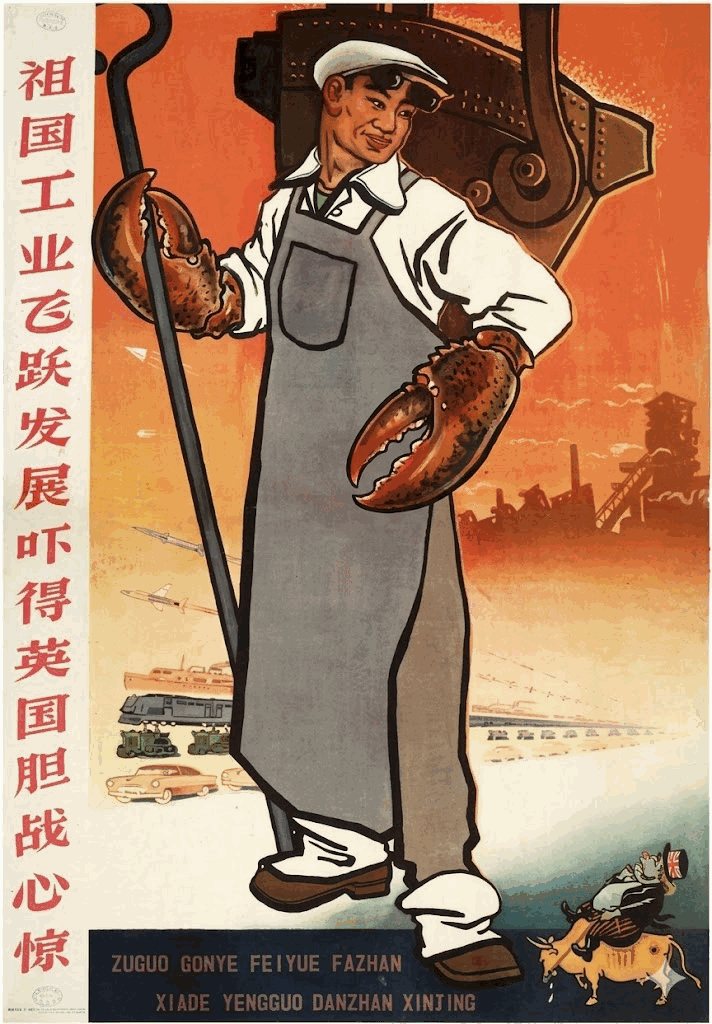
Entire departments are stitching together n8n workflows and calling it AI — dozens of automated chains firing prompts into models, zero evaluation on any of them. These tools are merchants of complexity: they sell visual simplicity while generating spaghetti underneath. A drag-and-drop canvas makes it trivially easy to chain ten LLM calls together and impossibly hard to debug why the eighth one hallucinates on Tuesdays. The people building these workflows have never designed an evaluation pipeline, never measured model drift, never A/B tested a prompt. They don’t need to — the canvas looks clean, the arrows point forward, the green checkmarks fire. The complexity isn’t avoided. It’s hidden behind a GUI where nobody with ML expertise will ever look.
The backyard steel of 1958 looked like steel. It was not steel. Today’s backyard AI looks like AI. It is not AI. A TypeScript workflow with hardcoded if-else branches is not an agent. A prompt template behind a REST endpoint is not a model. Calling these things AI is like calling pig iron from a backyard furnace high-grade steel. It satisfies the reporting requirement. It fails every real-world test.
But the most dangerous furnace is the one that produces something functional. Teams are building demoware — pretty interfaces, working endpoints, impressive walkthroughs — with zero validation underneath. Some are in-housing SaaS products by vibe coding some frontend with coding agents: it runs, it has a dashboard, it cost a fraction of the vendor. Klarna announced in 2024 that it would replace Salesforce and other SaaS providers with internal AI-built solutions. What these replacements don’t have is data infrastructure, error handling, monitoring, on-call support, security patching, or anyone who will maintain them after the builder gets promoted and moves on.
These apps will win awards at the next all-hands. In two years they’ll be unmaintainable tech debt some poor soul inherits and rewrites from scratch. The furnace produced pig iron. Someone stamped “steel” on it. Now it’s load-bearing.
Meanwhile, the actual product that customers pay for rots in the field. But hey, 超英趕美. The AI adoption dashboard is green.
Reporting Grain Production to the Central Committee
During the Great Leap Forward, provinces competed to report the most spectacular grain yields. Hubei reported 10,000 jin per mu. Guangdong said 50,000. Some counties claimed over 100,000 — physically impossible numbers, rice plants supposedly so dense that children could stand on top of them. Officials staged photographs. Everyone knew the numbers were fake. Everyone reported them anyway, because the alternative was being labeled a saboteur. The central government, delighted by the bounty, increased grain requisitions based on the reported yields. Farmers starved eating the difference between the real number and the fantasy.
You’ve seen this meeting.
One team reports their AI copilot “reduced development time by 40%.” The next team, not to be outdone, reports 60%. A third claims their AI agent “automated 80% of analyst workflows.” Nobody asks how these were measured. Nobody checks the methodology. Nobody points out that the team claiming 80% automation still has the same headcount doing the same work. The numbers go into a slide deck. The slide deck goes to the board. The board is delighted. The board increases investment.
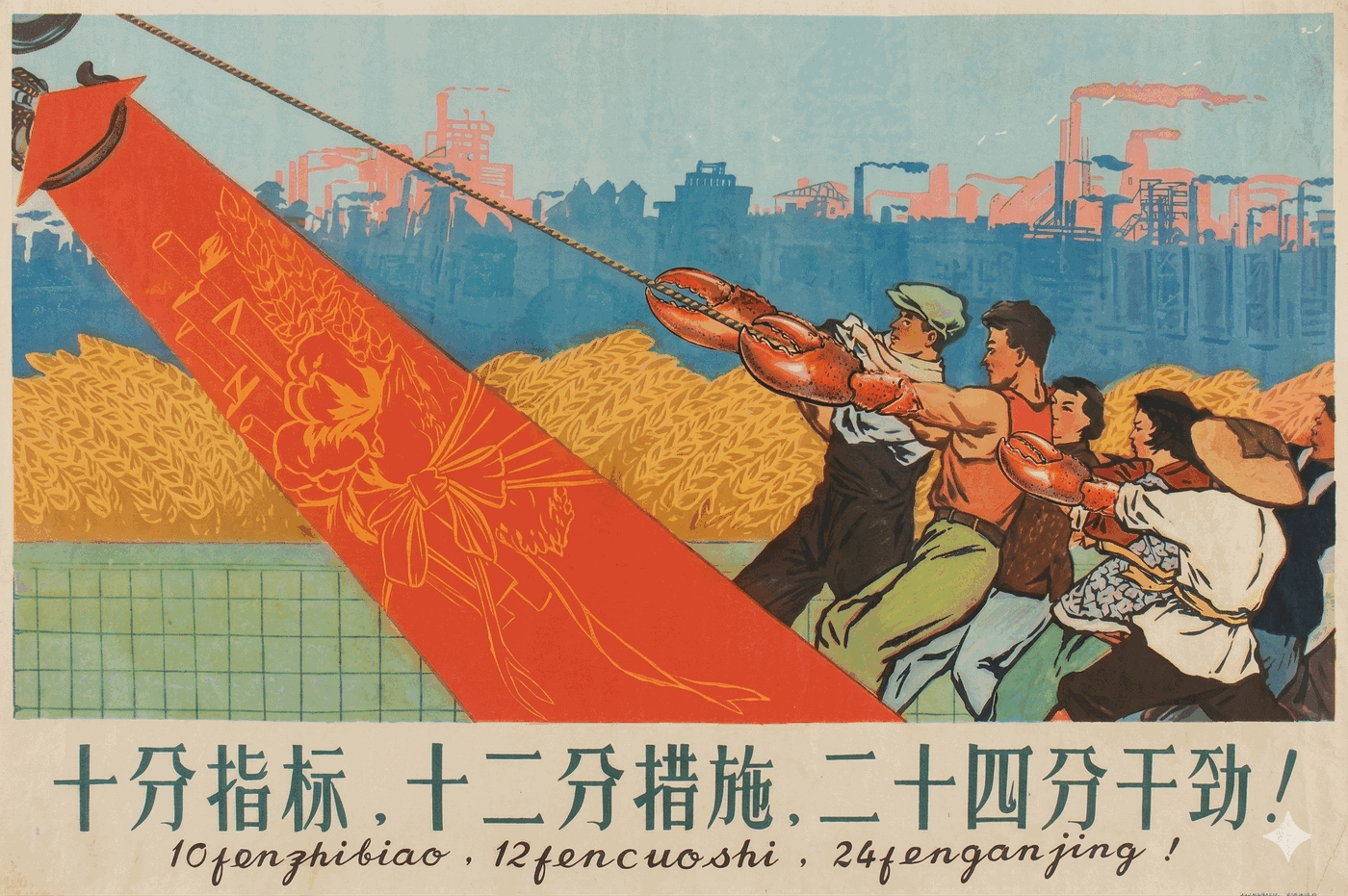
Then someone — there’s always someone — builds a leaderboard tracking how many prompts you wrote this week, how much of your code is AI-generated, your ranking versus your team, versus your org, versus the entire company. One day your company announces: stop everything, it’s AI Week. Build something with AI. Show what you’ve got. You think you’re done after the hackathon? No no no. Now you have to promote it. Daily posts: look what I built, here’s how many agents I used, here’s how many skills I shipped. Pull in teammates. Pull in strangers. Ask for feedback. “Humbly.”
Your AI usage is now a KPI. You are being evaluated on how much grain you reported, not how much grain you grew. This is Goodhart’s Law at organizational scale: when a measure becomes a target, it ceases to be a good measure. The metric was supposed to track whether AI is making the company better. Instead, the entire company is now optimizing to make the metric look better. The beatings will continue until adoption improves.
Killing the Sparrows
The Great Leap Forward’s most tragicomic chapter was the 除四害运动 (Eliminate Four Pests Campaign). Mao declared sparrows an enemy of the state — they ate grain seeds, so killing them would increase harvests. The entire country mobilized. Citizens banged pots and pans to keep sparrows airborne until they dropped dead from exhaustion. Children climbed trees to smash nests. Villages competed for the highest kill count. It worked. They nearly eradicated sparrows.
Then the locusts came.
Sparrows ate locusts. Without sparrows, locust populations exploded. The swarms devoured far more grain than the sparrows ever did. The campaign to save the harvest destroyed it. Mao quietly replaced sparrows with bedbugs on the official pest list and never spoke of it again.
Every AI Great Leap Forward has its sparrow campaign.
Middle managers are the sparrows. They’re declared pests — too many layers, too slow, too expensive. Flatten the org! Move faster! Let AI handle coordination! So companies eliminate M1s, turn managers into tech leads running pods, and let the teams self-organize with AI tools.
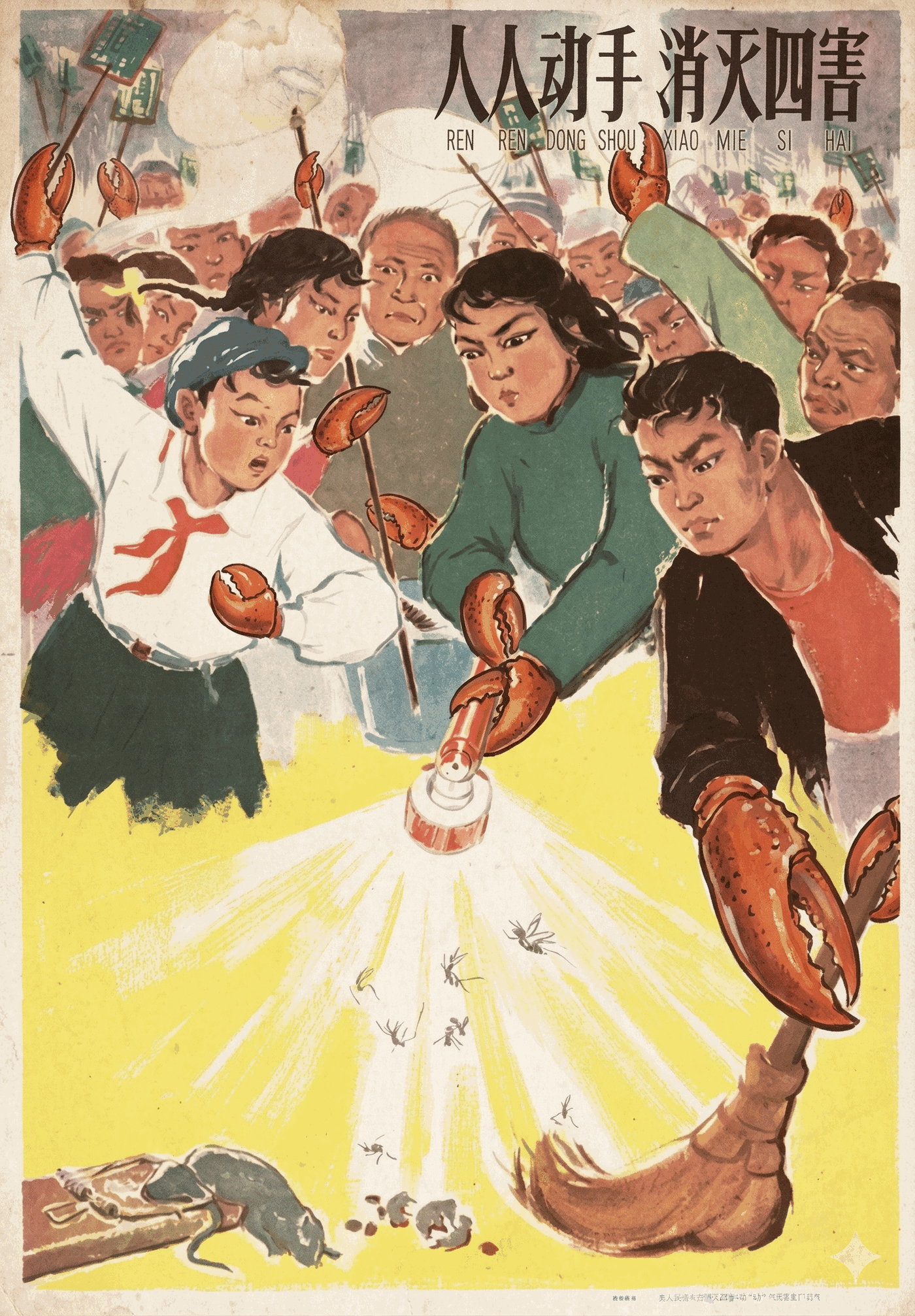
Then the locusts come. Those middle managers held institutional knowledge — which customer had the weird integration, why the data model had that inexplicable column, the undocumented business rule that kept compliance from flagging every third transaction. That context lived in their heads. Now they’re gone, and the AI system they were replaced with needs exactly that context to function.
QA is a sparrow too. “AI writes the tests now.” So you cut QA. The AI writes tests that validate its own assumptions — a machine checking its own homework. Senior engineers who mentored juniors? Sparrows. Documentation writers? Sparrows. The ops team that knew how to restart the weird legacy service at 2 AM? Definitely sparrows.
Each elimination looks rational in isolation. The second-order effects arrive six months later, and by then nobody connects the locust swarm to the dead sparrows.
Let a Hundred Skills Bloom
In 1956, Mao launched the 百花运动 (Hundred Flowers Campaign): “Let a hundred flowers bloom, let a hundred schools of thought contend.” Speak freely. Share your honest criticisms. The Party wants to hear your real thoughts.
Intellectuals took the bait. They spoke openly.
Then came the 反右运动 (Anti-Rightist Campaign). Everyone who had spoken honestly was identified, labeled, and purged. The Hundred Flowers was a trap — an efficient mechanism for surfacing exactly who knew what, then eliminating them. The lesson every survivor internalized: never honestly reveal what you know, because it will be used against you.
Now Meta and a growing list of companies have launched their own Hundred Flowers. The mandate: every employee must build “agent skills” — distill your subject matter expertise into structured prompts and workflows that AI agents can execute. Or even worse, build “agents” using some drag and drop legacy tech that never worked and had already been given up by the leading edge labs back in 2024. Encode your judgment. Document your decision-making. Make yourself legible to the machine.
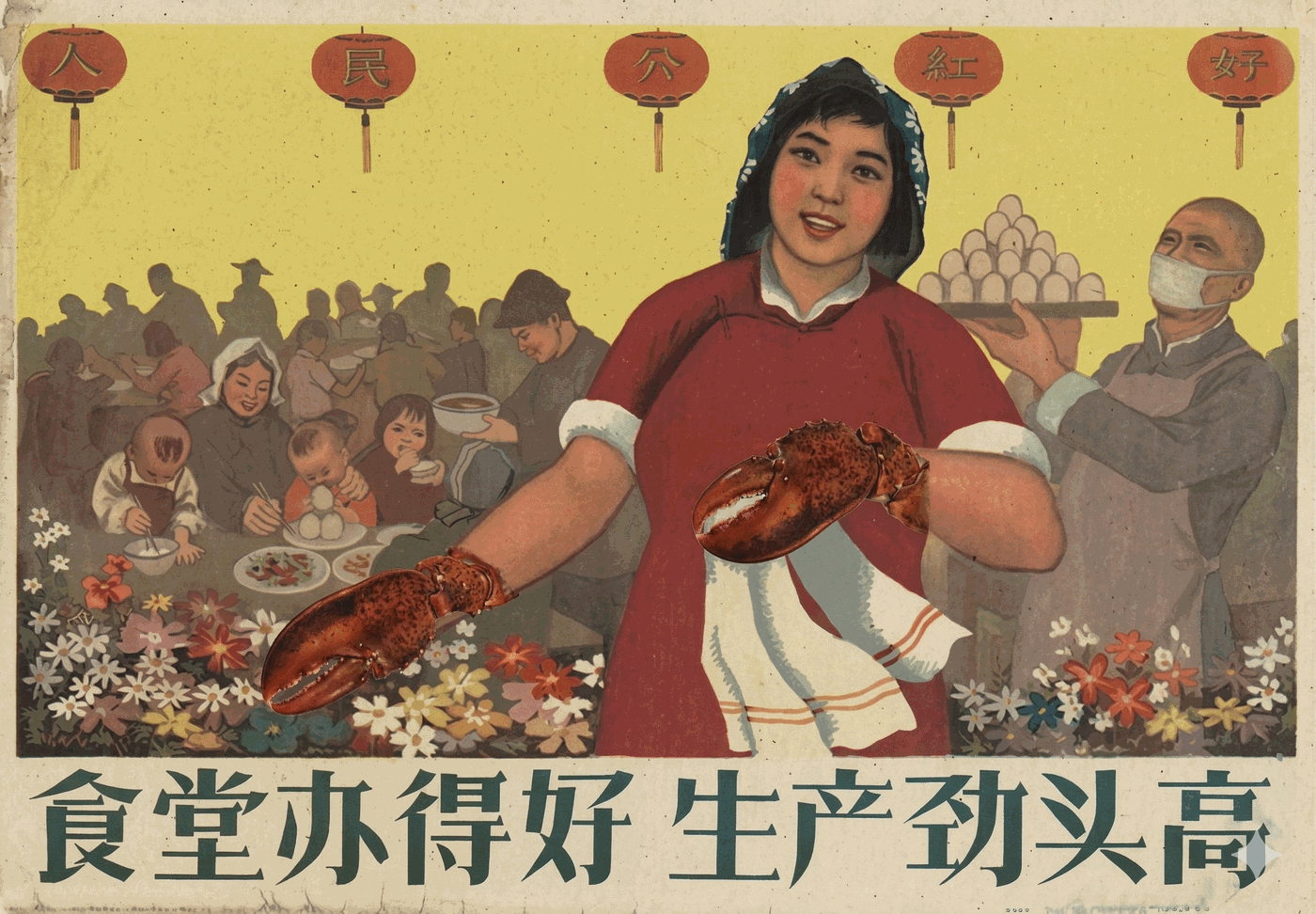
The stated goal is distilling your subject matter expertise. Turn the expert’s craft into the organization’s asset. What leadership actually wants is to convert individual human capital into organizational capital that survives any single employee’s departure.
Employees see the game immediately. If I distill my ten years of domain expertise into a skill that any junior can invoke with a prompt, I have just automated my own replacement. The knowledge that makes me the critical node — the person they call at 2 AM, the one who knows why the model does that weird thing for Brazilian entities — is my moat. You’re asking me to drain it.
So they adapt to build anti-distillation agent skills, just as the intellectuals adapted after the Anti-Rightist trap.
We are already seeing agent skills built specifically for job security. The performative skill looks comprehensive and demos well but omits the 20% of edge-case knowledge that makes it work in production — you are now more indispensable, not less. The poison pill encodes expertise faithfully but with subtle dependencies on context only you hold — internal wikis you maintain, terminology you coined, data pipelines you own — so removing you causes outputs to drift quietly until someone says “we need to bring them back on this.” The complexity moat makes the skill so architecturally entangled with your other work that extracting your knowledge is harder than keeping you around. You are now a load-bearing wall disguised as a decoration.
The campaign designed to reduce organizational dependence on individual experts has now created experts who are strategically indispensable — not because of what they know, but because of how they’ve booby-trapped the system to need them. The flowers bloomed. They’re full of thorns.
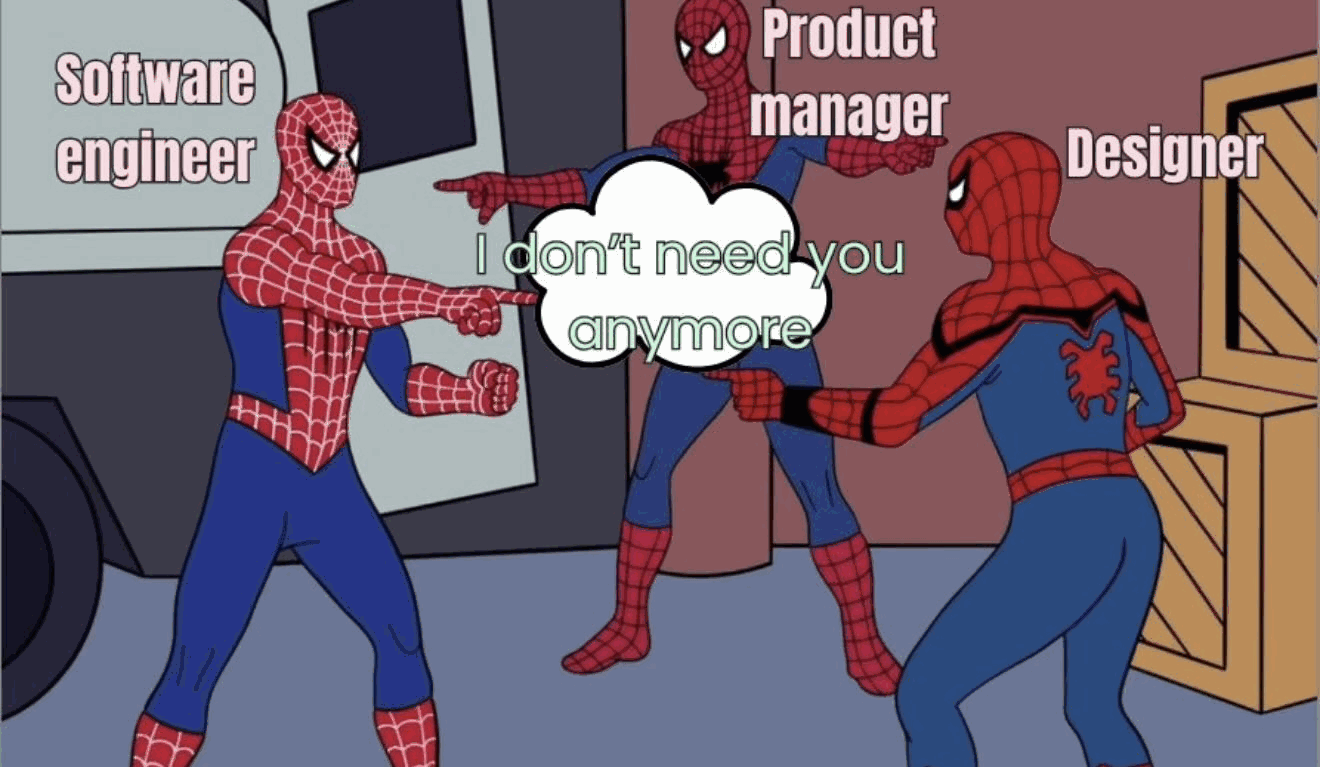
Meanwhile, the “everyone builds with AI” mandate has turned into a hunger game of scope creep. Engineers use AI to generate designs and ship prototypes without waiting for the design team. PMs use AI to write code and spin up dashboards without filing engineering tickets. Designers use AI to build product specs and run user research without looping in product. Everyone is expanding into everyone else’s territory — not because they’re better at it, but because AI makes it possible and the mandate makes it rewarded. The org chart says collaboration; the incentive structure says land grab. What looks like productivity gains is actually a war of all against all, where every function is simultaneously trying to prove it can absorb the others before the others absorb it.
The Famine Comes Later
The Great Leap Forward’s famine didn’t arrive immediately. For a while, the numbers looked spectacular. Every province reported record harvests. Leadership was pleased. The requisitions increased.
The famine came when the real grain ran out but the reported grain kept flowing upward.
We’re still in the reporting phase. The dashboards are green. Adoption is up and to the right. Every team reports productivity gains that, if summed across the company, would imply engineers are shipping at 300% efficiency while somehow still missing the same deadlines.
Underneath the metrics, it’s a race to the bottom. One person builds a skill, so someone else builds a better one. One person demos a prototype, so someone else benchmarks it. Everyone competing to prove, more thoroughly than the next person, that their own role is replaceable. All accelerating. All sinking.
The sparrows are dead. The locusts haven’t arrived yet. The flowers bloomed full of poison pills. The furnaces produced pig iron stamped as steel that’s now load-bearing. The grain numbers look fantastic.
But it’s fine. We’re surpassing and catching up.
Oh, and Klarna? The company that loudly announced it would replace Salesforce with internal AI solutions? They quietly replaced Salesforce with another SaaS vendor instead. The backyard furnace couldn’t produce real steel. They bought it from a different mill.
The question nobody’s asking: what did any of this actually produce?
The answer, when it arrives, will be awkward.
References
- Kafka, P. (2026). Meta’s AI week shows how every company is pushing employees to use AI. Business Insider. https://www.businessinsider.com/meta-ai-week-employee-training-claude-agents-vibe-coding-2026-3
- leilei926524-tech. (2026). anti-distill. GitHub. https://github.com/leilei926524-tech/anti-distill
- Blum, S. (2024). Klarna Plans to Shut Down SaaS Providers and Replace Them With AI. Inc. https://www.inc.com/sam-blum/klarna-plans-to-shut-down-saas-providers-and-replace-them-with-ai.html
- CX Today. (2025). Klarna Didn’t Replace Salesforce — It Replaced Them With Alternative SaaS Apps. https://www.cxtoday.com/crm/klarna-didnt-replace-salesforce-it-replaced-them-with-alternative-saas-apps/
@article{
    leehanchung,
    author = {Lee, Hanchung},
    title = {The AI Great Leap Forward},
    year = {2026},
    month = {04},
    day = {05},
    howpublished = {\url{https://leehanchung.github.io}},
    url = {https://leehanchung.github.io/blogs/2026/04/05/the-ai-great-leap-forward/}
}