


November 20, 2018
As a Developer Advocate, I often think about what impact I want to have and the best ways to accomplish that goal. My job is to meet developers where they’re at and inspire them to make more accessible websites and applications for people with disabilities; hopefully using our tools, but success to me does not hinge on that.
Sometimes developers don’t code with accessibility in mind because they don’t know about it yet, and given new information they’ll make a change; other times they don’t care to prioritize it or don’t feel it applies to them (“we’ll do it later”, “that’s not our audience”, etc.). Regardless, I seek to motivate and persuade developers across the industry to make an impact with accessibility; a worthy goal, but sometimes it isn’t easy.
I’ve written in the past about the tension between being patient and being loud, particularly in accessibility: do you wait for something to be fixed over time, or make waves in an effort to improve things? I observed back in 2015 that people don’t appreciate negativity and scolding when they aren’t doing things exactly as you’d like or expect, which is still true. I’ll admit I haven’t always been a perfect exemplar of this, as I’m also a human being who feels frustration and angst when I see people with disabilities being cast aside. As advocates, we’re supposed to avoid criticizing in the name of feel-good PR. But how do you make lasting change when people aren’t acting in good faith?
Over time I’ve realized that my job title is occasionally in conflict with my own values: I am a Developer Advocate, but I’m also an accessibility advocate at heart. In trying to make the world better for people with disabilities as a temporarily able-bodied person, it seems right to use my privilege and amplify their voices (e.g. “I’m Deaf and there are little-to-no captions here”, or “I’m blind and this update will jeopardize my livelihood”). When accessibility is ignored or demoted in favor of shipping, how could I possibly look the other way? Would sugarcoating it and using the nicest possible tone really make a difference where patterns of discrimination are concerned? Is the fact that I’m a woman speaking up about something playing into this at all?
Outside of the niche accessibility market, I’ve noticed that Developer Advocates can sometimes get a little carried away with their cause, pushing away the very people they’re trying to reach. Whether it’s web performance, standards, frameworks or something else, at some point railroading people with your opinions can start to hurt your cause more than it helps.
I can obviously see direct parallels to accessibility advocacy: except I’m fighting for users’ civil rights to access more than a subjective approach to programming. I do think there is value in being realistic about what people with disabilities face, given it is done with respect and without “gaining points” as able-bodied people. I can see a distinction between fact-based criticism and subjective opinions. But that only goes so far; being aggressive and neglecting to persuade may backfire. To paraphrase Maya Angelou: “people won’t remember what you said; they’ll remember how you made them feel.” By bringing people along rather than scolding, there’s a higher likelihood they’ll join you.
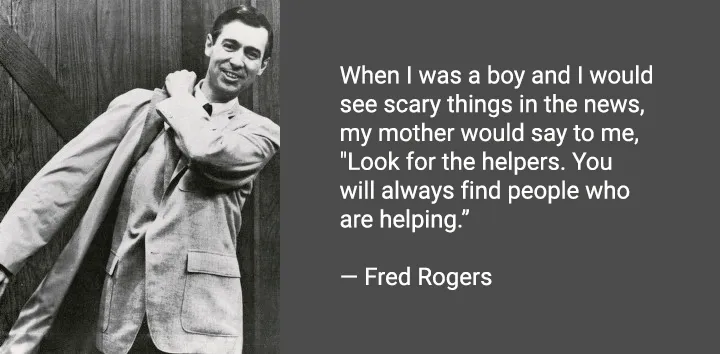
Where I’ve landed with all of these swirling ideas is this: by speaking up about something, are you helping or hurting your cause? In the spirit of Mr. Rogers, we should always aim to be the helpers. Except that’s a bit of a trick question: due to power dynamics, helping one group may come at the perceived inconvenience of a more powerful, oppressive group. It is sometimes impossible to please everyone at the same time, no matter how happy of a spin you put on it. But we should still try to lift everyone up rather than shaming; that’s optimism.
This is something I’m continually working on as I strive to make the web more accessible, and I’m grateful to those who contribute helpful, measured perspectives in an attempt to understand and resolve conflicts.
I wrote this post mainly because I’ve had some serious unpacking of feelings to do after difficult but meaningful conversations on social media in the past week. I’ll let them drift off into space and not link to them here, so I can focus more on that unabashed optimism. But hopefully what I’ve written can help you in some way. If you have helpful suggestions of how to balance these things better than I can, feel free to reach out.