
惯性聚合 高效追踪和阅读你感兴趣的博客、新闻、科技资讯
阅读原文 在惯性聚合中打开

推荐订阅源

K
Kaspersky official blog
小众软件
小众软件
Engineering at Meta
Engineering at Meta
博客园 - 三生石上(FineUI控件)
WordPress大学
WordPress大学
G
Google Developers Blog
Cyber Security Advisories - MS-ISAC
V
V2EX
freeCodeCamp Programming Tutorials: Python, JavaScript, Git & More
Google DeepMind News
Security Archives - TechRepublic
CTFtime.org: upcoming CTF events
C
Check Point Blog
aimingoo的专栏
aimingoo的专栏
罗磊的独立博客
钛媒体:引领未来商业与生活新知
钛媒体:引领未来商业与生活新知
MongoDB | Blog
MongoDB | Blog
L
LINUX DO - 热门话题
酷 壳 – CoolShell
酷 壳 – CoolShell
奇客Solidot–传递最新科技情报
奇客Solidot–传递最新科技情报
H
Help Net Security
Martin Fowler
Martin Fowler
G
GRAHAM CLULEY
Simon Willison's Weblog
OSCHINA 社区最新新闻
OSCHINA 社区最新新闻
博客园 - Franky
V
Vulnerabilities – Threatpost
云风的 BLOG
云风的 BLOG
博客园_首页
C
Cybersecurity and Infrastructure Security Agency CISA
量子位
Stack Overflow Blog
Stack Overflow Blog
Recent Announcements
让小产品的独立变现更简单 - ezindie.com
I
Intezer
Scott Helme
Scott Helme
A
About on SuperTechFans
博客园 - 司徒正美
Hacker News: Ask HN
Hacker News: Ask HN
The GitHub Blog
The GitHub Blog
Forbes - Security
Forbes - Security
Threat Intelligence Blog | Flashpoint
博客园 - 聂微东
人人都是产品经理
人人都是产品经理
The Cloudflare Blog
cs.CV updates on arXiv.org
Spread Privacy
Spread Privacy
T
Tailwind CSS Blog
S
Security Affairs
宝玉的分享
宝玉的分享

oida.dev | TypeScript, Rust

TypeScript's `erasableSyntaxOnly` Flag Unsafe for work Tokio: Macros Tokio: Channels Tokio: Getting Started Network Applications on the Tokio Stack Remake, Remodel, Reduce. The `never` type and error handling in TypeScript 5 Inconvenient Truths about TypeScript Refactoring in Rust: Introducing Traits Refactoring in Rust: Abstraction with the Newtype Pattern Announcing the TypeScript Cookbook TypeScript: Iterating over objects The road to universal JavaScript 10 years of oida.dev Rust: Tiny little traits The TypeScript converging point How not to learn TypeScript Getting started with Rust Introducing Slides and Coverage TypeScript: The humble function overload TypeScript + React: Children types are broken TypeScript: In defense of any Rust: Enums to wrap multiple errors Dissecting Deno Error handling in Rust TypeScript: Unexpected intersections Upgrading Node.js dependencies after a yarn audit TypeScript: Array.includes on narrow types TypeScript + React: Typing Generic forwardRefs shared, util, core: Schroedinger's module names Learning Rust and Go TypeScript: Narrow types in catch clauses TypeScript: Low maintenance types Tidy TypeScript: Name your generics Tidy TypeScript: Avoid traditional OOP patterns Tidy TypeScript: Prefer type aliases over interfaces Tidy TypeScript: Prefer union types over enums My new book: TypeScript in 50 Lessons Go Preact! ❤️ this in JavaScript and TypeScript TypeScript and ECMAScript Modules TypeScript + React: Why I don't use React.FC TypeScript + React: Component patterns TypeScript: Augmenting global and lib.dom.d.ts Vite with Preact and TypeScript TypeScript: Union to intersection type 11ty: Generate Twitter cards automatically Are large node module dependencies an issue? TypeScript: Variadic Tuple Types Preview TypeScript: Improving Object.keys Remake, Remodel. Part 4. TypeScript + React: Typing custom hooks with tuple types TypeScript: Assertion signatures and Object.defineProperty TypeScript: Check for object properties and narrow down type Boolean in JavaScript and TypeScript void in JavaScript and TypeScript Symbols in JavaScript and TypeScript Why I use TypeScript TypeScript + React: Extending JSX Elements TypeScript: Validate mapped types and const context TypeScript: Match the exact object shape TypeScript: The constructor interface pattern Streaming your Meetup - Part 4: Directing and Streaming with OBS Streaming your Meetup - Part 3: Speaker audio Streaming your Meetup - Part 2: Speaker video Streaming your Meetup - Part 1: Basics and Projector TypeScript and React Guide: Added a new styles chapter TypeScript and React Guide: Added a new render props chapter TypeScript and React: Styles and CSS TypeScript and React TypeScript and React Guide: Added a new prop types chapter TypeScript without TypeScript -- JSDoc superpowers TypeScript: Mapped types for type maps JAMStack vs serverless web apps TypeScript: Ambient modules for Webpack loaders My most favourite talks in 2018 TypeScript and React Guide: Added a new context chapter TypeScript: Built-in generic types TypeScript: Type predicates JSX is syntactic sugar TypeScript and React Guide: Added a new hooks chapter Getting your CfP application right FAQ on our Angular Connect Talk: Automating UI development TypeScript and Substitutability Debugging Node.js apps in TypeScript with Visual Studio Code From Medium: Deconfusing Pre- and Post-processing From Medium: PostCSS misconceptions Saving and scraping a website with Puppeteer Cutting the mustard - 2018 edition Wordpress as CMS for your JAMStack sites My most favourite podcast episodes in 2017 My most favourite talks in 2017 My most favourite books in 2017 The Best Request Is No Request, Revisited Not so hidden figures - Organizing ScriptConf My podcast journey to ScriptCast Grid layout, grid layout everywhere! #scriptconf and #devone Object streams in Node.js
The Unsung Benefits of JAMStack Sites
2019-05-09 · via oida.dev | TypeScript, Rust

This post originally appeared on dev.to

Traditional websites are usually built on top of a CMS. Drupal, Wordpress, Typo3, you name it. CMS handle everything from content editing, over application programming to front-end generation. So choosing a CMS has a huge impact on how you develop your sites, and what skills and trades you need to get the job done. A CMS has also impact on hosting! Does LAMP-Stack ring a bell? Linux, Apache, MySQL and PHP. The golden standard for lots of popular CMS to this day.

JAMStack sites are different. Instead of putting the CMS into the core of all your decisions, you focus on the Front-End. And for good reason. The browser doesn’t care what technology is underneath. It just wants cares about HTML, CSS and JavaScript. So why shouldn’t you?
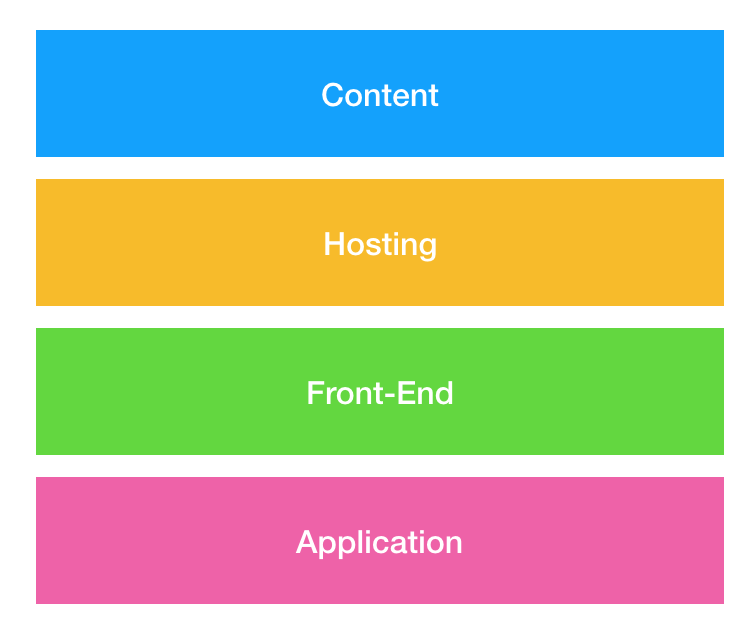
Architectural parts of any website and web application

Putting the Front-End into focus has a lot of impact on every other level of your website. Be it the CMS, your application layer or even where you host it. And this impact comes with a lot of benefits.

JAMStack sites treat hosting, content management and application as their own entities. With little to no dependency to each other.

The application layer can be anything as long as it produces APIs consumable by the Front-End. And if you go full serverless, you don’t even have to care about having a dedicated application server. This is where the server-less comes in, folks.

Same for Content Management Systems. Great deal: A CMS can focus on actually managing content again! No need to serve as a rendering tool or application platform. You even can stick with Wordpress, if you like. Or have something JAMStack optimised like Storyblok. As long as there’s an API to fetch content, you’re good.

Hosting is as easy as serving files. Put it up on a cloud storage like S3 or Azure Storage. Host it in your dropbox. Or find a cozy place next to your old website. It’s your choice.
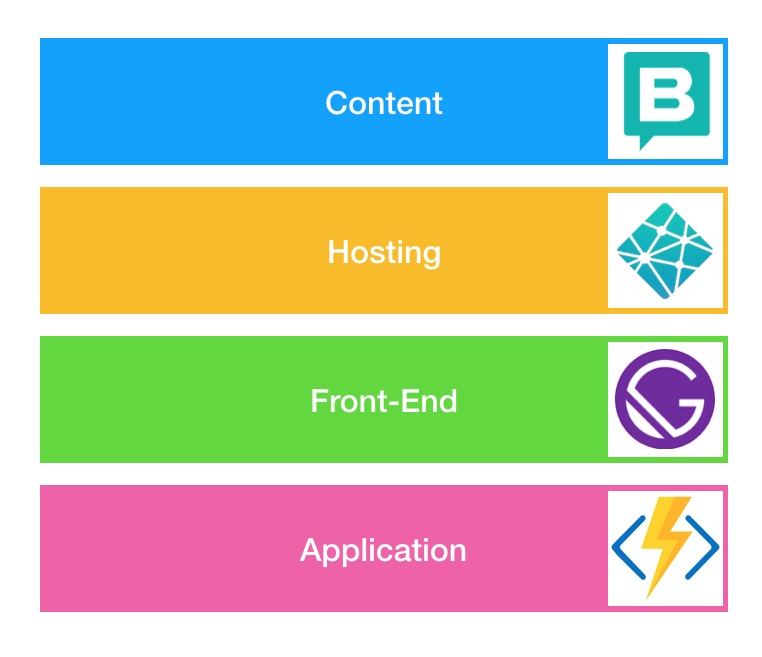
A set of technology choices

The best thing: People can choose what they like best, and what they feel most productive with. It all sticks together with APIs.

No technology lock-in #

With each part being independent, you not only have lots of choice for getting your website done. You also continue to have this choice as your project evolves. It’s mich easier to swap one technology for the other if you don’t have to replace your whole website. Want to move from Metalsmith to Gatsby, no need to kill your APIs. No need to kill your hosting strategy. No need to kill your builds or the huge amount of content you store in your CMS.

Does the CMS not serve your purpose anymore? Store the latest output in JSON files to keep builds going, and move silently to another one.

The bulky Java monolith is too slow and costs too much? Some light-weight cloud functions are easy to create and integrate. Only keep API contracts alive.
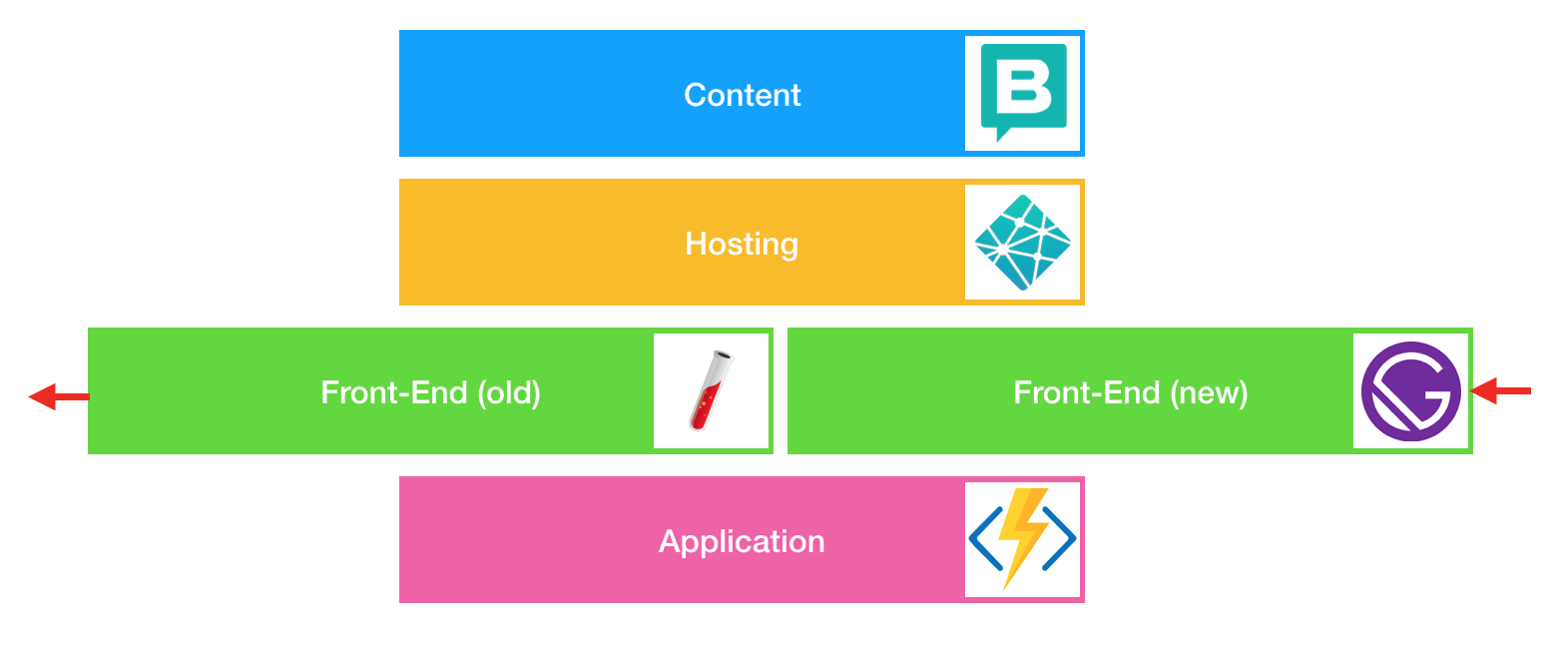
Out with the old, in with the new

Moving away from technology and adopting other still isn’t easy or without serious effort. But it’s a lot easier to grasp if you don’t have to take care about complete picture.

Incremental adoption #

Every part is independent, and written in the technology you prefer. This means you can start migrating to the JAMStack immediately. Your old app still in place, start getting a few cloud functions up and running and publish a few HTML pages next to your old installation. Any server is ready to serve static files!
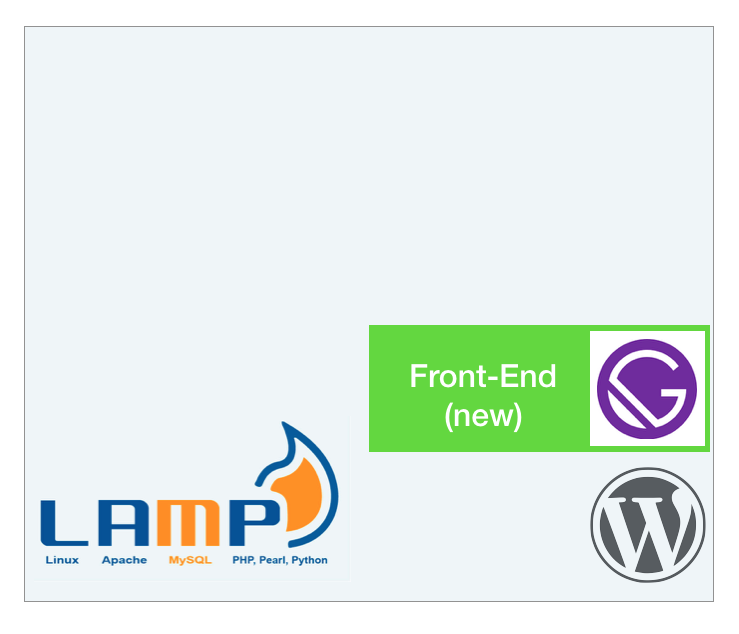
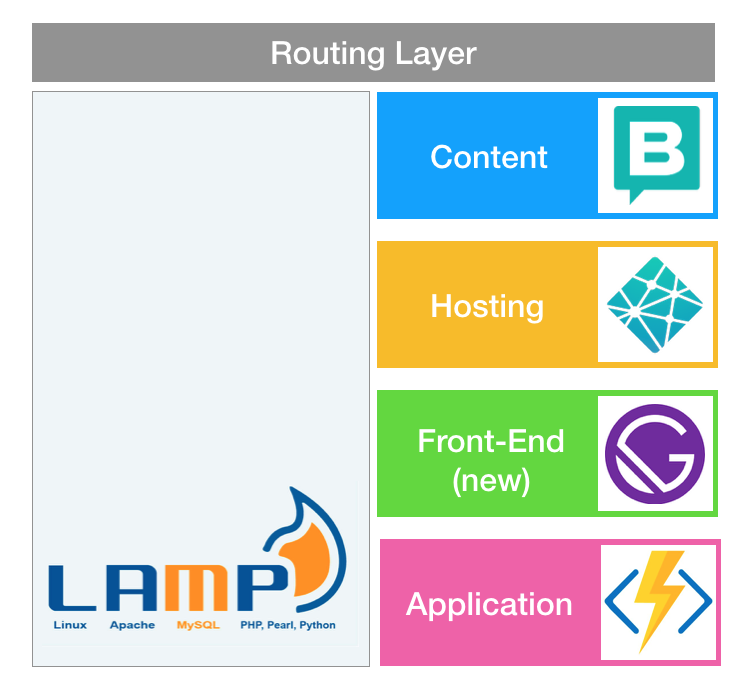
A Gatsby site as part of a LAMP Stack site

Running the JAMStack next to a LAMPStack

Especially in bigger projects I’ve seen this to be most beneficial. You don’t want to migrate 2000 pages to a new stack in a big bang. But having the top-most pages fresh, new and fast can make a huge impact.

Bottom line #

Moving to the JAMStack is a commitment to modern cloud architectures and DevOps workflows. This also means that you are able adopt as you go, with the tools you see fit best. Don’t be intimidated to redo everything. Start. And see where it takes you.

Related Articles