
惯性聚合 高效追踪和阅读你感兴趣的博客、新闻、科技资讯
阅读原文 在惯性聚合中打开

推荐订阅源

T
Tenable Blog
博客园_首页
Vercel News
Vercel News
WordPress大学
WordPress大学
美团技术团队
G
Google Developers Blog
大猫的无限游戏
大猫的无限游戏
小众软件
小众软件
Y
Y Combinator Blog
博客园 - 【当耐特】
量子位
酷 壳 – CoolShell
酷 壳 – CoolShell
The Cloudflare Blog
T
The Blog of Author Tim Ferriss
奇客Solidot–传递最新科技情报
奇客Solidot–传递最新科技情报
Google DeepMind News
云风的 BLOG
云风的 BLOG
腾讯CDC
M
MIT News - Artificial intelligence
爱范儿
爱范儿
Recent Announcements
雷峰网
雷峰网
Last Week in AI
Last Week in AI
宝玉的分享
宝玉的分享
The Register - Security
Jina AI
Jina AI
CTFtime.org: upcoming CTF events
cs.CL updates on arXiv.org
Hugging Face - Blog
Hugging Face - Blog
P
Privacy & Cybersecurity Law Blog
Recorded Future
Recorded Future
Help Net Security
Help Net Security
N
News and Events Feed by Topic
博客园 - Franky
P
Proofpoint News Feed
L
LINUX DO - 热门话题
S
SegmentFault 最新的问题
The GitHub Blog
The GitHub Blog
K
KPMG report finds enterprise disconnect between AI and its ROI | CIO
钛媒体:引领未来商业与生活新知
钛媒体:引领未来商业与生活新知
月光博客
月光博客
D
Docker
Google DeepMind News
有赞技术团队
有赞技术团队
IT之家
IT之家
Security Latest
Security Latest
L
LangChain Blog
V
V2EX
阮一峰的网络日志
阮一峰的网络日志
J
Java Code Geeks

oida.dev | TypeScript, Rust

TypeScript's `erasableSyntaxOnly` Flag Unsafe for work Tokio: Macros Tokio: Channels Tokio: Getting Started Network Applications on the Tokio Stack Remake, Remodel, Reduce. The `never` type and error handling in TypeScript 5 Inconvenient Truths about TypeScript Refactoring in Rust: Introducing Traits Refactoring in Rust: Abstraction with the Newtype Pattern Announcing the TypeScript Cookbook TypeScript: Iterating over objects The road to universal JavaScript 10 years of oida.dev Rust: Tiny little traits The TypeScript converging point How not to learn TypeScript Getting started with Rust Introducing Slides and Coverage TypeScript: The humble function overload TypeScript + React: Children types are broken TypeScript: In defense of any Rust: Enums to wrap multiple errors Dissecting Deno Error handling in Rust TypeScript: Unexpected intersections Upgrading Node.js dependencies after a yarn audit TypeScript: Array.includes on narrow types TypeScript + React: Typing Generic forwardRefs shared, util, core: Schroedinger's module names Learning Rust and Go TypeScript: Narrow types in catch clauses TypeScript: Low maintenance types Tidy TypeScript: Name your generics Tidy TypeScript: Avoid traditional OOP patterns Tidy TypeScript: Prefer type aliases over interfaces Tidy TypeScript: Prefer union types over enums My new book: TypeScript in 50 Lessons Go Preact! ❤️ this in JavaScript and TypeScript TypeScript and ECMAScript Modules TypeScript + React: Why I don't use React.FC TypeScript + React: Component patterns TypeScript: Augmenting global and lib.dom.d.ts Vite with Preact and TypeScript TypeScript: Union to intersection type 11ty: Generate Twitter cards automatically Are large node module dependencies an issue? TypeScript: Variadic Tuple Types Preview TypeScript: Improving Object.keys Remake, Remodel. Part 4. TypeScript + React: Typing custom hooks with tuple types TypeScript: Assertion signatures and Object.defineProperty TypeScript: Check for object properties and narrow down type Boolean in JavaScript and TypeScript void in JavaScript and TypeScript Symbols in JavaScript and TypeScript Why I use TypeScript TypeScript + React: Extending JSX Elements TypeScript: Validate mapped types and const context TypeScript: Match the exact object shape TypeScript: The constructor interface pattern Streaming your Meetup - Part 4: Directing and Streaming with OBS Streaming your Meetup - Part 3: Speaker audio Streaming your Meetup - Part 2: Speaker video Streaming your Meetup - Part 1: Basics and Projector TypeScript and React Guide: Added a new styles chapter TypeScript and React Guide: Added a new render props chapter TypeScript and React: Styles and CSS TypeScript and React TypeScript and React Guide: Added a new prop types chapter TypeScript without TypeScript -- JSDoc superpowers TypeScript: Mapped types for type maps JAMStack vs serverless web apps The Unsung Benefits of JAMStack Sites TypeScript: Ambient modules for Webpack loaders My most favourite talks in 2018 TypeScript and React Guide: Added a new context chapter TypeScript: Built-in generic types TypeScript: Type predicates JSX is syntactic sugar TypeScript and React Guide: Added a new hooks chapter FAQ on our Angular Connect Talk: Automating UI development TypeScript and Substitutability Debugging Node.js apps in TypeScript with Visual Studio Code From Medium: Deconfusing Pre- and Post-processing From Medium: PostCSS misconceptions Saving and scraping a website with Puppeteer Cutting the mustard - 2018 edition Wordpress as CMS for your JAMStack sites My most favourite podcast episodes in 2017 My most favourite talks in 2017 My most favourite books in 2017 The Best Request Is No Request, Revisited Not so hidden figures - Organizing ScriptConf My podcast journey to ScriptCast Grid layout, grid layout everywhere! #scriptconf and #devone Object streams in Node.js
Getting your CfP application right
2018-11-14 · via oida.dev | TypeScript, Rust

We just started the Call for Presentations for the upcoming DevOne conference, and I couldn’t be more excited. Last year’s proposals where excellent and a great addition to our line-up. And by looking at the people who already registered interest, I’m sure that there’s a ton of great stuff coming up.

I’m in the program committee for this conference and I’d love to hear your ideas. If you’re not sure, please get in touch with me. I’ll happily guide you through what we’re looking for DevOne.
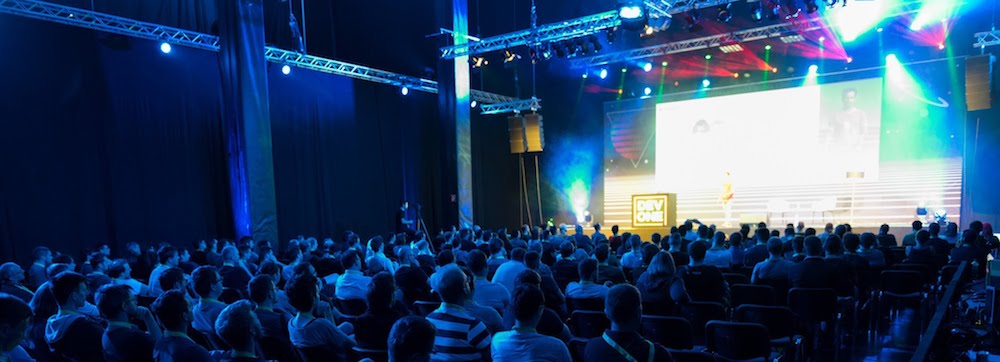
The DevOne stage
Share this stage with us

DevOne features 12 talks in two parallel tracks. Two of the slots are reserved for our CfP speakers. This also means that there’s usually a high amount of people not being selected. Having been on both sides of the spectrum, as a speaker applying to conferences and as a committee member, I thought I put together some tips for your proposal to hit it!

Know the conference #

I’ve applied to so many conferences, and I also failed at so many more. In hindsight, for most of the conferences I failed, I never was the right speaker to begin with. I applied because I loved the conference and its community, not because my talk was a good fit.

It got a lot easier when I selected conferences where I knew that the topic was hitting the nail on the head. I got more acquainted with what the conference was actually looking for.

Go and look at past line-ups. Check out the videos, their community, and their usual selection of talks.
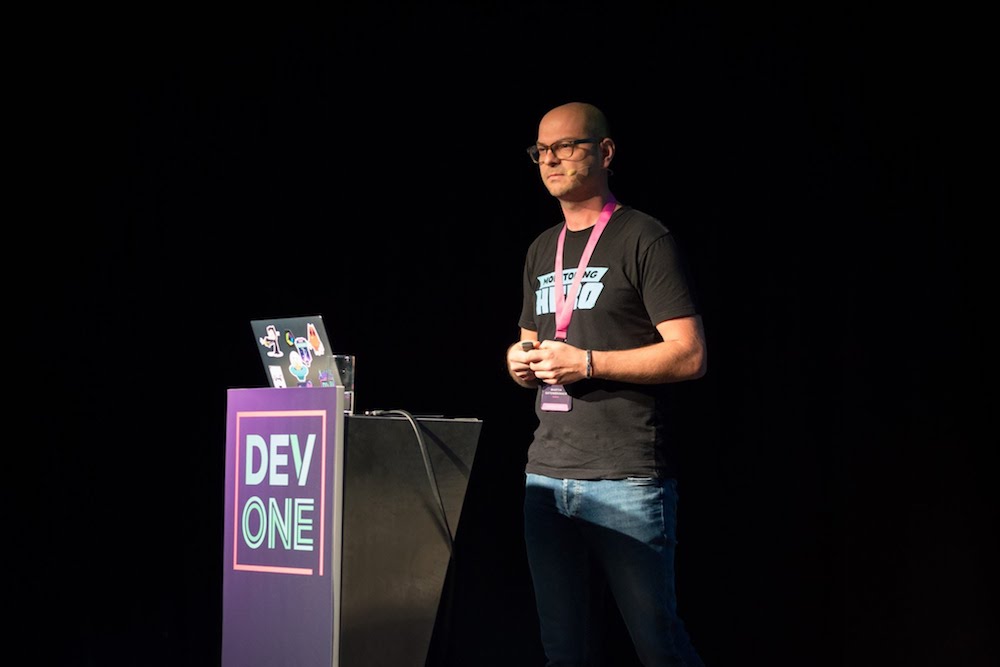
Martin Gutenbrunner
Martin was a DevOne 2017 speaker. In 2018 he applied through the CfP and had one of the best written proposals. His talk was then pre-selected for DevOne US in Detroit.

A Kubernetes talk might not be the right thing for the CSS community. A new JavaScript framework might not be fitting out when the major topics are CI/CD.

This does not mean that their isn’t the odd bird standing out that will fit perfect to the rest of the line-up. But tailoring it to what conferences are usually looking for is never a bad idea.

Conferences are usually pretty clear about that. The DevOne CfP gives you a list of topics right from the start. Check if your topic feels comfortable with that list.

Many conferences, just like DevOne, have a special field in their CfP where you can put any extra information in for the organisers. This is not something for the public, but rather for the PC to know what they’re dealing with.

Use this field.
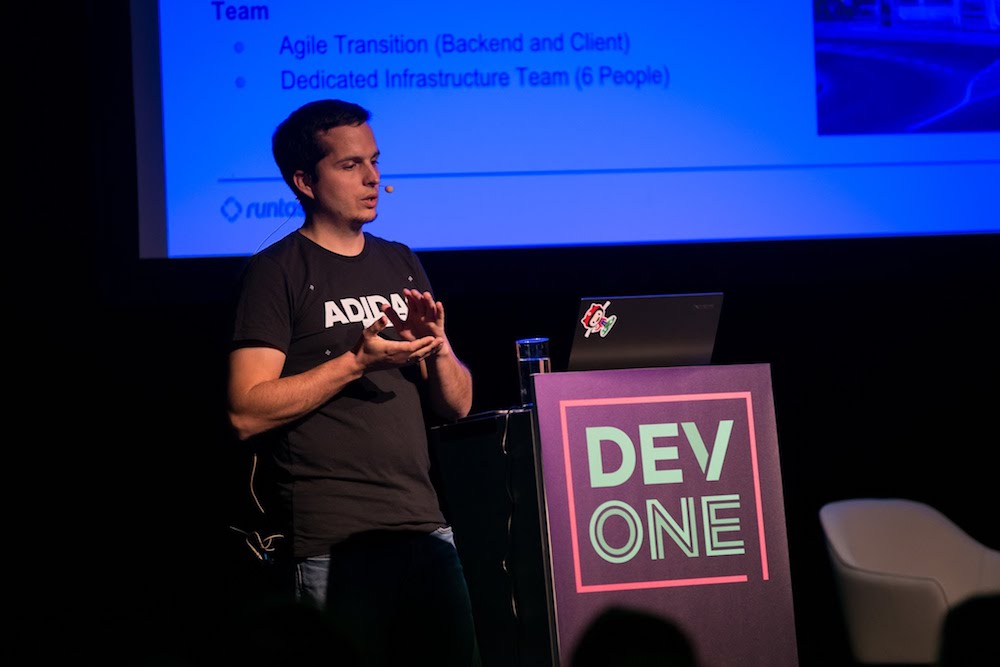
Simon Lasselsberger
Simon's talk about their Ruby architecture was the odd bird standing out. But the details he provided where pretty convincing.

Put in everything you got. Talk outlines, extra information, research results. Every quirk or extra that makes your delivery or talk special. The clearer the picture is for organisers, the better.

Ask for feedback #

If you are unsure about your proposal, ask for feedback. Ask your colleagues, ask your peers, ask the organisers. Usually they are very happy to provide feedback. It’s in their own interest to craft a great program, so why wouldn’t they give you feedback.

Katja Budnikov
Katja was the first person to apply for last year's DevOne. And the first person to be selected.

One thing that I started doing was to ask for feedback once a talk wasn’t selected. Organisers usually give great advice on what went wrong. From having a topic that was extensively covered already to a “not in tune with what’s happening in the community”. Especially the last advice was really helpful for me.

Feedback helps you shaping up your proposal. If not for this conference, maybe for the next.

Final note #

But in the end: Don’t worry. Even with your best proposal ever, there’s still a lot of chance involved. Some conferences get way over 500 proposals, and only feature a handful of free slots.

It’s like with everything else: Try. Do your best. If you fail, try again.

Good luck!

Related Articles