



惯性聚合 高效追踪和阅读你感兴趣的博客、新闻、科技资讯
阅读原文 在惯性聚合中打开

推荐订阅源

月光博客
月光博客
MyScale Blog
MyScale Blog
博客园 - Franky
The Cloudflare Blog
IT之家
IT之家
Blog — PlanetScale
Blog — PlanetScale
博客园 - 聂微东
WordPress大学
WordPress大学
Cyber Security Advisories - MS-ISAC
T
The Blog of Author Tim Ferriss
让小产品的独立变现更简单 - ezindie.com
罗磊的独立博客
Google DeepMind News
P
Proofpoint News Feed
Martin Fowler
Martin Fowler
aimingoo的专栏
aimingoo的专栏
J
Java Code Geeks
腾讯CDC
雷峰网
雷峰网
Microsoft Azure Blog
G
Google Developers Blog
博客园 - 【当耐特】
美团技术团队
云风的 BLOG
云风的 BLOG

Latest from TechRadar in Security

Robots are fighting wars and helping to quash riots — China is arming riot police with squads of AI controlled drones and Ukraine wants to man the frontlines with 25,000 robots US security agency still using Mythos despite ban – government using new security tool despite Pentagon's… Struggling to launch Teams? Microsoft recalls update causing failed startup and infinite loading loops –… NIST is cataloging so many vulnerabilities it can only assign severity scores to the highest priority threats How to meaningfully measure the effectiveness of cyber resilience 'We've identified a security incident': Vercel breach confirmed after hackers claim stolen data for sale… How EU organizations can turn sovereign cloud theory into action 'Update immediately': 60,000 WordPress websites at risk after experts discover flaw that allows hackers to… 'They mopped the floor with me and pulled every childish game they could': Disgruntled researcher releases second major Windows zero-day — claims Microsoft 'would ruin my life, and they did' 'As threats evolve, Gemini keeps our defenses one step ahead': Google claims its AI helped it block over 8.3… Cisco tells Webex users to patch critical security flaws immediately, as experts find its Wi-Fi boxes may be filling their disks with undeletable data every day Microsoft experts warn North Korean attackers target macOS users with 'a highly reliable infection chain' to steal passwords, financial data and more — here's how to stay safe Solving the shadow IT crisis in travel Agentic swarms will change how everyone uses AI – but how can organizations deploy them securely? Europol launches Operation PowerOFF — warns 75,000 DDoS users and takes down 53 domains China completes testing on ‘deep-sea electro-hydrostatic actuator’ capable of slicing undersea cables as deep as 3.5 kilometers – new compact subsea vessel testing bridges the ‘last mile’ and could deploy in 2026 Many are still leaving the door open': Security experts warn FIFA World Cup partners could be putting customers at… 'Anyone with $10 could have walked straight through': Report warns this legit-looking software is actually… An ancient Microsoft Excel security flaw could let hackers hijack your entire system, so patch now 'This is not a traditional coding error': Experts flag potentially critical security issues at the heart of Anthropic's MCP, exposes 150 million downloads and thousands of servers to complete takeover Your OpenClaw agents can empty your inbox and leak your data. Here's how to secure them Russia hits European thermal power plant in attempted ‘destructive’ cyberattack – Pro-Kremlin hackers are engaging in ‘riskier and more reckless behavior’ in latest attempt to cripple Western critical infrastructure The war in Iran is reaching cyberspace - here’s how to prepare Millions of hotel goers may have been exposed after hackers steal data and leak it on Telegram 'Every Apple user needs to know about this nasty scam': Fake warnings tell users their iCloud data will be… Dozens of WordPress plugins hijacked to target thousands of sites 'We are currently being extorted' — crypto giant Kraken says it is facing extortion attack, here's… McGraw Hill becomes latest to see its Salesforce data hacked Over 100 Chrome Web Store extensions found stealing user data from thousands of accounts OpenAI reveals its Mythos rival designed for cybersecurity pros
'This puts organizations at risk of credential theft, dat...
Sead Fadilpašić · 2026-04-08 · via Latest from TechRadar in Security
Digital image of a lock.
Image Credit: Shutterstock (Image credit: Shutterstock)

  • Forest Blizzard (APT28) hijacks SOHO devices for espionage
  • Attackers reroute DNS traffic to enable surveillance and AiTM attacks
  • Campaign impacts 200+ organizations across government, IT, telecom, and energy sectors

Russian state-sponsored threat actors are targeting poorly protected Small Office/Home Office (SOHO) devices and using them to pivot into enterprise and corporate environments, experts have claimed.

A report from Microsoft Threat Intelligence has warned about a large-scale attack by Forest Blizzard (AKA APT28) targeting TP-Link routers.

So far, more than 200 organizations and more than 5,000 consumer devices have been impacted by the attack, Microsoft said, noting the group is mostly interested in cyber-espionage and intelligence gathering.

What happened?

The campaign apparently started in August 2025, and instead of targeting corporate networks directly, Forest Blizzard focused on edge devices such as home routers, which often lack strong security controls and oversight present in enterprise environments.

Microsoft did not explicitly say how the attackers break into these endpoints but suggests they might have default or easy-to-crack passwords or known but unpatched vulnerabilities that can easily be exploited.

Once inside, they change the devices’ configuration to route Domain Name System (DNS) traffic through infrastructure they control, allowing them to monitor, and even influence, how infected devices resolve domain names.

By operating at this upstream level, APT28 gained broad visibility into network activity across both consumer and enterprise environments. This not only allows them to conduct passive surveillance at scale but also prepares the terrain for more targeted follow-on attacks against organizations of higher value.

Sign up to the TechRadar Pro newsletter to get all the top news, opinion, features and guidance your business needs to succeed!

The DNS acts like the internet’s address book. So, instead of sending requests to legitimate DNS servers, compromised devices are actually being redirected to servers under the attackers’ control. In more targeted cases, the threat actors would manipulate DNS responses to redirect victims to fake versions of legitimate services, resulting in what’s known as an Adversary-in-the-Middle (AitM) attack.

This, in turn, allows APT28’s operatives to intercept data as it moves between the user and the real service.

If the victim ignores browser warnings about invalid security certificates (which, truth be told, many of us often do), the attackers may be able to capture sensitive information, including login credentials and emails.

Who is targeted?
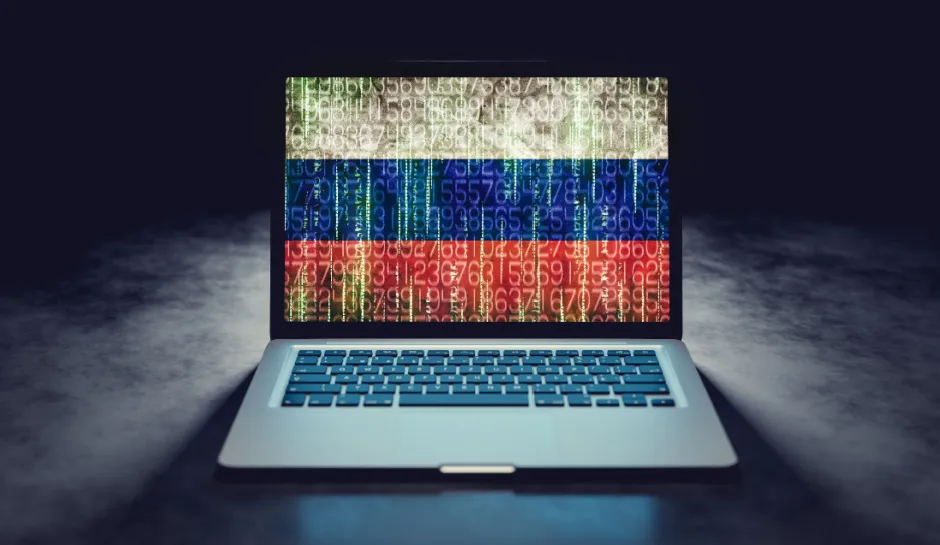
Russian flag on a laptop

Russian hackers are interested in cyber-espionage and intelligence gathering. (Image credit: Shutterstock)

The campaign affects a wide range of sectors, Microsoft stressed, including government agencies, information technology, telecommunications, and energy. While thousands of home and small office devices were compromised, Forest Blizzard appears to use the most intrusive follow-on attacks selectively, focusing on high-value targets.

They use AitM attacks to intercept emails and cloud data, but the sheer number of compromised devices give them a lot of maneuver space, for possibly larger-scale campaigns in the future.

“While the number of organizations specifically targeted for TLS AiTM is only a subset of the networks with vulnerable SOHO devices, Microsoft Threat Intelligence assesses that the threat actor’s broad access could enable larger-scale AiTM attacks, which might include active traffic interception,” Microsoft warned.

“Targeting SOHO devices is not a new tactic, technique, or procedure (TTP) for Russian military intelligence actors, but this is the first time Microsoft has observed Forest Blizzard using DNS hijacking at scale to support AiTM of TLS connections after exploiting edge devices.”

To defend against DNS hijacking, Microsoft advises organizations enforce trusted DNS servers, block malicious domains, maintain DNS logs, and avoid SOHO devices in corporate networks.

For AiTM and credential theft, they recommend centralizing identity management, enabling Single Sign-On, enforcing multifactor authentication (MFA) and passkeys, applying Conditional Access policies, and monitoring risky sign-ins with continuous access evaluation. Organizations should log identity activity, protect privileged accounts with phishing-resistant MFA, and follow Microsoft’s incident response best practices for recovering from systemic identity compromises. Network protection via Microsoft Defender for Endpoint is also recommended to block malicious sites.


Best antivirus software header

Follow TechRadar on Google News and add us as a preferred source to get our expert news, reviews, and opinion in your feeds. Make sure to click the Follow button!

And of course you can also follow TechRadar on TikTok for news, reviews, unboxings in video form, and get regular updates from us on WhatsApp too.

Sead is a seasoned freelance journalist based in Sarajevo, Bosnia and Herzegovina. He writes about IT (cloud, IoT, 5G, VPN) and cybersecurity (ransomware, data breaches, laws and regulations). In his career, spanning more than a decade, he’s written for numerous media outlets, including Al Jazeera Balkans. He’s also held several modules on content writing for Represent Communications.