

惯性聚合 高效追踪和阅读你感兴趣的博客、新闻、科技资讯
阅读原文 在惯性聚合中打开

推荐订阅源

GbyAI
GbyAI
OSCHINA 社区最新新闻
OSCHINA 社区最新新闻
博客园 - 叶小钗
大猫的无限游戏
大猫的无限游戏
H
Help Net Security
G
Google Developers Blog
D
Docker
阮一峰的网络日志
阮一峰的网络日志
A
About on SuperTechFans
aimingoo的专栏
aimingoo的专栏
博客园 - 聂微东
Hugging Face - Blog
Hugging Face - Blog
酷 壳 – CoolShell
酷 壳 – CoolShell
Apple Machine Learning Research
云风的 BLOG
云风的 BLOG
让小产品的独立变现更简单 - ezindie.com
腾讯CDC
T
The Blog of Author Tim Ferriss
Microsoft Security Blog
WordPress大学
WordPress大学
I
InfoQ
Engineering at Meta
Engineering at Meta
Stack Overflow Blog
Stack Overflow Blog
Google DeepMind News

Latest from TechRadar in Security

Robots are fighting wars and helping to quash riots — China is arming riot police with squads of AI controlled drones and Ukraine wants to man the frontlines with 25,000 robots US security agency still using Mythos despite ban – government using new security tool despite Pentagon's… Struggling to launch Teams? Microsoft recalls update causing failed startup and infinite loading loops –… How to meaningfully measure the effectiveness of cyber resilience 'We've identified a security incident': Vercel breach confirmed after hackers claim stolen data for sale… How EU organizations can turn sovereign cloud theory into action 'Update immediately': 60,000 WordPress websites at risk after experts discover flaw that allows hackers to… 'They mopped the floor with me and pulled every childish game they could': Disgruntled researcher releases second major Windows zero-day — claims Microsoft 'would ruin my life, and they did' 'As threats evolve, Gemini keeps our defenses one step ahead': Google claims its AI helped it block over 8.3… Cisco tells Webex users to patch critical security flaws immediately, as experts find its Wi-Fi boxes may be filling their disks with undeletable data every day Microsoft experts warn North Korean attackers target macOS users with 'a highly reliable infection chain' to steal passwords, financial data and more — here's how to stay safe Solving the shadow IT crisis in travel Agentic swarms will change how everyone uses AI – but how can organizations deploy them securely? Europol launches Operation PowerOFF — warns 75,000 DDoS users and takes down 53 domains China completes testing on ‘deep-sea electro-hydrostatic actuator’ capable of slicing undersea cables as deep as 3.5 kilometers – new compact subsea vessel testing bridges the ‘last mile’ and could deploy in 2026 Many are still leaving the door open': Security experts warn FIFA World Cup partners could be putting customers at… 'Anyone with $10 could have walked straight through': Report warns this legit-looking software is actually… An ancient Microsoft Excel security flaw could let hackers hijack your entire system, so patch now 'This is not a traditional coding error': Experts flag potentially critical security issues at the heart of Anthropic's MCP, exposes 150 million downloads and thousands of servers to complete takeover Your OpenClaw agents can empty your inbox and leak your data. Here's how to secure them Russia hits European thermal power plant in attempted ‘destructive’ cyberattack – Pro-Kremlin hackers are engaging in ‘riskier and more reckless behavior’ in latest attempt to cripple Western critical infrastructure The war in Iran is reaching cyberspace - here’s how to prepare Millions of hotel goers may have been exposed after hackers steal data and leak it on Telegram 'Every Apple user needs to know about this nasty scam': Fake warnings tell users their iCloud data will be… Dozens of WordPress plugins hijacked to target thousands of sites 'We are currently being extorted' — crypto giant Kraken says it is facing extortion attack, here's… McGraw Hill becomes latest to see its Salesforce data hacked Over 100 Chrome Web Store extensions found stealing user data from thousands of accounts OpenAI reveals its Mythos rival designed for cybersecurity pros When cyberattacks are inevitable, recovery becomes the strategy
North Korea accounts for almost half of all attacks again...
Benedict Collins · 2026-06-11 · via Latest from TechRadar in Security
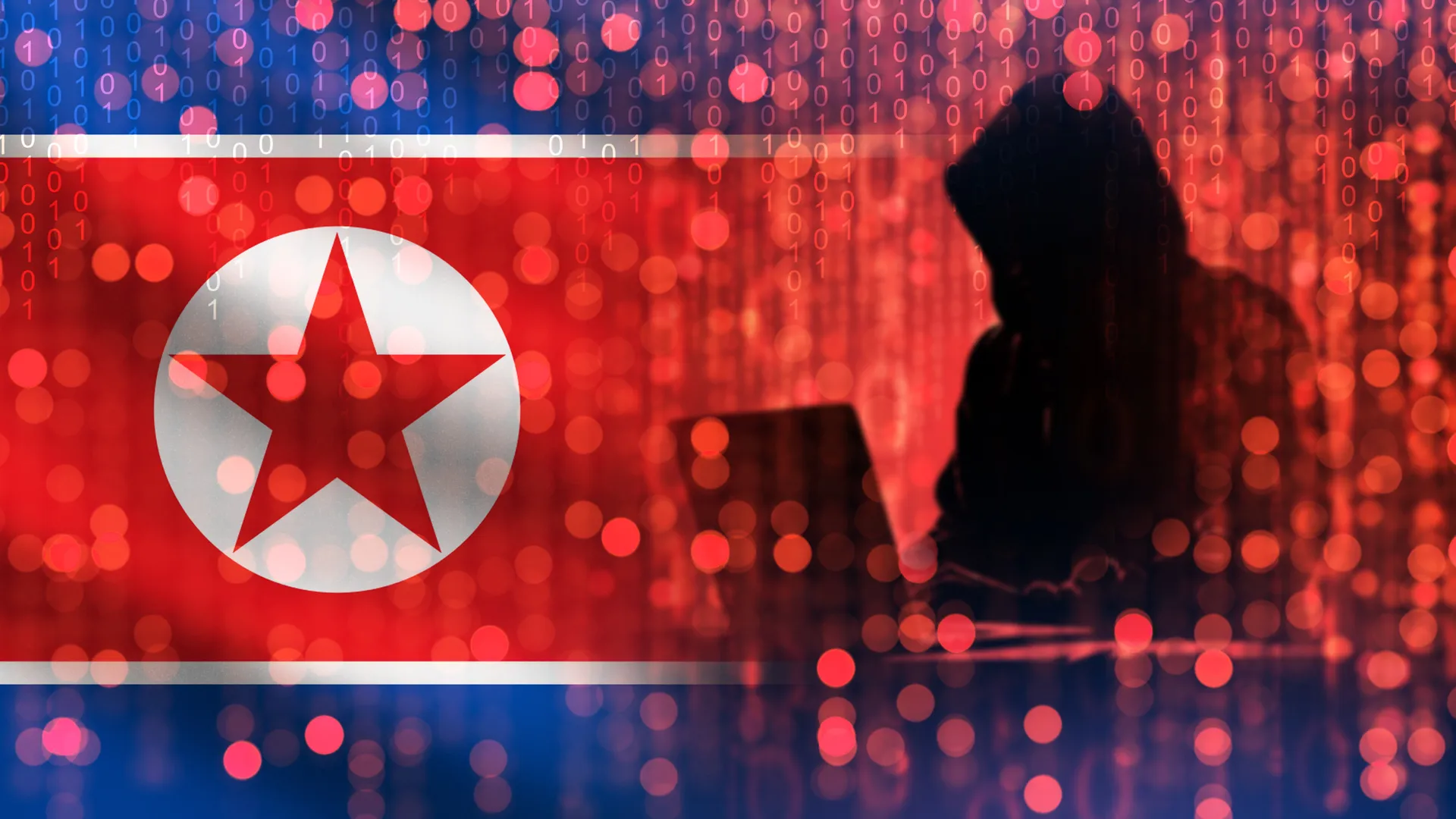
North Korean flag with a hooded hacker
(Image credit: Shutterstock)

  • North Korea is responsible for almost half of tech sector cyber intrusions
  • IT worker campaigns are hard to spot thanks to AI enhancement
  • The funds are being used to help develop new WMDs

A new Crowdstrike report has found nearly half (47%) of state-sponsored attacks against US tech companies came from a single North Korean group.

The group, tracked as Famous Chollima, has launched a string of fake IT worker schemes that use AI tools to enhance the personas of applicants.

The funds from successful intrusions are are a welcome addition to the nation’s highly industrialized economy, and are subsequently used to develop and procure weapons of mass destruction for Kim Jong Un’s regime.

IT salaries paid to develop nukes

North Korea has long relied on cyber activity as a source of funds, with sanctions against the country and a closed-economy resulting in the country being dubbed the ‘Hermit Kingdom’.

Reports of North Korea sneaking into businesses via IT worker applications have been widespread, but the scale of North Korea’s cyber activity has not been fully understood, until now.

The tiny country with its highly developed cyber-arm has a number of notorious groups, such as the Lazarus Group, but many of the IT worker attacks have been attributed to Famous Chollima.

The group conducts its activities by applying for remote tech jobs at western tech firms. They use AI tools to generate new personas, including images, which are then tied to stolen documents such as passports and driving licenses in order to pose as nationals of their target country.

Sign up to the TechRadar Pro newsletter to get all the top news, opinion, features and guidance your business needs to succeed!

If successful, the job provides the fake worker with a salary that is often thousands of times higher than the average North Korean, with the funds being appropriated by the state. The workers also steal intellectual property and secrets from the companies they work for, using them to advance the regime’s own tech industry or to launch further attacks against their employer.

Upon being exposed, many of the workers will threaten to reveal their identity unless they are paid a fee, which could be paid in order for the company to avoid the negative effects of having hired a sanctioned individual.


Google logo on a black background next to text reading 'Click to follow TechRadar'

Follow TechRadar on Google News and add us as a preferred source to get our expert news, reviews, and opinion in your feeds.


Benedict is a Senior Security Writer at TechRadar Pro, where he has specialized in covering the intersection of geopolitics, cyber-warfare, and business security.

Benedict provides detailed analysis on state-sponsored threat actors, APT groups, and the protection of critical national infrastructure, with his reporting bridging the gap between technical threat intelligence and B2B security strategy.

Benedict holds an MA (Distinction) in Security, Intelligence, and Diplomacy from the University of Buckingham Centre for Security and Intelligence Studies (BUCSIS), with his specialization providing him with a robust academic framework for deconstructing complex international conflicts and intelligence operations, and the ability to translate intricate security data into actionable insights.