


Drones fall. Sensors fail, signals drop, batteries die at inconvenient moments, and until now the consequences of that failure were left largely to chance. Obstacle avoidance technology solved one half of the safety equation, keeping drones from flying into buildings, power lines, or each other. But avoidance only works while the aircraft is still flying. Once a drone loses power or control, all that sensor smarts becomes irrelevant, and physics takes over. Even a small consumer grade drone weighing 8 or 9 ounces turns into a falling object with real force behind it when it drops from 200 or 300 feet, and DJI’s Matrice 400 is a far heavier machine flying far more demanding missions.
That is the gap the AP100 Parachute was built to close. It watches its own hardware in real time, running continuous checks so it knows the instant something looks off. Backup capacitors keep the system powered even if the drone itself loses electricity, which matters because a mid air failure rarely comes with a warning. Once triggered, deployment is instant, and the parachute slows descent to under 5 meters per second, turning what would be a crash into something closer to a controlled landing. Alarms then kick in after deployment, alerting anyone nearby and helping pilots track down exactly where their aircraft ended up.
Designer: DJI
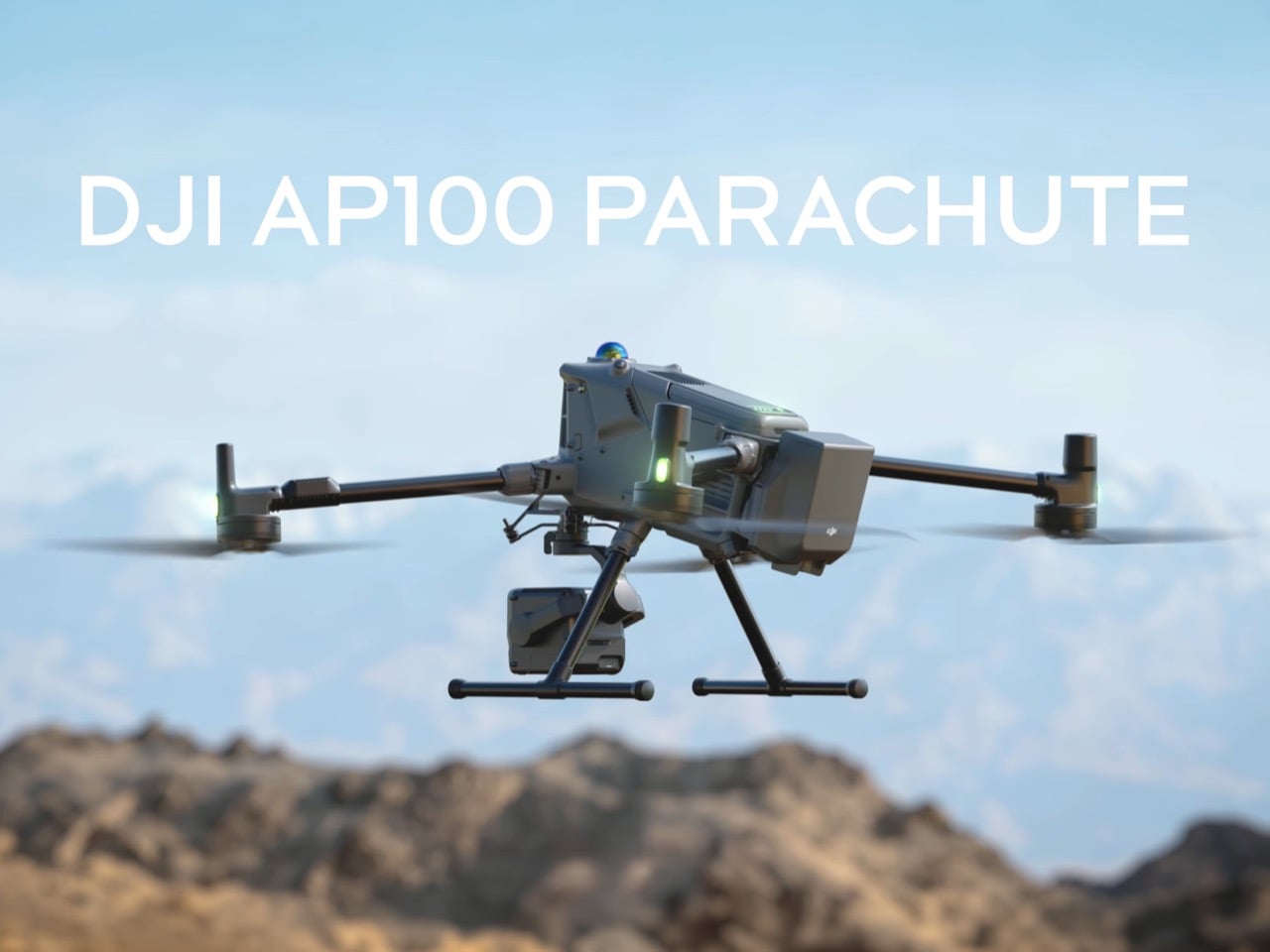
The AP100 gives pilots three separate ways to pull the ripcord, so to speak. It can trigger itself automatically the moment it detects an anomaly or a geocaging breach, meaning the drone strays somewhere it should not be. Pilots who want manual control can swipe to deploy directly inside the DJI Pilot 2 app, no digging through menus required. There is also a remote option through FlightHub 2’s FTS page, useful for fleet operators managing multiple aircraft from a central hub. Layering automatic, manual, and remote deployment together means there is rarely a scenario where the parachute simply cannot be triggered in time.
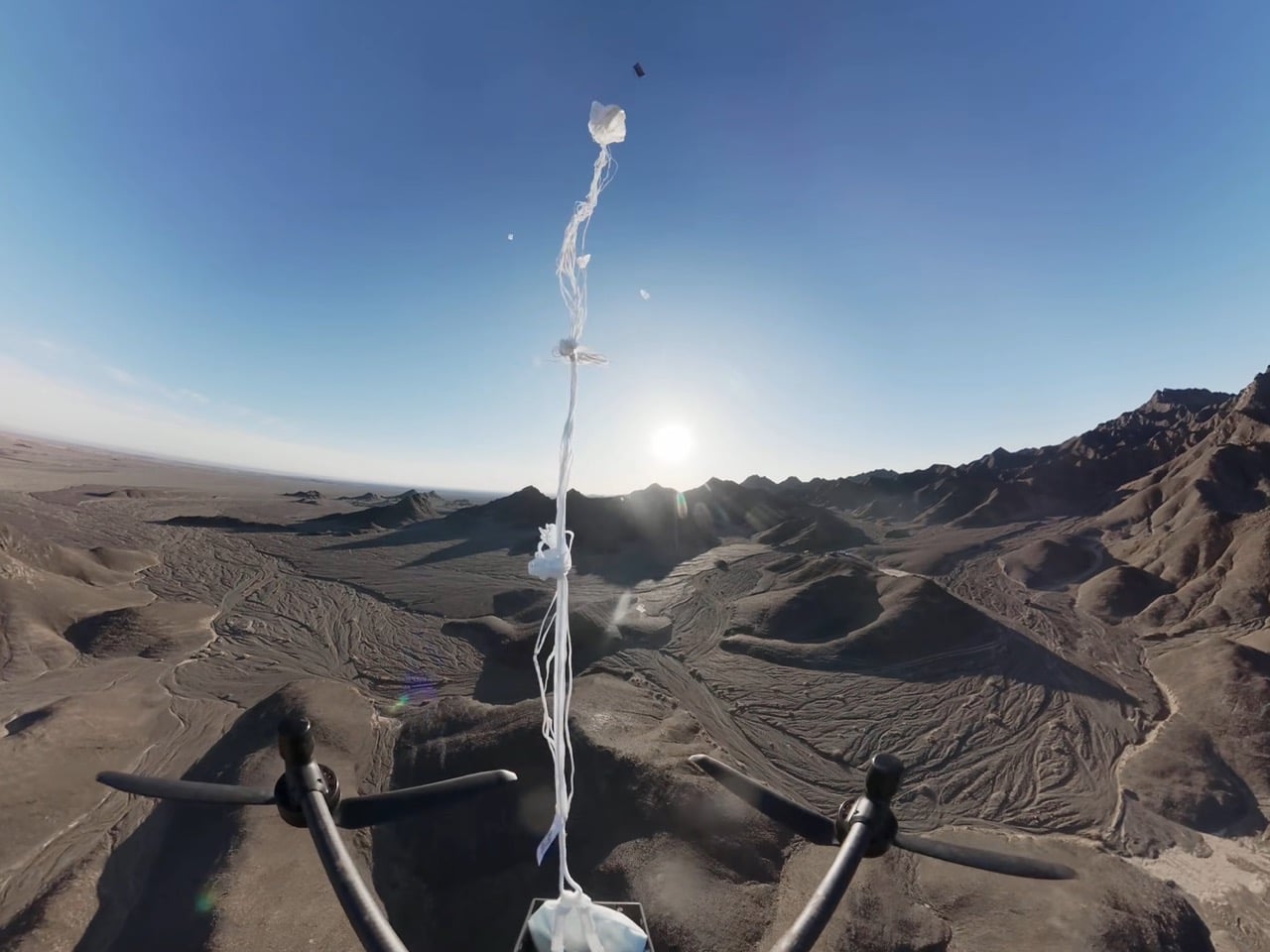
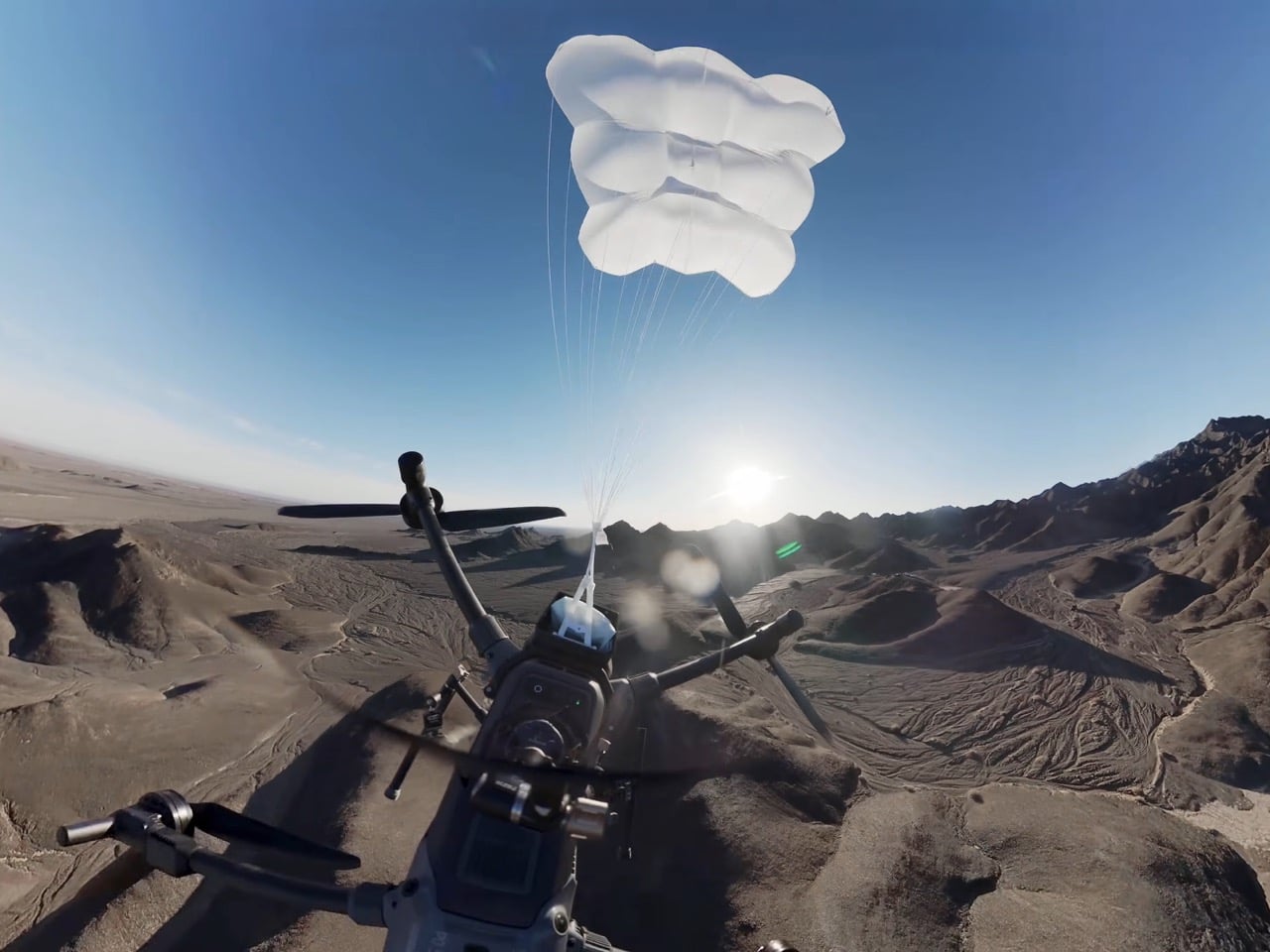
None of this exists in a vacuum. Commercial drone missions flying over cities or beyond the pilot’s direct line of sight, what the industry calls BVLOS, have to satisfy strict safety categories like C5 and C6 before regulators sign off. Surveying a highway route or inspecting a pipeline that snakes through populated areas used to mean stacking on extra precautions just to get approval. A parachute rated to meet those standards effectively does the compliance heavy lifting on its own. That turns what used to be a drawn out approval process into something considerably more straightforward for operators trying to get missions off the ground, literally and legally.
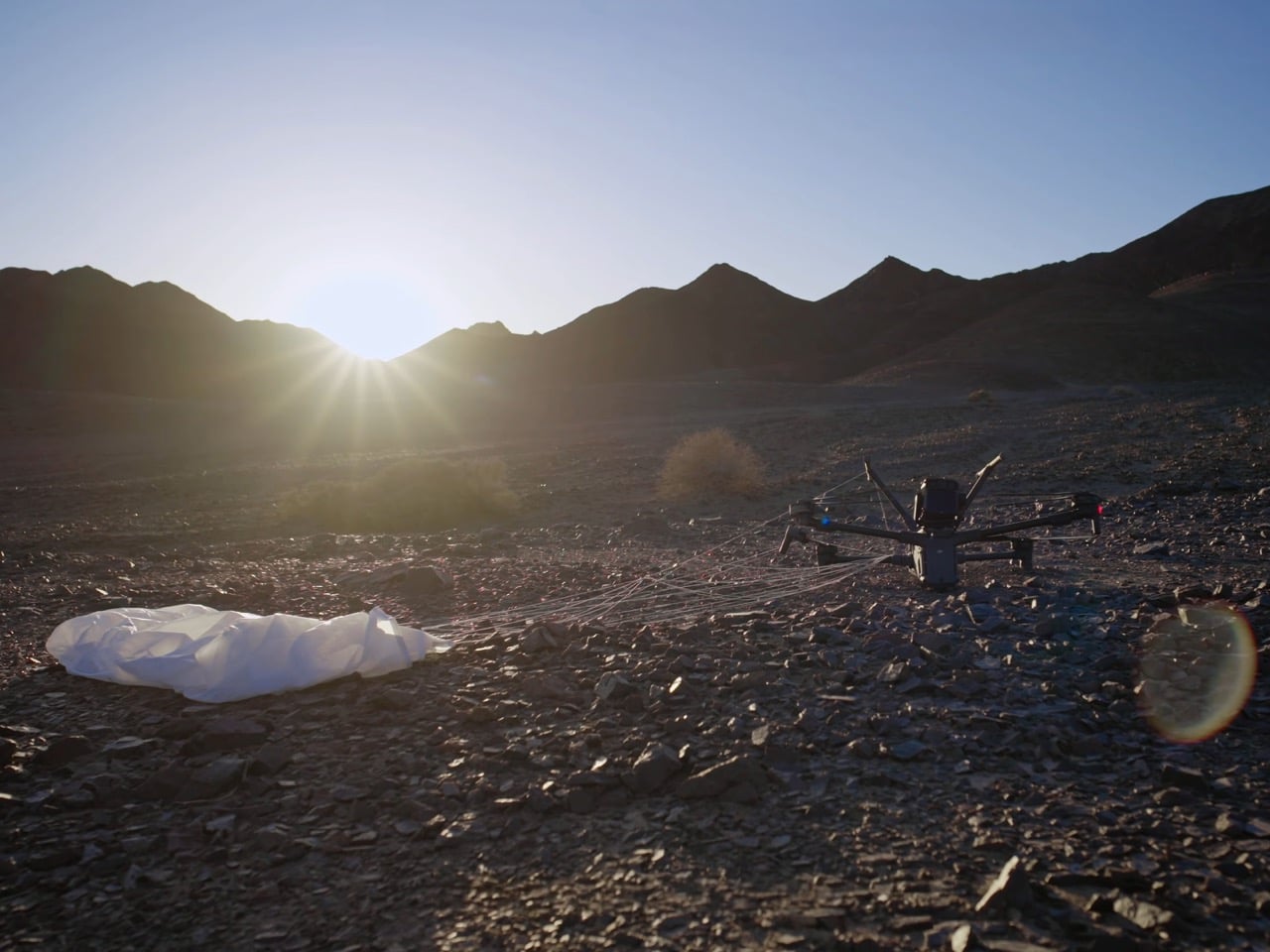
The hardware itself is built for the grind of daily operations rather than sitting as a one time safety gimmick. Pilots can swap batteries without ever detaching the parachute, which sounds minor until you are the one doing it in the field between flights. It also carries the same IP55 rating as the Matrice 400 itself, so rain or dust does not take it out of commission. Full system self checks run automatically at startup, cross referencing communication links and hardware status before the drone even leaves the ground. These are the kinds of details that matter more to the operator running ten missions a week than to anyone reading a spec sheet once.
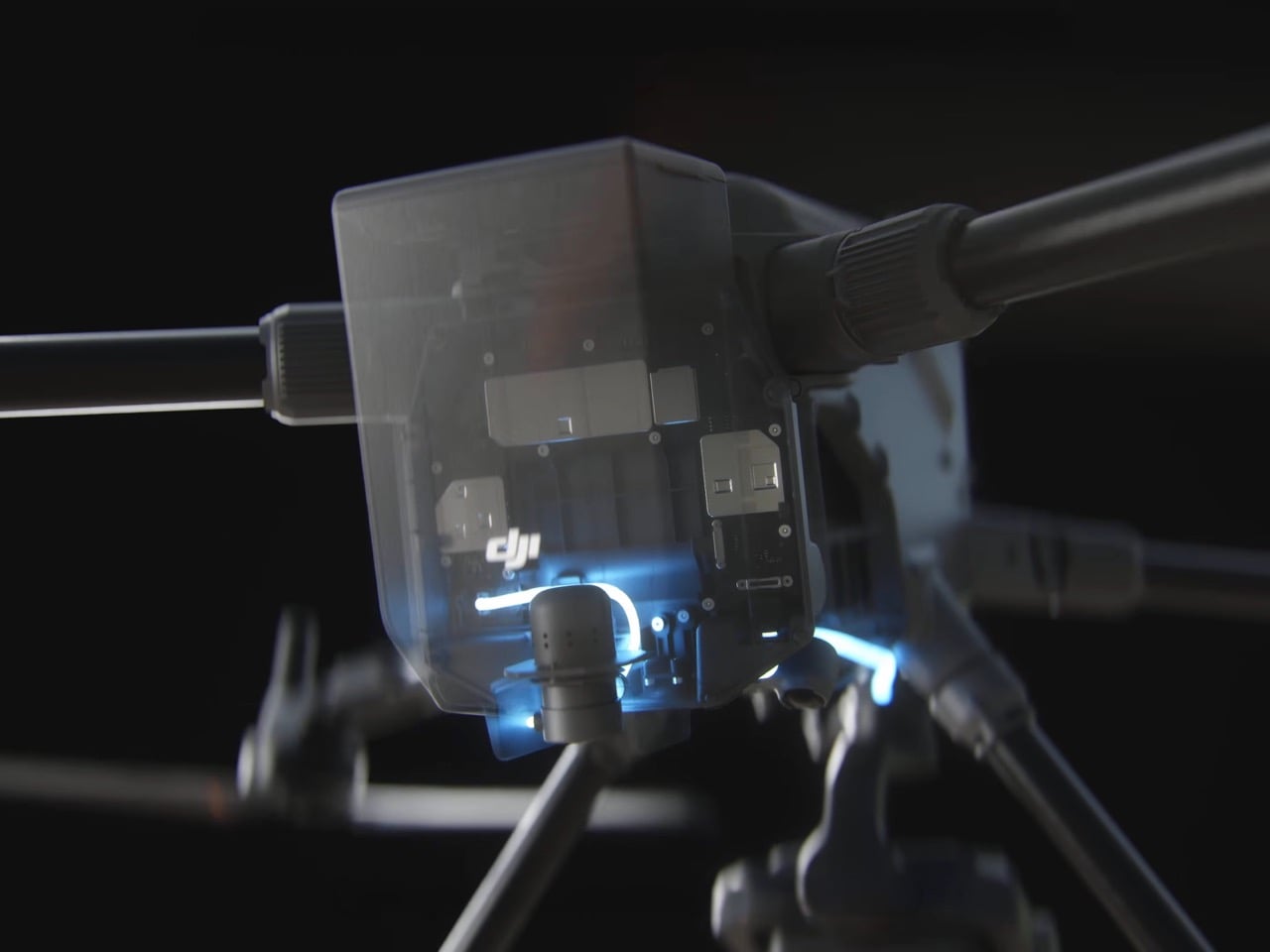
Here is the catch, though. The AP100 is built exclusively for the Matrice 400, DJI’s enterprise platform aimed at industrial inspection, surveying, and public safety work. Your Mavic will not be getting one, and neither will your FPV drone, at least not yet. That is not entirely surprising given the size and cost tradeoffs involved in strapping a parachute system to something meant to be light and nimble. But DJI has a track record of trickling enterprise safety features down into consumer lines once the engineering matures, and a company that just built a first party parachute for one drone rarely stops at just one.
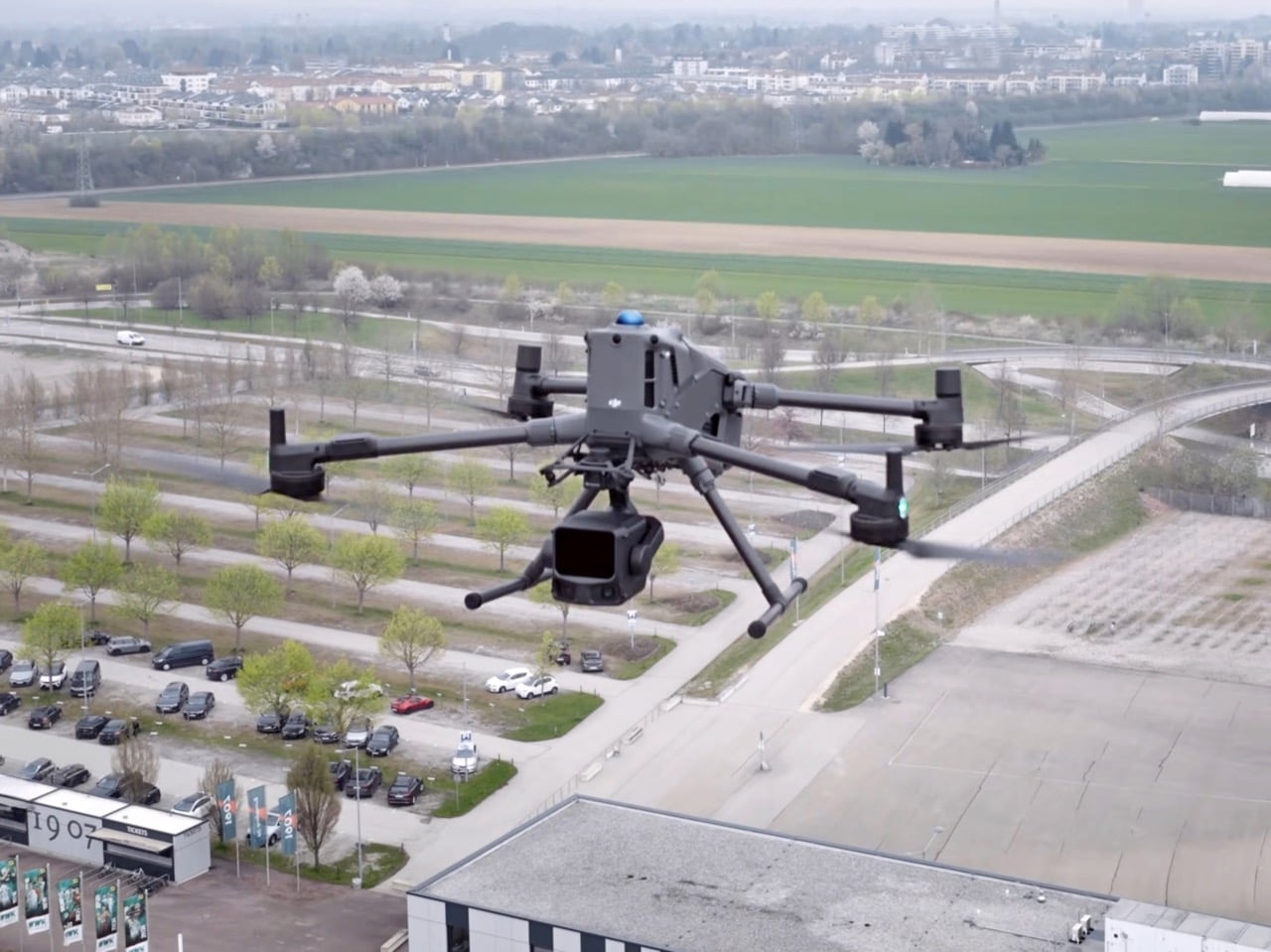
Regulators keep pushing drones toward busier skies, over highways, over crowds, over exactly the kind of scenarios where a hardware failure stops being a minor inconvenience and starts being a genuine hazard. DJI building a parachute directly into its own ecosystem, rather than leaving it to third party add ons, suggests the company sees this as a standard feature rather than an optional extra. Whether that logic eventually reaches the Mavic or Air lineup remains to be seen, but the direction feels obvious. Falling should not be part of the risk calculus anymore, and DJI just made a very public bet on that idea.
此内容由惯性聚合(RSS阅读器)自动聚合整理,仅供阅读参考。 原文来自 — 版权归原作者所有。