





A lot of companies suddenly seem to be hiring FDEs to oversee successful AI deployments. With that in mind, AWS exec Taimur Rashid talked about how his company approaches the role, what FDEs do, and why teams of engineers are better than hired guns.
So, what exactly are FDEs — are they techy lone rangers like the ones OpenAI, Google and Microsoft are hiring? Turns out it’s not so much about individual engineers who swoop in to design and roll out AI deployments; it’s more about a team of engineers working together at customer sites.
At least, that’s the view at Amazon Web Services (AWS).
In fact, according to Taimur Rashid, managing director of the AWS Generative AI Innovation Center, the FDE concept pre-dates the current generative AI (genAI) gold rush. The same kinds of engineering teams were needed for the earlier machine-learning and cloud eras to help companies with deployments.
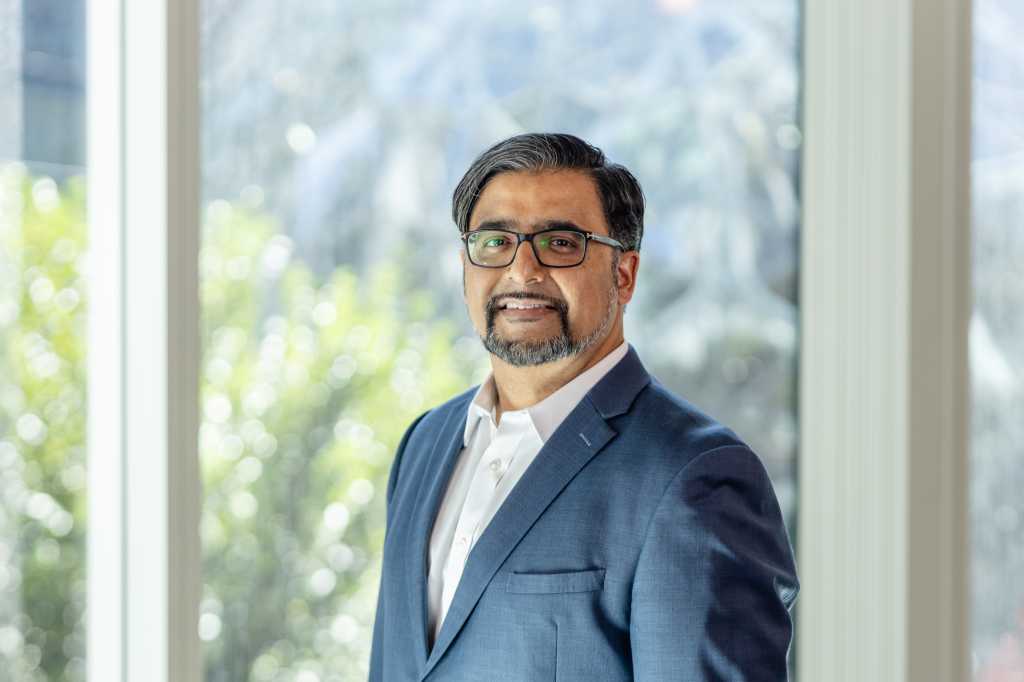
Taimur Rashid, managing director of the AWS Generative AI Innovation Center,
AWS
Rashid recently talked about how AWS sees FDEs as a profession in a conversation with Computerworld. And he weighed in on the desired job skills the company seeks in this increasingly AI-centric era.
What is an FDE? “We view it as a team. It’s a cross-functional team that has engineers, scientists, strategists, and folks that can piece technology and business together. In some cases, we do have to have security engineers in there, too.
“I see them as anesthesiologists. They have to prep so many things, monitor things throughout. We see ourselves as a frontier deployment team helping customers adopt all forms of AI, whether it’s genAI, agentic AI, even emerging trends like physical AI. We’re helping these companies become frontier themselves.”
How does an FDE engagement begin, and how is it structured? “Where we see the forward deployed model is when customers come in — for example, we have our executive briefing center in Seattle and in Arlington, VA. When customers share what they’re trying to do, very quickly a customer’s like, “What’s the quickest way I can go and build something with you?”
“We’ll forward deploy our people in, we’ll embed them in your business and we’ll go through these 45-day sprints that we typically design. Through those successive sprints, we’re building stuff together, we’re proving value, and then they can expand that to a much broader engagement.
Where do FDEs actually sit? Client side, internally, or in-between? “It’s mixed, and it largely depends on what the customer’s preference is. We’ve seen models where the customer has been very adamant that, ‘We want your teams with us in our business.’ In those cases, we forward deploy the majority of the teams on site.
“We have models where customers are fine with you being wherever you’re based, as long as you’re still embedded virtually. And then there’s a hybrid. We deploy anywhere from five to seven people. Sometimes, the baseline is actually three.”
Will cost savings be the job of an FDE, or someone else on the team? “I expect these teams to be able to architect systems that have those cost requirements in mind, whether it’s use a different model for a different use case that doesn’t increase the per-token cost…or think about ways where you can use semantic caching. I personally think you may have a high spend in token consumption, but if you’re generating revenue, as long as the economics work out, then you’re at peace.”
What challenges have you gone through deploying FDEs in the real world? “One of the challenges worth highlighting is when customers get really excited about us forward deploying resources, what they end up realizing is [that] they’re not set up to absorb that right away. They realize they have to go through … process-related things, security access — all those operational things.
“One very good example is the Commonwealth Bank of Australia. They said: “Prioritization’s a big thing, and if you forward deploy and you’re 100% dedicated, how do we ensure that our teams are also equally 100% dedicated?’ When you’re sitting in your office, you’re distracted by your day-to-day. So they said, ‘Why don’t we create a neutral ground in Seattle? You fly your people, we’ll fly our people. We’ll give them three weeks of dedicated time so they have no distractions.’”
Have you gone into projects where they want AI but have no security or governance ready? “I’ve been through this before, certainly. We do see customers that have security processes and capabilities, but it’s not as tight as it should be in the age of AI. Governance is the biggest area where customers right now have the biggest gap. I’m talking governance around agents. In the past two months, almost 100% of the conversation around agents is not about capability. It’s all about governance.
“That is a big area right now where forward deploy teams are helping with governance education, and building the scaffolding for that.”
How does software engineering fit into the FDE model? “One of the greatest learnings is that as we forward deploy resources and get customers to take AI and integrate it into their systems, the knowledge of software engineering is so important. Today, a customer can use one of the Claude models and scan their code base and look at vulnerabilities.
“The tough part is not assessing those vulnerabilities, it’s remediating [them]. Remediating [them] requires software engineering experience, because you have got to merge code, test it, deploy it. We largely see that the frontier software development teams are smaller and they’re managing agents that are doing various tasks across the software development lifecycle.”
AWS has many models at your scale, open source, closed — it’s more complex than what other AI vendors offer. How do you nail down the talent? “It’s massive, and when you look at not only scale, it’s the complexity of the stack. We take an approach where we fundamentally do three important things: No. 1, we want to ensure people understand concepts; they have to understand pre-training, post-training, reinforcement, fine-tuning.
“Secondly, we make sure that our teams are well versed in their first-party services. The third thing is that by design, AWS has always been about choice. We say, ‘Let’s do 80-20 here. What is 20% of those specialties that we need to have, which can cover 80% of what most customers are trying to do?’”
What skills should software developers learn to move into FDE work — the top three or four things? “We look at three categories. First category is entirely functional. Are they more engineering specific? Are they science specific? Are they security specific? Our litmus test is not only knowledge of the function, but the actual hands-on work that they can do with it. Secondly is around domain. I focus on what is their domain understanding across the whole AI lifecycle? The third thing is cultural. We are looking for folks that are okay at dealing with ambiguity, being good at stakeholder management, and having that startup mindset.
“This AI transformation’s not for the faint of heart.”
There’s a rush for FDEs from OpenAI, Google, and others. What’s different about what you look for? “I don’t know entirely what the others are looking for, but I’ll tell you what we have been looking for in the past. When we hired solution architects, it was about systems level understanding. But what I see more and more is hands-on experience, cultural mindset, all these things are very important. If I had to pick one thing that is going to be very important in the talent that we either upskill or future talent that we hire, it has to be the application of AI towards software engineering and system integration tasks.
You’re upskilling AWS talent as well? “We do. You will see some publications coming out in the next couple of weeks around how do we do this across our software teams and how does that translate to customer-facing roles.”
SUBSCRIBE TO OUR NEWSLETTER
From our editors straight to your inbox
Get started by entering your email address below.